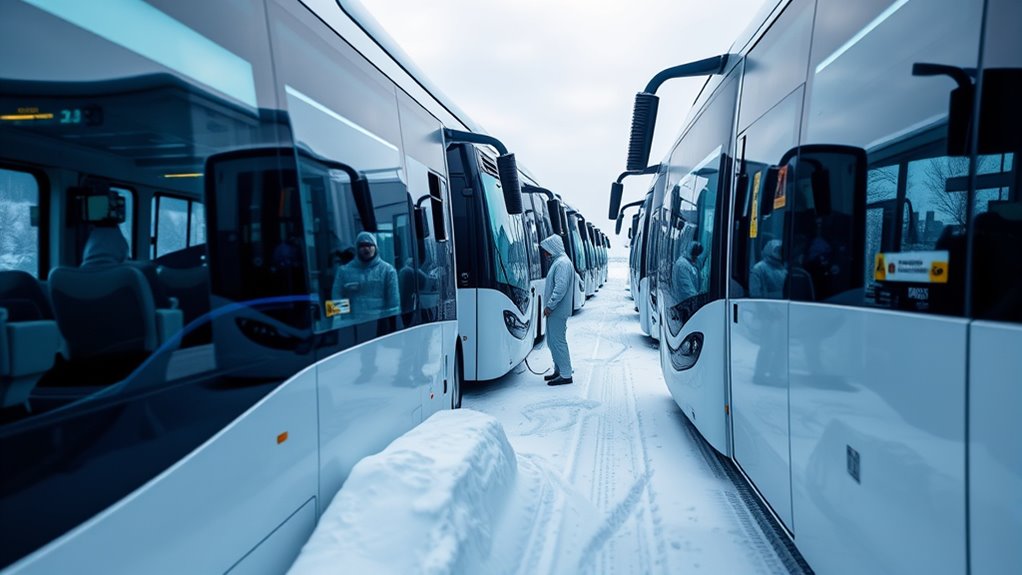

To prepare your electric buses for winter, start by pre-conditioning the batteries before routes, especially during the coldest hours. Use thermal management systems like heating elements or heat pumps to keep batteries within their essential temperature range, ensuring maximum efficiency and range. Insulate key components to retain heat and reduce energy use. Regular maintenance of thermal systems is also vital. Keep these tips in mind, and you’ll find there are even more ways to enhance winter performance.
Key Takeaways
- Schedule automatic pre-conditioning routines to warm batteries before routes during cold weather.
- Utilize thermal management systems like heat pumps or heating elements to maintain optimal battery temperatures.
- Insulate battery compartments and critical components to retain heat and reduce energy consumption.
- Monitor thermal system performance regularly to prevent cold spots and overheating issues.
- Plan for overnight or off-peak pre-conditioning to ensure buses are winter-ready at the start of each shift.

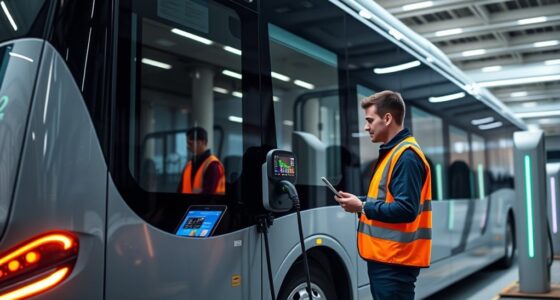
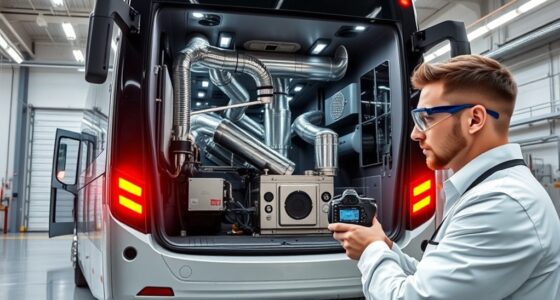
As winter approaches, preparing electric buses for the cold months becomes essential to guarantee they operate reliably and efficiently. Cold temperatures can markedly impact battery performance and overall vehicle operation, so proactive measures are indispensable. One of the key aspects to focus on is battery efficiency, which can decline sharply in low temperatures. To counter this, you need to guarantee the batteries are pre-conditioned before routes begin. Pre-conditioning involves heating the batteries to an ideal temperature, enabling them to deliver maximum capacity and efficiency. This process not only prolongs battery life but also helps maintain range, which is often compromised in winter conditions. Proper thermal management systems are critical during this period, as they regulate the temperature of the batteries and other essential components. These systems use heating elements, heat pumps, or liquid cooling to ensure batteries stay within their perfect temperature range. Without effective thermal management, batteries may become sluggish or even suffer damage from extreme cold, leading to reduced range and potential operational failures. Advanced thermal management systems can further optimize energy use and maintain battery health during winter months.
You should implement scheduled pre-conditioning routines that activate before buses start their shifts, especially during the coldest parts of the day. Many electric buses come equipped with built-in thermal management systems that can be programmed to automatically warm the batteries during off-peak hours or overnight. This proactive approach guarantees that buses are ready to operate at peak efficiency, minimizing delays caused by cold-related performance issues. Additionally, insulating key components and battery compartments can help retain heat and reduce energy consumption needed for heating, further supporting battery efficiency. Keeping a close eye on thermal management system performance is also indispensable; any malfunction can lead to uneven heating or cooling, affecting battery health and performance. Regular maintenance checks ensure that heating elements and cooling loops are functioning correctly, preventing cold spots or overheating.
Top picks for "prepar winter condition"
Open Amazon search results for this keyword.
As an affiliate, we earn on qualifying purchases.
Frequently Asked Questions
How Do Pre-Conditioning Systems Affect Battery Longevity?
Pre-conditioning systems can positively impact battery longevity by managing thermal conditions effectively. By warming or cooling the battery before use, you reduce battery degradation caused by extreme temperatures. This thermal management prevents stress and damage, extending the battery’s lifespan. Although it may draw power initially, the overall benefit is a healthier, longer-lasting battery, ensuring reliable performance and reducing maintenance costs over time.
What Are the Best Practices for Emergency Power Backup?
Think of your emergency power backup as the lifebuoy in a storm. You should regularly test your systems, follow clear emergency power protocols, and guarantee battery thermal management keeps temperatures just right. Keep backup batteries charged and accessible, and train staff on quick activation. By maintaining these practices, you ensure your electric bus stays afloat during unexpected power outages, safeguarding passengers and operations alike.
How Can Drivers Optimize Battery Performance in Extreme Cold?
To optimize your battery performance in extreme cold, guarantee proper thermal management by pre-conditioning the bus before departure. Use battery insulation to retain heat and prevent rapid cooling, which can reduce capacity. Keep the vehicle in a heated garage if possible, and avoid unnecessary battery drain during stops. Regularly monitor battery temperature and health, adjusting your driving style to conserve energy and maximize range during cold weather conditions.
Are There Specific Maintenance Routines for Winter-Ready Electric Buses?
You might think electric buses don’t need winter routines, but think again. Regularly check and improve battery insulation to keep cold out and cabin heating systems to ensure passenger comfort. Maintain battery health with proper pre-conditioning, and inspect wiring and seals for leaks. These simple routines help your bus battle the cold effectively, proving that even in winter, good maintenance keeps your fleet running smoothly and efficiently.
How Does Winter Weather Impact Charging Station Reliability?
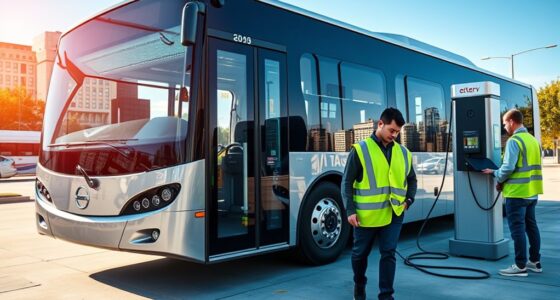
Winter weather can challenge charging station reliability by affecting charging station durability and stressing the power grid resilience. Cold temperatures may cause equipment to malfunction or operate less efficiently, leading to longer charging times or outages. Heavy snow and ice can damage infrastructure, and increased energy demand strains the grid. To guarantee reliable charging, you should regularly inspect stations, reinforce infrastructure, and coordinate with utilities to maintain grid stability during winter months.
Conclusion
Now that you know how to pre-condition your electric buses for winter, you’re well on your way to keeping them running smoothly in cold weather. Remember, it’s better to be safe than sorry—winter can catch you off guard if you’re not prepared. By taking these proactive steps, you’ll ensure your fleet stays reliable and efficient, no matter how harsh the season gets. Stay ahead of the game and keep your buses rolling smoothly through winter’s toughest days.