To prevent fires when wiring large inverters, you need the correct cable gauge based on your inverter’s power and current needs. Calculate your total wattage, consider inverter efficiency, and determine the current load. Use the fire-prevention formula to select a cable gauge that handles that current safely, factoring in cable length to reduce voltage drops and heat. Properly sized cables and quality connectors minimize fire risks—stay tuned for detailed steps to get it right.
Key Takeaways
- Calculate the inverter’s maximum current draw based on total wattage and system voltage to determine appropriate cable gauge.
- Use cables with insulation rated for high temperatures and environmental exposure to prevent insulation failure and fire hazards.
- Select a cable gauge that exceeds the maximum current capacity to minimize overheating and ensure safety margins.
- Keep cable runs as short as possible and use thicker gauge cables for longer distances to reduce voltage drop and heat.
- Regularly inspect connections, use high-quality connectors, and ensure proper insulation integrity to prevent shorts and fire risks.

Linkstyle 4PCS 1/0 AWG Battery Cable Kit 12 Inch, Heavy Duty High Current Pure Copper Inverter Cables with 3/8" Tinned Copper Lugs, for Inverter, Solar, Marine, RV
- Heavy Duty Battery Cable Kit: Includes 4 high-current copper cables
- Pure Copper Conductors: Maximize conductivity and reduce resistance
- Tinned Copper Lugs: 3/8 inch M10 terminals for durability
As an affiliate, we earn on qualifying purchases.
As an affiliate, we earn on qualifying purchases.
Why Using the Correct Cable Gauge Prevents Fires in Large Inverter Setups
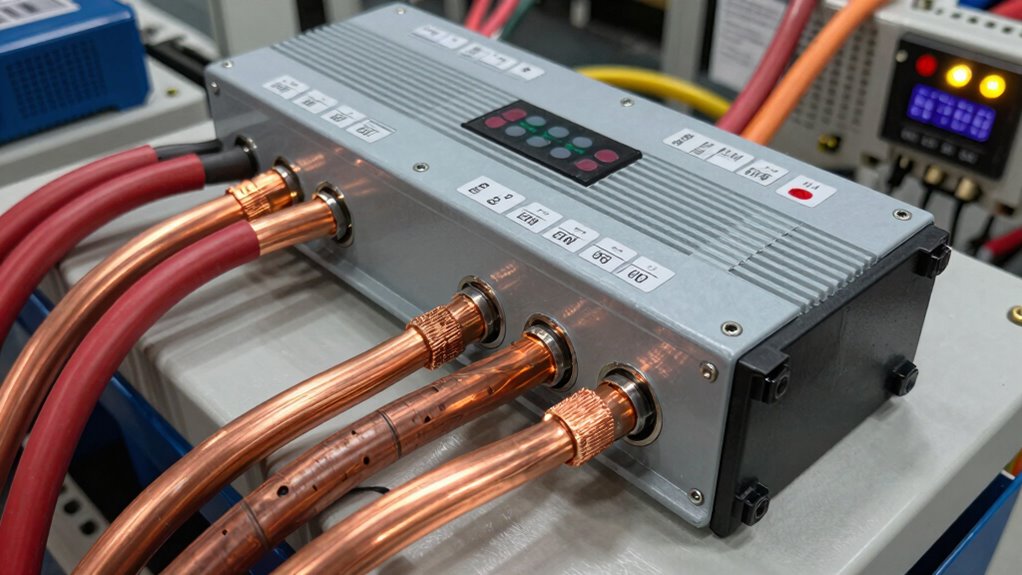
Using the correct cable gauge is essential for safety in large inverter setups because it directly affects how much current the cables can handle without overheating. Proper cable gauge prevents excessive heat buildup, which can ignite insulation or cause fires. When choosing cables, pay attention to cable insulation quality and fire ratings, ensuring they meet safety standards. High fire-rated insulation resists melting or burning under high temperatures, reducing fire risks. Undersized cables increase resistance, generate heat, and risk insulation failure, leading to dangerous situations. Additionally, current capacity is a critical factor that determines the appropriate cable gauge for your setup. To further ensure safety, always verify that the cables used are compliant with fire safety standards and suitable for high-current applications. Proper cable gauge and insulation are foundational to preventing fires in large inverter setups, especially when considering ampacity ratings to match the load requirements. Selecting cables with appropriate fire-resistant insulation further minimizes the risk of ignition and enhances overall safety. By selecting the right gauge with appropriate fire-rated insulation, you minimize the chance of electrical fires and ensure a safer, more reliable inverter system. Incorporating proper installation practices further enhances safety and prevents overheating issues.

6 AWG Battery Cable 3FT 6 Gauge Pure Copper Battery Inverter Cables with 5/16 in Lugs Both Ends Power Inverter Wire Set for Automotive Solar Power Inverter Marine Boat RV Car Motorcycle (3FT)
- Length: 3 feet long battery cable
- Material: Pure copper with tinned lugs
- Corrosion Resistance: Resistant to corrosion and oxidation
As an affiliate, we earn on qualifying purchases.
As an affiliate, we earn on qualifying purchases.
How to Calculate Your Inverter’s Power and Current Needs
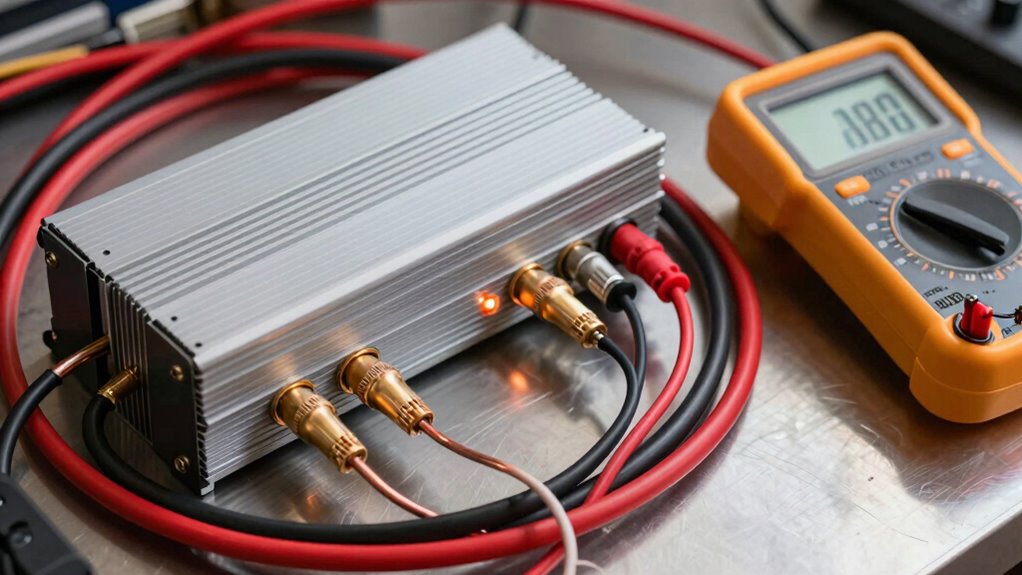
To guarantee your inverter can handle your power needs safely, you need to accurately calculate its total power and current requirements. Start by determining the total wattage of all connected devices, then consider the inverter’s efficiency—typically between 85% and 95%. Divide the total wattage by the inverter’s efficiency to find the actual power draw. To find the current, divide this power by your system’s voltage; for example, at 12V, divide by 12. Your battery capacity influences how long your system can run at this load, so ensure your battery can supply the necessary current without overtaxing it. Proper calculations prevent overloads, reduce fire risks, and ensure your inverter operates reliably within safe limits. Additionally, selecting the appropriate cable gauge is crucial for safely transmitting the current and preventing overheating or fires. Considering cable insulation ratings can further enhance safety by ensuring the wiring can withstand the current and environmental conditions. Understanding circuit protection devices is also vital in safeguarding your system from potential faults and overloads, which in turn helps prevent electrical fires and system failures. Incorporating thermal management strategies can further mitigate risks associated with heat buildup and improve overall system safety.

Linkstyle 6PCS 2 AWG Battery Cables 6 Inch, Heavy Duty Pure Copper Battery Bank and Inverter Cable Set with Tinned Copper 3/8" Lugs Terminals, for Solar, RV, Marine, Truck, Automotive 12V-48V
- Complete 6-Piece Cable Set: Includes six 6-inch heavy-duty cables
- High-Quality Material: Made from 99.9% pure copper with nickel-plated terminals
- Corrosion-Resistant Insulation: PVC insulation shell for durability and protection
As an affiliate, we earn on qualifying purchases.
As an affiliate, we earn on qualifying purchases.
The Fire-Prevention Formula: How to Size Your Cables Safely
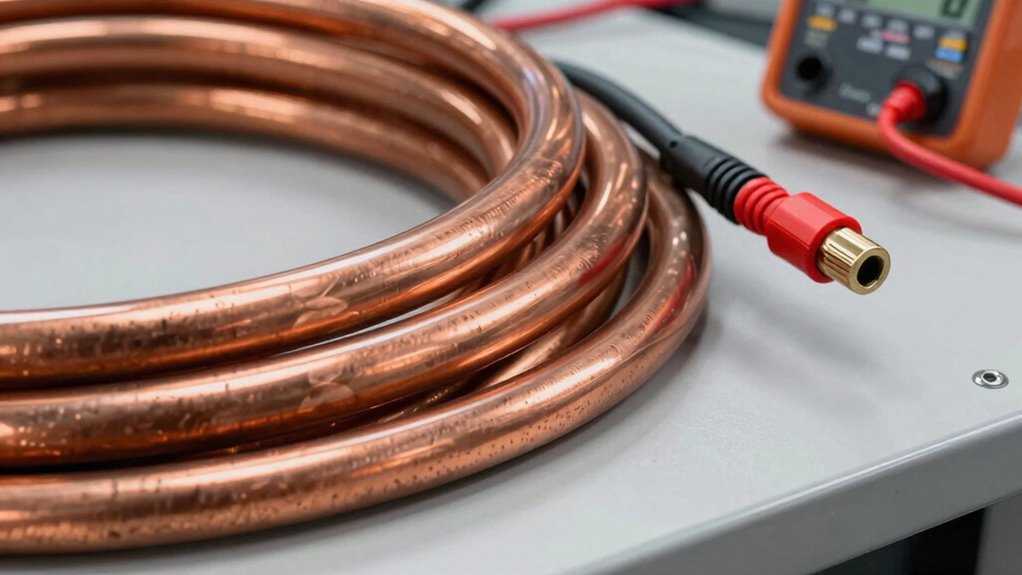
Ensuring your cables are properly sized is essential for preventing fires and maintaining system safety. The fire-prevention formula guides you in selecting the right cable gauge based on current capacity and insulation quality. Proper cable insulation prevents electrical shorts, while effective grounding techniques reduce shock risk and fire hazards. To size your cables safely, consider:
- Matching cable gauge to maximum current load
- Using high-quality cable insulation rated for your environment
- Incorporating appropriate grounding techniques for safety
- Avoiding undersized cables that overheat under load
- Selecting cables with fire-resistant insulation to further enhance safety
- Additionally, understanding insulation properties helps ensure your cables can withstand environmental stresses and reduces potential failure risks. Selecting cables with suitable insulation ratings is crucial for different weather conditions and operational environments, and understanding cable thermal ratings can help prevent overheating during high load situations. Properly assessing current capacity ensures your system remains safe and efficient under varying loads.
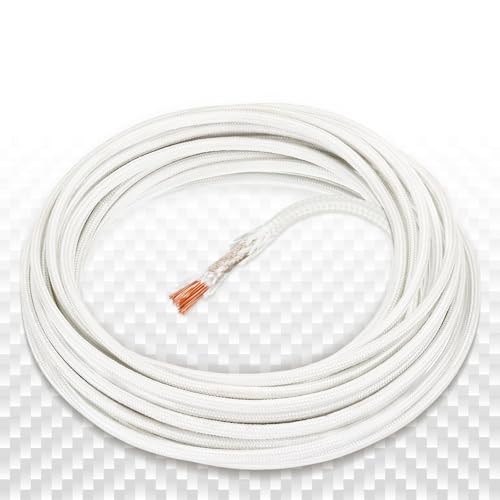
YeloDeer 12 AWG (16.4 FT) Mica High Temperature Wire -76-932 ℉
- High-Quality Insulation Materials: Mica and glass fiber for heat resistance
- Multiple Specifications Available: Various gauges and lengths for different needs
- Easy to Install: Flexible, easy to cut and wire
As an affiliate, we earn on qualifying purchases.
As an affiliate, we earn on qualifying purchases.
How Cable Length Affects Voltage Drop and Safety
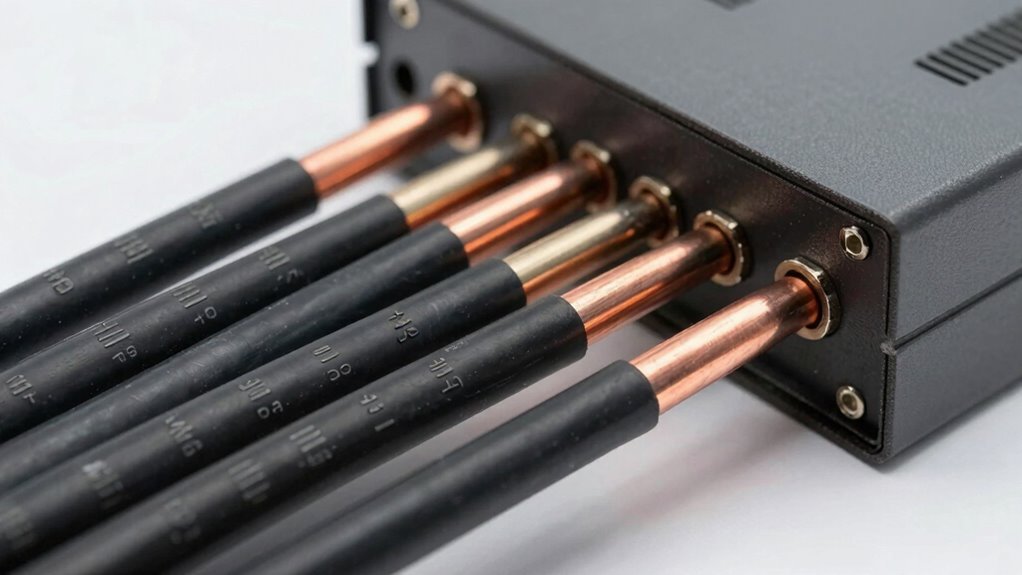
As your cable length increases, voltage drop becomes a significant concern that can compromise system performance and safety. Longer cables cause higher resistance, leading to a drop in voltage that can damage your inverter and connected devices. To minimize this risk, choose cables with proper insulation that resists heat and wear, ensuring safety over extended runs. Additionally, connector quality is vital; low-quality connectors can increase resistance and create points of failure, raising fire risks. Keep cable runs as short as possible and select thicker gauge cables for longer distances. Proper insulation and high-quality connectors help maintain voltage levels and prevent overheating, ultimately protecting your system from potential fire hazards caused by voltage fluctuations and poor connections. Proper cable sizing is essential to balance performance and safety in large inverter setups, especially considering resistance and heat buildup that can occur in inadequate wiring. Ensuring compliance with electrical standards can further reduce risks associated with improper wiring practices. Moreover, selecting cables with appropriate ampacity ratings helps prevent overheating and ensures safe operation over extended distances.
Common Wiring Mistakes That Can Lead to Fires
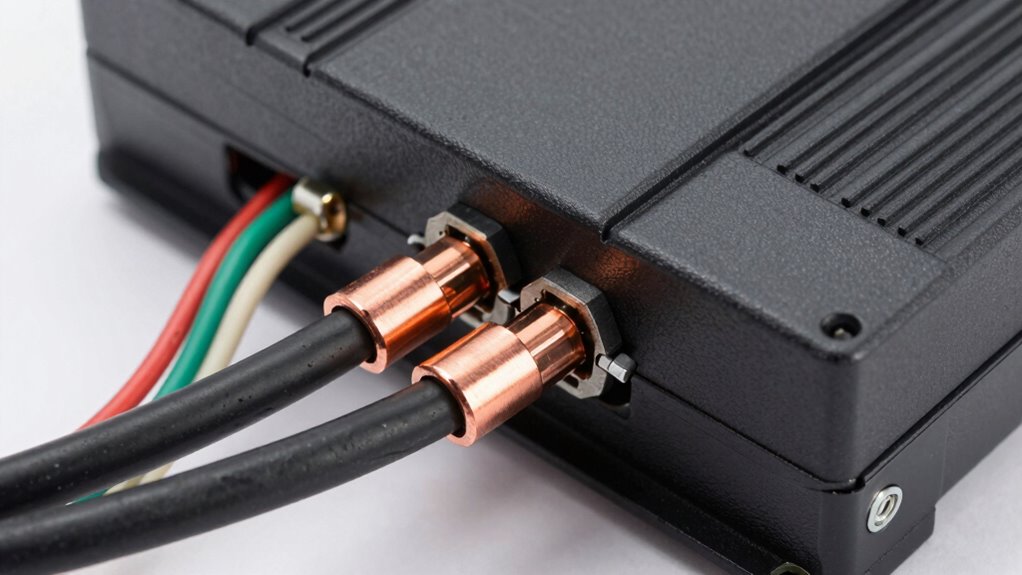
Incorrect wiring practices can considerably increase the risk of fires in your inverter system. Choosing the wrong wire gauge or neglecting proper connections can create serious fire hazards. Common mistakes include using wire gauge selection that’s too thin for the current, which causes overheating; making loose or poor connections that generate heat; neglecting proper insulation, risking short circuits; and running wires without adequate protection or support. Using professional-grade wiring can help prevent these issues by ensuring safety and durability. Proper maintenance and regular inspections are essential to identify potential issues before they lead to failures. These errors can lead to excessive heat buildup and potential fires. To prevent this, always select the correct wire gauge based on your inverter’s current requirements, ensure tight, secure connections, insulate all wiring properly, and follow safety codes. Additionally, understanding current capacity helps in choosing the appropriate wire size and prevents overheating. Being aware of wire insulation properties is crucial for maintaining system safety and avoiding fire hazards. Properly rated wiring also minimizes the risk of electrical faults, which can cause sparks or fires. Avoid these pitfalls to minimize fire hazards and keep your system safe.
Tips for Installing and Inspecting Your Inverter Cables Safely
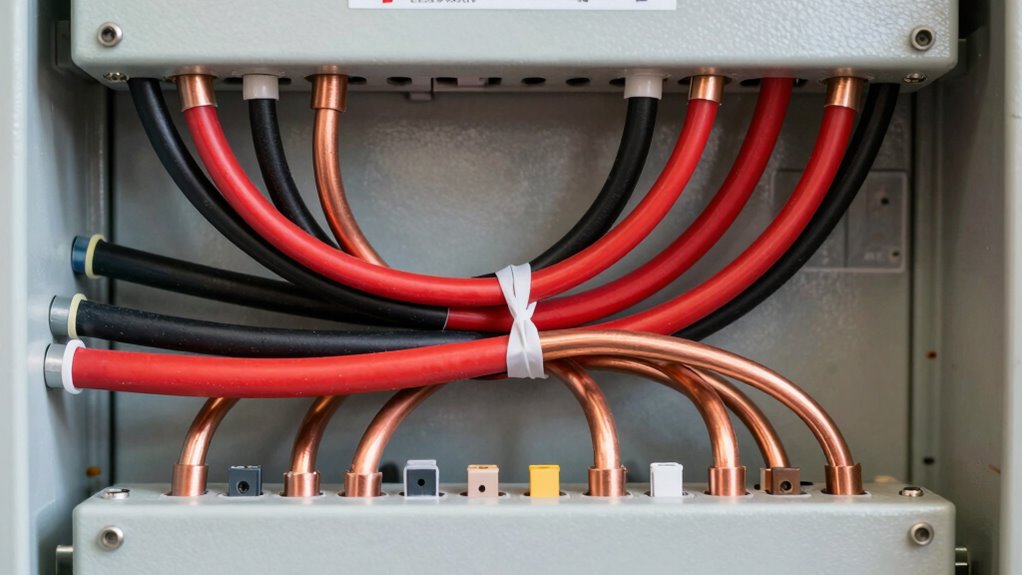
Properly installing and inspecting your inverter cables is essential for safety and system performance. Confirm the cable insulation remains intact, free from cracks or wear, to prevent shorts or fires. Use high-quality connectors that fit securely; loose or poor-quality connectors can cause overheating. Regularly check for corrosion or loose connections, especially at connection points. When installing, keep cables organized and avoid sharp bends that could damage insulation. Additionally, understanding regional flavor profiles can help you select the best components for your setup.
When and Why to Call a Professional for Big Inverter Wiring
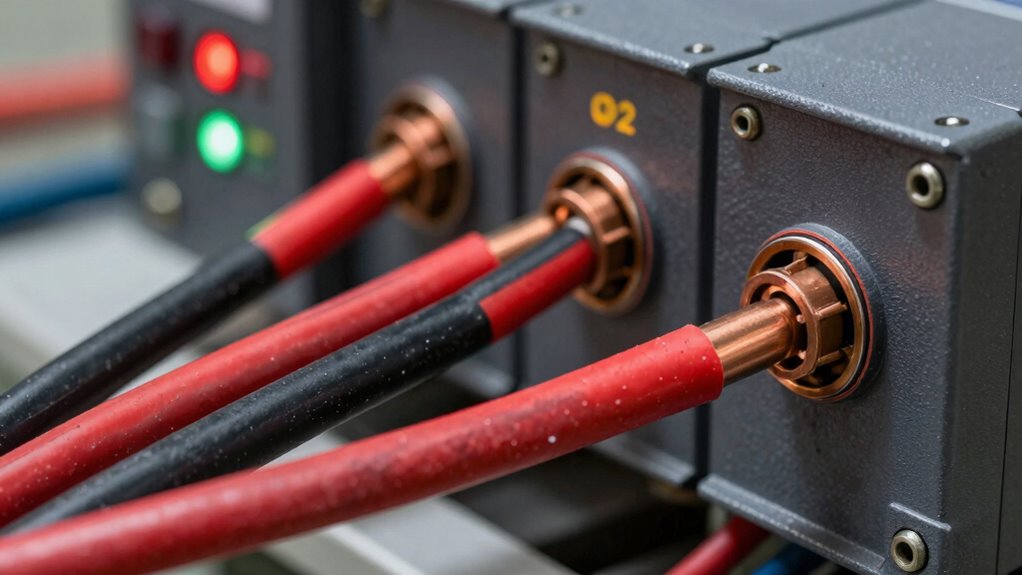
While installing inverter wiring might seem straightforward, large inverters require specialized knowledge and skills to guarantee safety and peak performance. You should call a professional when dealing with high current loads, complex setups, or unfamiliar wiring systems. A professional consultation ensures your wiring meets safety standards, reducing fire risks and equipment damage. Consider reaching out if you encounter:
Large inverter installations demand professional expertise for safety and optimal performance.
- Unclear wiring diagrams
- Uncertain about grounding procedures
- Need for proper cable sizing recommendations
- Compliance with local electrical codes
Engaging an expert helps you avoid costly mistakes and guarantees that your inverter installation is safe, efficient, and reliable. Always prioritize safety standards and professional expertise, especially for big inverters that handle substantial power loads.
Frequently Asked Questions About Inverter Cable Sizing

Choosing the right cable size for your inverter is vital to guarantee safe and efficient operation. One common question is how cable insulation affects current capacity; thicker, high-quality insulation helps prevent shorts and reduces heat buildup. Another concern is selecting compatible connector types, as improper connectors can cause voltage drops or overheating. Always match connector types to your cable gauge and make sure they’re rated for the inverter’s current load. Shorter cable runs reduce the risk of voltage loss and heat, so keep wiring as direct as possible. It’s also important to consider the environment—exposure to sun or moisture may require specialized insulation. Properly sizing your cables and connectors minimizes fire risks and ensures your inverter runs reliably.
Frequently Asked Questions
What Are the Signs of Under-Sized Inverter Cables?
If your inverter cables are under-sized, you’ll notice signs like excessive heat in the cable insulation and a significant voltage drop during operation. These issues indicate that the cables can’t handle the current, risking fire hazards. You might also see dimmer lights or reduced inverter performance. To prevent this, verify your cables are appropriately gauged, minimizing voltage drop and maintaining safe, efficient operation.
How Does Temperature Influence Cable Gauge Selection?
Temperature greatly influences your cable gauge choice because higher ambient conditions and inadequate cable insulation can cause overheating. When temperatures rise, you need a thicker gauge to handle the increased heat and prevent fire hazards. Make certain your cable insulation is rated for your environment, especially if outdoor or industrial settings, to maintain safe operation. Cooler temperatures allow for thinner cables, but always consider the worst-case ambient conditions for safety.
Can Flexible Cables Be Used for Large Inverters?
Yes, you can use flexible cables for large inverters. Flexible wiring offers excellent cable flexibility, making installation easier in tight spaces or complex setups. Just guarantee the flexible cable’s gauge matches the inverter’s current requirements and that it’s rated for the voltage and environment. Properly rated flexible wiring not only maintains safety but also prevents overheating, reducing fire risks when used with big inverters.
What Safety Standards Apply to Inverter Wiring?
You must follow strict safety standards when wiring your inverter. Imagine a safe, grounded setup where grounding requirements prevent electrical shock and fire hazards. Insulation standards ensure your cables resist heat and wear, reducing risks. Always adhere to local electrical codes, use UL-listed components, and consult professional guidelines. This way, your inverter operates reliably and safely, protecting both your equipment and your home from potential hazards.
How Often Should Inverter Cables Be Inspected or Replaced?
You should inspect your inverter cables at least once a year, checking for damaged cable insulation and loose or corroded connectors. If you notice frayed insulation, corrosion, or connector issues, replace them immediately. Regularly verifying connector compatibility guarantees a secure connection and prevents overheating or electrical fires. Frequent inspections help maintain safety, extend the lifespan of your inverter system, and reduce the risk of fire hazards.
Conclusion
Choosing the right cable gauge isn’t just a detail—it’s the firewall between your setup and disaster. When you size your cables correctly, you’re protecting your investment and preventing fires that could burn down your dreams. Follow the fire-prevention formula and stay vigilant with inspections. Think of it like building a fortress around your inverter—strong, reliable, and safe. Don’t leave safety to chance; be proactive and keep your system fireproof!