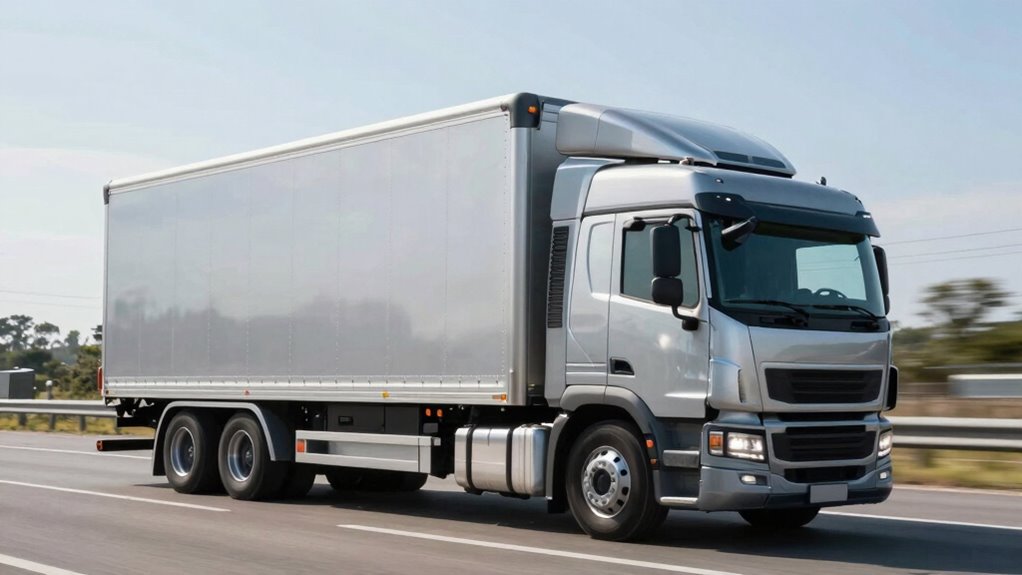
Cargo boxes can considerably reduce your vehicle’s range by increasing aerodynamic drag, which forces your engine to work harder and burns more fuel. Bulky or poorly shaped boxes create turbulence and disrupt airflow, especially if not properly installed. The faster you drive and the more turbulent the air, the worse the impact. Choosing a sleek, aerodynamic box, optimizing load placement, and driving smoothly can help reduce drag. Stick around to discover how to maximize efficiency and keep your range intact.

Get business pricing on monitors, keyboards and dev gear
- Business-only prices and quantity discounts
- Tax-exempt purchasing
- Multiple users, one account, clear invoices
Key Takeaways
- Cargo boxes increase aerodynamic drag, which reduces vehicle range by forcing the engine to work harder.
- Bulky or poorly shaped cargo boxes create turbulence, significantly impacting airflow and fuel efficiency.
- Proper aerodynamic design, including streamlined shapes and low mounting, can mitigate range loss caused by cargo boxes.
- Loading cargo evenly and keeping boxes close to the roof minimizes wind resistance and maintains better range.
- Removing the cargo box when not needed and driving at moderate speeds help preserve vehicle range.
As an affiliate, we earn on qualifying purchases.
How Do Cargo Boxes Increase Aerodynamic Drag and Hurt Your Fuel Economy?
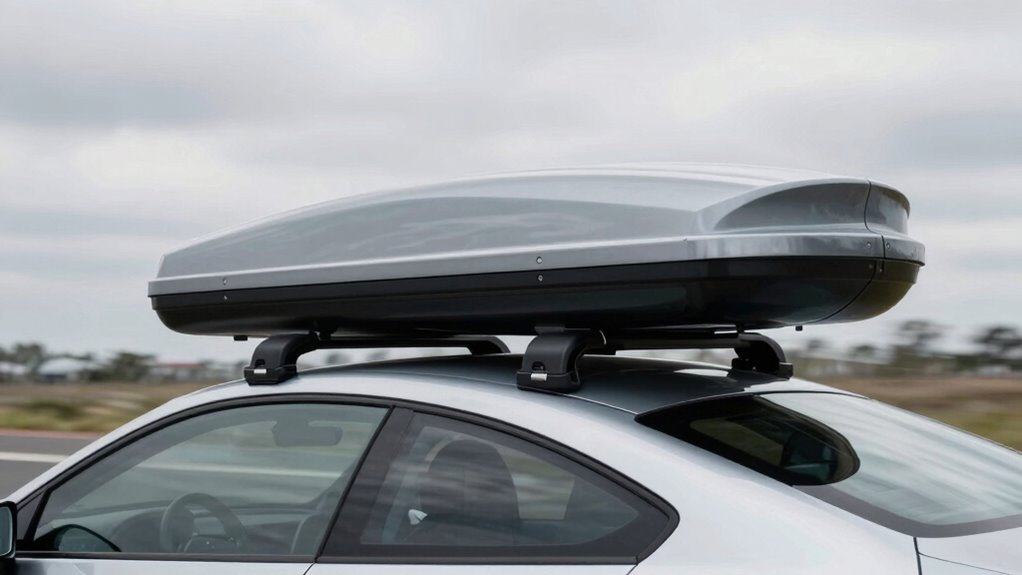
When you attach a cargo box to your vehicle, it disrupts the smooth flow of air over the surface. This added structure increases aerodynamic drag, making your engine work harder. The cargo box’s loading capacity influences how much air resistance you create; a larger or bulkier box generally results in more drag. Additionally, security features like locks and reinforced materials can add extra weight and alter the box’s shape, further impacting airflow. All these factors combine to reduce your vehicle’s fuel efficiency. The more aerodynamic disruption you cause, the more fuel you’ll burn to maintain speed. That’s why choosing a well-designed cargo box with optimized security features and appropriate loading capacity can help minimize the negative effects on your vehicle’s performance. Proper aerodynamic design of cargo accessories is crucial to maintaining your vehicle’s efficiency. Moreover, understanding the principles of airflow management can help you select accessories that cause less turbulence and drag. Incorporating streamlined shapes into cargo box designs can significantly reduce air resistance and improve overall fuel economy. Additionally, considering material weight can further influence how much extra weight your vehicle carries, impacting both aerodynamics and fuel consumption. Being aware of design considerations can help you make better choices for minimizing drag.
fuel-efficient roof cargo carrier
As an affiliate, we earn on qualifying purchases.
As an affiliate, we earn on qualifying purchases.
What Are the Main Ways Cargo Boxes Reduce Your Vehicle’s Range?

Cargo boxes primarily reduce your vehicle’s range by increasing aerodynamic drag, which forces your engine to work harder and consume more fuel. The main culprit is cargo box design; bulky, poorly shaped boxes create significant turbulence and disrupt vehicle aerodynamics. When a cargo box isn’t streamlined, it causes air to flow unevenly around your vehicle, boosting drag. This added resistance means your engine has to generate more power to maintain speed, leading to higher fuel consumption. Even small differences in cargo box shape can impact overall efficiency. Proper design minimizes airflow disruption, helping preserve your vehicle’s range. Additionally, selecting a battery inverter generator with appropriate capacity can offset some of the fuel penalties by providing efficient power. Understanding aerodynamic principles related to cargo boxes allows you to make smarter choices and reduce the fuel penalty caused by carrying extra gear on the roof. Recognizing the importance of vehicle airflow can further guide you in choosing the best cargo box for efficiency, especially when considering vehicle modifications to optimize aerodynamics. Implementing streamlined designs can make a significant difference in reducing turbulence and improving fuel economy.
As an affiliate, we earn on qualifying purchases.
How to Choose a Cargo Box That Minimizes Wind Resistance
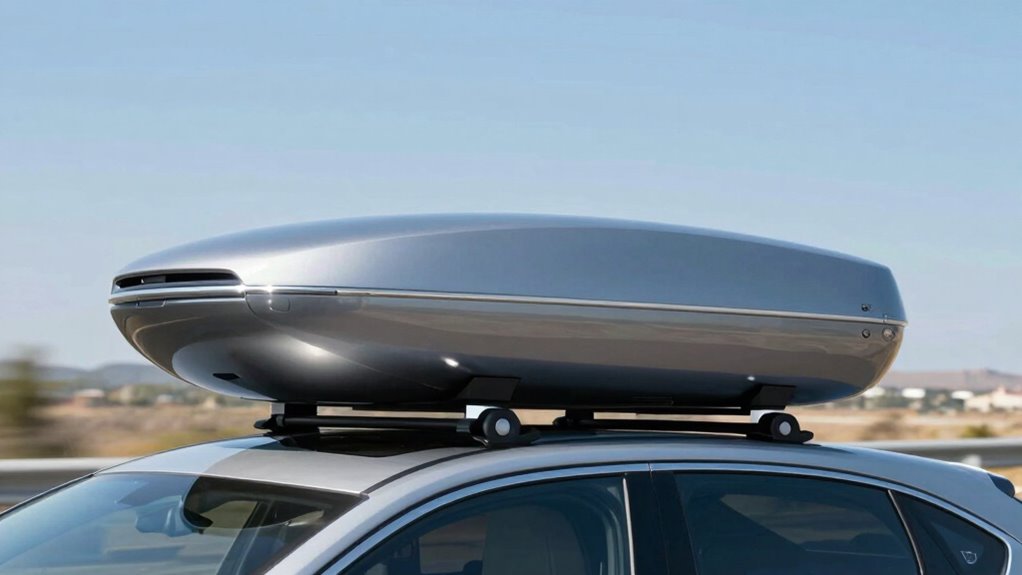
Choosing a cargo box that minimizes wind resistance starts with understanding its shape and design. Look for sleek, aerodynamic cargo box aesthetics, which help air flow smoothly over the surface, reducing drag. Avoid box shapes that are bulky or boxy, as they create unnecessary turbulence. Consider the cargo box’s storage capacity, but prioritize a size that fits your needs without being overly large, which can increase wind resistance. A well-designed, moderate-sized cargo box with rounded edges and a low profile cuts through the air more efficiently. Keep in mind that the more aerodynamic the design, the less it will impact your vehicle’s range. Selecting a cargo box that balances storage capacity with a streamlined profile helps you maximize space while minimizing wind resistance. Additionally, latest market trends indicate that manufacturers are increasingly focusing on aerodynamic features to improve fuel efficiency and electric vehicle range. Incorporating innovative design elements can further enhance aerodynamics and fuel economy. Understanding these aerodynamic principles can assist you in making an informed choice that benefits your vehicle’s performance, especially as advanced materials are being integrated into cargo box construction to reduce weight and improve airflow. For example, material innovation plays a crucial role in achieving a better balance between durability and aerodynamics.
vehicle aerodynamic drag reduction accessories
As an affiliate, we earn on qualifying purchases.
As an affiliate, we earn on qualifying purchases.
Tips for Installing Your Cargo Box to Cut Drag and Save Fuel

Properly installing your cargo box is essential for minimizing drag and maximizing fuel efficiency. During cargo box installation, ensure it’s mounted as low and close to the roof as possible to reduce wind resistance. Keep the box centered and aligned with your vehicle’s roof to prevent turbulent airflow. Check for any gaps or uneven mounting that could increase drag, and tighten all bolts securely. Remove any unnecessary accessories or attachments that may disrupt aerodynamics. Follow fuel saving tips by avoiding overloading your cargo box, which can increase wind resistance. Also, consider removing the cargo box when not in use to eliminate unnecessary drag. Proper installation guarantees your cargo box contributes minimally to air resistance, helping you save fuel during your journey.
Design Features of Cargo Boxes That Help You Save Gas
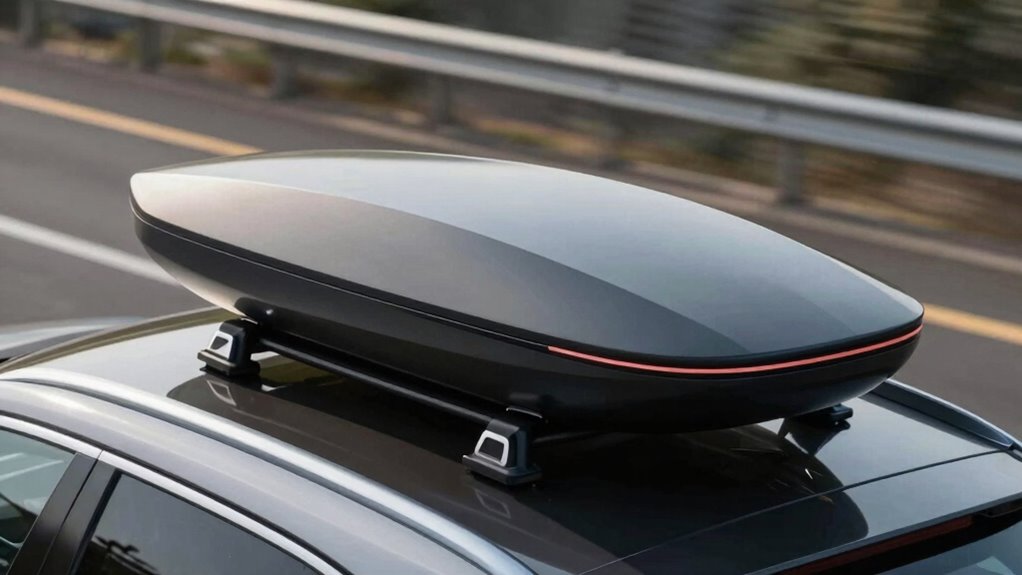
Choosing a cargo box with a streamlined shape helps reduce drag and improve fuel efficiency. Aerodynamic mounting points guarantee the box stays smooth against your vehicle’s surface, cutting wind resistance. Additionally, proper load distribution prevents uneven airflow and maintains ideal performance. Incorporating weather-resistant materials into the design also ensures durability and consistent aerodynamics in various conditions. Selecting a cargo box with aerodynamic design features further minimizes turbulence and enhances overall efficiency. Paying attention to streamlined shapes can make a significant difference in minimizing drag and conserving fuel. Considering caregiver emotional health can also help maintain overall well-being while managing travel-related stress. Understanding surface finishes and their impact on airflow can further optimize your cargo box’s aerodynamic performance.
Streamlined Shape Minimizes Drag
Have you ever noticed how a cargo box with a smooth, tapered shape cuts through the air more easily? That’s because it follows aerodynamic principles that reduce drag, a key factor in vehicle design for fuel efficiency. A streamlined shape minimizes air resistance by allowing air to flow smoothly over its surface, preventing turbulence and vortices that slow you down. When your cargo box is tapered and sleek, it aligns with the natural flow of air, helping your vehicle move more efficiently. This means less engine effort and improved gas mileage. Choosing a cargo box with a streamlined design isn’t just about looks—it’s a smart way to make your vehicle more aerodynamic and save fuel on every trip. Additionally, aerodynamic efficiency plays a crucial role in overall vehicle performance and fuel consumption. Optimizing airflow management around your cargo box can further enhance these benefits, making your vehicle even more fuel-friendly. For example, incorporating smooth surface textures can reduce air friction and improve overall aerodynamics, which in turn can enhance fuel savings during your drives. Properly designed ventilation features can also help manage airflow and reduce drag, contributing further to fuel efficiency.
Aerodynamic Mounting Points
When cargo boxes are mounted with aerodynamic design features, they help reduce air resistance and improve fuel efficiency. One key feature is the placement of mounting points, which are carefully positioned to minimize disruption to airflow. Proper mounting points ensure the cargo box sits flush with the roof, creating a smooth surface that guides airflow seamlessly over and around it. Additionally, many aerodynamic cargo boxes incorporate airflow channels or grooves that direct air smoothly past the box, further reducing turbulence. These design features prevent drag-inducing vortices and wake zones behind the box. By optimizing mounting points and incorporating airflow channels, you can notably cut down on drag, helping your vehicle maintain better fuel economy while carrying cargo.
Proper Load Distribution
Proper load distribution on your cargo box guarantees that weight is evenly spread across the roof, which helps maintain aerodynamic efficiency. When the cargo box weight is balanced, crosswind effects are minimized, reducing instability and drag. An uneven load causes the box to tilt or sway, increasing air resistance and decreasing fuel economy. Make sure to position heavier items toward the center and distribute weight evenly from front to back. This balance not only improves stability but also ensures your vehicle cuts through the air more smoothly. Proper load distribution is a simple yet effective way to counteract the negative impact of cargo boxes on range, especially when facing crosswinds. Keep your cargo evenly loaded to optimize aerodynamics and save fuel.
How Speed and Driving Habits Make Cargo Boxes’ Impact Worse
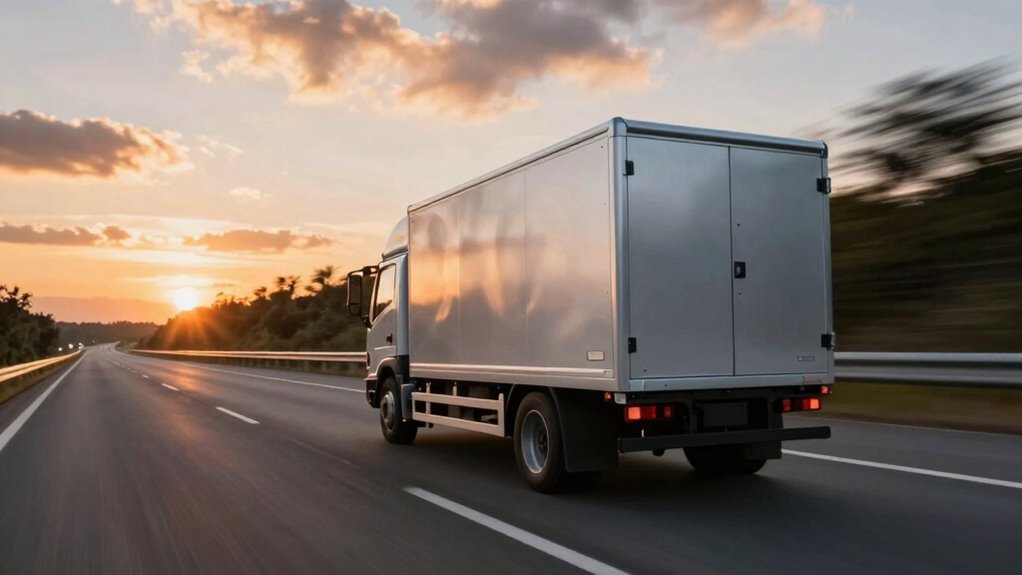
When you drive faster, the aerodynamic drag from your cargo box increases considerably, wasting fuel. Aggressive driving habits, like quick acceleration and hard braking, make this worse by creating more turbulence. Over longer trips, these effects add up, further reducing your vehicle’s range and efficiency.
Higher Speeds Increase Drag
As you increase your driving speed, the aerodynamic drag caused by cargo boxes grows considerably. A roof rack with a cargo box creates additional turbulence, which intensifies as speed rises. This increased turbulence not only reduces your vehicle’s range but also causes more wind noise, making your drive less comfortable. At higher speeds, even small changes in airflow can markedly impact fuel efficiency. The more you push your vehicle, the more drag you generate, forcing the engine to work harder. This results in higher fuel consumption and faster battery drain for electric vehicles. To minimize these effects, consider removing the cargo box when not needed or driving at lower speeds to maintain better aerodynamics and extend your range.
Aggressive Driving Amplifies Effects
Driving aggressively—such as accelerating quickly, braking suddenly, or taking sharp turns—exacerbates the aerodynamic drag caused by cargo boxes. When you drive this way, your vehicle faces increased air resistance, which further reduces fuel efficiency and range. Regular cargo box maintenance is essential to keep its aesthetics intact, but aggressive driving can also loosen or damage the box, worsening its aerodynamic profile. Poor cargo box aesthetics, like dents or loose fittings, disrupt airflow and increase drag even more. By adopting smoother driving habits—gradually accelerating and decelerating—you minimize additional aerodynamic resistance. This not only preserves your cargo box’s condition but also helps maintain better fuel economy, allowing you to get more out of each tank. Your driving style directly influences how much cargo boxes impact your vehicle’s range.
Longer Trips Worsen Impact
Extending your trips amplifies the aerodynamic penalties caused by cargo boxes, especially if you’re not mindful of your driving habits. The longer you drive, the more energy your vehicle needs to overcome increased drag from the box. High speeds worsen this effect, but your driving habits also matter. For example, poor vehicle insulation can cause you to use more energy for climate control, further straining your fuel economy. Additionally, underinflated tires increase rolling resistance, compounding the impact of the cargo box on range. Over longer trips, these factors add up, making your vehicle less efficient and increasing fuel costs. To minimize impact, maintain proper tire pressure, optimize driving speed, and consider vehicle insulation to reduce overall energy expenditure during extended journeys.
What Are the Best Cargo Box Shapes and Materials for Fuel Efficiency?
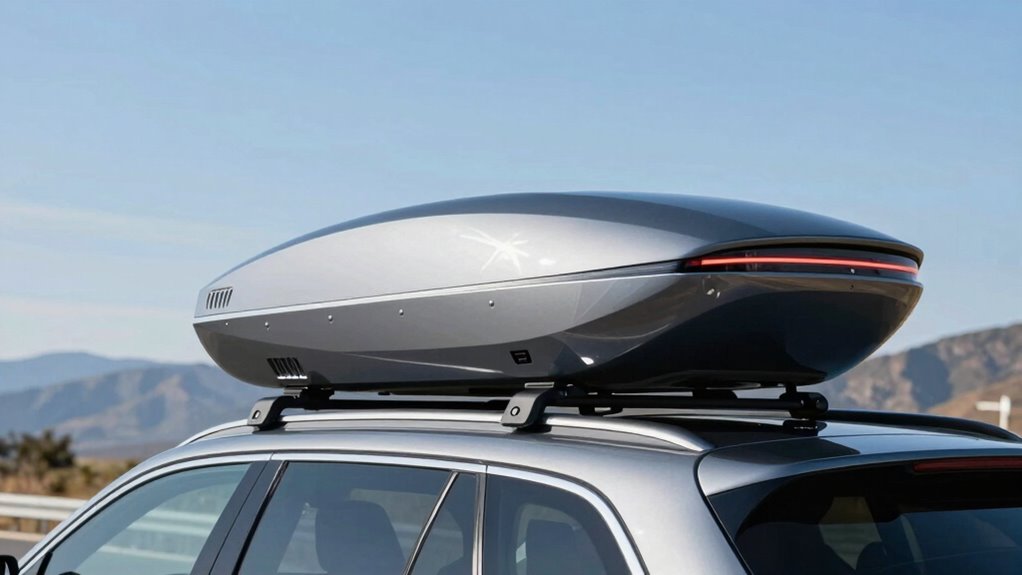
Choosing the right cargo box shape and material can considerably boost your vehicle’s fuel efficiency. Opt for aerodynamic shapes like teardrop or rounded designs that reduce drag and airflow disruption. When selecting materials, prioritize those with good material durability to withstand weather and road conditions, while also considering aesthetic appeal to match your vehicle’s look. Some top options include lightweight plastics and composites that cut weight without sacrificing strength. Keep in mind:
Choose aerodynamic, lightweight, and durable cargo boxes to boost your vehicle’s fuel efficiency and enhance its look.
- Aerodynamic shapes minimize wind resistance
- Lightweight materials improve overall efficiency
- Durable construction ensures longevity
- Aesthetic appeal enhances vehicle look
Simple Tricks to Reduce Drag When Using Cargo Boxes
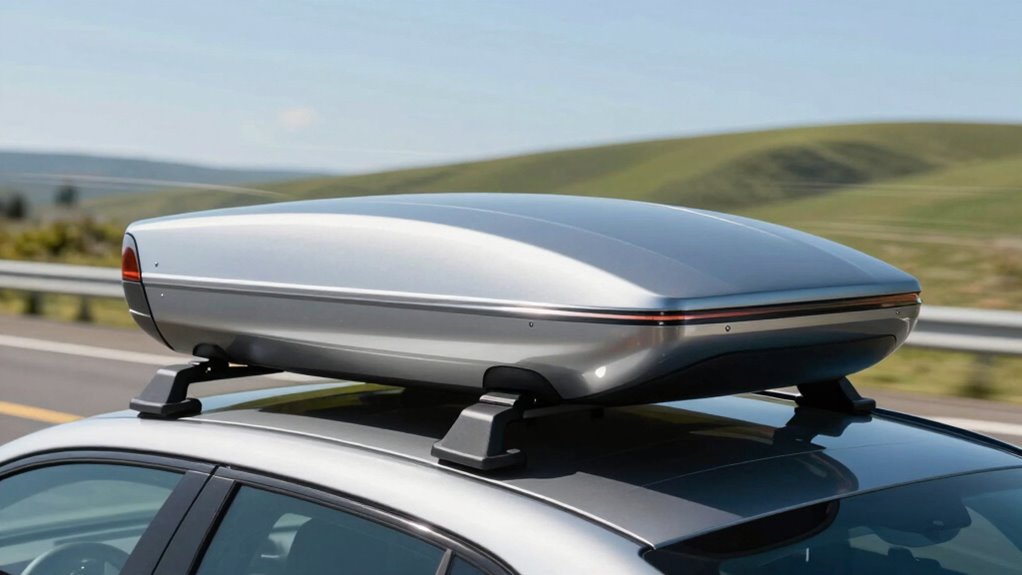
To effectively reduce drag when using cargo boxes, start by ensuring the box is properly mounted and aligned with your vehicle. Proper alignment minimizes turbulence, much like aircraft aerodynamics optimize airflow over wings. Keep the cargo box as close to the roof as possible to reduce the airflow disturbance. Use aerodynamic accessories, such as fairings or wind deflectors, to smooth airflow over the box, similar to sleek sports car design that reduces drag. Avoid oversized or poorly fitted boxes, as they create unnecessary resistance. Regularly clean and maintain the box to prevent dirt and debris buildup that can increase drag. Applying these simple tricks helps you maximize fuel efficiency by minimizing the aerodynamic drag that cargo boxes tend to cause.
Are There Better Alternatives to Cargo Boxes for Extra Storage and Range?

While cargo boxes are convenient for extra storage, they often increase aerodynamic drag and reduce fuel efficiency. Luckily, there are alternative options to maximize storage without sacrificing range. Roof rack baskets or cargo carriers with aerodynamic designs minimize wind resistance while providing ample space. Using a hitch-mounted cargo carrier can keep the load closer to the vehicle, reducing drag. Interior storage solutions like roof-mounted cargo bags or foldable storage bins avoid external impacts. Additionally, upgrading your vehicle’s interior storage or utilizing under-seat compartments can free up space without adding external obstacles.
- Aerodynamic roof-mounted cargo carriers
- Hitch-mounted storage options
- Interior storage solutions
- Foldable or collapsible storage bins
Frequently Asked Questions
How Much Fuel Can I Save by Choosing a More Aerodynamic Cargo Box?
Choosing a more aerodynamic cargo box can considerably boost your fuel savings, often reducing fuel consumption by up to 10%. The aerodynamic design minimizes drag, helping your vehicle cut through the air more efficiently. With less resistance, you’ll notice improved mileage, especially on long trips. So, investing in a sleek, aerodynamic cargo box not only protects your gear but also saves you money at the pump over time.
Do Certain Cargo Box Brands Perform Better for Fuel Efficiency?
Yes, some cargo box brands perform better for fuel efficiency because of their design and reputation. Look for brands known for aerodynamic cargo box design, which reduces drag and saves fuel. Reputable brands often invest in quality materials and innovative shapes that improve performance. By choosing a well-regarded brand with an aerodynamic design, you’ll notice better fuel economy and less impact on your vehicle’s range during long trips.
Can Removing the Cargo Box When Not in Use Improve Range Significantly?
Yes, removing your cargo box when not in use can substantially improve your vehicle’s range. Cargo box designs add aerodynamic drag, which decreases efficiency. By taking off your cargo box, you reduce this drag, saving fuel. Using alternative storage options like trunk organizers or roof racks without a box can further optimize aerodynamics. This simple step helps maximize your vehicle’s performance and fuel economy on every trip.
Are There Specific Vehicle Types That Are More Affected by Cargo Box Drag?
Yes, larger vehicles like SUVs and trucks are more affected by cargo box drag because of their size and aerodynamics. The added cargo weight and shape create more air resistance, reducing your range. Smaller vehicles experience less impact, but removing a cargo box still benefits fuel efficiency. You’ll notice the biggest gains when carrying a bulky or heavy cargo box on larger vehicles, especially during long trips.
How Does Weather Impact the Aerodynamics of Cargo Boxes During Driving?
They say “a storm in a teacup,” but weather can seriously impact your cargo box’s aerodynamics. Wind resistance increases during windy conditions, making your roof rack design more essential. Rain or snow can add weight and disrupt airflow, reducing fuel efficiency. When you drive in bad weather, expect more drag and decreased range. To minimize this, choose a sleek, aerodynamic cargo box and keep an eye on weather forecasts for better planning.
Conclusion
To maximize your fuel efficiency, you need to contemplate your cargo box’s design, installation, and your driving habits. Minimize wind resistance by choosing aerodynamic shapes, install your box correctly, and drive at moderate speeds. By being mindful of these factors and exploring better storage options, you can reduce drag, save fuel, and enjoy a smoother ride. Ultimately, smart choices and mindful habits keep your vehicle efficient and your journeys more economical.
Halloween Picks
halloween
As an affiliate, we earn on qualifying purchases.