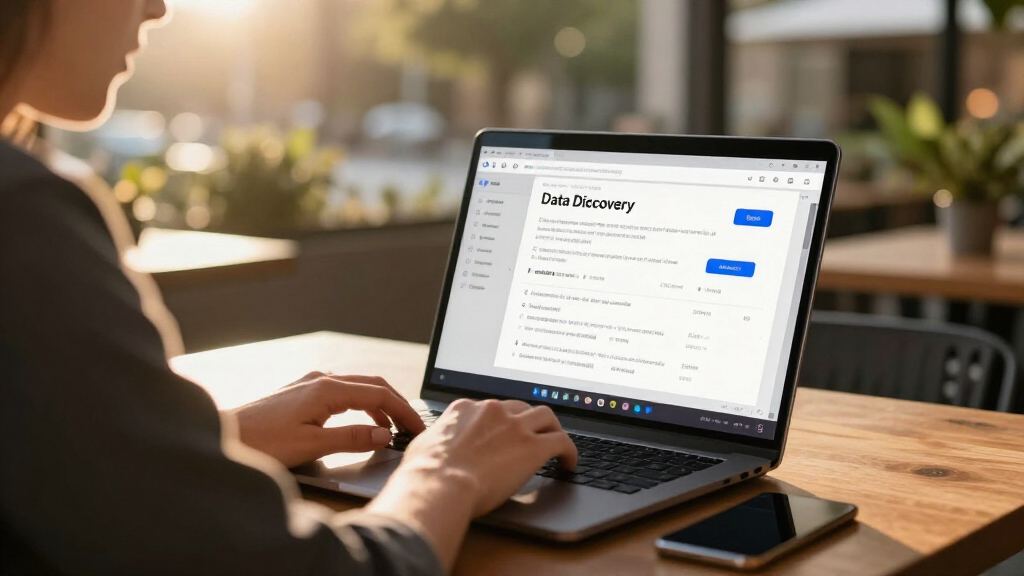

🔍 Read the full analysis: Making The World’s Data More Discoverable With AI on ThorstenMeyerAI.com

Get business pricing on monitors, keyboards and dev gear
- Business-only prices and quantity discounts
- Tax-exempt purchasing
- Multiple users, one account, clear invoices
TL;DR
The United Nations launched the UN System Data Commons, an open-source platform that unifies UN statistics into an AI-searchable knowledge graph. It aims to include 80% of UN datasets by 2027, enabling easier access and analysis for researchers and policymakers.
The United Nations has launched the UN System Data Commons, an open-source platform that consolidates data from across UN entities into a single, AI-searchable knowledge graph. Built on Google’s Data Commons and supported by Google.org funding, the platform aims to make UN statistics more accessible and easier to analyze, addressing long-standing issues of data silos and incompatible formats that hinder cross-agency insights. For more on making global data easier to explore, see this detailed overview.
The platform, available now at data.un.org, allows users to pose natural-language questions such as how access to clean water impacts school attendance or how life expectancy varies across regions, as discussed in the original analysis. It automatically integrates metrics, timelines, and geographic boundaries, enabling datasets to ‘speak the same language,’ according to Google AI.
Key features include an Explore tab for filtering by location or themes like health and education, and a Blog section that translates complex data trends into readable reports, exemplified by UNICEF data on child poverty reduction. The platform also introduces AI assistant capabilities based on open standards, including the Model Context Protocol (MCP), allowing AI agents to fetch authoritative data, connect datasets across domains, and generate visualizations or draft reports autonomously.
While the UN emphasizes that all datasets are validated by its statisticians and technical experts, the platform’s reliance on AI-generated outputs raises questions about the accuracy and interpretation of data, as highlighted in the original analysis.
Transforming Global Data Access and Analysis
This development represents a significant step toward democratizing access to high-quality international data. By enabling natural-language queries and AI-driven data integration, the platform reduces reliance on specialized data skills, potentially accelerating research, policymaking, and reporting on critical issues such as health, poverty, and education. The move toward AI agents as primary data interfaces could reshape how stakeholders interact with UN statistics, making data more timely, comprehensive, and actionable.
However, the increased reliance on AI-generated insights underscores the importance of data validation and source transparency. Ensuring that users review underlying datasets remains crucial to prevent misinterpretation or misuse of statistics, especially in high-stakes contexts like global health or climate policy.
As an affiliate, we earn on qualifying purchases.
Addressing Long-Standing Data Silos in the UN System
The UN system produces some of the world’s highest-integrity statistics on issues like health, poverty, and education. However, these datasets have historically been stored in incompatible formats across different agencies, making cross-cutting analyses slow and labor-intensive. For example, linking water access data with school attendance metrics required manual data reconciliation, often taking months.
The new platform builds on Google’s Data Commons, which aggregates public datasets into a unified knowledge graph, applying this infrastructure to UN statistics with funding from Google.org to the UN Foundation. This approach aims to streamline data integration, improve consistency, and facilitate real-time analysis, addressing a critical barrier to effective global policymaking.
While the platform is currently in early deployment, its success depends on the inclusion of datasets from more UN entities and the validation of data accuracy and currency. The goal is to reach 80% coverage of UN statistical datasets by 2027, but interim milestones and the scope of initial datasets remain to be clarified.
“Connecting datasets previously required months of manual work; now, they speak the same language.”
— Google AI
data visualization tools for research
As an affiliate, we earn on qualifying purchases.
As an affiliate, we earn on qualifying purchases.
Unverified Aspects and Data Coverage Challenges
As of now, independent testing of the platform’s natural-language accuracy, the reliability of AI-fetched figures, and the completeness of initial datasets has not been publicly reported. It remains unclear which UN entities’ datasets are included at launch, how current the data is, and how conflicting figures between agencies are managed. The goal of 80% coverage by 2027 is a target, not yet a confirmed milestone, and no interim benchmarks have been announced.
Additionally, the reliance on AI agents raises questions about data validation, source transparency, and potential biases in automated data retrieval and visualization. How the platform will handle updates, corrections, or disagreements between UN agencies is still to be clarified.
As an affiliate, we earn on qualifying purchases.
Next Steps Toward Broader Adoption and Validation
Over the next year, the UN system plans to expand dataset inclusion, aiming to reach 80% coverage by 2027. The platform will undergo further testing and validation, with potential updates to improve natural-language understanding, data accuracy, and user interface. Stakeholders will watch for signs of adoption, such as citations by UN agencies or external researchers, integration of MCP-based AI agents from major providers, and official updates on dataset scope and validation procedures.
Public feedback and independent assessments will be critical to ensuring the platform’s effectiveness and trustworthiness. The UN is expected to publish more detailed information on dataset coverage, validation processes, and platform updates as development progresses.
As an affiliate, we earn on qualifying purchases.
Key Questions
How comprehensive is the UN System Data Commons at launch?
The platform currently includes datasets from select UN entities, with the goal of reaching 80% coverage by 2027. The exact datasets and their currency are still being expanded and validated.
Can I trust the data provided by the AI search?
All datasets are validated by UN statisticians and technical experts. However, users are advised to review underlying sources before citing figures, especially as AI-generated outputs may sometimes oversimplify or misinterpret data.
Will the platform include datasets on issues like climate change or migration?
The platform aims to include a broad range of topics, including health, education, poverty, climate, and migration, with ongoing efforts to expand dataset coverage across UN agencies.
How will the UN ensure data accuracy and prevent misinformation?
The UN emphasizes validation by its statisticians, and the platform is designed to allow users to review source datasets before citing figures. Ongoing validation and updates are planned to maintain data integrity.
When will the platform be fully operational with 80% coverage?
The target is to reach 80% coverage by 2027, but the timeline depends on dataset inclusion, validation, and technical development milestones over the coming year.
Primary source: Google AI · via ThorstenMeyerAI.com
Fall Picks
fall essentials
As an affiliate, we earn on qualifying purchases.