🔍 Read the full analysis: Could Local Protests Reshape Europe’s AI Data Center Expansion? on ThorstenMeyerAI.com

Get business pricing on monitors, keyboards and dev gear
- Business-only prices and quantity discounts
- Tax-exempt purchasing
- Multiple users, one account, clear invoices
TL;DR
Police said 218 people were arrested on suspicion of trespassing after protesters entered a data center construction site in Amsterdam-West on Nov. 6; all have since been released. The action was part of a Europe-wide campaign calling for a halt to large data center projects, amid disputes over electricity, water, jobs and local control.
Police said 218 people were arrested on suspicion of trespassing after protesters entered a data center construction site in Amsterdam-West on November 6, climbed a crane and hung banners; all had been released by the following day. The action, which took place at a facility being built by developer Pure DC for Microsoft, was part of a broader campaign opposing large data centers in Europe, where concerns about electricity demand and local resources are colliding with plans to expand computing capacity.
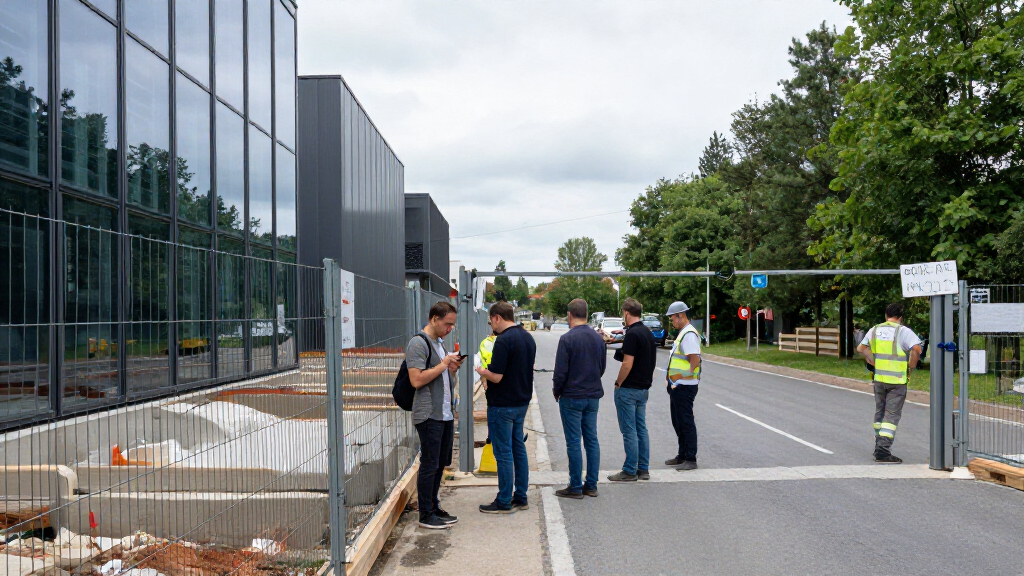
Protesters entered the construction site in Westpoort, Amsterdam’s port area, after a climate demonstration had been planned nearby. Police said demonstrators cut open a fence. Some climbed a crane and the building’s roof, lit flares and displayed banners opposing AI and Microsoft. Police gave those on the site 10 minutes to leave before riot police cleared the area, according to reporting by Dutch outlets AT5 and NOS. One officer was slightly injured.
The number of people at the site is disputed. A Reuters witness saw around 100 people there, while organisers said several hundred took part; a campaigner quoted by Bloomberg put the total at about 400. Police first estimated 150 to 200 arrests, then a police spokesperson told Dutch news agency ANP the final count was 218. The arrests were on suspicion of trespassing, and all those arrested were released. The site owner has filed a complaint alleging trespassing, vandalism and burglary. Those allegations have not been adjudicated.
Pure DC, the British developer, says the project will comprise three 85-metre towers with 78 megawatts of data hall capacity, backed by an on-site substation and an investment of more than €1 billion. Microsoft is the tenant, not the builder. Pure DC says cooling will use non-potable water from the port’s industrial supply and that the design allows for waste-heat export; an exchange arrangement with Vattenfall is still being planned. The company also projects more than 80 permanent jobs after construction, and a peak construction workforce of 1,100 in 2027.
Infographic 01 · What happened, and what is only claimed
One day at a data center construction site
The police account as reported by Dutch media, checked against independent reporting. What we could not confirm stays out.
People arrested on suspicion of trespassing on November 6, 2026, all released by the next day, according to a police spokesperson quoted by ANP.
How many were there?
The sources do not agree; we give the range
- Before noonGroup stopped on the way with an angle grinder and climbing gearPolice: "resistance and with it confrontations"✓ Police account
- Around noonFence cut open; people on the site, on a crane and on the roofReuters witness: around 100 on the site; organisers: several hundred✓ Confirmed
- Afternoon10 minutes to leave, then riot police clear the siteOne officer slightly injured✓ Confirmed
- EveningPolice estimate: 150 to 200 arrests for suspected trespassing✓ Confirmed
- SaturdayFinal count 218, all releasedComplaint by the site owner for trespassing, vandalism and burglary: allegations, no ruling! Alleged
- Online claimSite attacked earlier with balloons of an acidic mixtureOne report only, no police confirmation✕ Left out
Sources: police statements via ANP, NOS and AT5 / NH Nieuws · Reuters · AP.
Powered by Thorsten Meyer AI
Amsterdam’s Grid and Resource Dispute
The protest brings a local planning conflict into a broader European debate about who bears the costs of expanding digital infrastructure. Data centers power cloud services and AI systems, but their demand for electricity can compete with other needs for limited grid capacity. Residents and campaigners also raise concerns about water use, climate targets, energy bills and whether projects create enough lasting local employment to justify their footprint.
The European Commission, citing the International Energy Agency, says data centers in the EU used 70 terawatt-hours of electricity in 2024 and that demand could reach 115 TWh by 2030. That projection gives the debate urgency, but it does not establish how much electricity the Amsterdam project itself will use in practice, or how its demand will affect household bills or other users. Pure DC says the site will have an efficient design and use industrial rather than drinking water; those are company statements about the project, not independent findings about its wider effects.
For technology companies, developers and local authorities, protests can add scrutiny and potential delays to projects at a time when European governments and businesses also want more computing capacity within the region. Microsoft has pledged to increase its European data center capacity by 40%. Whether local opposition changes permitting or construction plans remains unknown, but the Amsterdam action shows that these projects can become visible political disputes rather than routine building developments.
Popular right now

Breville BES870XL Barista Express Espresso Machine

Sony WH-1000XM4 Wireless Noise Cancelling Headphones, Black

Hisense 40-Inch Class QD4SR Series Hi-QLED FHD Smart Roku TV (2026 Model)
As an affiliate, we earn on qualifying purchases.
A Europe-Wide Campaign Takes Shape
The Amsterdam action was linked to Stop Dirty Data Centres, a coalition calling for a moratorium on large data centers. Accounts of the campaign’s reach differ: Reuters reported actions in 16 countries, while organisers told the Associated Press and Agence France-Presse that actions took place in 15. The coalition’s website lists 85 events, including talks and walks, so that figure does not mean 85 site occupations or protests.
The local debate also follows limits on new construction. Amsterdam says it has permitted no new large data centers since June 2025. In Ireland, data centers accounted for 22% of metered electricity use in 2024, according to the source material. These examples illustrate why grid capacity is a central concern, but energy use varies by country and site; the figures should not be read as a direct measure of the Amsterdam facility.
The development is not simply a Microsoft construction project. Pure DC is building the Amsterdam facility, while Microsoft is set to lease it. That distinction matters when assigning responsibility for construction, design and operation. In June 2026, the same protest group had already blocked the site, according to Business Insider, suggesting that the latest action followed an existing local dispute.
“We understand that people feel strongly about the project, and we respect their right to express those views peacefully. However, we do not condone any actions that are unlawful or that put people’s safety at risk.”
— Microsoft, in a statement to media outlets
Project Impacts Still in Question
The arrest count and release of those detained were reported by police, but the final number of people who entered the site is not settled. Crowd estimates vary by source, and the number of arrests should not be treated as a count of everyone present. The site owner’s complaints are allegations; no court ruling is reported in the source material.
It is also unclear whether the protest will affect the project’s schedule, permits or financing. Pure DC’s figures on jobs, tax revenues, water supply and energy efficiency are company projections or design claims; the source material does not provide independent verification or a completed operating record. The planned waste-heat exchange is not yet settled, and the source material does not establish the project’s actual electricity use, its eventual water consumption, or its effect on local grid access and prices.
The campaign’s country count also varies between reports, and its event list includes different kinds of activity. The available accounts establish a coordinated campaign, but do not show that protests have changed policy across Europe or that governments have adopted the coalition’s requested moratorium.
Permits, Dialogue and Construction
The immediate next steps are likely to be discussions among the developer, Microsoft, local authorities and people concerned about the site, alongside any police investigation into the reported damage and the site owner’s complaints. The source material does not give a court date, a decision on charges or a revised construction timetable.
For the project, the next practical milestones include completing construction and resolving the planned waste-heat arrangement with Vattenfall. Pure DC’s published schedule identifies 2027 as the year of peak construction employment, but does not state whether the protest has changed that plan. City and national decisions on grid connections and data center rules will also shape what can be built, although no new policy decision is reported here.
The broader campaign may continue to bring local concerns into planning debates, but whether that produces a moratorium, new restrictions or project changes remains open. For now, the confirmed development is a high-profile site protest and 218 arrests, not a suspension of the Amsterdam project or a change in European policy.
Key Questions
What happened at the Amsterdam data center site?
On November 6, protesters entered a Pure DC construction site in Amsterdam-West intended for Microsoft, climbed a crane and the building’s roof, and displayed banners. Riot police later cleared the site.
How many people were arrested?
Police gave a final count of 218 arrests on suspicion of trespassing. Police said all those arrested had been released by November 7. Estimates of the crowd at the site differ.
Who is building the facility?
Pure DC is the developer, while Microsoft is the planned tenant. Pure DC says the project will have 78 MW of data hall capacity in three towers.
Why are campaigners opposing data centers?
The campaign cites concerns about electricity demand, grid access, water, climate goals, energy bills and local jobs. These are campaigners’ stated concerns; the available material does not establish the Amsterdam project’s specific effects on household bills or the local grid.
Has the protest stopped construction?
No suspension or change to the construction schedule is confirmed in the source material. Whether the protest will affect permits, costs or timing remains unclear.
Source: ThorstenMeyerAI.com