
The best prefab EV charging systems pair a ready-made charger with the installation approach your home can support. My best overall pick is the Emporia Pro Level 2 EV Charger, which combines 48-amp charging with PowerSmart energy management; the ChargePoint HomeFlex stands out for a familiar connected home-charging setup, while the Autel MaxiCharger 80A suits buyers with the electrical capacity for higher output. The main tradeoffs are charging speed versus circuit capacity, hardwired installation versus a plug-in unit, and a single-port charger versus load management or dual-port charging. This roundup also includes portable options, compact designs, and energy management devices that solve different installation problems. Read on for the full comparison and guidance on choosing a system that fits your panel, vehicle, and daily charging routine.

Get business pricing on monitors, keyboards and dev gear
- Business-only prices and quantity discounts
- Tax-exempt purchasing
- Multiple users, one account, clear invoices
Key Takeaways
- Emporia Pro stands out as the best overall balance: its 48-amp output and PowerSmart energy management address both charging capability and household electrical limits.
- Higher amperage is not automatically a better fit: the Autel 80A unit calls for an electrical setup that can support its output, while a 40-amp or 48-amp model may better match many homes.
- Energy management devices solve a different problem from chargers: the two EVEMS240-100 listings are relevant when panel capacity is the obstacle, but they are not substitutes for a charging station.
- Plug-in and portable options trade installation flexibility for circuit constraints: NEMA 14-50 models can suit existing outlets, but buyers still need to verify circuit ratings and installation condition.
- Households with two EVs should weigh shared charging directly: the Enphase dual-port unit offers a two-vehicle format, while most other picks focus on one vehicle at a time.
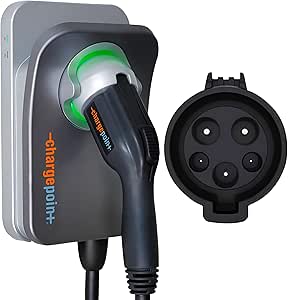


| prefab EV charging system | Cable length | Installation |
|---|---|---|
| ChargePoint HomeFlex Level 2 J | 23 ft | Indoor or outdoor; electrician installation |
| EVEMS240-100 EV Energy Managem | — | Qualified electrician recommended |
| DEWALT Level 2 Compact EV Char | 20 ft; UL-certified | — |
| Level 2 EV Charger | 25 ft | — |
| Emporia Pro Level 2 EV Charger | 25 ft | NEMA 14-50 plug or hardwired |
| IYILO Level 2 EV Charger | 25 ft | Hardwired; 60A breaker required for 48A charging |
| ApexCharger MACH 2 48-Amp Hard | 30 ft | Hardwired |
| DEWALT Level 2 Electric Vehicl | 25 ft | — |
| Autel MaxiCharger 80A Level 2 | 25 ft | Hardwired; professional electrician installation suggested |
| Level 2 EV Charger 50 Amp 240V | 25 ft | Hardwired |
| Enphase HCS-D40 Dual-Port Leve | Two 25-foot cables | 240V hardwired, wall-mounted |
| EVEMS240-100 240V Weatherproof | — | — |
| bokman Level 1 and Level 2 EV | — | — |
| ELEGRP Level 2 Portable EV Cha | — | — |
| Autel MaxiCharger AC Home Leve | 25 feet | Hardwired |
More Details on Our Top Picks
ChargePoint HomeFlex Level 2 J1772 EV Charger, Hardwired, 50A
The ChargePoint HomeFlex is my best overall pick for buyers who want a hardwired system with adjustable output and a long cable. Its 16–50A range gives an electrician room to match charging to the home’s circuit, while the 23-foot cold-resistant cable offers more reach than the DEWALT Compact’s 20-foot lead. Wi-Fi app controls add scheduling and charging information, though they make a reliable network more relevant than it is with a simpler charger. This is a complete charging unit, unlike the EVEMS240-100, which manages electrical capacity but requires a separate charger. The tradeoff is installation: HomeFlex must be hardwired by an electrician, and Tesla drivers need an adapter. I’d choose it for a flexible, established home setup, not for plug-in convenience.
Pros:- Adjustable 16–50A output can be matched to the home’s electrical circuit.
- 23-foot cold-resistant cable offers useful reach across garages and driveways.
- Wi-Fi app provides charging controls and information.
- UL-certified and Energy Star qualified.
Cons:- Requires hardwired installation by an electrician.
- Some features and troubleshooting depend on Wi-Fi.
- Tesla vehicles require a separate adapter.
Best for: EV owners who want a hardwired charger with adjustable amperage, app controls, and extra cable reach for an indoor or outdoor parking spot.
Not ideal for: Renters or drivers who need a plug-in charger, and Tesla owners who do not want to source a separate adapter.
- Charger type:Level 2, hardwired
- Connector:J1772
- Output:240 V AC; adjustable 16–50 A
- Cable length:23 ft
- Charging speed:Up to 45 mi/hr; listed elsewhere as up to 37 mi/hr
- Connectivity:Wi-Fi and ChargePoint mobile app
- Installation:Indoor or outdoor; electrician installation
- Certifications:UL-certified; Energy Star
- Warranty:3 years
Our verdict“Choose HomeFlex for a feature-rich hardwired setup with a long cable and adjustable output, provided professional installation suits your plans.”
EVEMS240-100 EV Energy Management System for 240V EV Charging
The EVEMS240-100 is not a charger; it is a capacity-management device for homeowners whose electrical service may not support a new EV load alongside existing appliances. It monitors 60A–100A services and can manage compatible charging up to 48A, potentially avoiding a service or panel upgrade. That makes it a different kind of prefab solution from the ChargePoint HomeFlex, which supplies the charging hardware but does not replace this device’s load-management role. The catch is that you must supply a compatible charger, and an electrician needs to assess the home’s loads and install the system. Its compatibility list includes ChargePoint, Autel, Grizzl-e, and Tesla chargers, but buyers should confirm their specific setup with an installer. I’d put it on the shortlist when electrical capacity—not charger features—is the main obstacle.
Pros:- Adjusts managed charging to available electrical capacity.
- Supports charging rates up to 48A and 11.5 kW.
- Compact 4 × 6 × 8-inch enclosure can fit near an electrical panel.
- Listed certifications and compliance include CEC, ETL, NEC, and SAE.
Cons:- EV charger must be purchased separately.
- A qualified electrician is recommended for load calculations and installation.
Best for: Homeowners with a 60A–100A electrical service who want managed EV charging and are trying to avoid a panel or service upgrade.
Not ideal for: Buyers seeking a ready-to-use charging station, since this device does not include an EV charger.
- Model:EVEMS240-100
- Input and output voltage:240 V
- Supported service size:60A–100A
- Supported charging rates:16A, 20/24A, 30/32A, 40A, and 48A
- Maximum charging output:11.5 kW
- Dimensions:4 × 6 × 8 in
- Compatible devices:EV chargers including Autel, Grizzl-e, Tesla, and ChargePoint
- Installation:Qualified electrician recommended
- Included EV charger:No
Our verdict“Choose the EVEMS240-100 when home electrical capacity is the limiting factor and you already plan to pair it with a compatible charger.”
DEWALT Level 2 Compact EV Charger, 48 A, 240 V, 20 ft Cable
For a crowded garage or narrow installation area, the DEWALT Level 2 Compact pairs a smaller-format wall unit with up to 48A charging. Its 4.6-inch height and 10.7-pound weight make it more space-conscious than the ChargePoint HomeFlex, while still offering a useful 20-foot cable and indoor/outdoor installation. The adjustable 12–48A range helps an installer set output to the available circuit; Bluetooth and Wi-Fi, plus an LCD, give owners more ways to check and manage charging than the simpler EVEMS240-100 device offers. The tradeoff is cable reach: HomeFlex and Emporia Pro each provide 25 or 23 feet, so they may suit parking spots farther from the wall better. It also needs hardwiring, and Tesla drivers must buy an adapter separately.
Pros:- Compact 10.7-pound wall-mounted design suits limited space.
- Adjustable 12–48A current supports different circuit capacities.
- Bluetooth, Wi-Fi, and LCD display provide several ways to manage or check charging.
- UL-certified cable and indoor/outdoor-rated design.
Cons:- Hardwired installation is required, with professional installation recommended.
- 20-foot cable is shorter than the ChargePoint HomeFlex and Emporia Pro cables.
- Tesla adapter is sold separately.
Best for: Owners with tight garage or driveway wall space who want a compact hardwired J1772 charger with adjustable output and app controls.
Not ideal for: Drivers whose vehicle parks far from the mounting point or who need a plug-in installation or included Tesla adapter.
- Charger type:Hardwired Level 2
- Maximum current:48 A
- Adjustable current:12–48 A
- Voltage and maximum power:240 V; 11.5 kW
- Charging rate:Up to 46 miles per hour
- Cable length:20 ft; UL-certified
- Connectivity and display:Bluetooth, Wi-Fi, and LCD screen
- Dimensions and weight:4.6 in H × 12.6 in L × 7.4 in W; 10.7 lb
- Warranty:3-year limited warranty
Our verdict“Pick the DEWALT Compact when wall space is tight and a 20-foot cable reaches your parking spot.”
Level 2 EV Charger, 40 Amp 240V NEMA 14-50 J1772 Charging Station
The AIXINE 40A stands apart from the hardwired ChargePoint HomeFlex and DEWALT Compact by using a NEMA 14-50 plug, so it can suit a suitable existing outlet rather than requiring a hardwired connection. Its 25-foot cable gives it more reach than either of those models, and the IP66 enclosure and -40°F to 131°F operating range speak to exposed parking locations. It tops out at 40A and 9.6 kW, below the 48A DEWALT Compact and the 48A capacity supported by the EVEMS240-100, so it is not the pick for buyers chasing the highest charging output. A dedicated 50A breaker is required, and the listed dynamic load-balancing features may need an additional energy monitor. I’d choose it for a plug-in outdoor setup after checking the outlet and circuit.
Pros:- NEMA 14-50 plug avoids hardwiring when a suitable outlet is already available.
- 25-foot cable reaches farther than the DEWALT Compact’s 20-foot cable.
- IP66-rated enclosure and broad listed operating-temperature range suit outdoor locations.
- Adjustable current and app controls include scheduling and load-balancing features.
Cons:- Maximum output is 40A and 9.6 kW, below the 48A DEWALT Compact.
- Requires a dedicated 50A circuit breaker.
- Full load-balancing functionality may require an additional energy monitor.
Best for: EV owners with a suitable NEMA 14-50 outlet who need a long cable and a weather-resistant charger for an outdoor parking area.
Not ideal for: Buyers seeking 48A charging, an included Tesla adapter, or load balancing without checking whether extra monitoring hardware is needed.
- Manufacturer and model:AIXINE; UA-US-AC10J-14-W
- Connector and plug:SAE J1772; NEMA 14-50
- Maximum current and power:40 A; 9.6 kW
- Cable length:25 ft
- Ingress protection:IP66
- Operating temperature:-40°F to 131°F
- Certifications:ETL, FCC, UL, Energy Star
- Weight:16.72 lb
Our verdict“Choose AIXINE for plug-in convenience and outdoor protection when 40A output meets your needs and the electrical circuit is ready.”
Emporia Pro Level 2 EV Charger with PowerSmart, 48A, J1772 Connector, 25 ft Cable
The Emporia Pro makes the most sense for buyers who want charging and household energy monitoring in one coordinated setup. Its included Vue 3 Energy Monitor works with PowerSmart to adjust charging based on available home capacity, a more integrated approach than buying the charger and the separate EVEMS240-100 device as distinct components. At up to 48A, it also offers more output headroom than the 40A AIXINE, while its 25-foot cable keeps installation placement flexible. Unlike ChargePoint HomeFlex and DEWALT Compact, Emporia supports either a NEMA 14-50 plug or hardwiring, giving buyers more installation paths. That flexibility still depends on having the appropriate outlet or an electrician, and Tesla drivers need an adapter. I’d shortlist it when coordinated load management and whole-home energy visibility matter more than a simple charger-only setup.
Pros:- PowerSmart adjusts charging in response to available home electrical capacity.
- Includes a Vue 3 whole-home energy monitor.
- Supports plug-in or hardwired installation.
- 25-foot cable and indoor/outdoor use provide placement flexibility.
Cons:- Requires a suitable NEMA 14-50 outlet or hardwired installation.
- Tesla vehicles need a separate adapter.
- The energy-management setup is more involved than a charger without monitoring.
Best for: Homeowners who want up to 48A charging alongside whole-home energy monitoring and automatic adjustment to available electrical capacity.
Not ideal for: Buyers who want a basic charger without an energy-monitoring system, or Tesla owners who expect an adapter in the box.
- Charging level and voltage:Level 2; 240 V AC
- Connector:SAE J1772
- Maximum charging current:48 A
- Cable length:25 ft
- Installation:NEMA 14-50 plug or hardwired
- Connectivity:Wi-Fi and Bluetooth
- Energy monitor:Emporia Vue 3 included
- Vehicle compatibility:North American J1772 EVs; Tesla requires an adapter
- Certification and placement:UL-certified; indoor and outdoor use
Our verdict“Choose Emporia Pro if you want a 48A-capable charger with included whole-home monitoring and flexible installation options.”
IYILO Level 2 EV Charger, 48A, 11.5 kW, 240V, J1772
The IYILO is a strong fit for homeowners who want to tune charging current to their electrical setup rather than commit to one fixed rate. Its range from 6A to 48A supports gentler charging on a limited circuit, with up to 11.5 kW available when hardwired with the specified 60A breaker. That flexibility gives it a different appeal from the DEWALT DXPAEV040, which tops out at 40A but uses a plug-in NEMA 14-50 setup. I also like the IYILO’s connector temperature shutdown, RFID access, and power-sharing controls for a managed home installation. The tradeoffs are a licensed-electrician requirement for full output and 2.4 GHz-only Wi-Fi. Tesla drivers need a separate NACS adapter, and buyers who want a plug-in installation should choose another model.
Pros:- Adjustable current from 6A to 48A helps match charging to available electrical capacity.
- Temperature monitoring can stop charging if the connector overheats.
- App supports scheduling, energy tracking, RFID, and power sharing.
- 25-foot cable and NEMA 4 enclosure suit a range of home installations.
Cons:- Full 48A output requires hardwiring, a 60A breaker, and a licensed electrician.
- Wi-Fi is limited to 2.4 GHz.
- Tesla vehicles need a separate NACS adapter.
Best for: Homeowners who want adjustable charging current, app scheduling, and RFID access in a hardwired J1772 system.
Not ideal for: Renters or anyone seeking a plug-in charger, plus Tesla owners who do not want to source a separate NACS adapter.
- Maximum output:48A; 11.5 kW
- Voltage:240V
- Connector:SAE J1772
- Cable length:25 ft
- Installation:Hardwired; 60A breaker required for 48A charging
- Current adjustment:6A to 48A in 1A increments
- Connectivity:2.4 GHz Wi-Fi
- Enclosure and warranty:NEMA 4; 3 years
Our verdict“Choose the IYILO if current adjustment and power-sharing features matter more than plug-in convenience or built-in Tesla compatibility.”
ApexCharger MACH 2 48-Amp Hardwired Level 2 EV Charger with J1772 Connector and NACS Adapter
The MACH 2 stands out for households with different connector needs: it includes J1772 and NACS connectors, so buyers do not have to treat Tesla compatibility as an adapter purchase, as they would with the IYILO or Autel MaxiCharger 80A. Its 48A, 11.5 kW output is a capable home-charging level, while the 30-foot cable offers more reach than the 25-foot cords on those alternatives. Wi-Fi, Bluetooth, RFID cards, and a 4.75-inch display give users several ways to access and monitor a session. For prefab installation, the included mounting and cable-management features are practical additions, and the five-year warranty is longer than the IYILO’s. The main compromise is that this remains a single-port hardwired unit; it cannot charge two vehicles at once, and installation still calls for electrical work.
Pros:- Includes J1772 and NACS connectors for broader vehicle compatibility.
- 30-foot cable reaches farther than the 25-foot cables on several alternatives.
- Wi-Fi, Bluetooth, app control, RFID cards, and an LED display provide varied controls.
- Five-year warranty and included cable-management features support a fixed home installation.
Cons:- Hardwired installation requires electrical work.
- One port means only one vehicle can charge at a time.
Best for: Households with both J1772 and NACS vehicles that want one hardwired charger with an extra-long cable and multiple access options.
Not ideal for: Drivers who need two vehicles to charge simultaneously or buyers who want a plug-in installation.
- Maximum output:48A; 11.5 kW
- Voltage:240V
- Connectors:J1772 and NACS
- Cable length:30 ft
- Installation:Hardwired
- Connectivity:Wi-Fi and Bluetooth
- Controls and display:Mobile app, two RFID cards, 4.75-inch LED display
- Certifications and warranty:ETL, Energy Star, FCC, RoHS, UL 2594:2022 Ed. 3; 5 years
Our verdict“Pick the MACH 2 for a mixed-connector household that values cable reach and built-in NACS support over dual-vehicle charging.”
DEWALT Level 2 Electric Vehicle Charger up to 40 A, 240 V, App-controlled Bluetooth & Wi-Fi, CSA Certified Indoor/Outdoor NEMA 14-50 Plug with 25 ft Cable
Unlike the hardwired IYILO and ApexCharger MACH 2, this DEWALT comes with a NEMA 14-50 plug and pre-wired wall mount, making it a more straightforward fit for a home that already has a suitable outlet. Its 40A, 9.6 kW ceiling is below those 48A models, but still offers a faster Level 2 option without requiring the same hardwired commitment. The 25-foot cable and indoor/outdoor-rated enclosure help with practical placement, while Bluetooth and Wi-Fi app control cover remote monitoring and scheduling. That approachable setup comes with a performance tradeoff: buyers seeking the highest output in this group should look at the Autel MaxiCharger 80A, though that model requires a much larger circuit and professional installation. Tesla owners also need a separate adapter.
Pros:- NEMA 14-50 plug and pre-wired wall mount suit homes with a compatible outlet.
- 40A, 9.6 kW output provides Level 2 charging without the higher circuit demands of 48A and 80A models.
- Bluetooth and Wi-Fi app control support remote monitoring and scheduling.
- CSA-certified enclosure and 25-foot cable support indoor or outdoor placement.
Cons:- Maximum output is lower than the IYILO, ApexCharger, and Autel models in this group.
- Tesla vehicles require a separate adapter.
- A compatible outlet and circuit are still needed; installation needs depend on the home’s electrical setup.
Best for: Homeowners with a compatible NEMA 14-50 outlet who want a recognizable, app-connected J1772 charger without choosing a higher-output hardwired unit.
Not ideal for: Drivers seeking 48A or higher charging, or Tesla owners who want NACS compatibility included.
- Maximum current:40A
- Power output:9.6 kW
- Voltage:240V
- Connector:SAE J1772
- Input connection:NEMA 14-50 plug
- Cable length:25 ft
- Connectivity:Bluetooth and Wi-Fi
- Warranty:3-year limited
Our verdict“Choose this DEWALT if you have a suitable NEMA 14-50 outlet and prefer an easier plug-in setup over the greater output of hardwired alternatives.”
Autel MaxiCharger 80A Level 2 EV Charger, Hardwired, J1772
For buyers whose vehicle and electrical service can use it, the Autel is the clear output leader here: 80A and 19.2 kW exceed the 48A IYILO and ApexCharger and the 50A AIXINE. That extra capacity can make sense for high-demand vehicles or drivers who want more charging power available at home, but it comes with a substantial electrical requirement: Autel recommends a 100A circuit for full output. The hardwired installation and professional electrician guidance make this less of a simple prefab fit than the plug-in DEWALT. Its 25-foot J1772 cable, app controls, Wi-Fi and Wi-SUN connectivity, temperature monitoring, and tamper protection add useful management and safety features. Tesla owners need an adapter, unlike MACH 2 buyers, and the single port serves one vehicle at a time.
Pros:- 80A and 19.2 kW output lead this group for maximum Level 2 charging capacity.
- App supports scheduling, remote start and stop, current adjustment, and energy monitoring.
- Wi-Fi and Wi-SUN connectivity, temperature monitoring, and tamper protection add management features.
- CSA and UL certifications, indoor/outdoor suitability, and a five-year warranty.
Cons:- Full 80A output calls for a recommended 100A circuit and professional installation.
- Tesla vehicles require a separate NACS adapter.
- Single-port design charges one vehicle at a time.
Best for: Owners of high-capacity EVs with suitable electrical service who want the highest available output and app-based charging management.
Not ideal for: Homes with limited electrical capacity, buyers seeking plug-in installation, or Tesla owners who do not want to purchase a separate NACS adapter.
- Maximum output:80A; 19.2 kW
- Voltage:240V
- Circuit recommendation:100A circuit for full 80A output
- Connector:SAE J1772
- Cable length:25 ft
- Installation:Hardwired; professional electrician installation suggested
- Connectivity:Wi-Fi and Wi-SUN
- Certifications and warranty:CSA and UL; 5 years
Our verdict“Choose the Autel when your electrical service can support its 100A circuit recommendation and maximum output matters more than installation simplicity.”
Level 2 EV Charger 50 Amp 240V Hardwired J1772 Charging Station
The AIXINE’s defining advantage is its included 200A load management kit, which dynamically balances household electrical demand. That makes it a more distinctive prefab system than simply choosing the highest amp rating: the Autel MaxiCharger 80A offers far more output, but also recommends a 100A circuit for full performance, while the AIXINE pairs a 50A, 12 kW charger with load balancing. Its NEMA 4 and IP66 ratings suit indoor or outdoor mounting, and the app adds scheduling, amperage adjustments, multi-user access, and OTA updates. The 25-foot J1772 cable covers common home layouts. The tradeoff is a hardwired installation that needs a licensed electrician and a compatible breaker; unlike the DEWALT plug-in model, this is not an outlet-based setup. Tesla drivers also need a compatible adapter.
Pros:- Included 200A load management kit dynamically balances home electrical load.
- 50A, 12 kW output sits above the 40A DEWALT while avoiding the Autel’s 80A circuit recommendation.
- NEMA 4 and IP66 protection support indoor and outdoor installations.
- App includes scheduling, amperage adjustment, multi-user access, and OTA updates.
Cons:- Hardwired installation requires a licensed electrician and compatible breaker.
- 50A output is below the 80A Autel MaxiCharger’s maximum.
- J1772 connector means Tesla vehicles need a compatible adapter.
Best for: Homeowners who want a 50A hardwired charger with dynamic household load balancing and app access for multiple users.
Not ideal for: Renters or homeowners looking for a plug-in unit, and drivers who need the highest output available in this lineup.
- Maximum current:50A
- Power output:12 kW
- Connector:SAE J1772
- Cable length:25 ft
- Installation:Hardwired
- Load management:Included 200A dynamic load management kit
- Weather protection:NEMA 4; IP66
- Certifications:ETL, FCC, UL, Energy Star
Our verdict“Pick the AIXINE if load balancing is a priority and you want more output than the plug-in DEWALT without building around an 80A charger.”
Enphase HCS-D40 Dual-Port Level 2 EV Charger, 32 Amp, 240V, Hardwired, J1772
I’d choose the Enphase HCS-D40 when one home circuit needs to serve two EVs. Its dual J1772 ports can provide 32A to one vehicle or 16A to each, a practical way to share charging without installing two separate chargers. That shared output is the main tradeoff: compared with the Autel MaxiCharger AC Home, which can deliver up to 50A to one car, the Enphase is slower when both ports are occupied. In return, it supplies two 25-foot cables, a NEMA 4-rated enclosure, and rugged connectors suited to exposed or demanding locations. The hardwired installation calls for an electrician, and 16A per car may feel limiting for drivers who need to replenish two large batteries quickly. I see it as a fleet-minded home setup, not the strongest single-car speed pick.
Pros:- Two ports let one circuit serve two EVs.
- Selectable output gives one vehicle up to 32A or two vehicles 16A each.
- Two 25-foot cables offer useful reach for separate parking positions.
- NEMA 4-rated enclosure and rugged connectors suit outdoor and demanding conditions.
Cons:- Charging two vehicles limits each to 16A.
- Hardwired installation may require professional electrical work.
- Its 32A single-vehicle output is lower than the Autel MaxiCharger AC Home’s 50A maximum.
Best for: Households with two J1772 EVs that want both vehicles connected to one hardwired charging system.
Not ideal for: Drivers who need the fastest possible charging for two vehicles at once, or renters without permission for hardwired installation.
- Model:HCS-D40
- Charging ports:2
- Connector:J1772
- Maximum output:32A; 16A per vehicle when charging two
- Power:7.7 kW
- Cable length:Two 25-foot cables
- Installation:240V hardwired, wall-mounted
- Enclosure and certifications:NEMA 4-rated; ETL, Energy Star, UL 2594
- Warranty:5-year limited manufacturer warranty
Our verdict“Choose the Enphase HCS-D40 if two EVs need charging from one installation and shared 16A output is acceptable.”
EVEMS240-100 240V Weatherproof EV Energy Management Device, NEMA 3R
The EVEMS240-100 is not a charger; it is the system component I’d shortlist when a home’s electrical service is too constrained for a straightforward EV installation. It monitors available capacity and adjusts power to a compatible 240V charger, with listed charging rates up to 48A. That makes it a different kind of prefab solution from the plug-in ELEGRP 40A charger: ELEGRP brings the charging hardware, while this device helps manage the home’s electrical load and requires a charger to be purchased separately. Its NEMA 3R enclosure and compact size support placement near a panel, and it can manage certain other loads as well. The tradeoff is added installation coordination: a qualified electrician is recommended, and this device alone cannot charge a car. I’d pick it for a capacity problem, not as a complete charging setup.
Pros:- Automatically manages charging around available electrical capacity.
- Supports compatible chargers from any brand.
- NEMA 3R weatherproof enclosure is suited to protected outdoor locations.
- Compact 4 x 6 x 8-inch body can fit near an electrical panel.
Cons:- The EV charger is sold separately.
- Qualified electrician installation is recommended.
- Load-management capability adds a component and installation step compared with a plug-in charger such as the ELEGRP.
Best for: Homeowners with a 60A–100A electrical service who need load management to support EV charging without immediately upgrading the service.
Not ideal for: Buyers seeking a ready-to-use EV charger in one package, or anyone without a compatible 240V charger and electrician.
- Model:EVEMS240-100-3R
- Input and output:240V
- Supported service size:60A–100A
- Supported charging rates:20A/24A, 30A/32A, 40A, and 48A
- Maximum listed charging output:11.5 kW
- Compatible devices:Any brand of EV charger; 240V plug
- Enclosure:NEMA 3R, grey
- Dimensions and weight:4 x 6 x 8 inches; 8.2 lb
- Standards:CEC, NEC; ETL, UL 2594 compliant
Our verdict“Choose this device when limited electrical-service capacity is the main obstacle and you already plan to supply a compatible charger.”
bokman Level 1 and Level 2 EV Charger, 32A, 20 ft Cable, NEMA 14-50P with NEMA 5-15 Adapter
The bokman BKL23220 makes the most sense for drivers who want one portable unit for both a standard household outlet and a 240V receptacle. Its included NEMA 5-15 adapter supports Level 1 charging, while the NEMA 14-50 plug and adjustable current settings provide a faster Level 2 option when that outlet is available. Compared with the ELEGRP 40A, bokman offers this extra 120V fallback and direct LED controls, but tops out at 32A and has a shorter 20-foot cable. The delay timer and tactile controls are useful for simple scheduled charging without relying on an app. Its IP65 enclosure and listed protections add reassurance for varied conditions, though an outlet is still required and Tesla drivers need a separate J1772 adapter. I’d favor it for flexibility over maximum charging speed.
Pros:- Included adapters support Level 1 and Level 2 charging.
- Adjustable current settings let drivers match charging to available circuit capacity.
- LED display, tactile controls, and delay timer work without an app.
- IP65 enclosure and multiple electrical protections support outdoor use.
Cons:- Maximum output is 32A, below the ELEGRP’s 40A maximum.
- The 20-foot cable offers less reach than the ELEGRP’s 25-foot cable.
- Tesla vehicles require a separate J1772 adapter, and charging requires a compatible outlet.
Best for: J1772 EV owners who want a portable charger that can use either a NEMA 14-50 outlet or a standard NEMA 5-15 outlet.
Not ideal for: Drivers who need more than 32A, need a cable longer than 20 feet, or want a hardwired installation.
- Model:BKL23220
- Charging levels:Level 1 and Level 2
- Maximum current:32A
- Adjustable current settings:6A, 8A, 10A, 12A, 16A, 24A, and 32A
- Voltage and plugs:120V/240V; NEMA 14-50P and NEMA 5-15 adapter
- Connector and cable:J1772; 20 feet
- Controls:LED display, tactile controls, and 1–12-hour delay timer
- Weather protection:IP65; operating range -22°F to 130°F
- Certification and protections:ETL; GFCI, over-voltage, over-current, surge, short-circuit, and over-temperature protection
Our verdict“Pick the bokman if outlet flexibility and simple controls matter more than the higher output and longer cable of the ELEGRP.”
ELEGRP Level 2 Portable EV Charger, 40A, J1772, 240V NEMA 14-50 Plug, 25 ft Cable
For a driver with a NEMA 14-50 outlet already in place, the ELEGRP portable charger offers a stronger output-and-reach combination than the 32A bokman: it goes up to 40A and 9.6 kW, with a 25-foot cable for parking farther from the receptacle. Five current settings and a delay timer let the owner adapt charging to the circuit and schedule, while the IP67 rating supports use indoors or outdoors. Unlike the hardwired Autel MaxiCharger AC Home, this is a plug-in option that can be moved, but it depends on a NEMA 14-50 outlet and does not offer Autel’s listed connectivity features. The 40A ceiling also trails Autel’s 50A maximum. Tesla drivers need a separate NACS adapter. I’d choose ELEGRP for portable, higher-current charging rather than a permanently installed smart setup.
Pros:- Up to 40A and 9.6 kW delivers more output than the 32A bokman.
- 25-foot cable provides useful reach around a garage or driveway.
- Five current settings and a delay timer support flexible charging.
- IP67 rating supports indoor and outdoor use.
Cons:- Requires a 240V NEMA 14-50 outlet.
- Tesla vehicles need a separately sold NACS adapter.
- Its 40A maximum is below the Autel MaxiCharger AC Home’s 50A output.
Best for: J1772 EV owners with a NEMA 14-50 outlet who want a portable 40A charger and enough cable reach for a garage or driveway.
Not ideal for: Buyers without a NEMA 14-50 outlet, those seeking a hardwired installation, or drivers who want app connectivity and a higher maximum output.
- Model:ECP24-40A0-01
- Charging level:Level 2
- Maximum current and power:40A; 9.6 kW
- Voltage and plug:240V; NEMA 14-50
- Connector and cable:J1772; 25 feet
- Current settings:16A, 20A, 24A, 32A, and 40A
- Timer:1–12-hour delay timer
- Ingress protection and temperature:IP67; -21°F to 121°F
- Certification and warranty:ETL; 2 years
Our verdict“Choose ELEGRP for portable 40A charging from an existing NEMA 14-50 outlet, but choose Autel if you need a hardwired 50A system with connectivity.”
Autel MaxiCharger AC Home Level 2 EV Charger, 50A, J1772, Hardwired, 25 ft Cable
The Autel MaxiCharger AC Home is the strongest fit here for a buyer who wants a high-output, permanently installed charger with connected controls. At up to 50A and 12 kW, it outpaces the Enphase HCS-D40’s 32A single-vehicle output and the plug-in ELEGRP’s 40A ceiling. Wi-Fi, Bluetooth, Ethernet, and app controls add scheduling and firmware-update options, while the 25-foot cable is designed to stay flexible in cold weather. Those capabilities come with a more involved installation: it is hardwired, unlike either portable charger, and its J1772 connector may call for an adapter on vehicles with another inlet type. The product data lists CSA certification and safety protections, but does not specify a warranty. I’d choose Autel when capacity and connected features justify a fixed installation, not when portability is the priority.
Pros:- Up to 50A and 12 kW offers the highest listed single-vehicle output among these five products.
- Wi-Fi, Bluetooth, and Ethernet support multiple connection options.
- App controls support charging schedules and firmware updates.
- 25-foot cable is designed to remain flexible in cold weather.
Cons:- Hardwired installation is less portable and may require professional electrical work.
- J1772 connector may require an adapter for vehicles with another inlet type.
- Higher output depends on a suitable electrical circuit and installation.
Best for: Homeowners with a suitable electrical circuit who want a high-output hardwired J1772 charger with app scheduling and multiple connection options.
Not ideal for: Renters, drivers who need a portable charger, or buyers who prefer a plug-in setup that avoids hardwired installation.
- Model:AC LW12 Sierra Blue
- Charging level and connector:Level 2; J1772
- Maximum amperage and power:50A; 12,000 W
- Installation:Hardwired
- Cable length:25 feet
- Connectivity:Wi-Fi, Bluetooth, and Ethernet
- Controls:Autel Charge app
- Safety features:Fire-resistant design; overcurrent, overvoltage, and overtemperature protection
- Certification and dimensions:CSA Certified; 16.3 x 12.3 x 9.25 inches
Our verdict“Choose the Autel if you want a connected, hardwired J1772 system with more output than the portable ELEGRP and dual-port Enphase.”
How We Picked
I ranked these products by how well each can serve as part of a prefab home EV charging system, not by amperage alone. My criteria include charging output, connector and plug format, hardwired versus portable installation, cable length, indoor or outdoor suitability where stated, energy management, and the practical demands each option places on a home electrical circuit. I also separated complete chargers from supporting devices: an EV energy management system may help address limited panel capacity, but it does not charge a vehicle by itself.
The order favors options with a clear use case and a useful balance of capability, installation fit, and day-to-day convenience. A well-rounded 48-amp charger ranks ahead of a higher-output unit when the latter requires greater electrical capacity, while lower-output and portable models remain strong choices for specific homes. Dual-port, compact, and budget-oriented models earn distinct places rather than being treated as interchangeable. Product details provided here do not establish compatibility with every vehicle, electrical service, or installation, so I frame those as checks buyers should make before purchase.
Factors to Consider When Choosing Best Prefab EV Charging Systems
A prefab charger is only one part of a working home setup. I would choose the system around the home’s electrical limits and the way the household charges, then compare convenience features among options that fit those constraints.
Start With Circuit Capacity, Not the Charger’s Maximum
A charger’s advertised amperage describes its capability, not what every home can safely supply. Before choosing a 48-amp or 80-amp model, ask an electrician to check the service panel, available breaker space, wiring, and other large electrical loads. A lower-output charger can be the better purchase if it fits existing capacity without a major electrical project. Load management may help a home share available capacity, but a management device must be compatible with the installation and does not replace a charger. Avoid assuming that an unused breaker position means the panel has enough capacity. The right system is the one whose charging rate and electrical requirements match the home after a proper assessment.
Choose Hardwired or Plug-In Based on the Installation
Hardwired chargers suit buyers who want a fixed installation and are comfortable arranging dedicated electrical work. Plug-in models can be easier to remove or relocate, but they depend on the correct receptacle, circuit rating, and outlet condition. A NEMA 14-50 plug does not make a charger compatible with any nearby outlet; the circuit and receptacle must be rated for the charger’s intended use. Portable units add flexibility for travel or changing parking arrangements, though their adapters and power sources need careful checking. Compare the total installation plan rather than treating the charger’s plug as a shortcut around electrical work. Local codes and a qualified installer can clarify what is permitted at the home.
Match Charging Speed to Your Daily Routine
More amperage can shorten charging time, but many drivers do not need the highest available output every night. Estimate how much driving the vehicle does on a typical day and how long it sits parked at home; those habits matter more than a headline power figure. Also check the vehicle’s onboard AC charging limit, since a car may not use all the output a charger can provide. If two vehicles share one charger, charging schedules and overnight parking patterns can matter as much as peak rate. Paying for capacity the car or home cannot use may add installation complexity without improving the routine. A balanced system can leave room for future needs while still fitting today’s electrical setup.
Treat Energy Management as a Separate System Choice
Energy management is most useful when a home’s existing electrical service is a constraint or when charging must share capacity with other household loads. A device such as an EVEMS can help coordinate electrical demand, but buyers should confirm what equipment it works with and whether it includes a charger; the listed EVEMS240-100 products are management devices, not complete charging stations. Ask how the system detects or controls load, what installation it requires, and what happens if its communication or sensing components fail. Do not assume that a load-management device automatically permits any charger size or removes local code requirements. The potential benefit is a better use of available capacity, balanced against extra components and installation planning.
Check Cable Reach, Parking Layout, and Weather Exposure
Cable length should be measured from the planned mounting point to the vehicle’s charge port, including the route around walls, parked cars, and other obstacles. A longer cable can make daily use easier, but it does not compensate for a poorly chosen mounting location or unsafe cable storage. If the charger will be outdoors, verify the unit’s stated environmental suitability and the requirements for the outlet, enclosure, and wiring. Do not infer weather protection from a product’s portable form or from an outdoor-rated accessory. Think about whether the vehicle parks in the same position every time and whether the cable will cross a walkway. A small amount of layout planning can prevent an otherwise capable system from becoming awkward to use.
Plan for More Than One EV Without Overbuying
Two vehicles do not always require two chargers, but one charger may be inconvenient if both cars need frequent overnight charging. A dual-port system can serve a household with simultaneous parking needs, while two separate units may offer more placement flexibility if the electrical service supports them. Compare how each arrangement shares power, what controls are available, and whether both connectors can be used at once. If drivers have different schedules, one charger with planned charging sessions may be enough. If both vehicles return late with low batteries, shared charging can become a bottleneck. Decide from actual parking and driving patterns before paying for extra ports or electrical work.
Frequently Asked Questions
Do I need an electrician before choosing a prefab EV charger?
It is sensible to check the home’s electrical capacity before settling on a charger, especially for higher-amperage or hardwired models. An electrician can review the service panel, circuit capacity, wiring route, and local installation requirements. That assessment may show that a lower-output unit is a better fit or that load management is worth investigating. It can also confirm whether an existing NEMA 14-50 receptacle is suitable for a plug-in charger. Use the findings to compare products rather than assuming the charger alone determines what the home can support.
Is a 48-amp charger always better than a 40-amp model?
No. A 48-amp charger can offer more output, but the home circuit and the vehicle’s onboard charging limit affect how much of that capability is useful. A 40-amp option may be easier to match to an existing installation or may provide enough overnight charging for the household’s driving. Ask an electrician to verify circuit requirements before comparing the two on output alone. Also consider whether the higher-rated charger’s hardwired installation fits the intended parking location. The better choice is the one that meets the charging routine without demanding capacity the home cannot use.
Can an EV energy management device charge my car on its own?
No. An EV energy management device helps manage electrical load; it is not a charging station unless the product is specifically described as including charging hardware. The EVEMS240-100 listings in this roundup are management devices, so buyers should pair them with a compatible EV charger. Confirm how the device interacts with the charger and the home’s electrical system before purchase. Ask an installer whether it can address the home’s particular capacity constraint and what extra wiring or components are needed. Treat the charger and the management device as parts of a system, not interchangeable products.
Should I choose a hardwired charger or a NEMA 14-50 plug-in model?
Choose based on the installation plan, not a general assumption that one format is always easier. Hardwired models provide a fixed setup, while a plug-in charger may be removable and can suit a home with an appropriate receptacle and circuit. The receptacle must be correctly installed and rated for the charger’s intended operation; an existing outlet is not proof of suitability. A qualified electrician can compare installation requirements, local rules, and the home’s wiring. If you expect to move the unit or use it in more than one location, portability may matter; for a permanent parking spot, a hardwired option may be the cleaner fit.
What should a two-EV household prioritize: a dual-port charger or two separate chargers?
Start with when each vehicle is parked and how much charging each needs, then compare the electrical capacity available to the household. A dual-port charger can simplify a shared installation, but buyers should confirm how it allocates power and whether both vehicles can charge at the same time. Two separate chargers can offer better placement flexibility, though they may require additional circuit planning and load management. If one vehicle is usually away while the other charges, a single unit may be enough. The Enphase dual-port model is the dedicated two-connector choice in this lineup, but the right setup depends on the household’s schedule and electrical assessment.
Conclusion
For most buyers seeking a capable, balanced system, I recommend the Emporia Pro Level 2 EV Charger as the best overall pick because it pairs 48-amp charging with PowerSmart energy management. The best value choice is the straightforward 40-amp NEMA 14-50 Level 2 charger for buyers whose homes already have a suitable circuit and who do not need advanced management features. For a best premium option, the Autel MaxiCharger 80A makes sense only when the home and vehicle can use its higher output; the Autel 50A model is a more measured hardwired alternative. Beginners may prefer the ChargePoint HomeFlex for a clear connected home-charging setup, after confirming installation needs. For specific needs, choose the Enphase dual-port unit for two-vehicle charging, a DEWALT compact or portable model when placement flexibility matters, and an EVEMS240-100 device when load management—not another charger—is the missing part of the system. Match the final pick to a verified electrical plan, vehicle compatibility, and parking layout.