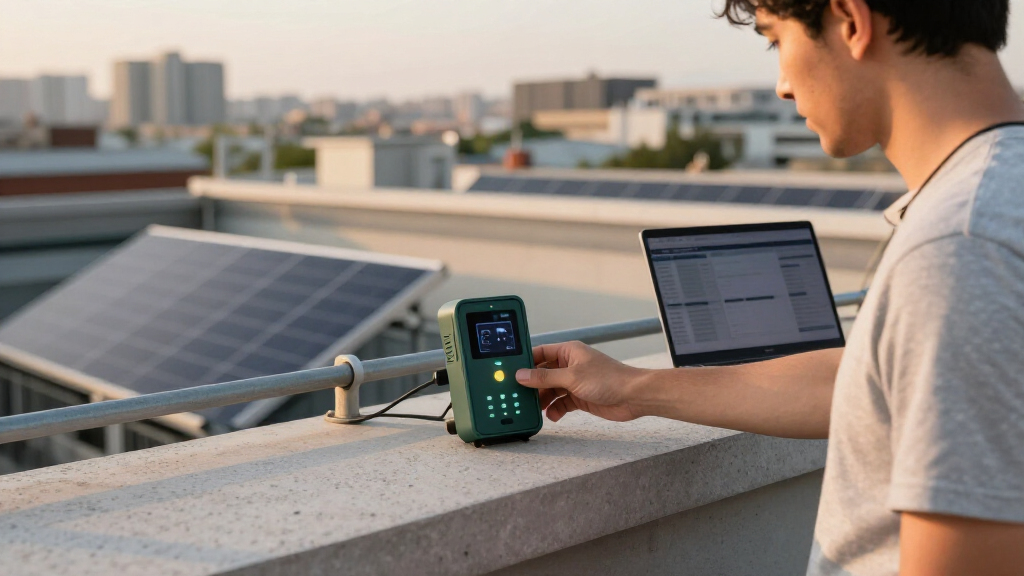
The best clean energy tracking devices help you see where household electricity goes, but the right choice depends on whether you want whole-home readings, circuit-by-circuit detail, or smart-home integration. I rank the Emporia Vue 3 as the best overall for its balance of broad monitoring and approachable setup, while the Meross 18-Circuit Monitor stands out for Home Assistant users and the Aeotec Home Energy Meter 8 for Z-Wave systems. More circuit sensors can reveal more about individual loads, but they also demand more panel space and installation work. Connectivity, clamp capacity, and compatibility may matter more than the largest sensor count. Read on for how these eight options compare and which one fits your home.

Get business pricing on monitors, keyboards and dev gear
- Business-only prices and quantity discounts
- Tax-exempt purchasing
- Multiple users, one account, clear invoices
Key Takeaways
The Emporia Vue 3 earns the overall lead by balancing circuit-level visibility with a less specialized smart-home focus than the Aeotec and Meross options.
Sixteen or eighteen circuit sensors can help identify individual high-use circuits, but that coverage is useful only if your panel has room and you are prepared for a more involved installation.
The Aeotec Home Energy Meter 8 is the clearest fit for buyers already using Z-Wave Long Range; its appeal is less compelling if you do not use that ecosystem.
Emporia’s 16-sensor bundle with four smart plugs can track selected plug-in devices as well as panel circuits, a different approach from buying a monitor focused only on the electrical panel.
Clamp count and rating are not interchangeable: the EdgeAnt‘s three 80A clamps and the two-clamp 120A model suit different measurement layouts, so match the hardware to the circuits and service you need to monitor.
| SEM-Meter Smart Home Energy Monitor with 16 Circuit Sensors |  | Best for Solar and Circuit-Level Tracking | Included circuit sensors: 16, 50A each | Supported electrical systems: Single-phase up to 240VAC line-neutral; single or split-phase 120/240VAC; three-phase up to 415Y/240VAC; no Delta | Connectivity: 2.4GHz Wi-Fi; local MQTT with Home Assistant | VIEW LATEST PRICE | See Our Full Breakdown |
| Refoss Smart Home Energy Monitor with 16 Circuit Sensors |  | Best for Long-Term Local Data | Circuit monitoring: Up to 18 circuits | Branch sensors: 16 sensors, up to 60A each | Main sensors: 2 sensors, up to 200A each | VIEW LATEST PRICE | See Our Full Breakdown |
| Aeotec Home Energy Meter 8, Z-Wave Long Range Electricity Monitor with 2 × 200 A Clamps |  | Best for Z-Wave Setups | Model: ZWA046-A | Phases supported: Up to 2 phases or split phases | Measurement accuracy: ±0.5% | VIEW LATEST PRICE | See Our Full Breakdown |
| Emporia Vue 3 Home Energy Monitor |  | Best for App-Based Energy Management | Model: EMV3A-2P-WH | Electrical systems: Single phase, single-split phase, and 2-wire; selected 3-wire and 3-phase 4-wire Wye systems require an additional 200A sensor | Branch sensors: Supports up to 16 additional 50A sensors, sold separately | VIEW LATEST PRICE | See Our Full Breakdown |
| EdgeAnt EPMC321-80A Smart Wi-Fi Energy Monitor with Three 80A Clamps |  | Best for a Compact Three-Clamp Setup | Model and style: Model 311-02; style EPMC321-80A | Sensors: Three 80A current transformer clamps | Measurement accuracy: ±2% | VIEW LATEST PRICE | See Our Full Breakdown |
| Wi-Fi Energy Monitor with Two 120A Clamps |  | Best for Historical Usage Tracking | Current sensors: Two 120A CT clamps | Accuracy: ±2% | Connectivity: 2.4 GHz Wi-Fi with internet access | VIEW LATEST PRICE | See Our Full Breakdown |
| Emporia Vue Whole-Home Energy Monitor with 16 Sensors and 4 Smart Plugs |  | Best for Circuit-Level Control | Circuit monitoring: Whole-home use and up to 16 individual circuits | Included components: Vue Energy Monitor with 16 sensors and 4 Wi-Fi Smart Plugs | Monitoring frequency: Second-by-second | VIEW LATEST PRICE | See Our Full Breakdown |
| Meross Smart Home Energy Monitor, 18-Circuit, with Home Assistant Support |  | Best for Local Data and Home Assistant | Model: EM16 | Circuit monitoring: 2 main circuits (200A) and 16 branch circuits (60A) | Measurement accuracy: ±2% | VIEW LATEST PRICE | See Our Full Breakdown |
| clean energy tracking device | Connectivity | Measurement accuracy | Dimensions |
|---|---|---|---|
| SEM-Meter Smart Home Energy Mo | 2.4GHz Wi-Fi; local MQTT with Home Assistant | 1% accuracy range | 3.1 × 1.2 × 4.18 inches |
| Refoss Smart Home Energy Monit | — | — | — |
| Aeotec Home Energy Meter 8 | Z-Wave 800 series Long Range | ±0.5% | — |
| Emporia Vue 3 Home Energy Moni | 2.4GHz Wi-Fi and internet connection required | — | — |
| EdgeAnt EPMC321-80A Smart Wi-F | — | ±2% | 2.3 × 3.5 × 4.69 inches |
| Wi-Fi Energy Monitor with Two | 2.4 GHz Wi-Fi with internet access | — | 8.11 × 7.28 × 2.32 inches |
| Emporia Vue Whole-Home Energy | — | — | — |
| Meross Smart Home Energy Monit | — | ±2% | 4.5 × 3.48 × 1.1 inches |
More Details on Our Top Picks
SEM-Meter Smart Home Energy Monitor with 16 Circuit Sensors
The SEM-Meter is a strong fit when I want to see which circuits use electricity and how solar production affects the home’s net usage. Its 16 included 50A sensors give it an advantage over the Emporia Vue 3, which supports up to 16 branch sensors but sells them separately. Local MQTT and Home Assistant support also let buyers keep monitoring within a local smart-home setup rather than relying solely on a cloud app. It tracks time-of-use costs and offers exports across several time periods, useful for spotting patterns beyond a single day. The tradeoffs are its 2.4GHz Wi-Fi requirement, one-year warranty, and lack of support for Delta three-phase systems. I’d choose Refoss instead for longer stated daily-data retention and additional local interfaces.
Pros:- Includes 16 clamp-on sensors for circuit-level monitoring.
- Tracks solar, net metering, and time-of-use electricity costs.
- Local MQTT support enables Home Assistant use without cloud access.
- Offers hourly, daily, weekly, monthly, and yearly history and exports.
Cons:- App-connected monitoring requires 2.4GHz Wi-Fi.
- Does not support Delta three-phase systems.
- Panels accessible only at the busbars may need separate flexible sensors.
Best for: Solar households and Home Assistant users who want included sensors across many individual circuits, plus local MQTT monitoring.
Not ideal for: Homes with Delta three-phase service, panels without accessible busbars unless separate flexible sensors are added, or buyers who need app monitoring without 2.4GHz Wi-Fi.
- Included circuit sensors:16, 50A each
- Supported electrical systems:Single-phase up to 240VAC line-neutral; single or split-phase 120/240VAC; three-phase up to 415Y/240VAC; no Delta
- Connectivity:2.4GHz Wi-Fi; local MQTT with Home Assistant
- Measurement accuracy:1% accuracy range
- Data history:Hourly exports retained for 90 days; daily, monthly, and yearly exports permanent
- Dimensions:3.1 × 1.2 × 4.18 inches
- Weight:4.05 pounds
- Warranty:1 year
Our verdict“I’d pick the SEM-Meter for solar-aware, circuit-by-circuit tracking with local Home Assistant support, provided the electrical system is compatible.”
Refoss Smart Home Energy Monitor with 16 Circuit Sensors
Refoss stands out for buyers who want broad circuit coverage paired with a long record of household usage. It monitors up to 18 circuits using 16 branch sensors and two main sensors, while daily data can be stored for up to five years and exported as CSV. That retention gives it a clearer advantage over the SEM-Meter, whose hourly exports are retained for 90 days, and its Local Web UI, Open API, MQTT, and WebSocket offer several routes into a smart-home setup. The external Wi-Fi antenna may also help where the electrical panel is far from a router. Refoss requires installation around household circuits, and its branch sensors are rated up to 60A each. I’d favor the Aeotec Home Energy Meter 8 for Z-Wave installations that need only two-phase monitoring rather than extensive circuit coverage.
Pros:- Monitors up to 18 circuits with 16 branch sensors and two main sensors.
- Provides local Web UI, Open API, MQTT, WebSocket, and Home Assistant integration.
- Stores daily usage data for up to five years and supports CSV export.
- Includes an external high-gain Wi-Fi antenna and a two-year warranty.
Cons:- Requires installation around the home’s electrical circuits.
- Branch sensors are limited to 60A each.
- Home Assistant integration is specified through Refoss_RPC.
Best for: Homeowners and Home Assistant users who want many monitored circuits, local interfaces, CSV exports, and years of daily usage history.
Not ideal for: Buyers who want a simple plug-in tracker, lack access to their electrical panel, or need branch sensors rated above 60A.
- Circuit monitoring:Up to 18 circuits
- Branch sensors:16 sensors, up to 60A each
- Main sensors:2 sensors, up to 200A each
- Measurement precision:±1%
- Supported systems:Single-phase, split-phase, and 3-phase 4-wire Wye
- Local connectivity:Local Web UI, Open API, MQTT, WebSocket, and Home Assistant via Refoss_RPC
- Data storage and export:Daily data stored for up to 5 years; CSV export
- Certification and warranty:ETL certified; 2-year warranty
Our verdict“I’d choose Refoss when long-term local data and extensive circuit coverage matter more than a simpler installation.”
Aeotec Home Energy Meter 8, Z-Wave Long Range Electricity Monitor with 2 × 200 A Clamps
The Aeotec Home Energy Meter 8 is the specialist pick here: it suits a home already built around a certified Z-Wave hub, not someone seeking the widest circuit-by-circuit view. Its two 200A clamps monitor consumption and production across up to two phases or split phases, making solar surplus visible without the Wi-Fi app approach used by the Emporia Vue 3 and EdgeAnt. Z-Wave Long Range, S2, and AES-128 encryption make its connectivity and security profile distinct from the lineup’s Wi-Fi monitors. Its stated ±0.5% accuracy is also tighter than the ±2% figures listed for Emporia and EdgeAnt. The tradeoff is limited scope: it does not offer the many branch sensors included with SEM-Meter or Refoss. Buyers also need a compatible hub, and the specified measuring voltage range is 80–150V.
Pros:- Tracks electricity consumption and production in real time.
- Includes two 200A clamps for monitoring up to two phases or split phases.
- Supports Z-Wave Long Range with S2 and AES-128 encryption.
- Lists ±0.5% measurement accuracy.
Cons:- Requires a compatible certified Z-Wave hub.
- Monitors up to two phases rather than many individual branch circuits.
- Specified measuring voltage range is 80–150V.
Best for: SmartThings or Home Assistant users with a certified Z-Wave hub who want real-time two-phase consumption and production monitoring.
Not ideal for: Households seeking circuit-by-circuit breakdowns, buyers without a compatible Z-Wave hub, or installations outside the stated 80–150V measuring range.
- Model:ZWA046-A
- Phases supported:Up to 2 phases or split phases
- Measurement accuracy:±0.5%
- Measuring range:80–150V; 0–200A
- Connectivity:Z-Wave 800 series Long Range
- Security:S2 and AES-128 encryption
- Compatibility:SmartThings, Home Assistant, and other certified Z-Wave hubs
- Included components:Home Energy Meter 8, two 200A clamps, and manual
Our verdict“I’d choose Aeotec for secure Z-Wave-based two-phase and solar tracking, but not as a substitute for a multi-circuit monitor.”
Emporia Vue 3 Home Energy Monitor
The Emporia Vue 3 makes the most sense for buyers who want energy use, solar production, and net metering presented through one app. Its energy-management automation and notifications give it a more app-centered role than the SEM-Meter, which is a better fit for buyers prioritizing included circuit sensors and local MQTT. Emporia supports up to 16 additional 50A branch sensors, so a household can expand monitoring, but those sensors are sold separately; the Refoss package includes 16 branch sensors. Its stated ±2% sensor accuracy is also less precise than the ±1% claims for SEM-Meter and Refoss. The app requires both 2.4GHz Wi-Fi and an internet connection, so it is not the choice for local-only monitoring. Some supported electrical configurations need an additional 200A sensor, adding another compatibility detail to check before installation.
Pros:- Monitors real-time electricity use, solar production, and net metering.
- App supports energy-management automation and notifications.
- Supports up to 16 additional 50A branch sensors.
- UL Listed and CE Listed.
Cons:- Requires 2.4GHz Wi-Fi and an internet connection.
- Branch sensors for circuit or appliance monitoring are sold separately.
- Some electrical configurations require an additional 200A sensor.
Best for: Homeowners who want app-based electricity, solar, and net-metering views with alerts and automation, and may add circuit sensors over time.
Not ideal for: Buyers who want many branch sensors included, local monitoring without internet, or the tighter stated accuracy of SEM-Meter or Refoss.
- Model:EMV3A-2P-WH
- Electrical systems:Single phase, single-split phase, and 2-wire; selected 3-wire and 3-phase 4-wire Wye systems require an additional 200A sensor
- Branch sensors:Supports up to 16 additional 50A sensors, sold separately
- Connectivity:2.4GHz Wi-Fi and internet connection required
- Sensor accuracy:±2%
- Data retention:1-second data for 3 hours; 1-minute data for 7 days; 1-hour data indefinitely
- Certifications:UL Listed and CE Listed
- Warranty:1 year
Our verdict“I’d pick the Emporia Vue 3 for app-led energy management and solar visibility, as long as internet access and separate sensor purchases suit the setup.”
EdgeAnt EPMC321-80A Smart Wi-Fi Energy Monitor with Three 80A Clamps
EdgeAnt suits buyers who want a relatively small monitor with three included 80A clamps for household circuits or appliances. Compared with the Emporia Vue 3, its package already includes three sensors, while Emporia’s additional branch sensors are sold separately; compared with SEM-Meter, though, it covers far fewer circuits. The SmartLife app reports power, voltage, current, and power factor, and bidirectional readings can help households track electricity moving in both directions, such as with solar. It also works with Tuya devices, which may be useful in an existing compatible setup. The tradeoffs are internet-dependent 2.4GHz Wi-Fi monitoring and ±2% stated accuracy. Delta systems are excluded, some configurations need an optional sensor, and installation or servicing should be handled by qualified personnel.
Pros:- Includes three 80A clamps for circuit or appliance monitoring.
- Measures power, voltage, current, and power factor in real time.
- Supports bidirectional readings and Tuya-device compatibility.
- Supports single-phase, split-phase, 2-wire, 3-wire, and 3-phase 4-wire Wye systems.
Cons:- Phone app monitoring requires 2.4GHz Wi-Fi and internet access.
- Does not support Delta systems, and some configurations need an optional sensor.
- Installation and servicing should be performed by qualified personnel.
Best for: Tuya or SmartLife households that want a compact monitor with three included clamps for selected circuits or appliances.
Not ideal for: Buyers who need many circuit sensors, local or offline app monitoring, Delta-system compatibility, or branch sensors rated above 80A.
- Model and style:Model 311-02; style EPMC321-80A
- Sensors:Three 80A current transformer clamps
- Measurement accuracy:±2%
- Connectivity and app:2.4GHz Wi-Fi with internet access; SmartLife
- Supported systems:Single-phase, split-phase, 2-wire, 3-wire, and 3-phase 4-wire Wye; excludes Delta
- Additional sensor:Optional 80A sensor for supported configurations
- Dimensions:2.3 × 3.5 × 4.69 inches
- Weight:1.3 pounds
Our verdict“I’d choose EdgeAnt for a compact SmartLife setup with three included clamps, but not when broad circuit coverage or local monitoring is the priority.”
Wi-Fi Energy Monitor with Two 120A Clamps
For buyers who want a clear record of household electricity use without monitoring a long list of individual circuits, this two-clamp monitor offers a focused alternative to the 16-circuit Emporia Vue. Its app reports power, voltage, current, and power factor, while hourly, daily, and monthly exports make it easier to compare usage patterns over as much as a year. Bidirectional measurement and support for several listed wiring configurations add flexibility for compatible homes. The tradeoff is less circuit-level detail than the Emporia Vue or the 18-circuit Meross EM16, so it is a weaker fit for finding which branch circuits drive consumption. It also depends on 2.4 GHz Wi-Fi and internet access, and installation calls for a qualified professional. Skip it if your system is Delta.
Pros:- Tracks power, voltage, current, and power factor in real time.
- Exports hourly, daily, and monthly data, with up to one year of history.
- Supports bidirectional measurement and several listed electrical system types.
- Works with Tuya smart devices.
Cons:- Requires a qualified professional for installation and servicing.
- App monitoring depends on 2.4 GHz Wi-Fi and internet access.
- Does not support Delta systems and offers less branch-circuit detail than the Emporia Vue or Meross EM16.
Best for: Homeowners with compatible wiring who want app-based whole-home readings and up to a year of exportable usage history without a large circuit-monitoring setup.
Not ideal for: DIY installers, households without reliable 2.4 GHz internet, and owners of Delta systems or buyers who need detailed monitoring across many branch circuits.
- Current sensors:Two 120A CT clamps
- Accuracy:±2%
- Connectivity:2.4 GHz Wi-Fi with internet access
- Measurements:Power, voltage, current, and power factor
- Supported systems:Single-phase, split-phase, 2-wire, and 2-phase 3-wire Wye
- Data export:Hourly, daily, and monthly totals; individual device data; up to one year of history
- Dimensions:8.11 × 7.28 × 2.32 inches
- Weight:1.3 pounds
Our verdict“Choose this monitor if exportable usage history matters more than circuit-by-circuit coverage and your electrical system is compatible.”
Emporia Vue Whole-Home Energy Monitor with 16 Sensors and 4 Smart Plugs
This bundle makes more sense for buyers who want to act on energy data, not just watch it. The Vue tracks whole-home use and up to 16 individual circuits with second-by-second visibility, while four included smart plugs add outlet-level tracking, schedules, and remote control. That gives it a broader control layer than the two-clamp Wi-Fi Energy Monitor, which focuses on household readings and historical exports rather than a bundle of controllable outlets. Solar net-metering support and Alexa compatibility also suit connected homes. The main compromises are cloud-based data storage and electrical-panel installation for circuit monitoring. Compared with the Meross EM16, this package adds four smart plugs, but the supplied data does not list the same local storage or Home Assistant support.
Pros:- Monitors whole-home use and up to 16 individual circuits.
- Second-by-second monitoring gives detailed visibility into changing loads.
- Four smart plugs add outlet-level tracking, remote control, and scheduling.
- Supports solar net metering and Alexa-enabled devices.
Cons:- Energy data is stored in the cloud.
- Circuit monitoring requires installation at the electrical panel.
- The supplied product data does not list local storage or Home Assistant integration.
Best for: Smart-home owners who want second-by-second whole-home and circuit data, plus outlet-level tracking and control from included plugs.
Not ideal for: Buyers who require local energy-data storage, want to avoid panel installation, or prioritize Home Assistant integration over Alexa compatibility.
- Circuit monitoring:Whole-home use and up to 16 individual circuits
- Included components:Vue Energy Monitor with 16 sensors and 4 Wi-Fi Smart Plugs
- Monitoring frequency:Second-by-second
- App platforms:iOS and Android
- Smart-home compatibility:Alexa-enabled devices
- Solar support:Supports solar net metering
- Data storage:Cloud
Our verdict“Pick the Emporia bundle if circuit-level visibility and controllable smart plugs matter more than keeping energy data local.”
Meross Smart Home Energy Monitor, 18-Circuit, with Home Assistant Support
The Meross EM16 is the strongest fit here for buyers who want broad circuit coverage without putting all their energy data in the cloud. It monitors two main circuits and up to 16 branch circuits, with local storage for up to five years, hourly reports, an open API, and Home Assistant support. That makes it a more integration-focused choice than the Emporia Vue bundle, whose standout extra is four smart plugs but whose data is cloud-stored. The Meross also lists solar-surplus detection and usage alerts, useful for households pairing monitoring with solar management. Its limits are wiring-specific: it does not support Delta and is intended for the stated US configurations. Choose the Emporia instead if included outlet control matters more than local data access.
Pros:- Monitors two main circuits and up to 16 branch circuits.
- Supports Home Assistant, an open API, and web control.
- Stores data locally for up to five years and provides hourly reports.
- Includes solar-surplus detection, usage alerts, and stated ±2% accuracy.
Cons:- Does not support Delta electrical systems.
- Compatibility is limited to the specified wiring configurations.
- Unlike the Emporia Vue bundle, it does not include smart plugs.
Best for: Home Assistant users with compatible US wiring who want local historical data and monitoring across main and branch circuits, including solar-related insights.
Not ideal for: Owners of Delta or other unsupported wiring systems, and buyers who want included smart plugs for direct outlet control.
- Model:EM16
- Circuit monitoring:2 main circuits (200A) and 16 branch circuits (60A)
- Measurement accuracy:±2%
- Electrical compatibility:Single-phase 2-wire, split-phase 3-wire, and 3-phase 4-wire Wye with earthed TN or TT neutral; not compatible with Delta
- Integration:Home Assistant; open API and web control
- Data storage and export:Up to five years of local storage; hourly reports
- Dimensions:4.5 × 3.48 × 1.1 inches
- Warranty:2 years
Our verdict“Choose the Meross EM16 if local data, Home Assistant, and extensive circuit coverage outweigh the need for included smart plugs.”
How We Picked
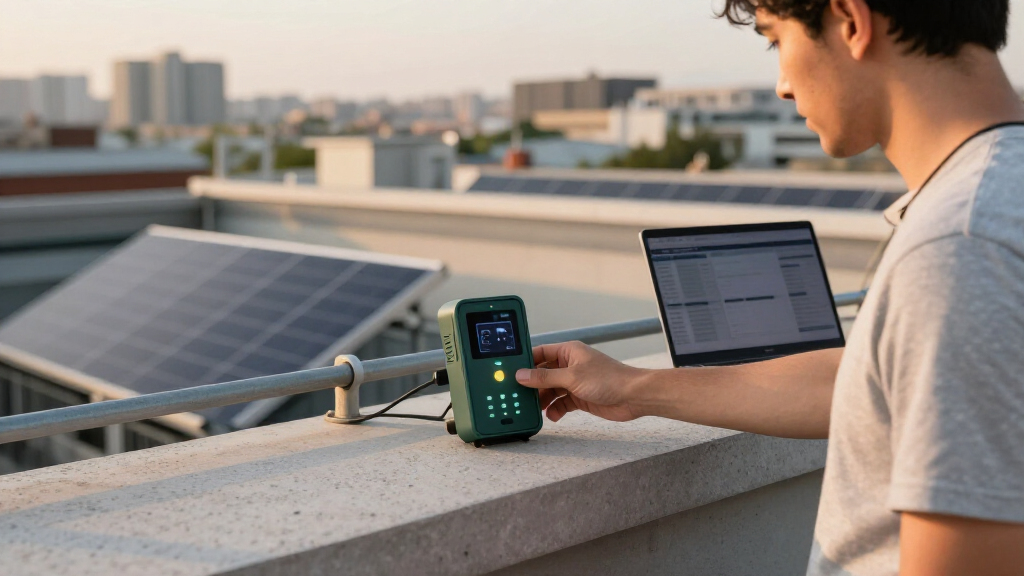
I compared these devices on the qualities that affect whether energy data will be useful day to day: circuit coverage, clamp configuration, connection options, and smart-home compatibility. I also weighed installation complexity, the likely fit for different electrical panels, and whether a package adds useful monitoring beyond the main service feed. A high circuit count can provide finer detail, but it does not automatically make a monitor a better choice if the panel lacks room or the buyer will not use that data.
The ranking favors devices with a strong balance of useful visibility and a clear audience. The Emporia Vue 3 leads as a broadly suitable pick; the Meross and Aeotec rank for buyers whose Home Assistant or Z-Wave setup shapes the decision. Bundled sensors and smart plugs earn credit when they extend tracking, while compact clamp sets and lower per-clamp ratings fit more specific monitoring jobs. The SEM-Meter and Refoss share a 16-sensor format, so their relative value depends on verified compatibility and package details rather than sensor count alone.
Factors to Consider When Choosing Best Clean Energy Tracking Devices
Before choosing a monitor, decide what you need the data to change: finding a high-use circuit, tracking solar generation, or automating loads. Monitoring hardware is only one part of the setup; panel capacity, software access, and the effort required to interpret readings all shape its usefulness.
Choose the level of detail you will actually use
A whole-home reading can reveal broad changes in consumption, while circuit sensors can help separate HVAC, cooking, or other dedicated loads. More channels make it easier to spot which parts of the home drive usage, but they also add installation steps and can create more data than a casual user wants to manage. Start with the decisions you hope to make, such as shifting laundry to solar hours or finding a persistently high-use circuit. Avoid treating maximum sensor count as a proxy for accuracy or usefulness. If you only need a household trend, whole-home monitoring may be enough; if you plan to act on individual loads, circuit-level coverage is more valuable.
Check electrical-panel fit before buying
Panel layout, available space, service configuration, and the number of circuits you want to track all affect compatibility. A monitor advertised with many sensors may still be a poor fit if its sensors cannot be placed comfortably in your panel. Clamp ratings also matter: select hardware suited to the conductors and measurement points you intend to monitor, rather than assuming a higher number is always better. Take clear photos of the panel and consult the product’s installation documentation before ordering. Panel work can expose dangerous voltages, so hire a qualified electrician if you are unsure or local rules require professional installation.
Match the connection to your smart-home setup
Wi-Fi models can be a straightforward choice when you want readings in a companion app, while Z-Wave or Home Assistant support may matter more if energy data will feed existing automations. Confirm that the exact monitor supports the platform and functions you need; a connection label alone does not promise every feature or integration. Think about what happens if your internet connection drops and whether local data access matters to you. Buyers who value easy app access may prefer a simpler ecosystem, while automation-focused users may accept extra setup for more control. Do not pay for an integration you will not configure.
Separate consumption monitoring from solar tracking
Some home energy monitors measure consumption without giving a complete picture of solar production, battery behavior, or export to the grid. If your goal is to maximize self-consumption, verify that the device can measure the flows you need and that its software presents them clearly. A consumption reading alone may show that usage changed without explaining whether solar generation covered it. Buyers with panels or storage should check supported wiring layouts and measurement points before choosing a monitor. For a home without generation equipment, detailed circuit usage may offer more practical value than solar-specific features.
Compare the full setup, not just the sensor count
Packages differ in what they monitor: a set of panel sensors follows selected circuits, while smart plugs can track particular plug-in devices without assigning an entire breaker to them. That distinction matters for appliances such as a refrigerator or entertainment system, but plugs are not suitable for every load. Check whether the package includes the sensors and accessories you need, and whether extra sensors can be added later. Software access, data retention, and any ongoing service requirements can shape long-term usefulness even when the hardware looks similar. Paying more makes sense when an included feature replaces a separate device or supports a monitoring job you will use regularly.
Frequently Asked Questions
Can I install a circuit-level energy monitor myself?
Installation typically involves working inside an electrical panel, where dangerous voltages may remain present even when a breaker is off. The difficulty depends on panel layout, the monitor’s wiring method, and local electrical rules. Do not assume that a DIY-friendly product makes panel work safe for every buyer. If you lack electrical experience, see exposed conductors, or are unsure about the panel configuration, use a qualified electrician. Ask in advance whether installation and any needed panel work are included in the quote.
Will a home energy monitor show exactly what each appliance uses?
A circuit sensor usually measures the combined load on the breaker it monitors, not each appliance on that circuit separately. Smart plugs can isolate certain plug-in devices, but they cannot cover hardwired equipment or every high-power appliance. Some software may estimate individual device activity from whole-home patterns, though estimates are not the same as direct measurement. For appliance-specific answers, check which loads share a circuit and choose a monitor setup that can measure them separately. The data is most useful when you understand what each sensor is actually measuring.
Can these devices track solar production as well as household use?
That depends on the monitor’s supported wiring arrangement and the measurement points included in its setup. A device that reports household consumption may not automatically separate solar generation, grid import, and export. Before buying, confirm that the product supports your inverter and electrical configuration, and check whether its app displays each energy flow distinctly. If your main goal is using more of your own solar power, clear production and export readings matter more than a large number of consumption sensors. Ask an installer to confirm compatibility when your system has batteries or a nonstandard layout.
Should I choose Wi-Fi, Z-Wave, or Home Assistant support?
Choose based on how you plan to use the readings, not the number of connection options listed on a box. Wi-Fi can suit buyers who mainly want an app, while Z-Wave or Home Assistant support may better fit a home that already runs automations or a local smart-home hub. Check whether the integration exposes the specific readings you need and whether it works locally or depends on a cloud service. A more flexible platform can take extra setup and maintenance. If you only want to review usage from time to time, simpler app access may be the better fit.
How many circuit sensors should I buy?
Count the circuits you genuinely want to monitor, then check the panel and the device’s supported sensor layout. You do not need to instrument every breaker to learn which major loads drive consumption; starting with a few large or schedule-sensitive circuits can provide actionable information. More sensors make sense when you want a detailed map of household use or have several loads you plan to manage separately. They add installation work and may require panel space, so leave room for compatibility rather than buying by the largest number alone. Check whether additional sensors can be added later if your needs grow.
Conclusion
For most households seeking a balance of circuit insight and straightforward monitoring, I recommend the Emporia Vue 3 as the best overall. The best value depends on the exact bundle and compatibility: compare the SEM-Meter and Refoss 16-sensor packages against your panel needs and included hardware rather than choosing by sensor count. For a more feature-rich panel-and-device setup, the Emporia Vue with 16 sensors and four smart plugs is my premium pick. Beginners who want a broadly suitable starting point should favor the Emporia Vue 3 and keep their first monitoring plan simple. For specific needs, choose the Aeotec for an established Z-Wave Long Range system, the Meross for Home Assistant support, or the EdgeAnt and two-clamp 120A models when their clamp configurations suit the job. Before deciding, verify panel compatibility and installation requirements.