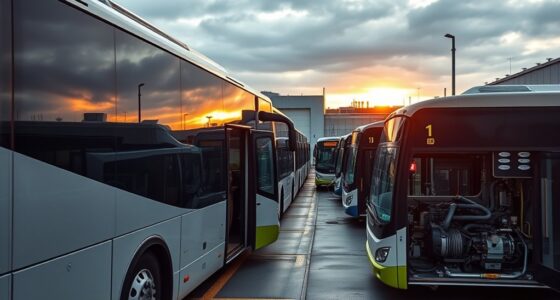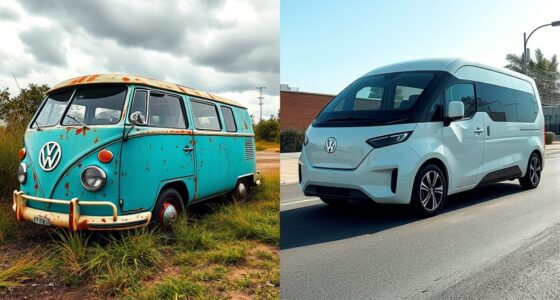

To budget for electric bus infrastructure, start by calculating upfront costs such as bus and battery purchases, charging stations, and depot upgrades. Consider funding options like grants, government incentives, and public-private partnerships to ease financial burden. Account for ongoing expenses like energy, maintenance, and staff training, and explore strategies for long-term savings through route optimization and bulk purchasing. If you want to learn more about creating a detailed budget plan, keep exploring key planning strategies.

Get business pricing on monitors, keyboards and dev gear
- Business-only prices and quantity discounts
- Tax-exempt purchasing
- Multiple users, one account, clear invoices
Key Takeaways
- Assess initial capital costs, including buses, batteries, charging stations, and depot upgrades, with consideration for bulk purchasing.
- Identify available funding sources such as grants, government incentives, and public-private partnerships to offset expenses.
- Calculate ongoing operational expenses like energy, maintenance, staff training, and predictive maintenance tools.
- Select appropriate charging technology and plan infrastructure upgrades for scalability and system integration.
- Incorporate long-term cost-saving strategies, including route optimization and renewable energy sourcing, into the budget.
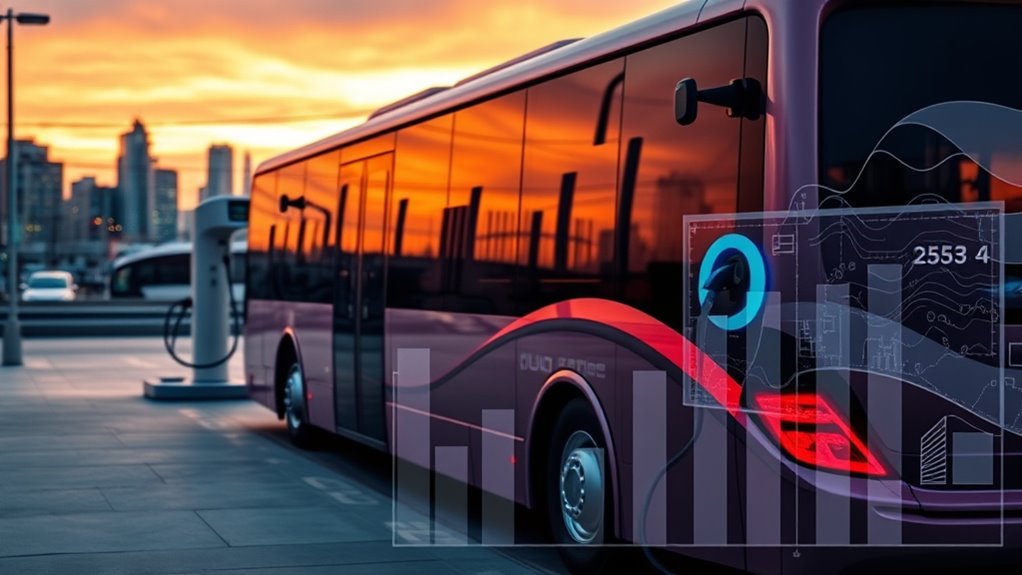
Planning a budget for electric bus infrastructure requires careful consideration of multiple cost factors. First, you need to account for the capital costs, which include purchasing electric buses, batteries, and the charging infrastructure itself. These upfront investments can be considerable, so understanding the initial expenses helps set realistic expectations.
Next, consider financing costs. If you’re taking out loans or seeking bonds to fund your project, interest payments will add to the total costs over time. It’s indispensable to factor in these costs early on to avoid surprises later.
Operational costs are also a key component. Energy costs for charging your fleet can fluctuate based on electricity rates and the size of your battery packs. Maintenance expenses tend to be lower than traditional buses, but they still require ongoing attention, especially for batteries and electrical systems.
Additionally, staff training for maintenance crews and drivers is crucial to ensure safe and efficient operation, which can add to your initial and ongoing expenses.
Strategic infrastructure planning plays a significant role in budgeting. You need to carefully select locations for charging stations and depots, considering accessibility, future expansion, and existing infrastructure. Proper site selection can influence both initial setup costs and long-term operational efficiency.
Also, keep in mind the total cost of ownership (TCO), which encompasses all costs over the bus’s lifespan, including maintenance, energy, and eventual replacement of batteries.
From a financial planning perspective, attracting external investments or grants can greatly ease the financial burden. Conduct thorough cost-benefit analyses that weigh the long-term environmental and operational benefits against upfront costs.
Exploring different business models, such as public-private partnerships, can distribute financial risks and reduce your burden. Additionally, leverage government incentives or subsidies designed to support electric vehicle adoption; these can substantially lower your initial costs and improve your project’s viability.
Technical requirements directly influence your budget. You need to determine the right battery capacity based on route distances, as well as select appropriate charging technology—fast chargers for quick turnaround or slow chargers for overnight charging.
Ensuring your depot can support these systems might require upgrades, which should be factored into your budget. Integrating new technology with existing transit systems also incurs costs but is critical for seamless operation and future scalability.
Cost reduction strategies can help stretch your budget further. Purchasing buses and infrastructure in bulk can lead to economies of scale.
Planning routes to maximize energy efficiency reduces charging frequency and energy consumption. Securing renewable energy sources or negotiating lower electricity rates can decrease energy costs.
Implementing predictive maintenance tools extends the lifespan of buses and reduces unexpected repair costs. Participating in rebate programs or incentives further lowers overall expenses.
Finally, infrastructure development must be prioritized. You should plan for scalable charging infrastructure, including depot stations, and ensure power supplies can handle increased loads.
Choosing strategic sites for depots, based on accessibility and expansion potential, minimizes future costs.
Integrating your electric bus infrastructure with existing transit systems and ensuring compliance with environmental regulations and safety standards are essential steps that also influence your budget planning.
As an affiliate, we earn on qualifying purchases.
Frequently Asked Questions
What Are the Long-Term Maintenance Costs for Electric Bus Infrastructure?
When considering long-term maintenance costs for electric bus infrastructure, you should focus on factors like battery replacements, charging station upkeep, and potential grid upgrades.
Regular maintenance tends to be lower than diesel systems, but infrastructure components such as chargers and power supply systems require ongoing monitoring and repairs.
Planning for these costs helps you optimize your budget, ensuring reliable operation while taking advantage of savings from electric buses over their lifespan.
How Do Utility Rates Impact Electric Bus Charging Expenses?
Utility rates considerably impact your electric bus charging costs. Time-of-use rates encourage charging during off-peak hours, lowering expenses, while demand charges based on peak consumption can spike costs if not managed carefully.
To save, you should plan charging schedules around lower-rate periods and explore programs like commercial managed charging. Be aware of additional fees, such as meter charges, which can also influence your overall utility bills.
What Funding Options Are Available for Electric Bus Infrastructure Projects?
You’re likely wondering about funding options for electric bus infrastructure. Luckily, a mix of federal, state, and local programs offers substantial support.
Federal grants like EPA’s Clean School Bus Program and FTA’s low-emission bus funding can cover significant costs.
State programs, utility rebates, and public-private partnerships also help reduce expenses.
Combining these sources—fund stacking—makes financing more manageable, bringing your clean transportation goals within reach.
How Can Municipalities Effectively Plan for Future Infrastructure Upgrades?
You should focus on integrating long-term infrastructure plans with land-use and financial forecasts, ensuring they reflect future growth and technology changes.
Prioritize projects based on community needs and sustainability goals, and use scenario planning to evaluate risks.
Collaborate across departments, leverage smart city data, and involve stakeholders early.
This approach helps you create a flexible, resilient upgrade plan that adapts to evolving demands and technological advancements.
What Are the Environmental Benefits Versus the Costs of Electric Bus Infrastructure?
You face a decision with stakes so high, they could change the planet! Electric bus infrastructure slashes emissions, saving millions of tons of greenhouse gases annually, and drastically improves public health by reducing toxic fumes.
Though the costs seem formidable upfront, the long-term savings on fuel, maintenance, and health benefits far outweigh the initial investment.
Embracing this tech transforms communities and fights climate change—making it a truly powerful, worthwhile choice.
As an affiliate, we earn on qualifying purchases.
Conclusion
Remember, a penny saved is a penny earned, so plan your electric bus infrastructure budget wisely. By carefully evaluating costs, exploring funding options, and prioritizing sustainable investments, you’ll set a strong foundation for success. Staying proactive and adaptable ensures your project stays on track and within budget. As the saying goes, ‘A stitch in time saves nine’—addressing potential issues early can save you time and money in the long run.
As an affiliate, we earn on qualifying purchases.
fast charging station for electric buses
As an affiliate, we earn on qualifying purchases.
As an affiliate, we earn on qualifying purchases.
Fall Picks
fall essentials
As an affiliate, we earn on qualifying purchases.