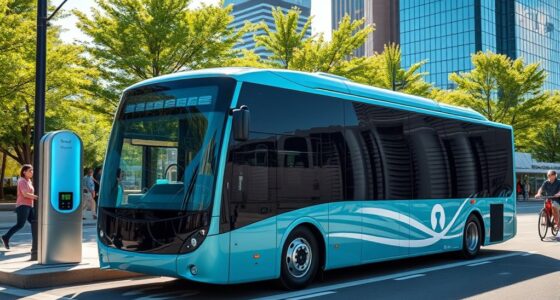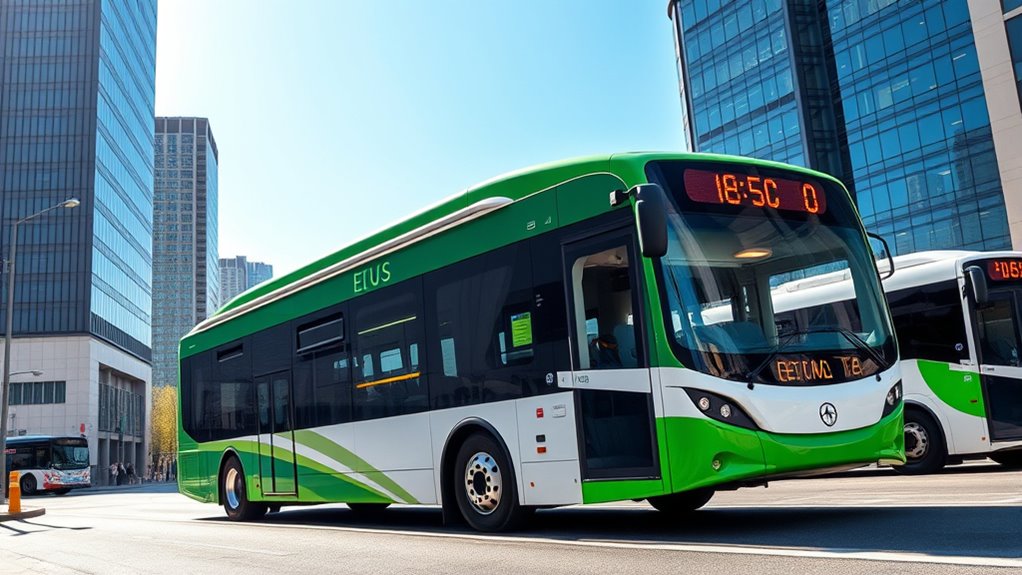

Electric buses are more energy-efficient than diesel models because they convert stored electrical energy directly into motion, wasting less as heat. Advances in battery technology and better energy management reduce energy loss and emissions. Fast-charging infrastructure also helps keep them running efficiently. Overall, less energy use means lower emissions and a cleaner environment. To understand how technology is making electric buses a smarter choice, there’s much more to explore.

Get business pricing on monitors, keyboards and dev gear
- Business-only prices and quantity discounts
- Tax-exempt purchasing
- Multiple users, one account, clear invoices
Key Takeaways
- Electric buses convert stored electrical energy directly into motion, reducing energy loss compared to diesel engines’ combustion process.
- Advances in battery technology increase energy density and efficiency, leading to less energy required per mile.
- Improved energy management systems minimize waste, resulting in lower overall energy consumption and emissions.
- Fast and reliable charging infrastructure reduces downtime and energy waste during recharging cycles.
- Lower energy use in electric buses translates to fewer emissions, especially with clean electricity sources.
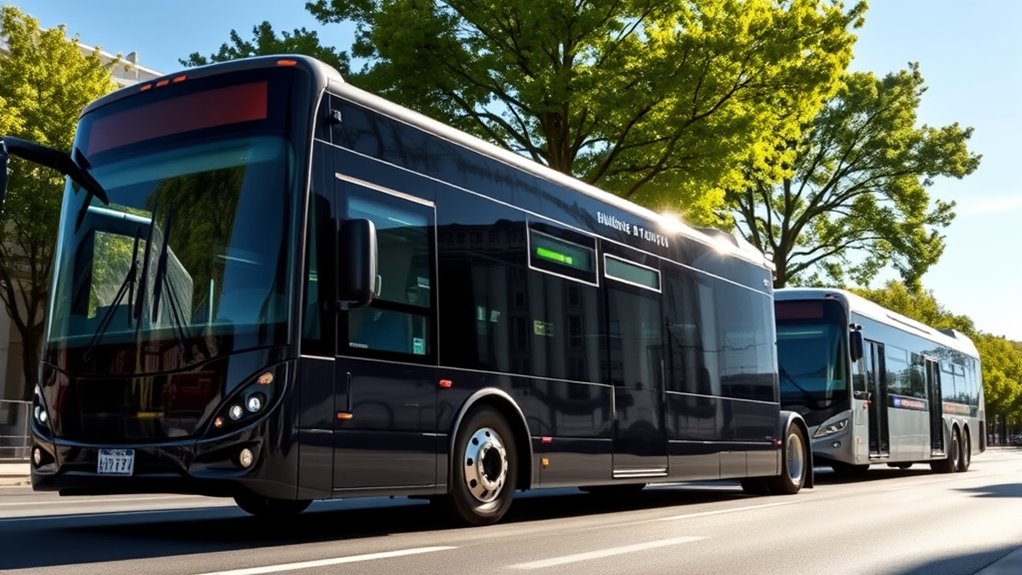
Electric buses are often promoted as a more energy-efficient alternative to traditional diesel-powered vehicles, but understanding the true differences requires a closer look at how each type consumes and utilizes energy. Central to this comparison are battery technology and charging infrastructure, which play crucial roles in determining an electric bus’s efficiency and practicality. Battery technology has advanced significantly in recent years, allowing for higher energy densities, faster charging times, and longer lifespans. These improvements mean that electric buses can store more energy in a smaller, lighter package, reducing weight and increasing efficiency. When you consider battery efficiency, it’s not just about how much energy the battery can hold but also how well it manages energy during charge and discharge cycles. Modern batteries minimize energy loss, ensuring that more of the stored energy is available for propulsion, rather than wasted as heat. This directly translates into lower energy consumption per mile, which means fewer emissions if the electricity used is generated from clean sources. Additionally, battery management systems play a vital role in optimizing performance and extending battery lifespan, further contributing to overall efficiency.
Charging infrastructure is equally vital in understanding energy efficiency. A robust and strategically planned charging network ensures that buses are charged efficiently, often during off-peak hours, reducing energy costs and strain on the grid. Fast-charging stations enable quick turnaround times, minimizing downtime and maintaining fleet reliability. The efficiency of the charging process itself depends on the infrastructure’s ability to deliver power smoothly and reliably, avoiding energy losses associated with inadequate or outdated systems. When charging infrastructure is optimized, electric buses spend less energy during charging and are ready to operate with minimal delays, thereby maximizing operational efficiency. Conversely, poorly designed infrastructure can lead to increased energy loss, higher operational costs, and reduced overall efficiency.
You’ll find that the synergy between advanced battery technology and efficient charging infrastructure is what makes electric buses a compelling choice for reducing energy consumption. While diesel buses rely on onboard combustion that wastes a significant amount of energy as heat, electric buses convert stored electrical energy directly into motion with fewer losses. This streamlined energy conversion results in less fuel consumption and fewer emissions. As you consider transitioning to electric buses, keep in mind that investing in cutting-edge battery tech and reliable charging infrastructure not only boosts energy efficiency but also helps you achieve lower emissions, supporting a cleaner environment. Ultimately, the combination of these technological advancements makes electric buses a smarter, more sustainable choice for modern transportation needs.
electric bus fast charging station
As an affiliate, we earn on qualifying purchases.
As an affiliate, we earn on qualifying purchases.
Frequently Asked Questions
How Do Electric Buses Perform in Extreme Weather Conditions?
You’ll find electric buses can handle extreme weather reasonably well, but their weather resilience depends on design and infrastructure. Cold temperatures may increase energy consumption because batteries work less efficiently, reducing range. However, with proper insulation and heated battery systems, they perform reliably. In hot weather, cooling systems help maintain battery health. Overall, careful planning and maintenance guarantee electric buses remain dependable even during harsh weather conditions.
What Is the Lifespan Comparison Between Electric and Diesel Buses?
They say “time will tell,” and it applies here. Electric buses typically have a shorter initial lifespan than diesel buses, mainly due to battery longevity concerns. While diesel buses can last 12-20 years with proper maintenance, electric buses often need battery replacements around 8-10 years, increasing replacement costs. However, advances in battery technology are gradually extending electric bus lifespans, making them more comparable over time.
Are There Any Recycling Concerns for Electric Bus Batteries?
You should know that battery recycling is a key concern for electric buses, as improper disposal can harm the environment. Recycling helps recover valuable materials and reduces environmental impact. While advancements are making battery recycling more efficient, you need to stay aware of ongoing efforts to improve processes. Proper recycling guarantees that the benefits of electric buses outweigh potential environmental risks, making them a more sustainable transportation option overall.
How Do Maintenance Costs Differ Between Electric and Diesel Buses?
You’ll find maintenance costs differ markedly between electric and diesel buses. Electric buses typically have lower fuel efficiency costs and fewer moving parts, meaning less frequent repairs. Battery replacement is a key expense, but over time, electric buses often cost less to maintain overall. Diesel buses require regular engine tune-ups and fuel system maintenance, which can add up. So, electric buses usually save you money on maintenance in the long run.
What Infrastructure Is Required to Support Electric Bus Fleets?
You’ll need a network of charging stations strategically placed along routes to keep your electric buses operational. These stations require reliable, high-capacity power supplies connected to the power grid to handle fast or overnight charging. Upgrading the grid may be necessary to support increased energy demand. Ensuring proper infrastructure helps maximize bus uptime, reduce charging time, and make your electric fleet efficient and sustainable for daily operations.
high energy density electric bus battery
As an affiliate, we earn on qualifying purchases.
As an affiliate, we earn on qualifying purchases.
Conclusion
Think of electric buses as swift, clear streams rushing with purpose, using less energy to reach their destination, leaving behind fewer pollutants. Diesel buses, like slow-moving rivers, carry more weight and waste more resources, causing more pollution along the way. By choosing electric, you’re steering your transportation river toward cleaner, greener shores. Less energy use isn’t just about saving power—it’s about guiding our journey toward a healthier planet, one smoother, more efficient ride at a time.
electric bus energy management system
As an affiliate, we earn on qualifying purchases.
As an affiliate, we earn on qualifying purchases.
electric bus charging infrastructure
As an affiliate, we earn on qualifying purchases.
As an affiliate, we earn on qualifying purchases.
Halloween Picks
halloween
As an affiliate, we earn on qualifying purchases.