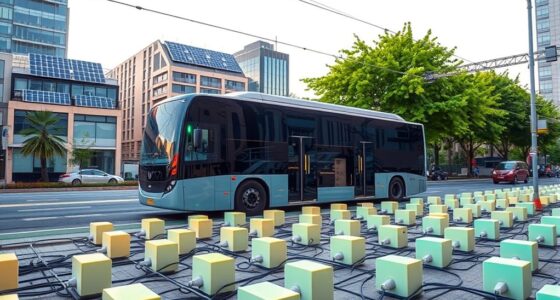
Noise measurements in cities reveal how electric buses affect urban soundscapes. You can access data on their acoustic levels during different operating phases, such as acceleration or cruising. This information helps evaluate whether electric buses reduce overall noise or contribute to new challenges, especially in densely populated areas. Understanding these patterns is essential for planning quieter transportation solutions. If you explore further, you’ll discover how these insights support smarter urban noise management strategies.
Key Takeaways
- Noise measurement data shows how electric buses contribute to urban soundscapes during various operational phases.
- Acoustic level measurements help assess the effectiveness of electric buses in reducing overall city noise pollution.
- Data highlights peak noise periods and locations, informing targeted noise mitigation strategies in urban areas.
- Recorded acoustic levels assist policymakers in developing regulations to protect residents from excessive transportation noise.
- Continuous noise data supports improvements in bus design and urban planning for quieter, healthier city environments.
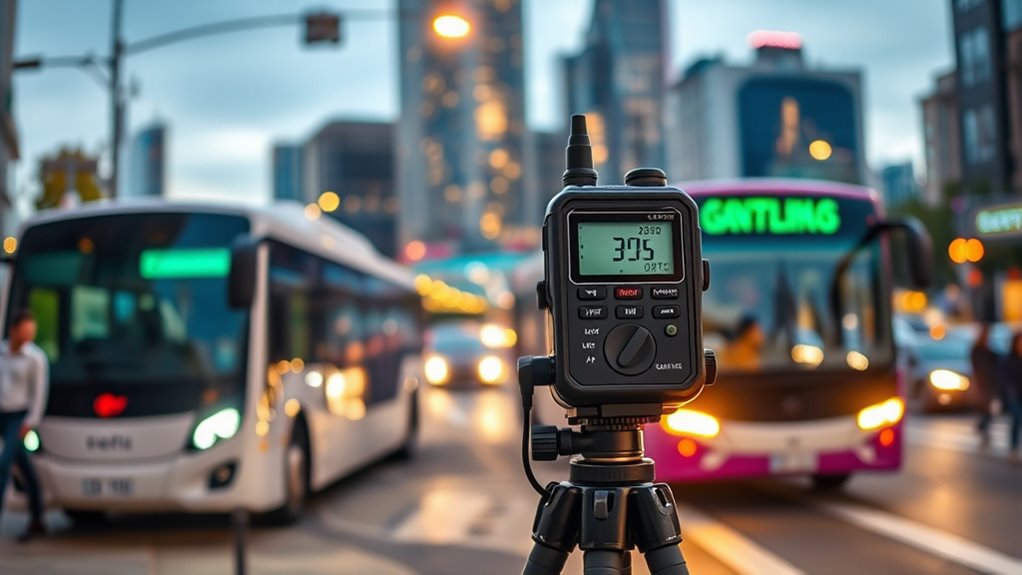
Noise measurements are essential for evaluating environmental and health impacts of sound exposure. When it comes to urban noise, understanding the levels of acoustic pollution becomes vital, especially as cities grow denser and transportation options diversify. Cities are increasingly adopting electric buses to reduce air pollution, but these vehicles introduce new considerations regarding noise levels. While electric buses are quieter than traditional diesel-powered ones, they still produce noise that contributes to overall urban noise pollution. Monitoring acoustic pollution helps you identify how much sound these buses add to the city’s soundscape and whether they truly mitigate noise issues or shift them elsewhere.
Monitoring urban noise levels reveals how electric buses impact city soundscapes and noise pollution.
By measuring the acoustic levels of electric buses in various city environments, you can determine their impact on urban noise. These measurements reveal how much noise electric buses generate during different operational phases—accelerating, cruising, and stopping. You might find that, although quieter than diesel buses, electric buses still produce enough noise to affect residents’ quality of life, especially in densely populated neighborhoods. This data enables city planners and transportation authorities to make informed decisions about bus deployment, routes, and operating hours, aiming to minimize noise disturbance in sensitive areas.
Understanding electric bus acoustic levels also helps address concerns about acoustic pollution, which can have serious health implications. Chronic exposure to elevated noise levels is linked to stress, sleep disturbances, and even cardiovascular problems. If measurements show that electric buses considerably contribute to urban noise, especially during peak hours, it indicates the need for additional noise mitigation strategies. These could include better bus design, sound barriers, or adjusted schedules to reduce noise during nighttime or early morning hours, when residents are most vulnerable to disturbances. Additionally, assessing earplug technology can be useful for protecting workers and residents in noisy environments.
Furthermore, collecting and analyzing data on electric bus noise provides valuable insights for future vehicle design. Manufacturers can use this information to develop quieter buses, incorporating advanced insulation and noise-dampening technology. As a result, the goal isn’t just to replace old buses with electric models but to improve the overall acoustic environment of your city. When you have accurate data on electric bus acoustic levels, it becomes easier to advocate for policies that protect residents from excessive noise while supporting sustainable transportation.

awlbed 10 PCS Car Drag Reduction Noise Reduction Shark Fin Antenna, Self-Adhesive Smooth Linear Design Roof Wing Air Vortex Generator, Modified Accessories, for Most Models (Carbon Fiber Black)
Smooth Linear Design: This car shark fin antenna has a smooth linear appearance design, which conforms to the…
As an affiliate, we earn on qualifying purchases.
As an affiliate, we earn on qualifying purchases.
Frequently Asked Questions
How Do Weather Conditions Affect Electric Bus Noise Levels?
Weather variability, especially temperature effects, can influence electric bus noise levels. Hotter temperatures may cause components to expand, potentially increasing noise, while colder weather can make materials contract, possibly reducing noise emissions. Wind and rain also impact sound propagation, either amplifying or dampening noise. As a result, you might notice fluctuations in electric bus noise depending on weather conditions, making it important to take into account these factors when evaluating acoustic levels.
Are There Differences in Noise Emissions Between Different Electric Bus Models?
You’ll find that electric bus models do differ in noise emissions due to variations in bus design and manufacturing standards. Some buses are built with quieter motors or soundproofing features, making them much more neighbor-friendly. It’s a case of apples and oranges, really. When comparing models, pay close attention to the manufacturer’s standards and design details, as these factors directly influence the acoustic levels and overall noise footprint of each bus.
What Is the Impact of Bus Speed on Acoustic Levels?
You’ll notice that as bus speed increases, acoustic levels also rise due to vehicle dynamics, like engine and tire noise. Faster speeds contribute more substantially to noise pollution, making streets noisier and affecting urban environments. By understanding this relationship, you can better manage noise levels, implement speed regulations, and promote quieter streets, ultimately reducing the overall impact of electric buses on city noise pollution.
How Do Urban Design Features Influence Noise Measurement Results?
You might be surprised how urban design features shape noise levels around you. Urban canyons trap sound, amplifying noise, while street furniture can either deflect or absorb it, changing your listening experience dramatically. These elements create a complex acoustic environment, influencing measurements and perceptions alike. By understanding how such features interact with noise, you gain insight into creating quieter, more comfortable city spaces—an impact that’s often hidden but deeply felt.
What Noise Mitigation Strategies Are Most Effective for Electric Buses?
You can reduce electric bus noise by establishing silent zones and installing acoustic barriers along busy routes. Silent zones create designated areas where noise restrictions help protect residents, while acoustic barriers absorb or block sound, minimizing disturbance. Combining these strategies with regular maintenance and quiet engine technologies enhances effectiveness, making city environments more livable and reducing overall noise pollution from electric buses.

Decibel Meter, RISEPRO® Digital Sound Level Meter 30 – 130 dB Audio Noise Measure Device Backlight MAX/MIN, Data Hold Auto Power Off Dual Ranges HT-80A
USEFUL TOOL IN YOUR WORK & LIFE – This sound level meter is a great tool for checking,…
As an affiliate, we earn on qualifying purchases.
As an affiliate, we earn on qualifying purchases.
Conclusion
By examining the acoustic footprints of electric buses in cities, you uncover a symphony of quieter urban life. These measurements reveal a promising shift toward peaceful streets, where the hum of progress replaces the roar of traditional engines. As you peer into this data, you see a future where city soundscapes become softer melodies, inviting you to breathe easier and enjoy a more harmonious urban rhythm. Embrace this change—peace is just a quiet ride away.

Mack's Ultra Soft Foam Earplugs, 50 Pair – 33dB Highest NRR, Comfortable Ear Plugs for Sleeping, Snoring, Travel, Concerts, Studying, Loud Noise, Work | Made in USA
ULTRA COMFORTABLE – Made with super low-pressure, slow release, Comfy Cush Comfort Foam. Their user preferred color is…
As an affiliate, we earn on qualifying purchases.
As an affiliate, we earn on qualifying purchases.

Sound Deading Material for Cars, 80mil (2mm) 36 sqft (3.4 sqm) Car Sound Deadening Mat, Butyl Automotive Sound Deadener, Noise Insulation and Vibration Dampening Material (33 pcs)
80mil Car Sound Deadening Mat: 80mil(2mm) 3-layer sound deadening material for cars blocks noise effectively. 8-wire aluminum foil…
As an affiliate, we earn on qualifying purchases.
As an affiliate, we earn on qualifying purchases.