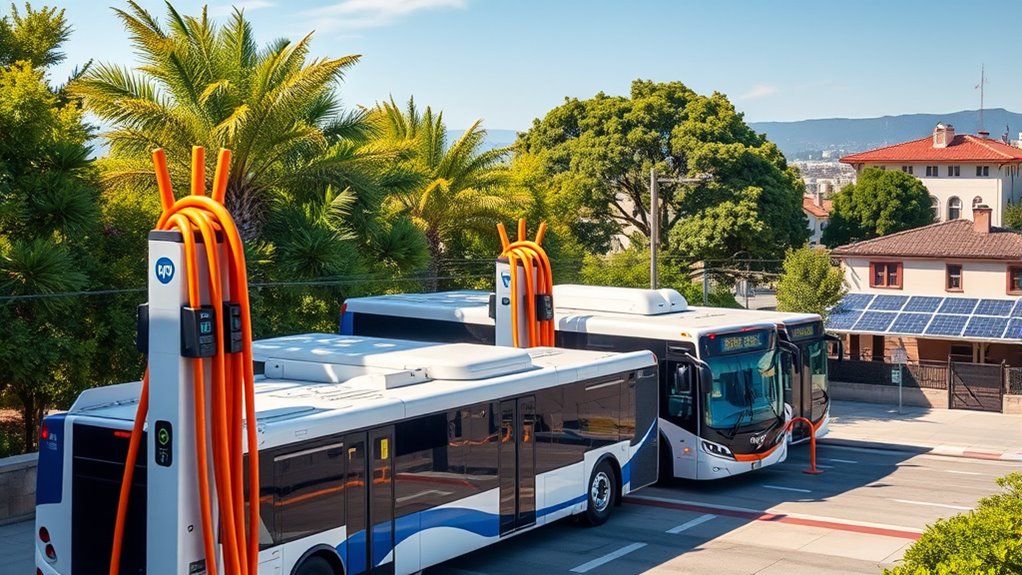

Integrating V2G with electric buses in California microgrid projects allows you to transform transit fleets into dynamic energy resources that support grid stability and renewable integration. By leveraging parked and plugged-in buses, these microgrids can supply excess energy during peak times or outages, reducing reliance on traditional power plants. Advanced control systems and battery management guarantee buses stay operational while contributing to energy balancing. To learn more about how this innovative approach is shaping California’s clean energy future, keep exploring further.
Key Takeaways
- California microgrid projects leverage parked electric buses’ batteries for grid stabilization and demand management through V2G integration.
- V2G-enabled electric buses support local energy balancing, reducing reliance on traditional power plants within microgrids.
- Advanced control systems and Battery Management Systems ensure buses provide grid support without disrupting transit operations.
- Integrating V2G enhances renewable energy utilization, balancing solar and wind sources with microgrid energy needs.
- Projects focus on regional customization, optimizing bus-to-grid energy flows for resilient, sustainable California microgrids.
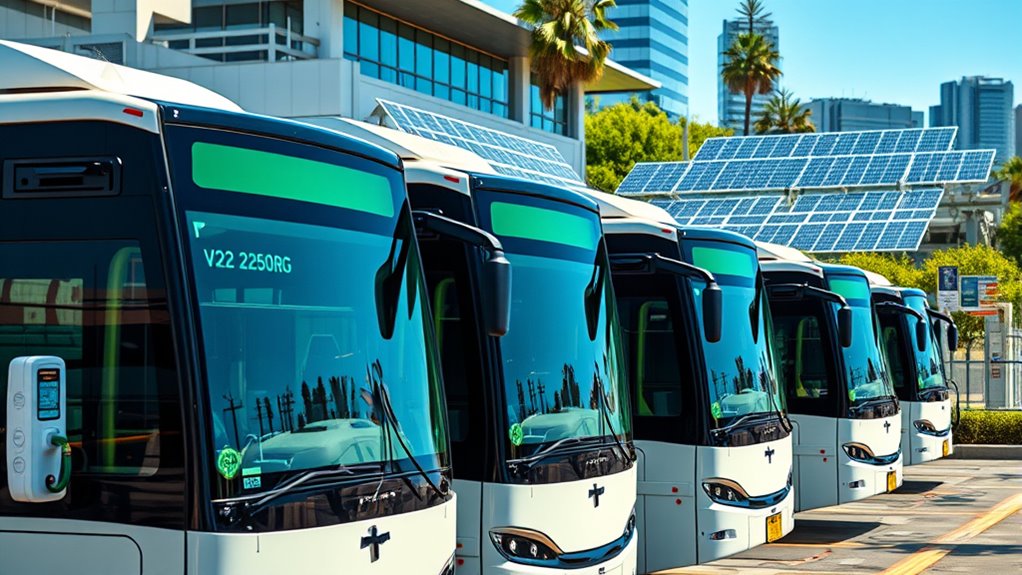
As electric buses become more common, integrating vehicle-to-grid (V2G) technology offers a promising way to maximize their value. When you connect these buses to a grid, you can turn idle batteries into powerful assets that support overall grid stability. Proper battery management becomes essential here, ensuring that the buses’ batteries retain their longevity while providing grid services. With effective management, you prevent excessive wear on the batteries, balancing charging and discharging cycles to optimize performance and lifespan. This approach not only benefits the grid but also extends the operational life of the buses’ batteries, making V2G a cost-effective solution.
Proper battery management in V2G systems extends bus battery life and maximizes grid support.
In California’s microgrid projects, V2G integration with electric buses is proving especially beneficial. These microgrids act as localized energy hubs, capable of balancing supply and demand within a confined area. When buses are parked and plugged in, they can supply excess energy back to the microgrid during peak periods or emergencies. This reduces reliance on traditional power plants, lowers costs, and improves resilience. By leveraging the batteries’ stored energy, these microgrids achieve a level of grid stabilization that was previously unattainable without large-scale infrastructure investments.
The key to successful V2G integration lies in managing the energy flow efficiently. You need sophisticated control systems that monitor battery health, state of charge, and grid needs in real time. This ensures energy is supplied where it’s needed most without jeopardizing the buses’ primary function — transportation. When managed correctly, the buses serve a dual purpose: moving people and stabilizing the grid. This synergy supports California’s ambitious sustainability goals and helps integrate more renewable energy sources, such as solar and wind, into the grid. Additionally, implementing effective battery management systems ensures that discharging cycles do not compromise the buses’ operational readiness, maintaining a balance between energy output and vehicle availability.
California’s microgrid projects demonstrate how V2G technology can be tailored to regional needs, emphasizing the importance of grid stabilization. You can imagine a future where electric buses are not just transit tools but essential components of a resilient, flexible energy network. They act as mobile energy storage units, providing power during outages and smoothing out fluctuations caused by renewable sources. Battery management systems play a pivotal role here, ensuring that discharging cycles don’t compromise the buses’ operational readiness. This careful balance allows the system to deliver reliable grid support without sacrificing the buses’ primary function.
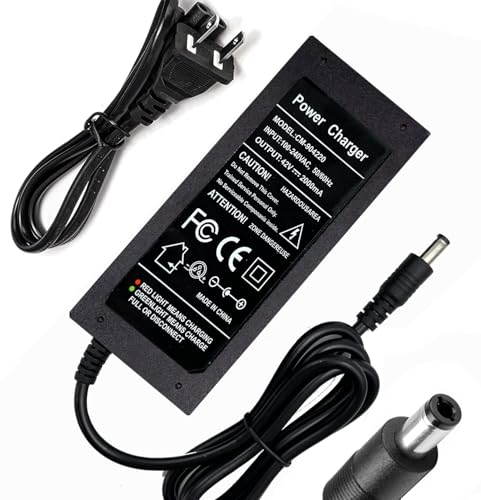
42V 2A Charger for 36V Scooter Lithium Battery, Fast Smart Power Adapter for 36 Volt Lithium Battery, Connector Diameter 5.5mm x 2.5mm
- Compatible Battery Voltage: 36V Lithium scooter batteries
- Power Output: 42V, 2A fast charging
- Connector Size: 5.5mm x 2.5mm prong
As an affiliate, we earn on qualifying purchases.
As an affiliate, we earn on qualifying purchases.
Frequently Asked Questions
What Are the Main Regulatory Hurdles for V2G Integration?
You face several regulatory hurdles when integrating V2G. Policy barriers often slow adoption because regulations lag behind technology, creating uncertainty. Licensing challenges arise as you navigate different requirements for utility interconnection and vehicle-to-grid operations. These hurdles can delay project approvals and complicate coordination with grid operators. To succeed, you need to advocate for clearer policies and streamlined licensing processes that support V2G technology’s growth and integration.
How Does V2G Impact Electric Bus Battery Lifespan?
V2G impacts your electric bus battery lifespan like a rollercoaster, with frequent charging cycles causing more wear. Each V2G interaction accelerates battery degradation, reducing overall longevity. While V2G offers benefits like grid support and cost savings, you should consider that increased charging and discharging cycles can shorten battery life. Managing charging schedules carefully helps balance V2G advantages with preserving your batteries’ health.
What Are the Cost Implications for Municipalities Adopting V2G?
You’ll find that adopting V2G impacts your municipality’s costs through initial investments in compatible infrastructure and ongoing maintenance. A thorough cost analysis helps you comprehend potential savings from grid services and energy management. Incorporate these insights into your budget planning to balance upfront expenses against long-term benefits, like reduced energy costs and improved grid reliability. While upfront costs are notable, strategic planning ensures V2G adoption becomes economically viable for your community.
How Do V2G Systems Coordinate With Existing Grid Infrastructure?
You coordinate V2G systems with existing grid infrastructure through careful grid synchronization, ensuring the energy exchange aligns with the grid’s frequency and voltage. You also focus on infrastructure compatibility by upgrading or integrating hardware like smart inverters and communication networks. This seamless coordination allows V2G to efficiently supply power or draw energy without disrupting grid stability, making the system reliable and responsive to dynamic energy demands.
What Are the Security Concerns Related to V2G Data Transfer?
You should be aware that V2G data transfer security concerns include potential cyberattacks or data breaches. To safeguard this information, implement strong data encryption to prevent unauthorized access and ensure data integrity. Additionally, use strict access control measures so only authorized personnel can access or modify V2G data. These steps help safeguard sensitive information and maintain the reliability of the energy management system.

Energy Management Systems for Microgrids with Wind, PV and Battery Storage (Energy Engineering)
As an affiliate, we earn on qualifying purchases.
As an affiliate, we earn on qualifying purchases.
Conclusion
Just as Icarus harnessed the sun’s power to soar higher, integrating V2G with electric buses in California propels us toward a sustainable future. By revealing the hidden potential of these buses as mobile energy hubs, we’re not just riding the wave of innovation but shaping a resilient microgrid landscape. Embrace this revolution, for like Prometheus bringing fire, we hold the key to energizing our communities smarter and cleaner. The future is within our reach—let’s seize it.

Electric Vehicle Technology and Repair: Complete Guide to EV Diagnostics, Battery Management Systems, Charging Systems, Electric Motors, Inverters, … Analysis (Vehicle System Engineering Series)
As an affiliate, we earn on qualifying purchases.
As an affiliate, we earn on qualifying purchases.

Grid-to-Vehicle (G2V) and Vehicle-to-Grid (V2G) Technologies
As an affiliate, we earn on qualifying purchases.
As an affiliate, we earn on qualifying purchases.