
Implementing wheelchair lifts and ramps on electric buses ensures your transportation system is inclusive and accessible for everyone. These upgrades make it easy for passengers with mobility challenges to board safely and comfortably. Smart technology in lifts and ramps enhances reliability, reduces maintenance, and streamlines operations. Funding options like grants and partnerships help fund these improvements. Exploring these solutions will show how you can create a safer, more efficient, and welcoming transit experience for all users.
Key Takeaways
- Installing wheelchair lifts and ramps on electric buses ensures inclusive access for passengers with mobility challenges.
- Smart technology in lifts enhances safety, reliability, and reduces maintenance costs over time.
- Funding can be secured through government grants, public-private partnerships, and advocacy organization support.
- Proper planning considers community needs, safety, air quality, and stakeholder input for effective implementation.
- Upgrades improve passenger safety, demonstrate social responsibility, and optimize operational efficiency.

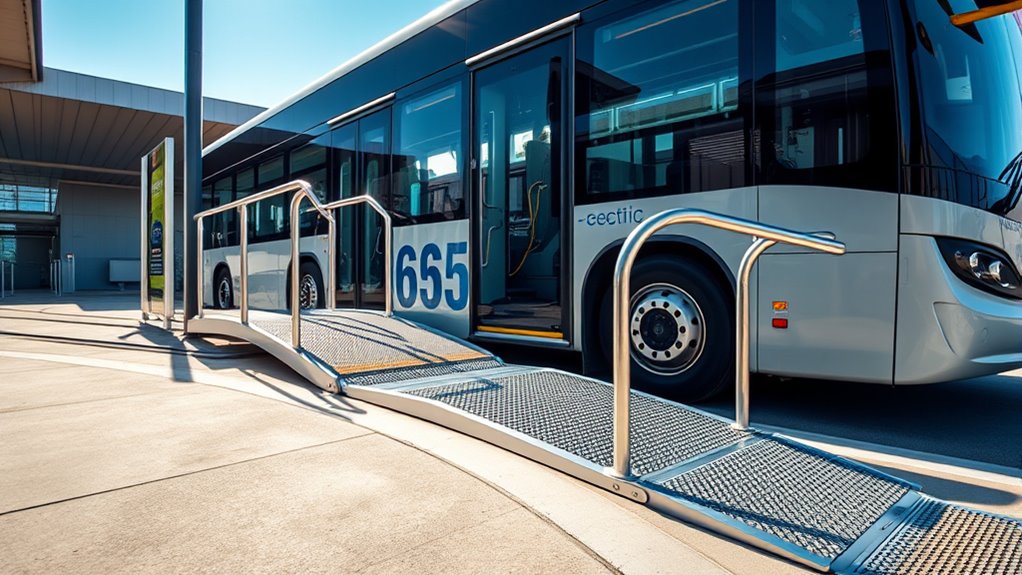
Accessibility upgrades are indispensable for creating inclusive spaces that everyone can enjoy. When it comes to electric buses, incorporating features like wheelchair lifts and ramps isn’t just about compliance; it’s about ensuring mobility for all passengers. As you plan these upgrades, smart technology plays a pivotal role. Modern wheelchair lifts and ramps are equipped with sensors and automation that make the boarding process safer and more efficient. For instance, sensors can detect obstructions, preventing accidents and streamlining operations. Automated systems also reduce the need for manual handling, making it easier for drivers to deploy lifts or extend ramps quickly, especially during busy schedules. These innovations help you deliver a smoother, more accessible experience for passengers with mobility challenges, reinforcing your commitment to inclusivity.
However, integrating these upgrades requires strategic planning, and funding strategies are essential to making them a reality. You need to explore various sources of funding—government grants, transportation subsidies, or public-private partnerships—that specifically support accessible transportation initiatives. Many local and federal programs prioritize funding for smart upgrades that enhance accessibility, so it’s worth researching which grants align with your project. Additionally, you can consider phased implementation, spreading costs over time to manage budgets more effectively. Partnering with organizations that focus on disability advocacy can also open doors to additional funding opportunities or donations, making the investment more manageable. Incorporating air quality considerations can also contribute to creating healthier environments inside your vehicles, especially important given the increased focus on health and safety. When considering these upgrades, you should assess the specific needs of your community and the technical requirements of your electric buses. Prioritize upgrades that provide maximum accessibility benefits without compromising efficiency. For example, choosing lifts with smart technology features can reduce maintenance costs and improve reliability, ultimately saving you money in the long run. Keep in mind that engaging with stakeholders—including passengers, advocacy groups, and staff—can help identify the most critical features and ensure your upgrades meet real-world needs.
electric bus wheelchair lift
As an affiliate, we earn on qualifying purchases.
As an affiliate, we earn on qualifying purchases.
Frequently Asked Questions
How Do Wheelchair Lifts Impact Overall Bus Maintenance Costs?
Wheelchair lifts can slightly increase your overall bus maintenance costs due to higher maintenance frequency and parts replacement needs. However, with proper cost analysis, you’ll find that these upgrades improve accessibility without a significant financial burden. Regular inspections and timely repairs help keep maintenance manageable. Over time, the benefits of enhanced accessibility and passenger satisfaction often outweigh the additional costs, making wheelchair lifts a worthwhile investment.
Are There Specific Safety Standards for Installing Ramps on Electric Buses?
Think of installing ramps on electric buses as building bridges that connect diverse journeys. You must follow strict safety regulations and installation guidelines to make certain these bridges are secure and reliable. These standards, set by authorities like the ADA and FMVSS, focus on stability, slip resistance, and proper anchoring. By adhering to them, you guarantee passenger safety and smooth integration of accessibility features, making every trip inclusive and safe.
What Training Is Required for Drivers Operating Wheelchair Lifts?
You need to complete thorough driver training focused on lift operation protocols to ensure safe and proper use of wheelchair lifts. This training covers how to operate the lift correctly, secure wheelchairs safely, and handle emergency situations. By mastering these protocols, you help protect passengers and comply with safety standards. Regular refreshers are also recommended to keep your skills sharp and stay updated on any new procedures or regulations.
How Do Accessibility Upgrades Affect Bus Route Scheduling?
Accessibility upgrades can increase route scheduling efficiency by reducing passenger wait times, especially for those with mobility challenges. With 85% of riders benefiting from improved access, you’ll need to adjust route frequencies to accommodate new lift and ramp deployment. Planning ahead guarantees that buses equipped with these features run smoothly, minimizing delays and enhancing overall service for all passengers. Your proactive scheduling makes a real difference in transit accessibility.
Can Existing Electric Buses Be Retrofitted With Wheelchair Lifts and Ramps?
You can retrofit existing electric buses with wheelchair lifts and ramps, but you’ll face certain challenges. Retrofitting challenges include fitting new equipment into the bus’s design and ensuring safety standards. Cost implications can be significant, as upgrades may require substantial investment in both parts and labor. However, retrofitting allows you to improve accessibility without needing entirely new buses, making it a practical option if you’re committed to inclusivity.
automatic wheelchair ramp for bus
As an affiliate, we earn on qualifying purchases.
As an affiliate, we earn on qualifying purchases.
Conclusion
So, next time you see electric buses gliding by with shiny new wheelchair lifts and ramps, imagine them as the red carpet of public transit—everyone’s VIP. No more struggling, no more excuses. It’s like installing a secret VIP lounge for wheelchair users, where accessibility is the star of the show. Because in a world where buses get upgrades, everyone deserves a front-row seat—no ticket required. Welcome to the future of truly inclusive travel.
smart wheelchair lift for transit vehicles
As an affiliate, we earn on qualifying purchases.
As an affiliate, we earn on qualifying purchases.
accessible bus boarding ramp
As an affiliate, we earn on qualifying purchases.
As an affiliate, we earn on qualifying purchases.