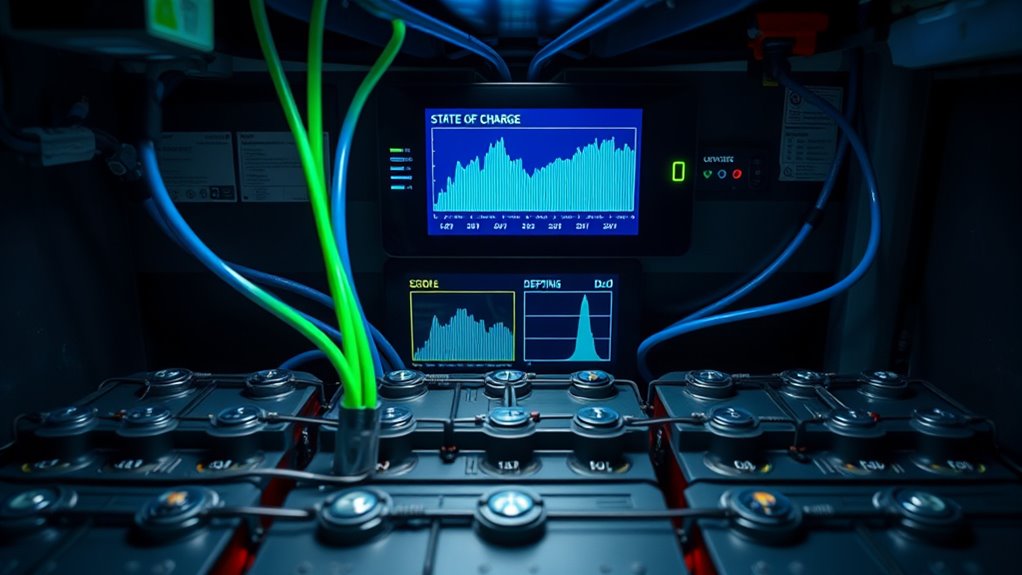

Understanding the state of charge (SoC) tells you how much energy your bus battery currently holds, while depth of discharge (DoD) shows how much power you’ve used relative to its capacity. Keeping track of these helps prevent overcharging or deep discharges that can damage the battery and shorten its lifespan. Properly managing SoC and DoD boosts battery performance and durability. If you keep exploring, you’ll discover how to optimize your bus battery’s health effectively.

Get business pricing on monitors, keyboards and dev gear
- Business-only prices and quantity discounts
- Tax-exempt purchasing
- Multiple users, one account, clear invoices
Key Takeaways
- State of Charge (SoC) indicates the current battery capacity relative to its maximum, guiding charging and usage decisions.
- Depth of Discharge (DoD) measures how much energy has been used, with deeper discharges increasing battery wear.
- Maintaining optimal SoC levels prevents overcharging and deep discharges, extending battery lifespan.
- Regular monitoring of SoC and DoD helps optimize charging schedules and avoid capacity loss.
- Proper management of SoC and DoD enhances battery efficiency, reliability, and overall bus operational performance.
Understanding bus battery charge is essential for guaranteeing reliable operation and efficient maintenance. When you monitor the state of charge, you’re directly influencing the battery’s lifespan and overall performance. A well-maintained battery that stays within ideal charge levels will last longer, saving you money and reducing unexpected breakdowns. Proper management of the state of charge helps prevent overcharging or deep discharges, both of which can shorten your battery’s service life. By understanding how much energy your bus battery holds at any given moment, you can make smarter decisions about charging, usage, and maintenance routines.
Monitoring bus battery charge ensures longevity, efficiency, and reliable operation through smarter charging and maintenance decisions.
Charging efficiency plays a key role in maintaining your battery’s health. When your charging process is efficient, less energy is wasted, and your batteries reach full capacity faster and more reliably. An efficient charging cycle ensures that you’re not overcharging, which can cause thermal stress and degrade the battery over time, nor undercharging, which leaves the battery partially depleted and vulnerable to damage. To maximize charging efficiency, it’s essential to use the correct chargers designed for your battery type, and to follow recommended charging profiles. This way, you avoid unnecessary strain on the battery, helping it maintain a healthy state of charge and prolonging its overall lifespan.
A key aspect of understanding the state of charge is recognizing the importance of not letting your bus battery discharge too deeply. Deep discharges can lead to irreversible damage, reducing the battery’s capacity and shortening its useful life. Keeping the battery within a safe depth of discharge means you’re not draining it below critical levels. This practice is especially important because deep discharges can cause permanent damage to certain types of batteries. Keeping the battery adequately charged at all times improves its readiness and reduces the time needed for charging cycles, contributing to better operational efficiency.
In addition, knowing the battery’s current state of charge allows you to plan charging schedules more effectively, especially if your bus operates on tight schedules. It helps you avoid unexpected power shortages mid-route and ensures that your fleet remains operational throughout the day. Regularly checking and managing the state of charge also enables you to detect potential issues early, such as declining capacity or charging inefficiencies, so you can take corrective actions before problems escalate. By paying close attention to these factors, you’ll maximize your bus battery’s performance, extend its lifespan, and keep your fleet running smoothly with minimal downtime.
bus battery state of charge monitor
As an affiliate, we earn on qualifying purchases.
As an affiliate, we earn on qualifying purchases.
Frequently Asked Questions
How Often Should Bus Batteries Be Calibrated?
You should calibrate bus batteries every 3 to 6 months as part of regular battery maintenance. Calibration guarantees accurate readings of the State of Charge and Depth of Discharge, helping prevent unexpected failures. Keep an eye on battery performance and follow manufacturer recommendations for calibration frequency. Regular calibration maintains ideal battery health, extends lifespan, and ensures your bus operates reliably, especially during long routes or demanding conditions.
What Is the Impact of Temperature on Battery SOC?
Temperature effects substantially impact your battery’s state of charge (SOC) and overall performance. When it’s cold, your battery’s chemical reactions slow down, reducing capacity and making it seem like the SOC is lower than it actually is. Conversely, high temperatures can boost initial performance but may accelerate battery aging. To guarantee accurate readings and ideal battery health, you should monitor temperature effects and keep batteries within recommended temperature ranges.
Can SOC and DOD Be Monitored Remotely?
Yes, you can monitor SOC and DOD remotely using advanced battery management systems. These systems allow you to track your bus batteries’ charge levels and health in real time through connected devices. With remote monitoring, you gain instant insights, enabling proactive maintenance and efficient energy management. This technology helps guarantee your batteries stay within ideal ranges, extending their lifespan and preventing unexpected failures.
How Do Charging Cycles Affect Battery Lifespan?
Charging cycles can cause cumulative coil of corrosion, compromising charging efficiency and accelerating battery degradation. Each cycle stresses the battery’s structure, gradually wearing down its capacity. Frequent, shallow cycles can extend battery life, but deep discharges damage batteries faster. To maximize lifespan, you should monitor and manage charging habits carefully, avoiding overcharging or deep discharges, therefore protecting your bus batteries from premature failure and ensuring reliable, long-lasting performance.
Are There Differences in Soc/Dod for Different Bus Battery Types?
Yes, different bus battery types have varying SOC and DOD characteristics due to their battery chemistry. For example, lithium-ion batteries typically allow higher DOD and better SOC management compared to lead-acid batteries. You should adapt your maintenance practices accordingly, like monitoring DOD closely for lead-acid batteries to extend lifespan, while lithium-ion batteries require less frequent maintenance. Knowing your battery chemistry helps optimize charge cycles and prolong battery health.
As an affiliate, we earn on qualifying purchases.
Conclusion
Now that you understand the dance between state of charge and depth of discharge, imagine your bus batteries as overworked chefs in a busy kitchen. If they’re constantly pushed to the limit without rest, they’ll burn out faster than a day-old soufflé. Treat them kindly, give them proper breaks, and keep an eye on their “fuel gauge.” After all, a well-rested battery is the secret ingredient to a smooth ride—no more kitchen chaos on wheels!
As an affiliate, we earn on qualifying purchases.
As an affiliate, we earn on qualifying purchases.
Halloween Picks
halloween
As an affiliate, we earn on qualifying purchases.