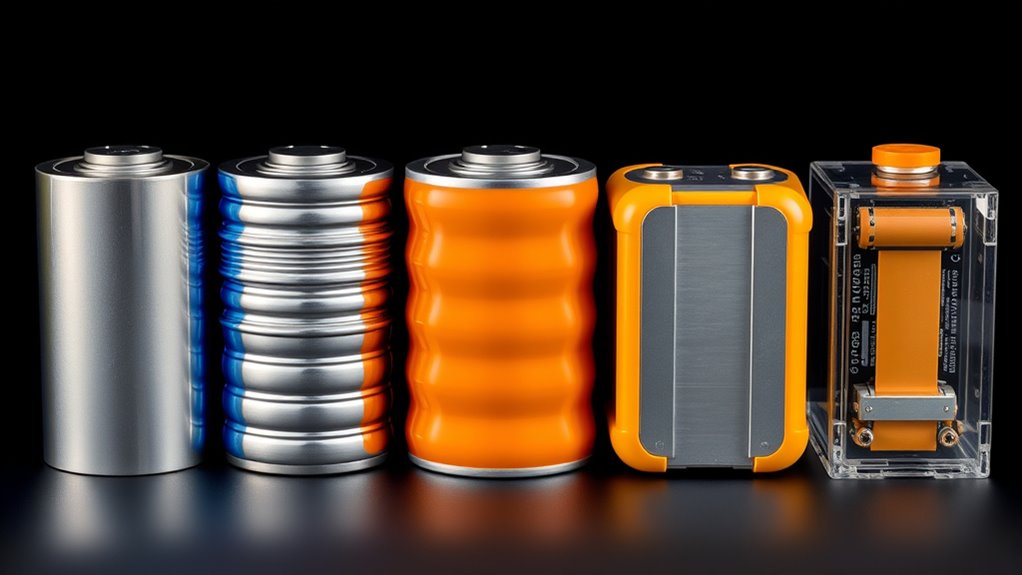

When comparing battery chemistries like LFP, NMC, NCA, LTO, and solid-state, you’ll find that LFP offers superior safety and a longer lifespan, ideal for stationary storage and EVs focused on reliability. NMC and NCA have higher energy densities, perfect for compact devices and fast-charging applications but pose safety risks if not managed well. LTO provides excellent safety and longevity but at a higher cost. Solid-state batteries promise higher safety and energy, though they’re still developing. Understanding these differences helps you choose the right chemistry for your needs.

Get business pricing on monitors, keyboards and dev gear
- Business-only prices and quantity discounts
- Tax-exempt purchasing
- Multiple users, one account, clear invoices
Key Takeaways
- LFP batteries prioritize safety and longevity, with lower fire risk and longer cycle life, ideal for stationary storage and EVs.
- NMC and NCA offer higher energy density for lightweight, high-performance devices but pose higher thermal runaway risks.
- LTO batteries provide exceptional stability and extremely long cycle life but are more expensive and suited for specialized applications.
- Solid-state batteries promise improved safety, higher energy density, and faster charging, though they face manufacturing and development challenges.
- The choice of chemistry depends on application needs, balancing safety, environmental impact, performance, and cost considerations.
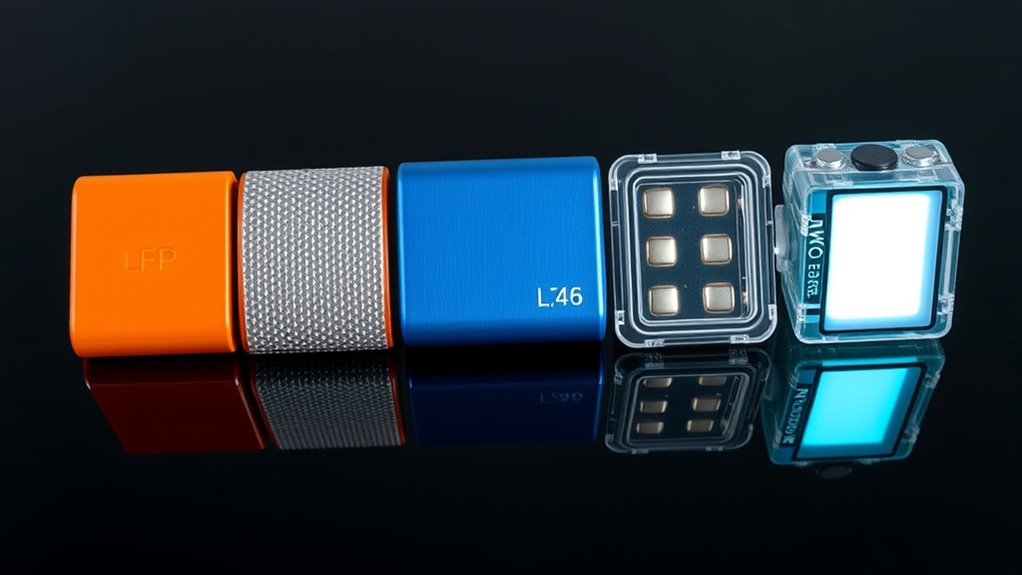
Choosing the right battery chemistry is essential for optimizing performance, cost, and longevity in various applications. When evaluating options, safety considerations and environmental impact play crucial roles. For example, lithium iron phosphate (LFP) batteries are known for their superior safety profile because they are less prone to thermal runaway, reducing the risk of fires. This safety advantage is vital in electric vehicles and stationary energy storage, where safety cannot be compromised. Additionally, LFP batteries are considered environmentally friendly since they contain fewer toxic metals and have a longer lifecycle, which reduces waste and the need for frequent replacements. Their stable chemistry means they generate less heat during operation, further enhancing safety and environmental sustainability. Moreover, advances in battery chemistry stability continue to improve the safety and efficiency of these batteries.
Choosing battery chemistry impacts safety, environment, performance, and longevity across various applications.
In contrast, nickel manganese cobalt (NMC) and nickel cobalt aluminum (NCA) chemistries offer higher energy densities, making them suitable for applications demanding compact, lightweight batteries, like smartphones and electric vehicles. However, these chemistries often contain cobalt, which raises environmental and ethical concerns because mining cobalt can have significant ecological and social impacts. Cobalt extraction can cause habitat destruction, pollution, and human rights issues, making NMC and NCA batteries less environmentally friendly despite their performance benefits. Safety considerations are also more complex with NMC and NCA, as they are more susceptible to thermal runaway if not properly managed, necessitating sophisticated battery management systems.
Lithium titanate (LTO) batteries stand out for their exceptional safety and longevity. They are highly stable and resistant to thermal runaway, making them one of the safest options available. LTO batteries also have an extended cycle life, often surpassing 10,000 cycles, which reduces environmental waste by decreasing replacement frequency. Their environmental impact is relatively low, but they tend to be more expensive due to the cost of materials and manufacturing processes. This makes them ideal for specialized applications like grid stabilization and backup power, where safety and long-term performance outweigh initial costs.
Solid-state batteries are emerging as the next frontier, promising unparalleled safety due to their solid electrolytes, which eliminate the risk of leakage and thermal runaway. They also have the potential for higher energy density and faster charging times. From an environmental standpoint, solid-state batteries could reduce reliance on hazardous liquid electrolytes and potentially use more sustainable materials. However, their manufacturing processes are still developing, and large-scale production challenges mean their environmental impact and safety profile will become clearer as technology matures. Ultimately, choosing the right chemistry depends on balancing safety, environmental impact, performance, and cost, tailored to specific application needs.
lithium iron phosphate (LFP) battery pack
As an affiliate, we earn on qualifying purchases.
As an affiliate, we earn on qualifying purchases.
Frequently Asked Questions
Which Battery Chemistry Has the Longest Cycle Life?
You’ll find that LTO batteries have the longest cycle life among these chemistries. Their chemistry durability allows them to endure over 10,000 cycles, far surpassing others like LFP, NMC, or NCA. This makes LTO ideal for applications demanding frequent charging and long-term reliability. Understanding this cycle life comparison helps you choose the best chemistry for your needs, especially when longevity and durability are your top priorities.
How Do Safety Profiles Differ Among These Chemistries?
Imagine a battery as a delicate balance between fire risk and thermal stability. LFP batteries offer superior safety with lower fire risk and excellent thermal stability, making them more resilient under stress. In contrast, NMC and NCA chemistries carry higher fire risks due to their chemistry but can deliver higher energy densities. LTO and solid-state batteries balance safety and performance, providing safer options with reduced thermal concerns.
Which Chemistries Are Most Environmentally Sustainable?
You’ll find LFP batteries tend to be more environmentally sustainable because they use less harmful raw materials and face fewer recycling challenges. NMC and NCA batteries, however, rely on cobalt and nickel, which pose significant raw material impacts and recycling difficulties. LTO and solid-state batteries show promise but still face challenges in recycling infrastructure. Overall, LFP offers a greener option with fewer environmental concerns.
What Are the Cost Differences Over the Battery Lifespan?
Over the battery lifespan, you’ll find that LFP batteries tend to have lower manufacturing costs and longer cycle life, saving you money long-term. NMC and NCA batteries usually cost more upfront but offer higher energy density. LTO batteries, while durable, have higher manufacturing costs. Recycling challenges vary; solid-state batteries are promising but still expensive to recycle. Ultimately, your choice depends on balancing initial costs, longevity, and recyclability.
How Do Temperature Ranges Affect Each Chemistry’s Performance?
Did you know that LTO batteries can operate in temperatures up to 60°C without losing efficiency? Temperature ranges considerably impact each chemistry’s thermal stability and temperature tolerance. For example, LFP batteries perform well in high temperatures but can degrade in cold weather. NMC and NCA have moderate tolerance, while solid-state batteries are promising with their enhanced thermal stability. Understanding these differences helps you choose the right chemistry for your climate.
As an affiliate, we earn on qualifying purchases.
Conclusion
Think of battery chemistries like different roads for your electric journey. LFP is the smooth, steady highway, offering safety and longevity. NMC and NCA are like fast lanes, delivering high energy but needing careful driving. LTO is a rugged trail, built for durability, while solid-state is the futuristic expressway, promising safety and power. Choosing the right one depends on your destination—whether it’s speed, safety, or endurance—each road guides your ride in its unique way.
As an affiliate, we earn on qualifying purchases.
As an affiliate, we earn on qualifying purchases.
Halloween Picks
halloween
As an affiliate, we earn on qualifying purchases.