
V2G technology enables electric buses to support grid stability by storing excess energy and sending it back when demand peaks. This transforms buses from simple transportation tools into mobile energy sources that help balance supply, smooth out fluctuations, and reduce reliance on fossil fuels. During low demand, they absorb surplus renewable energy, and during high demand, they release it, preventing outages. Discover how these buses can become essential for a resilient, cleaner grid.
Key Takeaways
- Electric buses equipped with V2G can supply stored energy back to the grid during peak demand.
- They help balance grid load by absorbing excess renewable energy during low demand periods.
- Buses provide rapid response support, stabilizing voltage and preventing outages.
- V2G-enabled buses reduce reliance on traditional power plants, enhancing grid resilience.
- They enable seamless integration of renewable energy sources, ensuring a steady power supply.
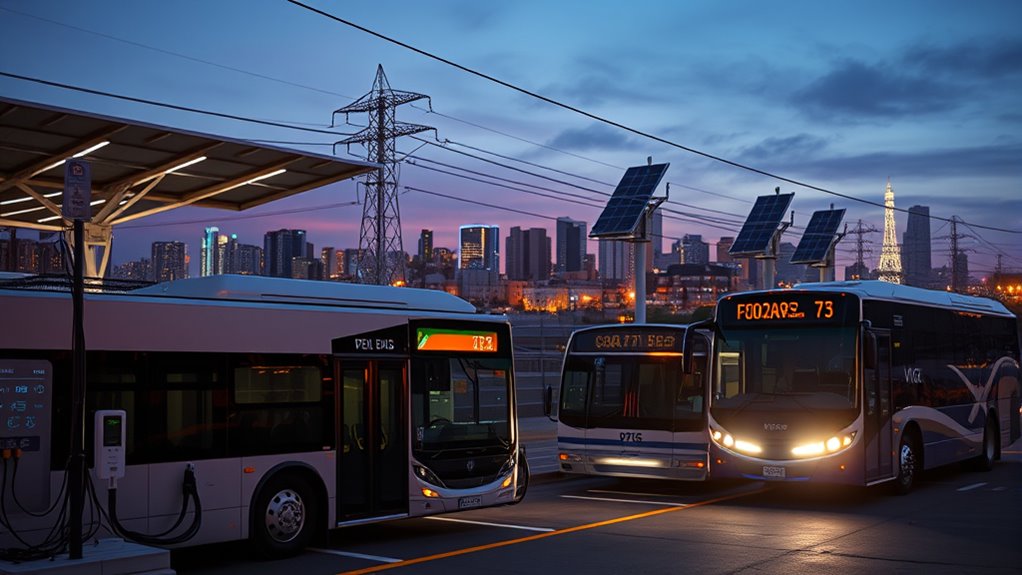
Have you ever wondered how electric vehicles can do more than just transport you? The answer lies in how they interact with the electricity grid, especially through Vehicle-to-Grid (V2G) technology. V2G allows electric buses and cars to send excess energy back to the grid, transforming them from mere transportation tools into active participants in energy management. This isn’t just about having a greener ride; it’s about creating a smarter, more resilient power system. At the core of this innovation is battery integration, which guarantees that electric buses can seamlessly connect to the grid without compromising their primary function of transit. These batteries act as mobile energy reservoirs, capable of storing excess electricity during periods of low demand and releasing it when demand peaks.
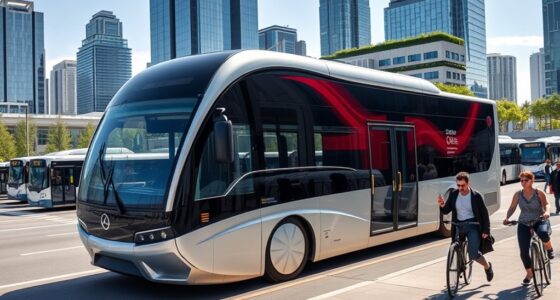
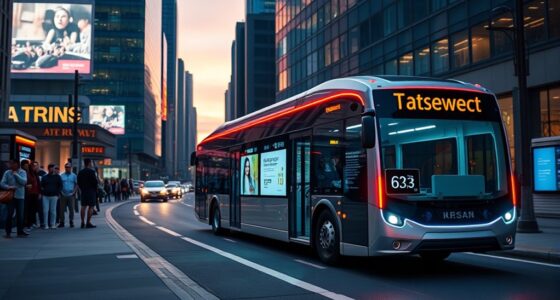
Electric buses with battery integration turn into mobile energy hubs, balancing the grid while serving their primary transit role.
With battery integration, electric buses become dynamic assets that contribute to grid balancing. During times of high electricity consumption, such as hot summer afternoons or cold winter mornings, these buses can feed stored energy back into the system, easing stress on the grid and preventing outages. Conversely, during periods of low demand, they can absorb surplus power, helping to stabilize voltage levels and maintain a consistent supply. This bidirectional flow of energy makes the grid more adaptable and less dependent on traditional power plants, which often take longer to ramp up or down. Additionally, Kia Tuning upgrades can optimize the performance of these vehicles, ensuring they operate efficiently while providing grid services. The beauty of this setup is that it leverages existing infrastructure—namely, the buses and their batteries—to provide essential services without requiring drastic new investments.
V2G-enabled buses also support renewable energy integration by smoothing out intermittent supplies from sources like wind and solar. When the sun’s shining or the wind’s blowing, excess renewable energy can be stored in the bus batteries. When conditions are less favorable, the stored energy can be released, ensuring a steady flow of clean power. This process not only enhances grid stability but also promotes the wider adoption of renewable resources. You can think of electric buses as mobile batteries that actively help balance the grid, making it more efficient and resilient.
In essence, the combination of battery integration and grid balancing capabilities transforms electric buses from simple transit vehicles into vital components of the smart energy ecosystem. They help reduce reliance on fossil fuels, support renewable energy, and guarantee a reliable power supply. As you consider the future of transportation and energy, it’s clear that electric buses equipped with V2G technology will play a crucial role in building a cleaner, more stable electricity grid.
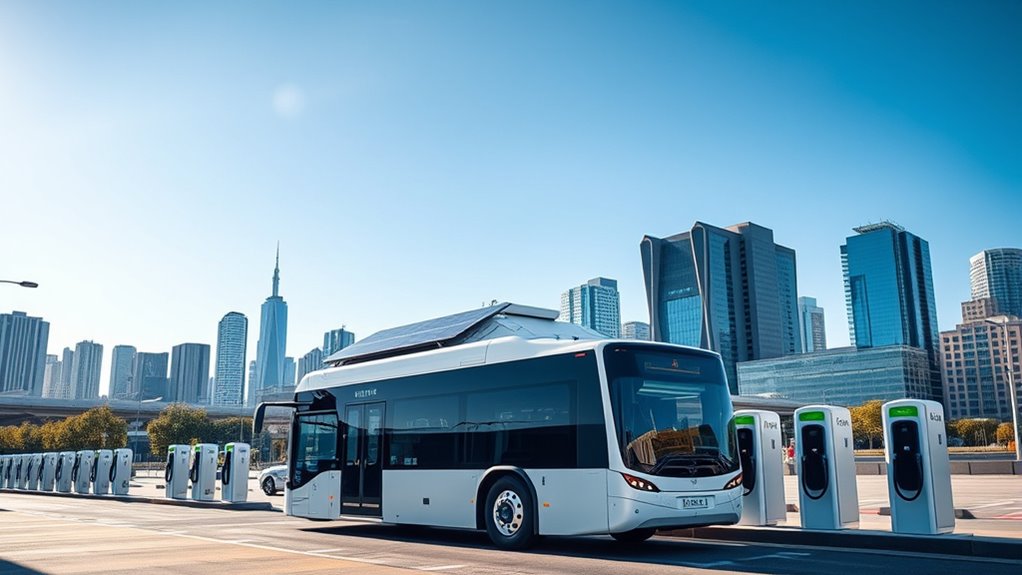
V2G electric bus charging station
As an affiliate, we earn on qualifying purchases.
As an affiliate, we earn on qualifying purchases.
Frequently Asked Questions
How Does V2G Technology Impact Bus Battery Lifespan?
You might worry about battery degradation with V2G technology, but it’s designed to minimize impact. Frequent charging cycles can slightly accelerate battery wear, yet advanced management systems help optimize charging and discharging, extending battery life. If you follow proper protocols, V2G shouldn’t substantially reduce your bus’s battery lifespan. Proper maintenance and smart scheduling ensure your batteries stay healthy while providing valuable grid services.
What Are the Costs Associated With Implementing V2G for Buses?
Imagine opening hidden savings—implementing V2G for buses involves costs like infrastructure upgrades and technology investments. You’ll need to fund charging stations, smart grid systems, and maintenance. However, financial incentives from governments or energy providers can offset these expenses, making the shift more affordable. While initial costs seem high, the long-term benefits of grid stability and energy savings can outweigh the upfront investment, turning challenges into opportunities.
How Do Regulations Affect V2G Deployment in Different Regions?
Regulations substantially influence V2G deployment across regions by creating policy barriers, which can slow or block adoption. You might face restrictive rules on energy sharing or vehicle integration. However, regional incentives can encourage V2G use, making it more affordable and attractive. Staying informed about local policies and advocating for supportive regulations will help you navigate these challenges and accelerate the integration of V2G technology in your area.
Can V2G Services Be Integrated With Renewable Energy Sources?
Yes, V2G services can be integrated with renewable energy sources by enhancing renewable integration and providing energy storage. You can use electric buses as mobile energy storage units, capturing excess renewable energy during peak periods and supplying it back to the grid when needed. This approach helps balance supply and demand, reduces reliance on fossil fuels, and promotes a cleaner, more resilient energy system.
What Are the Cybersecurity Risks of V2G Systems?
You face cybersecurity threats like hacking, data breaches, and unauthorized access in V2G systems, risking disruption of energy flow. Data privacy is also at risk, as sensitive information about your vehicle and energy usage could be exposed. To protect yourself, make certain strong encryption, regular updates, and secure authentication methods are in place. Staying vigilant helps safeguard your system from cyberattacks and preserves your privacy.
bi-directional EV charger for buses
As an affiliate, we earn on qualifying purchases.
As an affiliate, we earn on qualifying purchases.
Conclusion
By embracing V2G technology, you open a future where buses become both travelers and guardians of the grid. Imagine a symphony where each vehicle plays its part in harmony, stabilizing energy flow just as a conductor guides an orchestra. With your support, this vision transforms from a distant dream into a tangible reality—proving that the power to shape our energy future lies not just in machines, but in your hands.
electric bus battery storage system
As an affiliate, we earn on qualifying purchases.
As an affiliate, we earn on qualifying purchases.
vehicle-to-grid energy management system
As an affiliate, we earn on qualifying purchases.
As an affiliate, we earn on qualifying purchases.