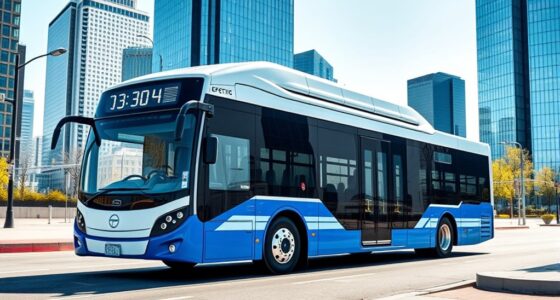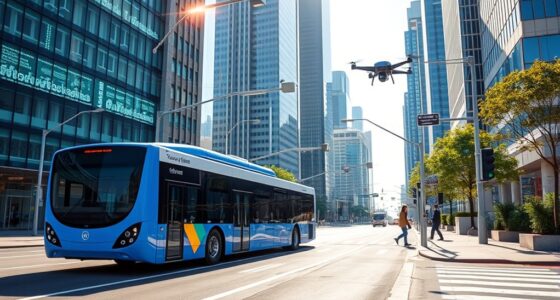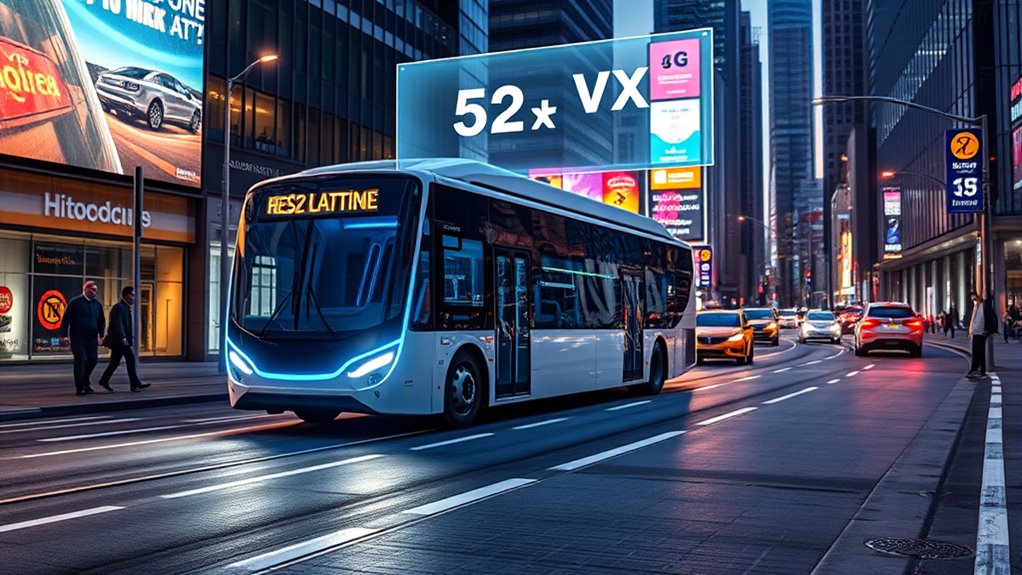
5G and V2X communications will revolutionize your bus mobility experience by enabling instant data sharing between buses, traffic signals, and infrastructure, making your transit safer and more efficient. With low-latency connectivity, buses can adapt routes in real-time to avoid congestion, reduce delays, and optimize schedules. They’ll also communicate better with traffic management systems to prioritize public transit, ensuring smoother journeys. Keep exploring further to see how these innovations will shape the future of urban transit for you.

Get business pricing on monitors, keyboards and dev gear
- Business-only prices and quantity discounts
- Tax-exempt purchasing
- Multiple users, one account, clear invoices
Key Takeaways
- 5G and V2X enable real-time data exchange, enhancing bus communication with infrastructure and other vehicles.
- They facilitate adaptive routing and scheduling, improving punctuality and operational efficiency.
- These technologies support traffic signal prioritization for buses, reducing delays and congestion.
- They enhance safety through faster hazard alerts and coordinated responses to emergencies.
- Overall, 5G and V2X drive smarter, safer, and more sustainable urban bus mobility systems.
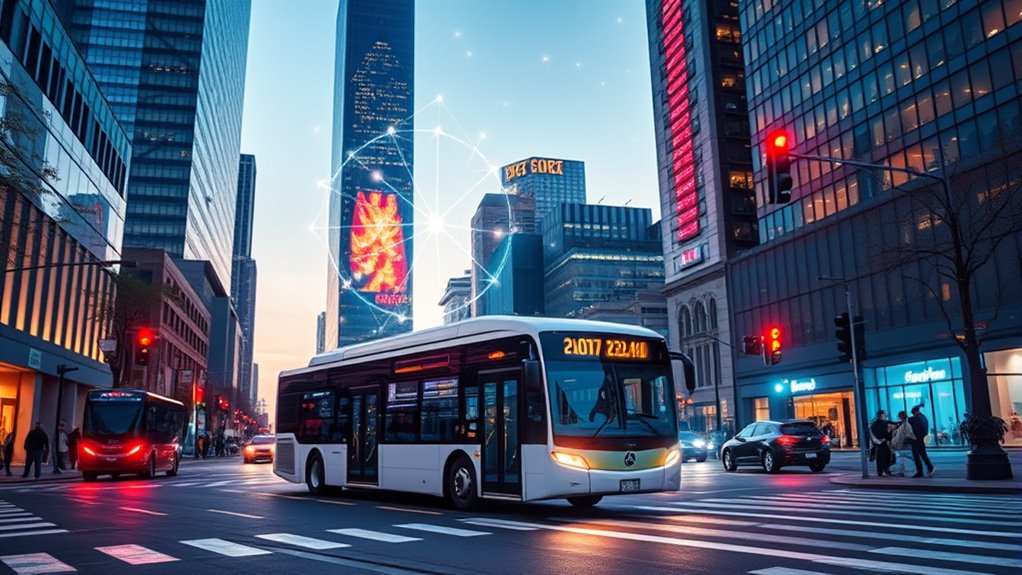
Have you ever wondered how technology is transforming public bus systems? With the advent of 5G and Vehicle-to-Everything (V2X) communications, the way buses operate and serve communities is on the brink of a major overhaul. These innovations enable real-time data exchange between buses, infrastructure, and other vehicles, creating a smarter, more efficient transit network. The key to this transformation lies in autonomous integration and traffic coordination, which work together to streamline operations and enhance safety.
Autonomous integration allows buses to communicate seamlessly with traffic signals, other vehicles, and transit infrastructure. This means buses can receive instant updates about traffic conditions, road hazards, or signal changes, enabling them to adjust their routes and speeds proactively. For passengers, this translates into more reliable schedules and less time spent waiting. For operators, it reduces the stress of manual navigation through congested areas. By connecting buses to a broader digital ecosystem, autonomous integration guarantees they operate as intelligent, adaptive units within a complex urban environment.
Autonomous integration enables buses to communicate with traffic signals and infrastructure for smarter, more adaptive urban transit.
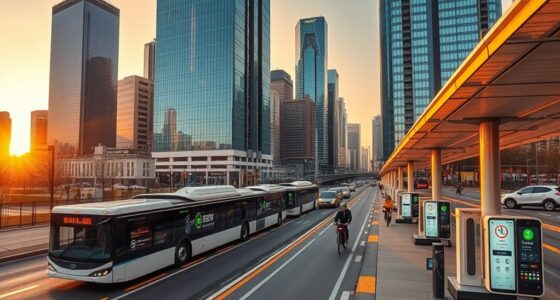
Traffic coordination, powered by V2X communications, further enhances bus mobility by orchestrating vehicle movements across the entire transportation network. When buses share their position and speed data with traffic management systems and nearby vehicles, the entire system can work together to optimize flow. For instance, traffic lights can adjust their timing based on bus schedules, prioritizing public transit and reducing delays. Similarly, buses can be routed around congestion or accidents, maintaining schedules and improving overall efficiency. This coordinated approach minimizes stop-and-go traffic, lowers emissions, and creates a smoother commute experience for everyone.
With 5G’s ultra-reliable, low-latency connectivity, these systems can operate in real time, ensuring that data-driven decisions are instantaneous. As a result, buses become more than just vehicles—they transform into active participants in a connected ecosystem that’s constantly optimizing itself. This interconnectedness not only improves operational efficiency but also bolsters safety; buses can alert drivers and passengers to hazards faster and coordinate with emergency services if needed. Additionally, incorporating high refresh rates in display and communication systems ensures more accurate and timely data exchange, further enhancing responsiveness. The combination of autonomous integration and traffic coordination facilitated by 5G and V2X creates a resilient, adaptive transit environment designed for the challenges of modern cities.
In essence, you’re witnessing a future where public bus systems are smarter, safer, and more efficient, all thanks to the powerful synergy of 5G and V2X communications. These technologies are not just incremental improvements—they’re foundational shifts that will redefine bus mobility and urban transportation for years to come.
Popular right now

Bose QuietComfort True Wireless Earbuds with Active Noise Cancellation, Black

Ninja Flip Toaster Oven and Air Fryer, 8-in-1, Stainless Steel, SP151

KitchenAid Artisan 5-Quart Tilt-Head Stand Mixer, Almond Cream
As an affiliate, we earn on qualifying purchases.
Frequently Asked Questions
How Will V2X Improve Passenger Safety in Buses?
V2X improves passenger safety by alerting you to potential hazards, helping you react faster and prevent accidents. It also monitors driver behavior, encouraging safer driving practices. With real-time data, you can enhance passenger comfort by avoiding sudden stops or sharp turns. This technology creates a safer environment inside the bus, giving you confidence that safety measures are actively protecting you throughout your journey.
What Are the Privacy Concerns With V2X Data Sharing?
You should be aware that V2X data sharing raises privacy concerns about data security and user anonymity. As your vehicle transmits information, there’s a risk that sensitive data could be intercepted or misused. Ensuring robust encryption and anonymizing user data helps protect your privacy. It’s essential for manufacturers and authorities to implement strict measures so you can enjoy the benefits of V2X without compromising your personal information.
How Does 5G Reduce Latency in Bus Communication Systems?
You’ll notice that 5G reduces latency in bus communication systems through edge computing and network slicing. Edge computing processes data closer to the bus, minimizing delays, while network slicing allocates specific network segments for real-time data transfer. This combination ensures faster, more reliable communication, allowing buses to respond instantly to traffic, safety signals, and passenger needs, ultimately enhancing overall mobility and safety.
What Infrastructure Is Required for V2x-Enabled Buses?
You need to invest in urban planning and infrastructure to enable V2X-enabled buses. This includes installing roadside units, smart traffic signals, and reliable 5G networks to support real-time communication. Upgrading existing communication systems and guaranteeing seamless data integration are vital. Your infrastructure investment ensures that V2X technology functions smoothly, improving safety, efficiency, and connectivity in bus mobility within smart cities.
How Will V2X Impact Bus Route Optimization and Scheduling?
V2X technology will markedly improve your bus route optimization and scheduling by providing real-time data. As a result, you can adjust routes quickly to avoid delays and improve route efficiency. This means fewer missed stops, better adherence to schedules, and enhanced passenger satisfaction. By leveraging V2X, you’ll make smarter decisions on the fly, ensuring your bus system operates smoothly and efficiently even in dynamic traffic conditions.
Conclusion
As 5G and V2X transform bus mobility, you’re stepping into a future where connectivity is the heartbeat of transportation. Imagine the network as a nervous system, guiding buses smoothly through the city’s veins. This tech evolution doesn’t just enhance efficiency; it creates a smarter, safer transit landscape. Embrace these changes, and you’ll see your daily commute become a well-orchestrated symphony, where every vehicle plays its part in harmony.