In the COTA case, you see how autonomous buses challenge driver union agreements by shifting roles and raising legal and contractual issues. Unions must negotiate to protect workers’ rights, seeking guarantees like retraining and transitional plans. While transit agencies push automation for efficiency, legal frameworks may need to adapt. To understand how unions can navigate these industry changes and safeguard jobs, there’s more to uncover about this evolving landscape.

Get business pricing on monitors, keyboards and dev gear
- Business-only prices and quantity discounts
- Tax-exempt purchasing
- Multiple users, one account, clear invoices
Key Takeaways
- COTA seeks to implement autonomous buses while respecting existing driver union agreements and labor protections.
- Unions aim to negotiate transitional provisions, retraining, and job security measures amid automation adoption.
- Legal frameworks and collective bargaining agreements may require updates to address autonomous vehicle roles.
- Automation challenges traditional driver roles, prompting unions to influence policy to safeguard employment rights.
- The success of COTA’s autonomous bus initiative depends on effective union engagement and adaptation of agreements.
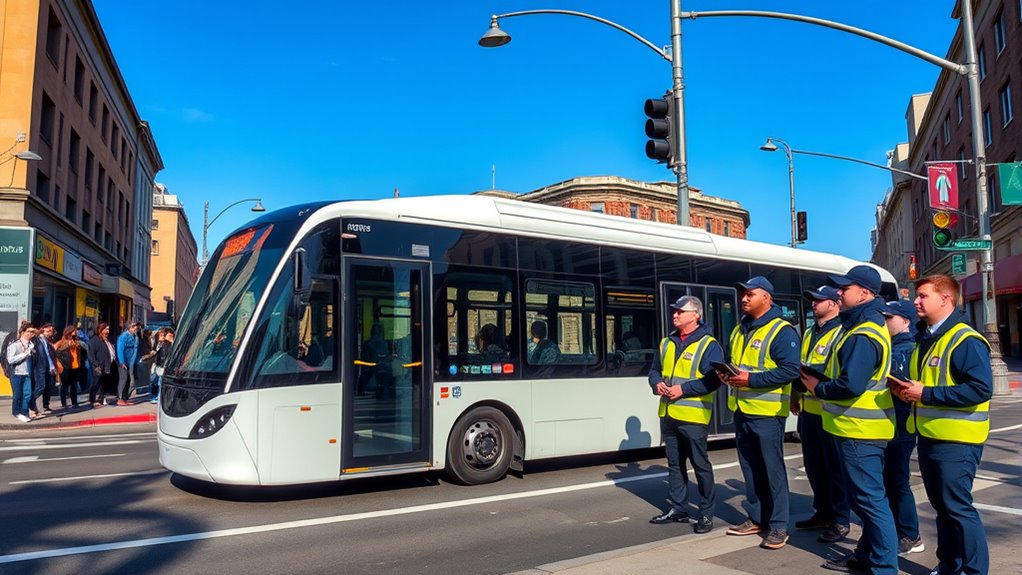
As autonomous buses become more common, driver union agreements are facing significant challenges. You might find yourself questioning how unions, which have historically protected drivers’ labor rights, will adapt to the rapid advancement of automation technology. The shift toward driverless vehicles introduces complex automation challenges that threaten to disrupt established labor agreements. These agreements often guarantee job security, fair wages, and working conditions for drivers. Now, with autonomous buses, the fundamental nature of the job changes, prompting unions to reconsider their role in safeguarding workers’ rights in a new landscape. You need to understand that automation challenges are not just technical hurdles but also social and legal issues that impact employment stability. As these buses become more prevalent, unions must negotiate with transit agencies and policymakers to ensure that labor rights aren’t sacrificed in the name of efficiency or cost savings. The key concern is whether drivers will be displaced entirely or if their roles will evolve into oversight, maintenance, or other support functions. This uncertainty fuels tension, especially when transit authorities push for automation as a way to reduce labor costs and improve service reliability. For unions, the challenge lies in advocating for their members’ interests while accepting that automation might eventually lead to job reductions. Some unions push for guarantees of retraining programs or job transition plans, but the effectiveness of these measures is uncertain. You have to recognize that the legal framework underpinning driver union agreements might need to be redefined, as existing contracts often don’t address issues related to autonomous vehicles. Negotiations become more complex as authorities seek to implement autonomous fleets without infringing on labor rights, which they usually protect through collective bargaining agreements. Additionally, the technological pace of automation complicates long-term planning for unions, who must adapt their strategies to protect workers’ rights amid a shifting industry. The COTA case study exemplifies these challenges, as the transit agency explores autonomous buses while trying to honor existing union agreements. The outcome depends heavily on how effectively unions can influence policy and negotiate transitional provisions that safeguard employment. Ultimately, the future of driver union agreements hinges on balancing innovation with the rights of workers. You need to stay informed about these automation challenges and actively participate in dialogues that shape policies, making sure that progress doesn’t come at the expense of the labor rights that have historically protected transit workers.
Frequently Asked Questions
How Do Union Agreements Impact the Deployment Timeline of Autonomous Buses?
Union agreements can slow down the deployment of autonomous buses because labor negotiations often involve contractual obligations that need to be addressed first. You might face delays as unions seek assurances or protections for drivers, which can hinder quick implementation. These negotiations require time and compromise, making it more challenging to swiftly introduce autonomous technology without resolving concerns related to employment, rights, and shift plans.
What Are Drivers’ Rights During the Transition to Autonomous Vehicle Technology?
During the shift to autonomous vehicle technology, your rights include worker protections guaranteed through union negotiations. You have the right to participate in discussions about job security, retraining programs, and safety measures. Employers must respect your union’s role in safeguarding your interests. Be proactive in engaging with union representatives, stay informed about policy changes, and advocate for fair treatment to guarantee your rights are upheld throughout this technological shift.
How Are Compensation and Benefits Negotiated in Autonomous Bus Pilot Programs?
You negotiate compensation and benefits through contract negotiations, ensuring employee benefits reflect the shift to autonomous buses. As the technology advances, you advocate for fair pay, job security, and benefits that protect workers’ interests. While pilot programs may start with temporary arrangements, you work to establish long-term agreements that balance innovation with workers’ rights, recognizing that shared benefits foster trust and stability in this evolving transportation landscape.
What Legal Liabilities Exist for Drivers and Unions With Autonomous Bus Accidents?
You’re likely liable for autonomous bus accidents if negligence or regulatory compliance issues are involved. Liability insurance helps cover damages, but drivers and unions could face legal challenges if they’re found responsible for unsafe operations or failing to meet safety standards. While autonomous technology shifts some liability away from drivers, ensuring proper oversight and adherence to regulations is essential to limit legal risks and protect all parties involved.
How Will Autonomous Buses Affect Union Membership and Job Security?
Autonomous buses will likely lead to decreased union membership and job security because you might face job displacement as technology replaces traditional driver roles. During union negotiations, you’ll need to push for protections against layoffs and ensure retraining programs are in place. Without proactive measures, the shift toward automation could weaken unions’ bargaining power and threaten your job stability in the transit industry.
Conclusion
Just like a tightrope walker balancing carefully, you must consider both the promise of autonomous buses and the impact on driver union agreements. These negotiations are the safety net that keeps change steady and fair. As technology advances, cooperation between unions and companies becomes vital—without it, progress risks falling flat. Embrace the challenge, because managing this shift is like steering a ship through uncharted waters, and a steady hand makes all the difference.
Fall Picks
fall essentials
As an affiliate, we earn on qualifying purchases.