
When evaluating hydrogen for buses, you should consider how each type impacts emissions. Green hydrogen, produced with renewable energy, has the lowest carbon footprint, making it the most sustainable choice. Blue hydrogen, created from natural gas with carbon capture, reduces emissions but isn’t entirely clean. Grey hydrogen, from fossil fuels without capture, results in high emissions. To understand which option best suits your goals, you’ll discover the key differences and environmental impacts further.

Get business pricing on monitors, keyboards and dev gear
- Business-only prices and quantity discounts
- Tax-exempt purchasing
- Multiple users, one account, clear invoices
Key Takeaways
- Green hydrogen has the lowest emissions, produced via electrolysis using renewable energy sources.
- Blue hydrogen reduces emissions through natural gas reforming combined with carbon capture and storage (CCS).
- Grey hydrogen results in high CO2 emissions due to unmitigated natural gas or coal reforming processes.
- The overall carbon footprint of hydrogen for buses depends on the energy source and emission control technologies used.
- Transitioning to green or blue hydrogen significantly lowers transportation-related carbon emissions compared to grey hydrogen.
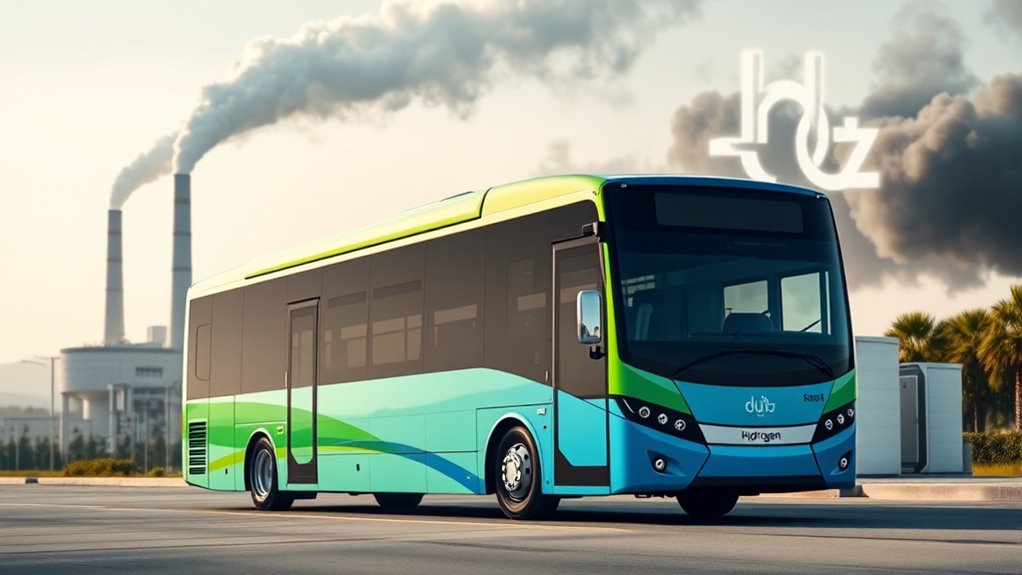
Have you ever wondered how clean hydrogen really is? When considering hydrogen as a fuel for buses, it’s essential to understand its environmental impact, particularly the carbon footprint associated with its production. The type of energy sources used during production determines how sustainable hydrogen truly is. Green, blue, and grey hydrogen each have distinct processes, and their differences influence their environmental friendliness.
Green hydrogen is often regarded as the cleanest option because it’s produced using renewable energy sources like wind, solar, or hydro power. In this process, called electrolysis, electricity splits water into hydrogen and oxygen without emitting greenhouse gases. As a result, the carbon footprint of green hydrogen remains minimal, making it an attractive choice for those aiming to reduce overall emissions. Since renewable energy sources produce little to no carbon emissions, green hydrogen aligns well with efforts to lower the environmental impact of transportation.
Green hydrogen is the cleanest option, produced via electrolysis using renewable energy sources with minimal carbon emissions.
Blue hydrogen offers a balance by utilizing natural gas as the primary energy source, but with a twist: it captures and stores most of the carbon dioxide emissions generated during production. This process, known as carbon capture and storage (CCS), aims to mitigate the carbon footprint associated with traditional natural gas reforming. Although blue hydrogen still relies on fossil fuels, the implementation of CCS helps reduce its emissions considerably. However, the effectiveness of CCS varies, and some CO2 may still escape, which means blue hydrogen isn’t entirely emission-free but still presents a lower-carbon alternative compared to grey hydrogen.
Grey hydrogen, the most common form today, is produced from natural gas or coal through processes like steam methane reforming without capturing carbon emissions. This method releases large quantities of CO2 into the atmosphere, resulting in a high carbon footprint. If you’re concerned about the environmental impact of hydrogen, grey hydrogen falls short because it contributes markedly to greenhouse gas emissions. Its reliance on fossil fuels makes it less sustainable and less ideal for reducing the carbon footprint of transportation systems like buses.
Popular right now

LG 85-inch QNED75B Mini LED Smart TV Bundle with HDMI and CPS Protection Plan

Shark Navigator Robot Vacuum with Self-Empty Base, Dark Grey (RV2120AE)

Breville Bambino Espresso Machine, Brushed Stainless Steel
As an affiliate, we earn on qualifying purchases.
Frequently Asked Questions
What Are the Current Global Hydrogen Production Capacities?
Currently, the global capacity for hydrogen production is around 70 million tonnes per year, and it’s steadily increasing. Production trends show a shift toward greener methods, with green hydrogen growing rapidly due to falling costs and policy support. You’ll see more investments in renewable-powered electrolysis, which boosts sustainable capacity. Overall, the world’s hydrogen capacity is expanding, aligning with efforts to decarbonize sectors like transportation and industry.
How Does Hydrogen Storage Impact Emission Levels?
Hydrogen storage substantially impacts emission levels through storage efficiency and leakage mitigation. If storage isn’t efficient, you lose hydrogen, which may require extra production, increasing emissions. Proper containment reduces leakage, preventing the escape of hydrogen, a potent greenhouse gas. Using advanced storage methods, you can minimize emissions and improve overall sustainability, making your hydrogen-powered buses cleaner and more environmentally friendly.
Are There Emerging Technologies Reducing Blue and Grey Hydrogen Emissions?
Yes, emerging technologies are reducing blue and grey hydrogen emissions through innovative capture and renewable innovations. You’ll find new methods like advanced carbon capture systems that trap emissions during production, considerably lowering their environmental impact. Additionally, renewable innovations such as using solar or wind power for electrolysis are making green hydrogen more viable, further decreasing reliance on traditional methods. These advancements are essential for cleaner, more sustainable hydrogen options for buses and other applications.
How Do Government Policies Influence Hydrogen Production Practices?
Government policies are the compass guiding hydrogen production practices through a sea of options. Policy incentives act as wind in your sails, encouraging cleaner methods like green hydrogen, while regulatory frameworks set the boundaries, ensuring responsible practices. When you align policies with sustainable goals, you steer the industry toward innovation and lower emissions, turning ambitions into reality and making the journey toward eco-friendly transportation smoother and more predictable.
What Are the Economic Costs Associated With Each Hydrogen Type?
You’ll find that green hydrogen has the highest cost due to extensive renewable energy and infrastructure investment needed for electrolysis. Blue hydrogen’s costs are lower, thanks to natural gas reforming with carbon capture, but still involve significant infrastructure. Grey hydrogen remains the most affordable, with lower production costs but higher emissions. A thorough cost analysis shows that balancing initial infrastructure investments and long-term savings is key for each hydrogen type.
Conclusion
When weighing green, blue, and grey hydrogen, remember that your choices shape sustainable futures. Green hydrogen gleams with its guilt-free glow, while blue and grey carry carbon costs. By choosing clean, conscious options, you contribute to a cleaner climate and curb catastrophic consequences. Your decisions drive demand, diminish emissions, and demonstrate dedication to a greener, greater goal. Embrace eco-friendly alternatives, empower progress, and guarantee that every effort elevates environmental excellence.