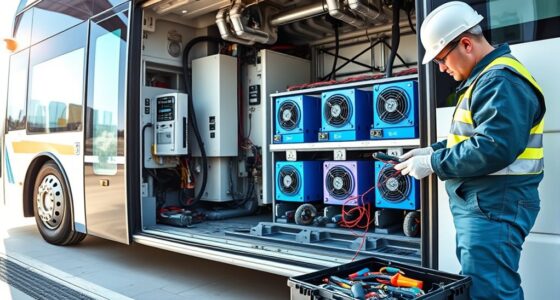
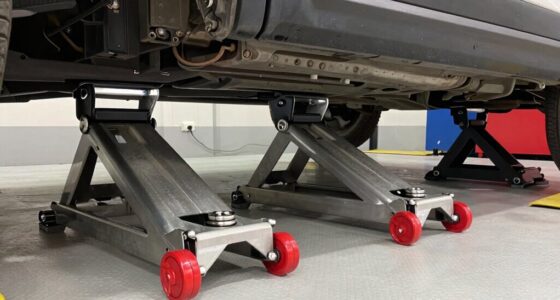
When managing heavy battery loads, ensuring your suspension components are properly repaired and maintained is vital for vehicle stability and safety. You should check that shocks and springs are rated for the extra weight and look for signs of wear, leaks, or sagging. Proper load distribution also helps prevent uneven stress on suspension parts. Continuing with these steps can help you maintain ideal handling and avoid costly repairs down the line.
Key Takeaways
- Use load-rated shocks and suspension components designed for heavy batteries to ensure effective damping and stability.
- Regularly inspect shocks, springs, and control arms for leaks, wear, or damage caused by heavy loads.
- Properly distribute battery weight across the vehicle to prevent uneven stress on suspension parts.
- Upgrade to load-leveling springs or heavier-duty suspension to handle increased weight safely.
- Maintain correct ride height and perform proactive maintenance to prevent premature component failure under heavy loads.
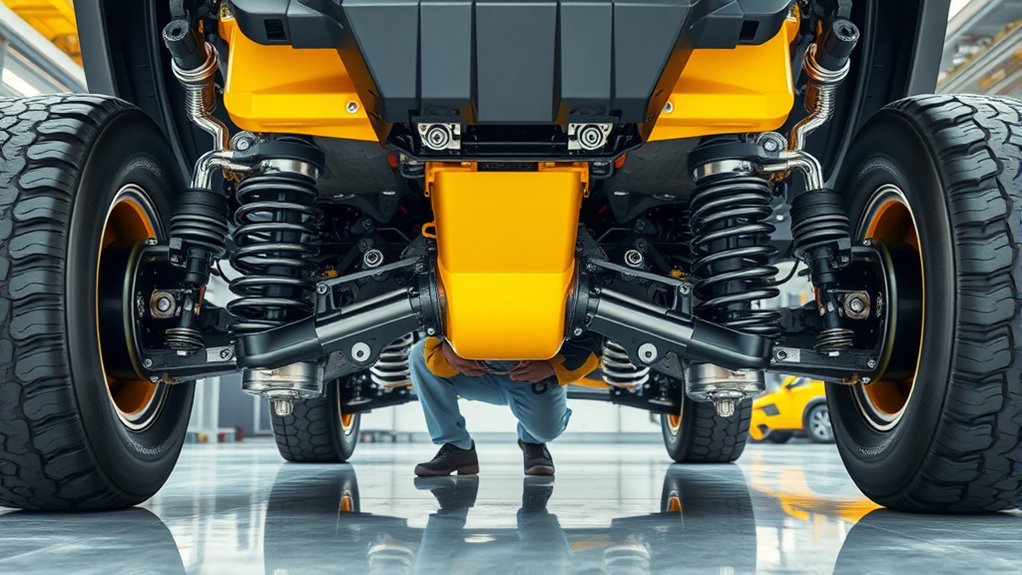
Proper suspension setup plays an essential role in managing your vehicle’s weight distribution and overall handling. When your vehicle carries heavy loads, like a large battery or other substantial equipment, it’s necessary to ensure that your suspension components, especially shock absorbers, are up to the task. Shock absorbers are designed to absorb the impact from uneven road surfaces and help maintain tire contact with the road. In heavy-load situations, they become even more critical because they manage the extra weight and prevent excessive bouncing, nose-diving, or swaying. If shock absorbers wear out or aren’t properly adjusted for load distribution, your vehicle’s stability suffers, leading to unsafe driving conditions and increased wear on other suspension components.
Load distribution is another key factor when managing heavy batteries or similar loads. Proper load distribution ensures that weight is evenly spread across your suspension, preventing undue stress on any one component. When a heavy battery is added, it shifts the vehicle’s weight forward or to one side, which can cause uneven wear on shocks, springs, and control arms. You need to consider how the weight impacts your suspension geometry and make adjustments accordingly. Upgrading to heavy-duty shocks or adding load-leveling springs can help maintain ideal load distribution, keeping your vehicle balanced and responsive. This not only improves handling but also prolongs the lifespan of your suspension components by reducing excessive strain. Additionally, regular maintenance and inspection can help identify early signs of wear, ensuring your suspension remains in optimal condition under heavy loads.
If you ignore these considerations, you risk damaging your shock absorbers and other suspension parts. Overloaded shocks can leak, lose their damping ability, or even fail completely. This leads to compromised ride quality and safety issues. Additionally, uneven load distribution puts extra stress on tires, axles, and frame components, which can cause premature failure or costly repairs. Regular inspections become essential as well—look for leaks, unusual noises, or changes in ride height, especially after installing a heavy battery. If you notice any signs of wear or imbalance, addressing them quickly can save you money and prevent dangerous driving conditions.
Ultimately, managing weight effectively involves more than just adding a heavy battery; it requires a detailed approach to your suspension setup. Ensuring your shock absorbers are rated for your load and maintaining proper load distribution will help your vehicle handle the extra weight smoothly. It enhances safety, ride comfort, and durability. Remember, the goal is to keep your vehicle stable and responsive under load, which means paying attention to your suspension’s condition and making necessary upgrades or adjustments before issues arise. Proper maintenance and proactive upgrades will keep your suspension functioning efficiently, even when faced with heavy loads. Being aware of load management and how it impacts your suspension’s longevity can help you make informed decisions to prevent costly repairs down the line.
heavy-duty shock absorbers for vehicles
As an affiliate, we earn on qualifying purchases.
As an affiliate, we earn on qualifying purchases.
Frequently Asked Questions
How Often Should Suspension Components Be Inspected for Heavy Battery Loads?
You should inspect suspension components every 6,000 to 10,000 miles when carrying heavy battery loads. During these checks, focus on alignment and shock absorber durability, as heavy loads can cause misalignment and wear out shocks faster. Regular inspections help catch issues early, ensuring your suspension system stays reliable. If you notice uneven tire wear or suspension noise, get it checked sooner to prevent further damage.
What Are Signs of Suspension Failure Due to Weight Stress?
Did you know that 35% of suspension failures are linked to material fatigue from heavy loads? If you notice uneven tire wear, excessive bouncing, or your shock absorbers leak fluid, these are signs of suspension failure due to weight stress. Suspension material fatigue weakens components, and shock absorber leaks indicate they’re no longer functioning properly, risking safety and ride quality. Regular inspections help catch these issues early.
Can Aftermarket Suspension Upgrades Improve Load Management?
Yes, aftermarket suspension upgrades can improve load management by increasing your vehicle’s load capacity. Installing air suspension allows you to adjust the ride height and stiffness, making it easier to handle heavy battery loads without compromising comfort or safety. These upgrades help distribute weight evenly, reduce stress on suspension components, and maintain vehicle stability, ensuring better performance and longevity when managing heavy loads.
How Does Weight Distribution Affect Suspension Lifespan?
Weight distribution directly impacts your suspension’s lifespan by affecting spring durability and shock absorption. When weight isn’t balanced, springs endure uneven stress, leading to premature wear or failure. Proper weight management ensures your suspension components work efficiently, reducing strain and extending their durability. You should regularly check load distribution, especially with heavy batteries, to prevent uneven wear and maintain ideal shock absorption, ultimately prolonging suspension performance.
Are There Specific Suspension Parts Designed for Heavy Electric Vehicles?
Yes, there are suspension parts specifically designed for heavy electric vehicles. These components are built to handle the increased weight of the electric vehicle chassis and heavy batteries. You should consider suspension calibration to optimize performance and longevity, ensuring the system effectively manages the added load. Upgrading or customizing suspension parts can help maintain ride quality and extend the lifespan of your suspension under the demanding conditions of electric vehicle operation.

RETRUE Rear Air Bags Suspension Kit for 2015-2025 Ford F150
- Vehicle Compatibility: Fits 2015-2025 Ford F150 (excludes Raptor)
- Load Capacity: Supports up to 5,000 pounds load leveling
- Enhanced Ride Quality: Reduces shock and vibration for stability
As an affiliate, we earn on qualifying purchases.
As an affiliate, we earn on qualifying purchases.
Conclusion
By understanding how suspension systems handle heavy battery loads, you can guarantee your vehicle remains smooth and reliable. Properly repairing and maintaining these components is like giving your car a heartbeat, essential for longevity. Don’t underestimate the strain on your suspension; it’s the backbone of your ride’s stability. With attentive care, you’ll keep your vehicle performing at its peak, avoiding catastrophic failures that could turn your journey into a nightmare. Stay proactive—your car’s health depends on it.

TRQ Front and Rear Steering and Suspension Kit Tie Rods Control Arms Ball Joints Sway Bar Links Compatible with 1998-2005 Lexus GS300 without Sport Package 1998-2000 GS400 2001-2005 GS430
- Complete Suspension Kit: Includes tie rods, control arms, ball joints, sway bar links
- Compatible Models: Fits 1998-2005 Lexus GS300, GS400, GS430
- Reference Numbers: Multiple OEM reference numbers included
As an affiliate, we earn on qualifying purchases.
As an affiliate, we earn on qualifying purchases.

Old Man Emu 2886 Coil Spring
- Package Dimensions: 20.25 x 7.27 x 12.34 inches
- Package Weight: 24.67 pounds
- Country of Origin: Australia
As an affiliate, we earn on qualifying purchases.
As an affiliate, we earn on qualifying purchases.