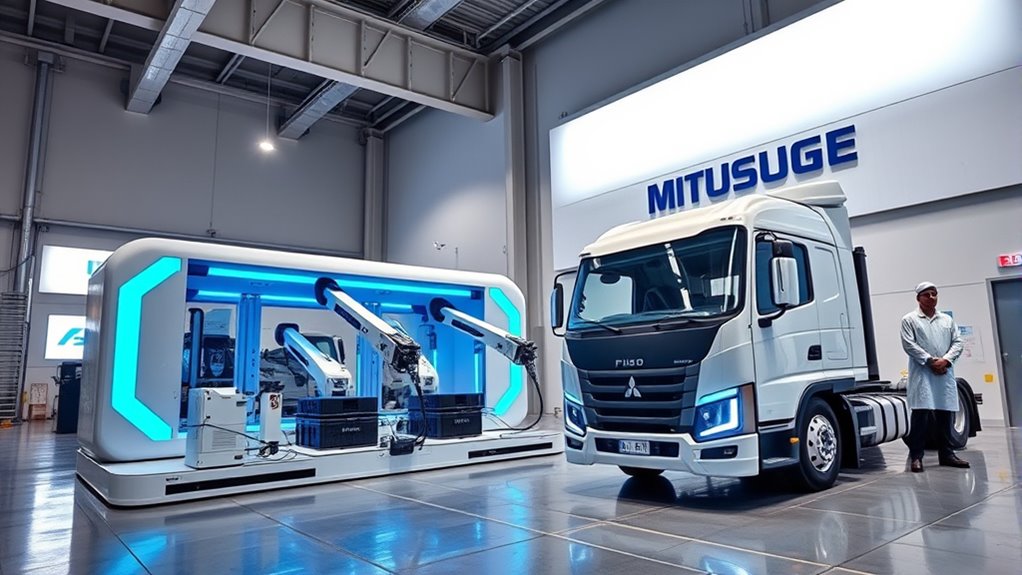

The Mitsubishi Fuso and Ample partnership showcases how battery swapping networks can quickly power electric commercial vehicles, reducing downtime and increasing efficiency. By developing scalable, flexible infrastructure, they make battery exchanges fast and reliable across urban and remote areas. The system also optimizes energy use, extends battery lifespan, and incorporates renewable energy sources. If you’re curious about how this innovative approach is transforming fleet operations, there’s more to discover on how these systems work seamlessly together.

Get business pricing on monitors, keyboards and dev gear
- Business-only prices and quantity discounts
- Tax-exempt purchasing
- Multiple users, one account, clear invoices
Key Takeaways
- Mitsubishi Fuso and Ample are collaborating to create an advanced battery swapping network for commercial EV fleets.
- The infrastructure is designed to be scalable, adaptable, and suitable for urban and remote deployment.
- The system features smart energy management to optimize battery health, charging, and renewable energy integration.
- The partnership aims to reduce vehicle downtime, increase operational efficiency, and meet stricter emissions standards.
- Technological innovations include safety-focused design and seamless swapping experiences to modernize EV infrastructure.

Battery swapping networks are transforming the way we think about electric vehicle (EV) charging by offering a quicker, more efficient alternative to traditional charging methods. Instead of waiting hours to top off your vehicle, you can swap a depleted battery for a fully charged one in just minutes. This shift is reshaping the landscape of battery infrastructure, making EV adoption more practical for daily use and commercial operations. As a driver or fleet operator, you’ll find that this approach reduces downtime and increases productivity, especially when integrated with robust energy management systems that optimize power flow and storage.
In the case of Mitsubishi Fuso’s partnership with Ample, this innovation takes on a new dimension. Mitsubishi Fuso, known for its commercial trucks, aims to electrify its fleet to meet stricter emissions standards and operational demands. By collaborating with Ample, a company specializing in battery swapping technology, they’re developing a network that leverages advanced battery infrastructure to support large-scale electric commercial vehicles. This infrastructure isn’t just about having enough batteries; it’s about creating a seamless system where batteries are stored, charged, and swapped efficiently. You’ll notice that energy management plays a key role here, as it ensures batteries are charged using renewable sources when possible, balancing supply and demand while minimizing costs.
The partnership’s battery infrastructure is designed to be scalable and adaptable, allowing for the deployment of swapping stations in various locations, from urban centers to remote areas. This flexibility means you can plan routes with confidence, knowing that charging or swapping stations are accessible and reliable. Additionally, the system incorporates smart energy management, which monitors battery health, optimizes charging schedules, and manages energy loads to prevent overuse or shortages. This approach not only enhances operational efficiency but also extends the lifespan of each battery, reducing overall costs. Furthermore, utilizing advanced contrast ratio technologies ensures that the visual displays at swapping stations are clear and easily readable in various lighting conditions, promoting safety and efficiency during operations.
electric vehicle battery swapping station
As an affiliate, we earn on qualifying purchases.
As an affiliate, we earn on qualifying purchases.
Frequently Asked Questions
How Does Battery Swapping Impact Vehicle Maintenance Costs?
Battery swapping can lower your vehicle maintenance costs by reducing battery wear and tear, since swapping stations manage battery health and lifespan. It minimizes downtime and dependency on extensive charging infrastructure, making maintenance more predictable. With proper management of battery lifespan and optimized swapping processes, you avoid costly repairs and replacements, keeping your fleet running smoothly and efficiently while saving money over time.
What Are the Safety Standards for Swapping Batteries?
Think of swapping batteries as trading a precious gem; safety is paramount. You must follow strict standards for battery safety and guarantee standard compliance to prevent hazards. These standards act as your safeguard, guiding proper handling, secure connections, and robust safety protocols during swaps. By adhering to these rules, you protect yourself and others, making battery exchanges as safe as passing a valued jewel with care and precision.
How Scalable Are Mitsubishi Fuso and Ample’s Swapping Stations?
You can expect Mitsubishi Fuso and Ample’s swapping stations to be quite scalable, thanks to their focus on station deployment and infrastructure scalability. They design their systems to expand smoothly as demand grows, allowing you to add more stations without major overhauls. This flexible setup guarantees you can increase coverage efficiently, making the network adaptable to future growth and helping you meet increasing fleet needs seamlessly.
What Is the Environmental Impact of Battery Swapping Networks?
Think of battery swapping networks as a beacon for greener futures. They substantially reduce environmental impact by promoting recycling benefits, as batteries are reused and properly recycled. Plus, they support renewable energy use by enabling faster charging with clean power sources. This minimizes waste and lowers emissions, helping you cut your carbon footprint. Overall, these networks make transportation more sustainable, turning eco-conscious choices into everyday actions.
How Does Battery Swapping Compare to Traditional Charging in Efficiency?
You’ll find that battery swapping is more efficient than traditional charging because it offers faster charging speed, allowing you to get back on the road quickly. With energy transfer happening rapidly during swapping, downtime is minimized, and you save time compared to waiting for a charger. This method enhances operational efficiency, especially for fleet operations, by reducing charging time and increasing vehicle availability.
commercial EV battery replacement kit
As an affiliate, we earn on qualifying purchases.
As an affiliate, we earn on qualifying purchases.
Conclusion
By now, you can see how Mitsubishi Fuso and Ample’s battery swapping network is like a well-oiled machine, making electric vehicle operation smoother and more efficient. It cuts down downtime and keeps your fleet moving just like a quick pit stop in a race. As this partnership grows, expect more innovative solutions to power your journeys, transforming the way you think about electric mobility. It’s a leap forward, brighter than a fully charged battery on a sunny day.
As an affiliate, we earn on qualifying purchases.
renewable energy EV charging station
As an affiliate, we earn on qualifying purchases.
As an affiliate, we earn on qualifying purchases.
Halloween Picks
halloween
As an affiliate, we earn on qualifying purchases.