
Smart charging algorithms help you efficiently balance grid demand and your EV fleet’s needs by using real-time data, renewable energy patterns, and adaptive learning. They schedule charging during periods of high renewable generation and lower electricity rates, reducing costs and emissions. These systems also enable vehicle-to-grid functionality, sending excess energy back to the grid when needed. Keep exploring to discover how these technologies work together to optimize performance and sustainability.
Open a free Amazon Business account
Business pricing, bulk buying and tax-exempt orders.
As an affiliate, we earn on qualifying purchases.
Key Takeaways
- Utilize real-time grid data and vehicle states to optimize charging times, reducing peak demand and balancing load effectively.
- Incorporate renewable energy forecasts to schedule vehicle charging when clean energy is most available.
- Enable bidirectional V2G functionality to supply excess energy during high demand, aiding grid stability.
- Learn from historical usage and environmental patterns to refine algorithms for dynamic, adaptive energy management.
- Coordinate fleet needs with grid conditions to ensure vehicle readiness while minimizing overall energy costs and stress.
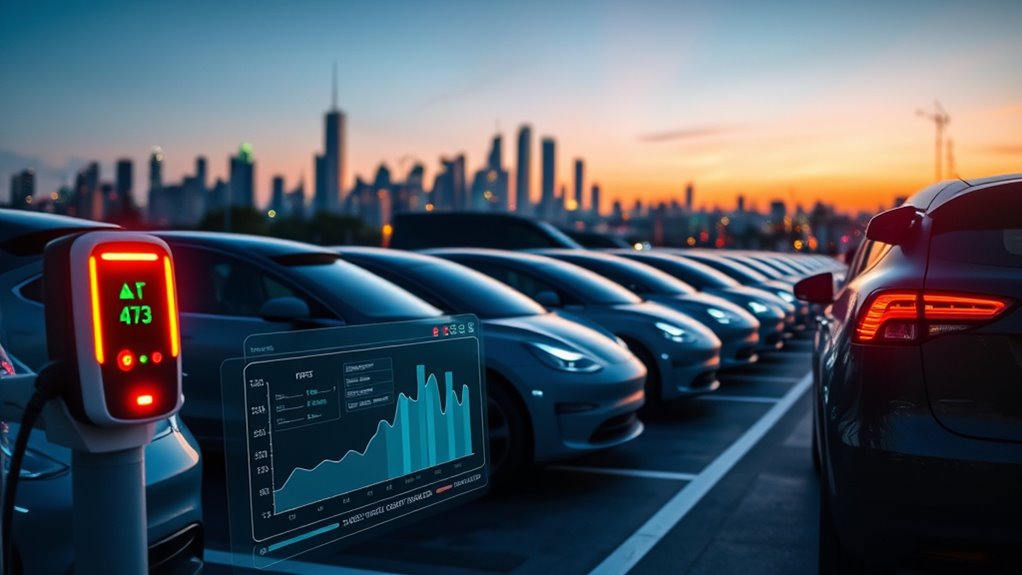
Smart charging algorithms are transforming the way we manage electric vehicle (EV) charging by optimizing energy use and reducing costs. These algorithms play a key role in balancing grid demand with the needs of EV fleets, making charging more efficient and sustainable. One of their essential functions is supporting renewable integration, allowing your charging system to align with the availability of renewable energy sources like solar and wind. By intelligently scheduling charging times during periods of high renewable generation, these algorithms help reduce reliance on fossil fuels and lower carbon emissions. This means you can charge your EVs using cleaner energy, contributing to a more sustainable future without sacrificing convenience.
Smart charging algorithms optimize energy use by aligning EV charging with renewable energy availability, reducing emissions and costs.
Moreover, smart charging algorithms facilitate vehicle-to-grid (V2G) technology, which turns your EV into a distributed energy resource. With V2G, your vehicle doesn’t just draw power from the grid; it can also send excess energy back when demand peaks. This bidirectional flow of electricity helps stabilize the grid by providing additional capacity during stressful periods, like heatwaves or sudden power outages. When your EV is plugged in, the algorithm assesses grid conditions, your vehicle’s state of charge, and your driving schedule to determine whether to charge, discharge, or remain idle. This real-time decision-making maximizes efficiency while ensuring your vehicle is ready when you need it.
These algorithms are designed to be adaptive, learning from patterns in energy consumption and renewable generation to improve over time. They consider variables such as weather forecasts, grid load, and electricity prices, allowing you to benefit from lower rates and reduced environmental impact. For instance, during sunny days with abundant solar power, the system might prioritize charging your EV, while on cloudy days, it might delay or limit charging to avoid drawing high-cost grid energy. This dynamic approach not only saves you money but also minimizes grid stress, especially during peak hours.
Implementing smart algorithms also supports the integration of renewable energy into the overall grid infrastructure, leading to a more resilient and sustainable energy system. They enable utilities and consumers to work together seamlessly, reducing the need for costly infrastructure upgrades and making renewable energy more accessible. As EV adoption grows, these algorithms will become even more indispensable in managing the complex interplay between energy sources, grid stability, and consumer needs. By leveraging renewable integration and vehicle-to-grid technology, smart charging algorithms help you charge smarter, save money, and contribute to a cleaner planet.
Additionally, advances in energy storage technologies complement these algorithms by providing additional flexibility and reliability in renewable energy use.
As an affiliate, we earn on qualifying purchases.
Frequently Asked Questions
How Do Smart Charging Algorithms Adapt to Fluctuating Renewable Energy Sources?
You can expect smart charging algorithms to adapt to renewable variability by continuously monitoring energy supply and demand. They automatically adjust charging schedules to maximize renewable usage and support grid integration, reducing strain during low renewable output and taking advantage of excess energy when available. This dynamic approach helps balance the grid effectively, ensuring your fleet charges efficiently while contributing to a greener, more sustainable energy system.
What Are the Privacy Concerns Related to Smart Charging Data Collection?
You should be aware that collecting smart charging data raises privacy concerns, especially around data security and user consent. It’s essential that your data is protected against breaches and misuse. Make sure that you’ve given clear consent before sharing your information, and that companies follow strict data security practices. By staying informed and vigilant, you can help safeguard your privacy while benefiting from smart charging systems.
How Do Algorithms Prioritize Between Fleet Operational Needs and Grid Stability?
You manage how algorithms prioritize fleet optimization and grid balancing by setting clear goals and constraints. They analyze real-time data to guarantee vehicles are charged when needed, minimizing downtime, while also adjusting charging times to reduce grid strain. These algorithms dynamically balance both needs, ensuring your fleet stays operational without compromising grid stability, creating an efficient, responsive system that meets your operational demands while supporting overall grid health.
Are There Specific Standards or Regulations for Implementing Smart Charging Algorithms?
You need to guarantee your smart charging algorithms comply with relevant standards and regulations, like ISO 15118 and IEC 61850, which address interoperability and safety. Additionally, you must prioritize regulatory compliance and data security to protect sensitive information and maintain trust. Keep updated on evolving policies, such as GDPR or local cybersecurity laws, to avoid penalties and ensure your system operates legally and securely within the grid and fleet management framework.
How Do These Algorithms Handle Unexpected Grid Outages or Emergencies?
When unexpected grid outages or emergencies occur, these algorithms activate emergency protocols and outage management strategies. You’ll see them quickly prioritize critical loads, reduce charging during peak stress, and reroute energy to essential services. They monitor grid stability in real-time, automatically adjusting charging schedules to prevent further strain. This proactive approach helps maintain grid reliability while ensuring your fleet remains safe and operational during unpredictable situations.
As an affiliate, we earn on qualifying purchases.
Conclusion
As you implement smart charging algorithms, you’ll find that balancing grid demand and fleet needs isn’t just a technical challenge but a chance to create a more sustainable future. Coincidentally, the very act of optimizing your fleet’s charging schedules often aligns with reducing costs and emissions, revealing a hidden harmony in energy use. Embracing these algorithms transforms your approach, turning potential conflicts into opportunities for efficiency—proof that smart technology can seamlessly connect your goals with the grid’s needs.
As an affiliate, we earn on qualifying purchases.
As an affiliate, we earn on qualifying purchases.
Fall Picks
fall essentials
As an affiliate, we earn on qualifying purchases.