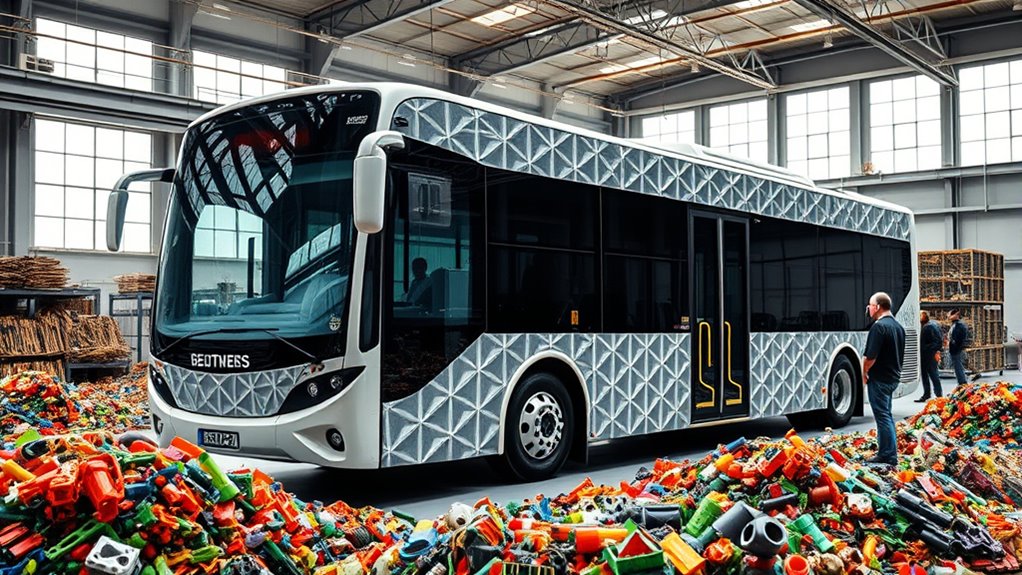

In bus manufacturing, adopting circular economy practices means you focus on reusing and recycling materials, like recycled plastics and metals, to cut waste and lessen environmental impact. Using innovative techniques like 3D printing helps create customized, repairable parts that extend the bus’s lifespan and reduce raw material use. These strategies promote sustainable design, lower costs, and support eco-friendly transportation. Keep exploring to discover how these approaches can transform the future of bus manufacturing even further.

Get monitors, keyboards and dev gear delivered free — and shop member deals
- Fast, free delivery on millions of items
- Access to Prime Big Deal Days deals on October 6–7
- Prime Video, Amazon Music and more included
Key Takeaways
- 3D printing enables rapid, on-demand production of bus components, reducing waste and supporting circular economy principles.
- Utilization of recycled materials in 3D printing promotes resource conservation and minimizes reliance on virgin resources.
- Incorporating recycled plastics and metals in additive manufacturing enhances durability and facilitates component reuse.
- 3D printing allows for easy disassembly and recycling of bus parts, aligning with sustainable design and lifecycle management.
- Combining recycled materials with 3D printing accelerates sustainable manufacturing, lowers costs, and reduces environmental impact.

As cities seek sustainable transportation solutions, bus manufacturers are increasingly adopting circular economy principles to reduce waste and conserve resources. This shift emphasizes sustainable design, which guarantees that buses are built with their entire lifecycle in mind. You’ll find that companies are focusing on creating vehicles that are easier to disassemble, repair, and recycle, aligning with the core idea of minimizing environmental impact. By integrating sustainable design, they aim to extend the lifespan of bus components, reduce the need for new raw materials, and promote efficient reuse. This approach not only benefits the environment but also offers economic advantages by lowering maintenance costs and reducing waste disposal expenses. Incorporating recycling techniques into manufacturing processes further enhances these efforts, ensuring that materials are continuously reused and repurposed. Material innovation plays a crucial role in this transition, as manufacturers explore new, eco-friendly materials and manufacturing techniques. You might notice the increased use of recycled plastics, metals, and composites in bus construction, which helps divert waste from landfills and reduces reliance on virgin resources. These materials are often sourced from post-consumer waste or industrial byproducts, turning what was once considered trash into valuable components. This process exemplifies how material innovation can foster a circular economy—where materials are continuously reused, repurposed, or regenerated, rather than discarded after a single use. Such innovations also improve the durability and lightweight properties of buses, leading to better fuel efficiency and lower emissions.
As an affiliate, we earn on qualifying purchases.
Frequently Asked Questions
How Cost-Effective Is 3D Printing for Large Bus Components?
3D printing for large bus components can be cost-effective, especially when you consider the initial cost analysis and potential for production scalability. While upfront expenses might be higher, as you scale up production, costs decrease, making it more economical over time. You’ll benefit from reduced material waste and faster prototyping, which can lower overall manufacturing costs and improve efficiency in the long run.
What Are the Main Challenges in Recycling Bus Materials?
You face challenges like material contamination, which complicates recycling processes, and limited recycling infrastructure that hampers effective reuse. Contaminants in materials, such as dirt or incompatible substances, reduce recyclability and increase costs. Additionally, the lack of advanced facilities means recycling efforts are often inefficient or incomplete. Overcoming these hurdles requires investing in better sorting technologies and expanding recycling infrastructure to support sustainable bus manufacturing.
How Do Recycled Materials Impact Bus Safety Standards?
Recycled materials can impact bus safety standards by affecting material durability, which is essential for ensuring safety compliance. You might worry that recycled components aren’t as strong or reliable, but with proper testing and quality controls, they can meet or even exceed safety requirements. Incorporating recycled materials requires diligent assessment to maintain safety standards, ensuring that durability isn’t compromised and that the bus remains safe for passengers and operators.
Can 3D Printing Customize Bus Designs Efficiently?
You can definitely customize bus designs efficiently with 3D printing. For example, imagine a bus manufacturer using 3D printing to produce unique interior panels tailored to specific client needs. This technology offers unmatched production flexibility, allowing rapid adjustments to design without high costs or long lead times. With 3D printing, you can implement custom designs quickly, making the manufacturing process more adaptable and responsive to market demands.
What Regulations Govern the Use of Recycled Materials in Bus Manufacturing?
You need to adhere to recycling regulations that govern the use of recycled materials in bus manufacturing. These regulations ensure material compliance by setting standards for safety, environmental impact, and quality. You must stay updated on regional and international standards, such as those from the EPA or ISO, to make certain your recycled materials meet all legal requirements. Failing to comply could lead to legal issues or safety risks for your buses.
As an affiliate, we earn on qualifying purchases.
Conclusion
By embracing 3D printing and recycled materials, you can markedly reduce waste and resource consumption in bus manufacturing. Did you know that using recycled materials can cut down production costs by up to 30%? This shift not only benefits the environment but also boosts your company’s efficiency and sustainability. Moving toward a circular economy isn’t just a trend—it’s a smart, forward-thinking choice that helps you stay competitive while protecting the planet.
eco-friendly bus manufacturing materials
As an affiliate, we earn on qualifying purchases.
As an affiliate, we earn on qualifying purchases.
customizable 3D printed vehicle parts
As an affiliate, we earn on qualifying purchases.
As an affiliate, we earn on qualifying purchases.
Fall Picks
fall essentials
As an affiliate, we earn on qualifying purchases.