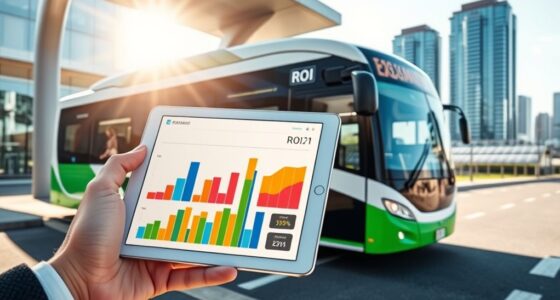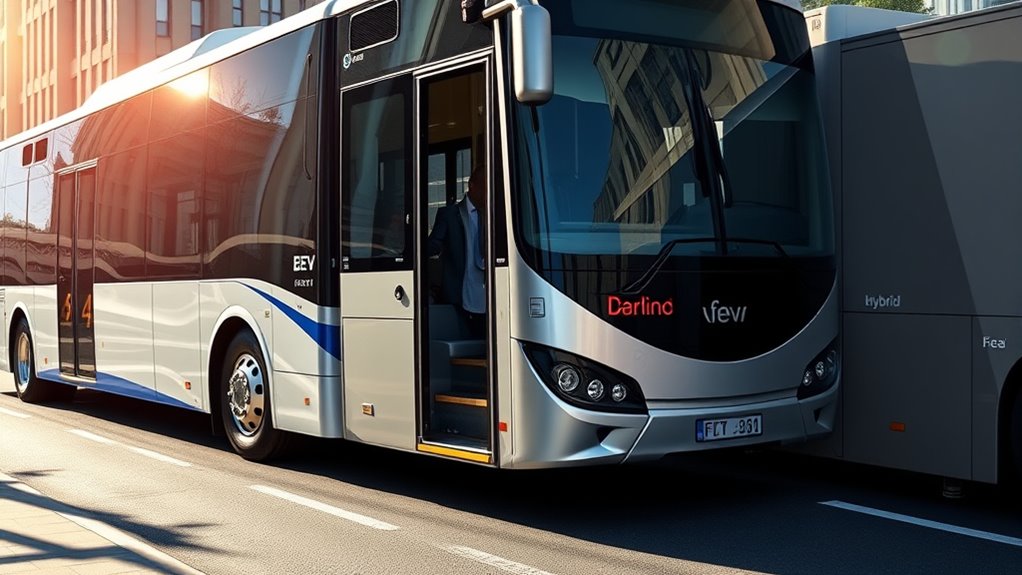

When comparing lifecycle costs of BEV, FCEV, and hybrid buses, you’ll find that BEVs generally have lower operational costs due to cheaper fuel and less maintenance. FCEVs offer quick refueling and longer ranges but involve costly infrastructure and hydrogen fuel expenses. Hybrids often come with lower upfront costs but higher fuel and maintenance over time. Exploring these factors further reveals which option best balances initial investments with ongoing expenses.

Get monitors, keyboards and dev gear delivered free — and shop member deals
- Fast, free delivery on millions of items
- Access to Prime Big Deal Days deals on October 6–7
- Prime Video, Amazon Music and more included
Key Takeaways
- BEVs generally have lower operational fuel and maintenance costs, but higher upfront battery replacement expenses impact total lifecycle costs.
- FCEVs face significant infrastructure investment and hydrogen fuel costs, influencing their long-term economic viability.
- Hybrids offer a balance with lower initial costs and moderate fuel and maintenance expenses, but their reliance on fossil fuels raises operational costs.
- Battery degradation and recycling costs are critical factors affecting the total cost of ownership for BEVs and hybrids.
- Infrastructure development and fuel prices for FCEVs are key determinants in their comparative lifecycle cost efficiency.

Understanding the true cost of a project or investment requires looking beyond the initial purchase price. When evaluating buses like Battery Electric Vehicles (BEVs), Fuel Cell Electric Vehicles (FCEVs), or hybrids, you need to consider how factors such as battery degradation and fuel efficiency influence long-term expenses. Battery degradation is a vital component for BEVs because over time, the battery’s capacity diminishes, leading to reduced range and increased replacement costs. While initial prices might seem competitive, the need for battery replacements or upgrades can considerably inflate the total cost of ownership. Additionally, as batteries age, their ability to hold a charge decreases, meaning you’ll need to charge more frequently, which impacts operational costs. On the other hand, FCEVs rely on hydrogen fuel cells, which generally don’t degrade as quickly as batteries, but maintaining hydrogen infrastructure and fuel costs can be pricey. Hybrids, combining internal combustion engines with electric systems, tend to have less battery degradation but may not deliver the same fuel efficiency as fully electric options, especially over longer routes. It is also important to consider the battery lifecycle and the associated costs of disposal or recycling at end-of-life.
Fuel efficiency plays a major role in long-term cost savings. BEVs are often praised for their high fuel efficiency, as electricity can be generated from various sources at a lower cost compared to gasoline or hydrogen. This translates into lower fuel costs per mile, especially when charged using renewable energy. In contrast, FCEVs, while offering quick refueling times and longer range, depend on hydrogen production and distribution, which can be costly and energy-intensive, affecting overall fuel efficiency. Hybrids sit somewhere in between—they use gasoline more efficiently than traditional vehicles but still rely on fossil fuels, which can make their long-term fuel costs higher compared to BEVs or FCEVs. When you analyze lifecycle costs, it’s essential to weigh these fuel efficiencies against maintenance and replacement expenses. BEVs usually require less maintenance due to fewer moving parts, but battery replacement costs can offset those savings if batteries degrade rapidly or are replaced frequently.
Ultimately, your decision should factor in not just initial costs but also how battery degradation, fuel efficiency, maintenance, and infrastructure expenses will influence long-term operational costs. While BEVs often provide lower fuel costs and fewer mechanical issues, the potential for battery degradation demands careful consideration of battery warranties and replacement plans. FCEVs might have higher fuel costs but could offer advantages in refueling speed and range. Hybrids, meanwhile, may serve as a transitional option, balancing fuel efficiency with manageable maintenance costs. To truly understand which option offers the best value over its lifetime, you need to evaluate all these factors together, not just the sticker price.
As an affiliate, we earn on qualifying purchases.
Frequently Asked Questions
How Do Maintenance Costs Compare Among BEV, FCEV, and Hybrid Buses?
You’ll find that maintenance costs vary among BEVs, FCEVs, and hybrids. BEVs typically have lower upkeep since they lack engine parts, but you should watch for battery degradation over time, which can increase costs. FCEVs require regular fuel cell maintenance to prevent issues, while hybrids need both traditional engine and battery upkeep. Overall, BEVs tend to be cheapest long-term, but all options need specific maintenance considerations.
What Are the Environmental Impacts Over the Lifecycle of Each Bus Type?
Did you know that BEVs emit up to 70% less greenhouse gases over their lifecycle compared to traditional buses? You’ll find that BEVs and FCEVs markedly reduce air pollution, especially when powered by renewable energy, while hybrids still produce emissions during fuel use. Recycling batteries minimizes environmental impacts, and integrating renewable energy further cuts overall emissions. Your choice impacts climate change, making sustainable options better for the planet over their entire lifecycle.
How Does Energy Infrastructure Influence Total Lifecycle Costs?
Energy infrastructure greatly impacts your total lifecycle costs. You’ll find that the availability of charging stations and grid capacity determines how efficiently you can operate BEVs, reducing downtime and maintenance expenses. Insufficient infrastructure can lead to higher installation costs and energy management challenges. For FCEVs, hydrogen fueling stations are critical, while hybrids rely less on infrastructure but still benefit from reliable power sources. Investing in robust infrastructure ultimately lowers your long-term costs.
What Are the Potential Resale Values for Each Bus Technology?
You should consider that residual values vary based on market demand and technology longevity. BEVs often have higher residual values due to growing market acceptance and battery improvements, while FCEVs’ resale value depends on hydrogen infrastructure development. Hybrid buses tend to hold moderate residual value, influenced by fuel efficiency and maintenance costs. Your decision should account for these factors to maximize resale potential and overall lifecycle returns.
How Do Operational Costs Vary in Different Geographical Regions?
Think of operating costs as a garden that depends on regional climate. In areas with high regional fuel prices, FCEVs and hybrids become more cost-effective, while BEVs benefit from lower electricity rates. Government incentives act like fertilizer, reducing overall expenses. You’ll find that in some regions, charging infrastructure costs or hydrogen availability markedly impact operational costs, making certain bus types more economical depending on local policies and fuel prices.
As an affiliate, we earn on qualifying purchases.
Conclusion
When comparing lifecycle costs, you’ll find that Battery Electric Vehicles (BEVs) often have lower total expenses over time, thanks to reduced fuel and maintenance costs. notably, a recent study shows that BEVs can save operators up to 40% in total ownership costs compared to FCEVs and hybrids. So, if you’re considering long-term savings, going electric might be your best bet, offering both financial benefits and environmental advantages.
As an affiliate, we earn on qualifying purchases.
electric bus battery replacement
As an affiliate, we earn on qualifying purchases.
As an affiliate, we earn on qualifying purchases.
Halloween Picks
halloween
As an affiliate, we earn on qualifying purchases.