
The UK’s Clean Bus Fund and ZEBRA2 Scheme are dedicated to supporting your conversion to electric buses, with a goal to procure 1,200 units nationwide. These programs provide grants, funding, and technical support to help you expand charging infrastructure and reduce operating costs. They aim to improve air quality and make urban transit greener. If you keep exploring, you’ll uncover how these initiatives are shaping the future of public transportation.
Key Takeaways
- The UK’s Clean Bus Fund and ZEBRA2 Scheme jointly aim to fund the procurement of 1,200 electric buses nationwide.
- These schemes provide grants, subsidies, and technical support to local authorities and operators.
- They focus on expanding charging infrastructure, including depot and route-specific rapid chargers.
- The initiatives promote innovative deployment approaches, such as integrated charging solutions and smart grid management.
- The programs support the UK’s broader goal of reducing emissions and improving urban air quality through electric bus adoption.
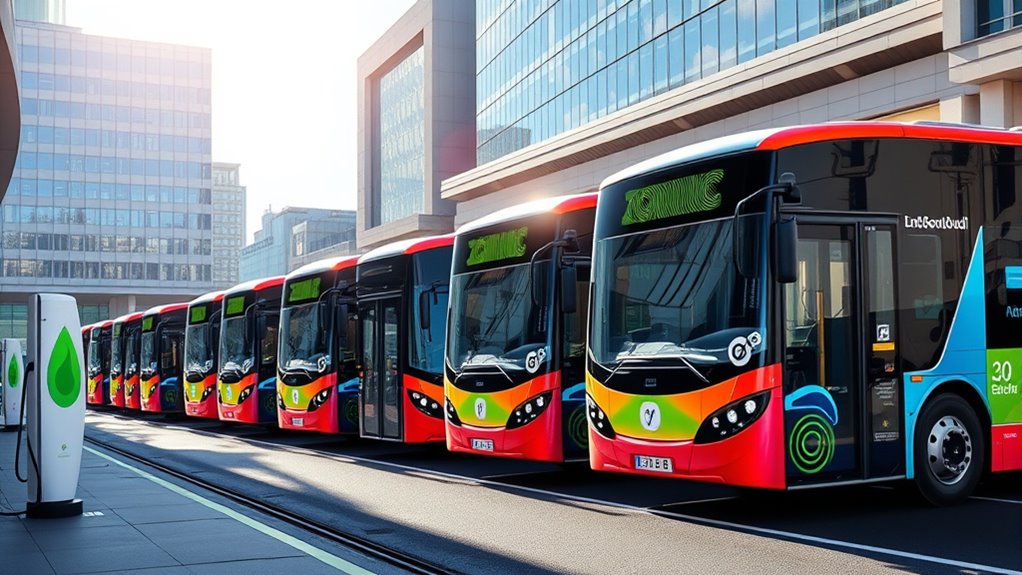
The UK is investing heavily in electric buses to reduce emissions and improve air quality across cities. This commitment reflects a broader strategy to shift public transport away from polluting diesel engines toward cleaner, sustainable alternatives. Central to this effort are initiatives like the UK’s Clean Bus Fund and the ZEBRA2 Scheme, which aim to procure 1,200 electric buses and accelerate the nationwide move to electric mobility. As you consider this changeover, it’s essential to understand that successful adoption hinges on robust charging infrastructure and supportive policy incentives.
Charging infrastructure is the backbone of this changeover. Without sufficient charging points, electric buses won’t be able to operate efficiently or reliably, which could hinder transit schedules and diminish public confidence. Recognizing this, the UK government is allocating funds specifically for expanding charging networks, ensuring that bus depots, depots, and route-specific charging stations are adequately equipped. This development is critical because it reduces downtime, enables quick turnaround times, and provides a seamless experience for operators and passengers alike. You’ll find that deployment of rapid chargers along key routes makes the shift more practical, allowing buses to recharge during short layovers and maintain frequent service.
Policy incentives are equally essential. The UK government offers various grants and subsidies through programs like the Clean Bus Fund, which subsidizes the purchase of electric buses and supports infrastructure upgrades. These incentives help lower the financial barriers for operators, making electric buses more economically viable and attractive. Additionally, policy measures such as low-emission zones and congestion charges incentivize operators to switch to electric, as they benefit from reduced operating costs and compliance with future regulations. For you, this means that moving to electric buses isn’t just environmentally responsible—it’s also financially advantageous in the long run.
The ZEBRA2 Scheme further amplifies these efforts by providing targeted funding and technical support to local authorities and operators. This scheme encourages innovative approaches to deploying electric buses, including integrated charging solutions and smart grid management. As the UK advances its electric bus rollout, the combination of well-planned charging infrastructure and compelling policy incentives ensures a smoother, more cost-effective changeover. For you, it means that adopting electric buses isn’t just a future goal but an immediate opportunity to enhance urban air quality, reduce operational costs, and align with national sustainability targets. Moreover, charging infrastructure development is a critical factor that can significantly influence the success of nationwide adoption.
Ultimately, these initiatives demonstrate the UK’s dedication to transforming its public transport system into a cleaner, greener network. With strategic investments in charging infrastructure and policy incentives, you’re positioned at the forefront of this mobility revolution, helping shape healthier, more sustainable cities for generations to come.
Top picks for "clean fund zebra2"
Open Amazon search results for this keyword.
As an affiliate, we earn on qualifying purchases.
Frequently Asked Questions
How Will the Funds Impact Local Bus Ticket Prices?
The funds will likely lead to fare reductions, making bus travel more affordable for you. As electric buses cost less to operate and maintain, transit authorities might pass these savings on to passengers. Additionally, increased funding can boost service frequency, reducing wait times and improving your overall experience. So, expect cheaper tickets and more reliable, frequent services, making your journeys more convenient and budget-friendly.
Are There Plans to Expand Electric Bus Routes Nationwide?
You’ll be glad to know plans are underway to expand electric bus routes nationwide, transforming urban mobility. Currently, electric buses make up only 4% of UK’s fleet, but that’s set to grow, reducing emissions markedly. This expansion will improve air quality and promote sustainable travel. As more electric routes develop, you’ll experience cleaner, quieter rides, making a real difference for both the environment and your daily commute.
What Training Will Drivers Receive for Electric Bus Operation?
You’ll receive extensive training focused on driver safety and charging protocols, guaranteeing you operate electric buses confidently and securely. The training covers safe handling, emergency procedures, and how to efficiently manage charging schedules. This prepares you to navigate the unique aspects of electric bus operation, so you can maintain safety standards and keep routes running smoothly. Proper training helps you adapt quickly and ensures passenger safety at all times.
How Will Charging Infrastructure Be Integrated Into Existing Networks?
You’ll see charging stations integrated seamlessly into existing networks through strategic planning and grid integration. This means placing charging points at key bus depots and stops, ensuring they connect smoothly with the local grid. Upgrades may be necessary to handle increased demand, and smart technology will optimize energy flow. With these steps, you’ll experience efficient charging, minimal disruptions, and reliable electric bus operation across the network.
What Is the Estimated Timeline for Full Fleet Deployment?
The clock’s ticking, so expect the full electric bus fleet to be on the road within three to five years. You’ll need to coordinate fleet scheduling and maintenance planning carefully during this changeover. Regular updates and phased rollouts will help you stay on top, ensuring smooth integration. Patience and proactive management will be key to meeting the ambitious timeline without a hitch.
Conclusion
You can see how the UK’s Clean Bus Fund and Zebra2 scheme are transforming public transport. By investing in 1,200 electric buses, they’re not only reducing emissions but also supporting a cleaner environment. Think of it like planting a forest; each bus is a tree contributing to a healthier planet. This initiative proves that targeted funding can turn bold ideas into tangible change, making cities greener and travel more sustainable for everyone.