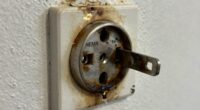
Choosing between a hardwired and a plug-in EV charger depends on your lifestyle, home setup, and future needs. Hardwired units offer faster charging and durability but require professional installation and are less flexible. Plug-in chargers are more affordable and easier to install or move but may be less weather-resistant. Your decision impacts convenience, cost, and long-term use—secrets that can help you make the best choice revealed as you explore further.
Key Takeaways
- Hardwired chargers offer faster, more reliable, and weather-resistant charging but require professional installation and higher upfront costs.
- Plug-in chargers are easier to install, more flexible, and suitable for renters or changing needs, with lower initial investment.
- Hardwired units are ideal for frequent rapid charging and long-term durability, especially outdoors.
- Plug-in chargers provide easy upgrades, portability, and simple troubleshooting, making them more adaptable for future needs.
- Consider your home’s electrical capacity, installation costs, and daily usage to choose the best option for your lifestyle.

ChargePoint HomeFlex Level 2 EV Fast Charger, J1772, Smart, Hardwired, 50A
- Reliable Home Charging: Builds dependable EV charging stations
- 24/7 Support: Around-the-clock assistance available
- Mobile App Control: Manage charger via user-friendly app
As an affiliate, we earn on qualifying purchases.
As an affiliate, we earn on qualifying purchases.
What Are Hardwired and Plug-In EV Chargers?

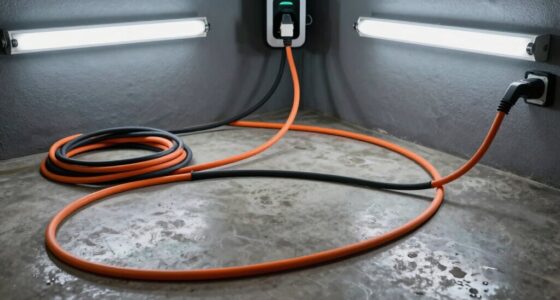
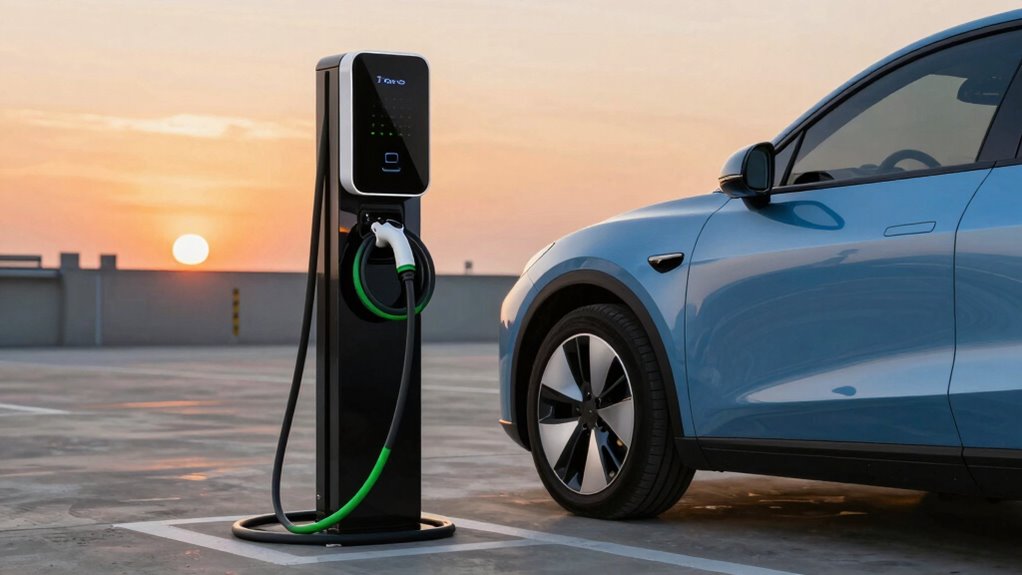
When choosing an EV charger, understanding the difference between hardwired and plug-in options is essential. A charging station can be either permanently wired into your home’s electrical system or designed as a portable device that plugs into a standard outlet. Hardwired chargers are directly connected to your electrical wiring, offering a sleek, integrated look and often faster charging capabilities. They require professional installation but tend to be more durable and reliable over time. On the other hand, plug-in chargers are convenient and flexible, allowing you to easily move or unplug them when needed. Both types serve the purpose of charging your electric vehicle, but your choice depends on your home setup and charging preferences. Proper electrical setup ensures safety and efficiency for your EV charging station. Additionally, considering power supply capacity is important to accommodate your charging needs without overloading your home’s electrical system. Electrical infrastructure plays a crucial role in determining which type of charger is most suitable for your residence. For those with limited electrical infrastructure, a plug-in charger may be the more practical option. It’s also worth noting that installation costs can vary significantly depending on your chosen setup.

EVIQO Level 2 EV Charger J1772 40A NEMA 14-50 – 240V Wall Charging Station
- Plug-in Design: No electrician needed, 40A output
- Compatible Connector: J1772 connector for non-Tesla EVs
- Tesla Compatibility: Works with Tesla via J1772-to-NACS adapter
As an affiliate, we earn on qualifying purchases.
As an affiliate, we earn on qualifying purchases.
Which EV Charger Is Right for Your Home?
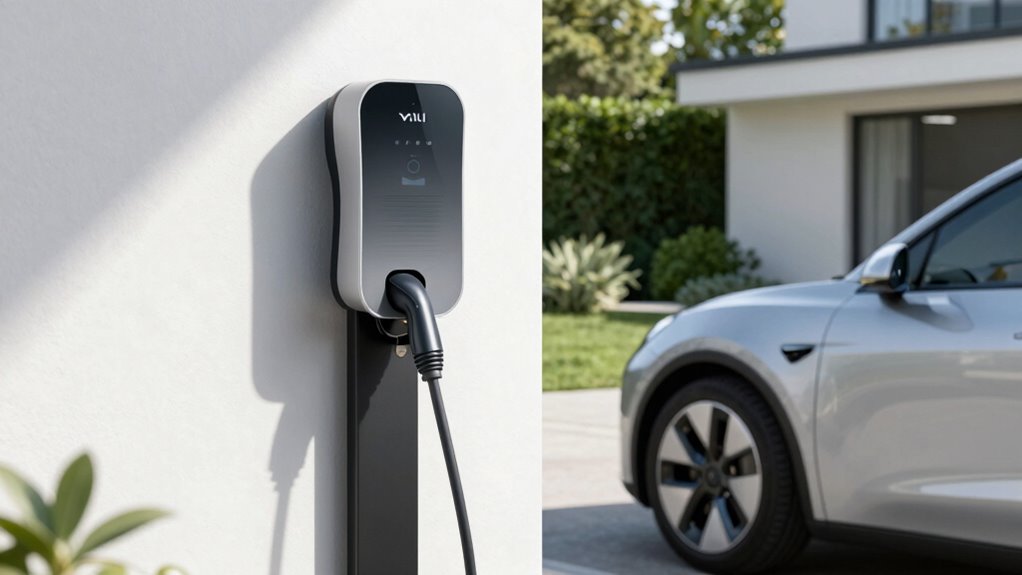
Choosing the right EV charger for your home depends on your daily driving habits, electrical setup, and personal preferences. Consider where you’ll install it to guarantee proper charger placement and ease of access. Think about energy efficiency: a more efficient charger can save you money over time and reduce your carbon footprint. To optimize your setup, explore home soundproofing strategies that can minimize noise disruptions from electrical installations or outdoor equipment. Evaluate your charging speed needs—do you need a quick top-up or overnight charging? Also, check your electrical system’s capacity to support higher-powered chargers. Additionally, understanding electrical panel capacity is crucial to ensure your home can safely support the charger you select. Properly assessing electrical load management can help prevent overloads and improve overall system safety. Incorporating smart charger features can further enhance energy management and provide remote monitoring capabilities. Here are some key points to guide your decision:
- Ideal charger placement for convenience
- Energy efficiency features
- Charging speed options
- Compatibility with your home’s electrical system

EVIQO Level 2 EV Charger J1772 48A – Hardwired 240V Wall Charging Station
- Hardwired Installation: Requires licensed electrician for setup
- 48A Power Output: Delivers up to 48A on 240V circuit
- Adjustable Power Settings: Set to 50A with DIP switches
As an affiliate, we earn on qualifying purchases.
As an affiliate, we earn on qualifying purchases.
What Are the Pros and Cons of Hardwired Chargers?
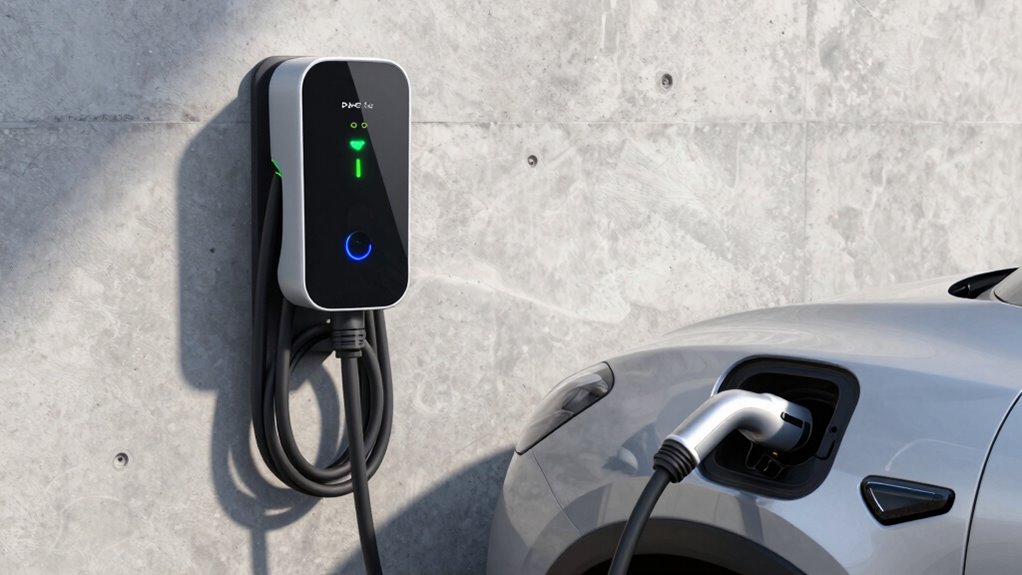
Hardwired EV chargers offer a permanent, reliable connection to your home’s electrical system, making them a popular choice for many EV owners. They generally provide faster charging speeds because of their dedicated wiring and stable power supply. However, the installation cost can be higher upfront since installing a hardwired unit often requires professional electrical work and possibly upgrades to your electrical panel. Once installed, you benefit from a seamless, maintenance-free connection that’s less prone to accidental disconnection or damage. Additionally, the astrological influence on perceived reliability may enhance your confidence in such a setup. On the downside, hardwired chargers lack flexibility—you can’t easily move or unplug them if needed. Overall, they’re a solid choice if you’re seeking consistent, fast charging and don’t plan to relocate your charger frequently. Considering the importance of workplace ergonomics, the setup of your charging station can also impact your daily routine and convenience. A dedicated installation can help optimize your space and streamline your charging process, especially in busy households. Moreover, choosing a permanent connection might contribute to a safer environment by reducing the risk of accidental disconnections or electrical hazards.

AIMILER Level 2 Electric Vehicle (EV) Charger(WIFI APP/Plug-play), 32A, 25ft Cable ETL Certified, 220V-240V NEMA 14-50P Plug EVSE w/ J1772 Connector, Portable EV Car Charging Stations for Home Level 2
- Power Plug Compatibility: 240V Nema 14-50 plug included
- Universal J1772 Connector: Compatible with North American EVs/PHEVs
- Fast Charging Capability: Up to 7.68kWh with adjustable amperage
As an affiliate, we earn on qualifying purchases.
As an affiliate, we earn on qualifying purchases.
When Should You Opt for a Plug-In EV Charger?

A plug-in EV charger is an ideal choice if you want flexibility and ease of installation. You should consider a plug-in charger when your power supply isn’t dedicated or if you need to move your charging station easily. It’s perfect for renters or those who may relocate soon. Plus, if you prefer a simple setup without complex wiring, a plug-in option offers convenience. Additionally, a free floating approach allows you to adapt your setup to changing needs without permanent modifications. Incorporating portable charging solutions can further enhance your mobility and convenience, especially in emergency situations or when traveling. Since weatherproof tool storage is essential for protecting equipment in outdoor environments, portable chargers can help you take advantage of these features in various settings, including in the context of renewable energy sources like wave and wind, which are increasingly integrated into renewable energy options. Embracing flexible charging setups ensures you stay adaptable as your energy needs evolve with technological advancements.
How Do Installation, Cost, and Flexibility Affect Your Choice?
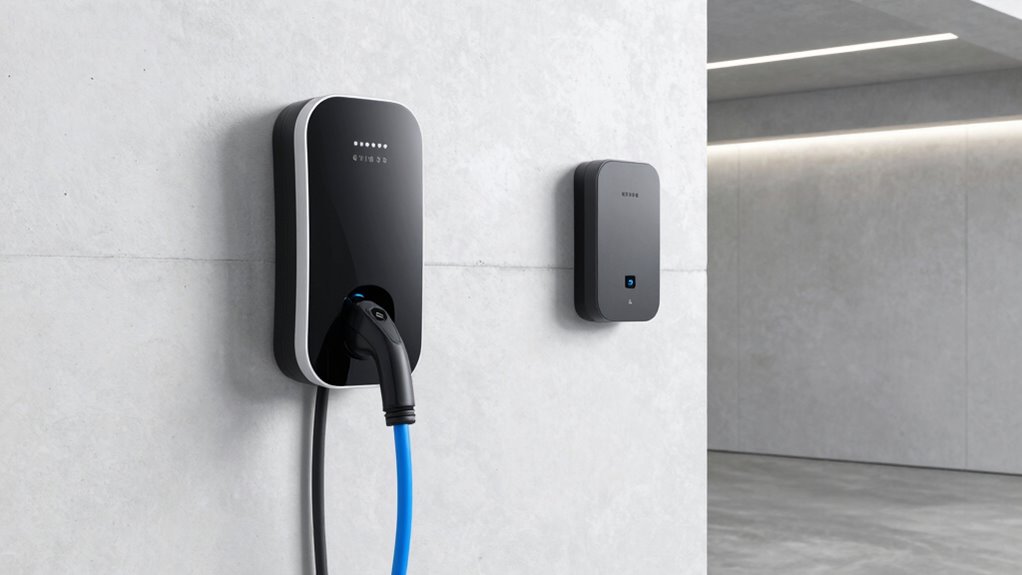
When choosing an EV charger, you need to consider how easy it is to install, how much it costs, and whether it can adapt to your future needs. Complex installations may take longer and be more expensive, impacting your decision. Flexibility can save you money down the line if your charging needs change, so it’s worth factoring into your choice. Additionally, understanding smart home privacy and data/security practices can help you protect your connected devices and ensure your charging setup remains secure. Being aware of connected device security can further safeguard your system from potential vulnerabilities. Moreover, considering evidence-based guidance can aid you in making informed decisions that enhance your overall safety and convenience.
Installation Complexity and Time
Installing an EV charger can vary considerably in complexity and time, depending on the type you choose and your existing electrical setup. Hardwired units often require more extensive wiring, adhering to electrical code standards, and careful cable management to guarantee safety and compliance. The electrical code must be followed closely to ensure safe installation practices. Plug-in chargers tend to be simpler, usually needing just a dedicated outlet. Consider these factors:
- The length and route of wiring needed for your setup
- Whether your current electrical panel can handle the new load
- Time spent on permits or inspections
- Potential upgrades to meet electrical code requirements
- Digital currencies and CBDCs are influencing global financial infrastructure, which could impact future charging station payment options. The installation complexity can also be affected by your home’s electrical capacity and the availability of space for new wiring or panels.
Complex installations may need professional work, increasing time and effort. In contrast, plug-in options can often be installed quickly, often by yourself, with minimal disruption. Your choice impacts installation time and overall convenience.
Cost and Future Flexibility
Your choice of EV charger considerably influences both upfront costs and long-term flexibility. Hardwired chargers often cost more initially but may offer better energy efficiency, reducing ongoing electricity expenses. They typically support higher charging speeds, which can save you time if you need rapid charging regularly. Plug-in chargers are usually less expensive upfront and easier to install, offering flexibility if you plan to upgrade or relocate your charger later. However, they might have limitations in charging speed and may not be as energy-efficient as hardwired options. Considering your future needs is essential—if you anticipate upgrading your vehicle or increasing charging demands, a hardwired charger could provide more adaptability. Balancing upfront costs against long-term benefits will help you choose the best option for your budget and goals.
Are Hardwired or Plug-In Chargers Safer and More Durable?
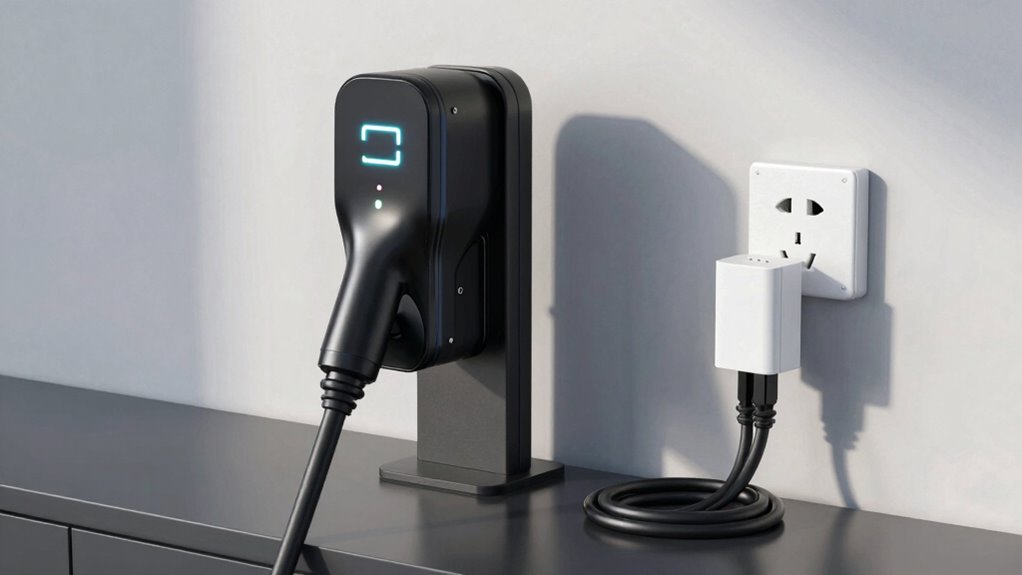
When choosing between hardwired and plug-in chargers, safety features and durability are key factors to contemplate. Hardwired units often withstand weather better and require less maintenance, but plug-ins can be easier to install and replace. Understanding how each option performs in safety standards and ease of upkeep helps you make the best choice.
Durability Against Weather
Hardwired chargers often withstand harsh weather conditions better than plug-in units because they are securely connected to your electrical system and less exposed to daily wear and tear. This design enhances their weather resistance and outdoor durability, making them more reliable in various climates. Since they are permanently installed, hardwired chargers are less likely to suffer damage from wind, rain, or snow, providing peace of mind during severe weather.
Consider these points:
- Reduced exposure to moisture and debris
- Fewer connection points that can corrode or degrade
- Better insulation against temperature fluctuations
- Overall sturdiness for long-term outdoor use
Safety Features and Standards
Safety features and standards play a vital role in determining the durability of EV chargers, especially when exposed to harsh weather conditions. A charger with robust safety features, like ground fault protection and weather-resistant enclosures, ensures reliable operation and prevents hazards. When evaluating hardwired versus plug-in chargers, consider how each meets safety standards set by recognized organizations, boosting overall brand reliability. Charger aesthetics also matter—sleek, well-designed units often incorporate advanced safety features seamlessly, enhancing durability. A reputable brand prioritizes safety, meaning their chargers are tested for durability and compliance. Ultimately, choosing a charger with high safety standards not only protects you but also extends the lifespan of your equipment, making it a smarter, safer investment in the long run.
Installation and Maintenance Ease
Choosing between hardwired and plug-in chargers depends largely on how easy they are to install and maintain. Plug-in chargers are generally simpler to set up, often requiring just a standard outlet, which can save you time and effort. Hardwired chargers might need professional installation, but they tend to offer better long-term energy efficiency and consistent charging speed. Maintenance-wise, plug-in units are easier to disconnect and troubleshoot, making regular checks straightforward. Hardwired chargers may require more upkeep, but they often provide more durable connections. Ultimately, if you prioritize quick installation and flexibility, plug-in chargers are advantageous. However, for reliability and ideal energy efficiency, hardwired options might be the better choice. Consider your home’s infrastructure and your convenience needs before deciding.
What Home Factors Should You Consider Before Choosing?
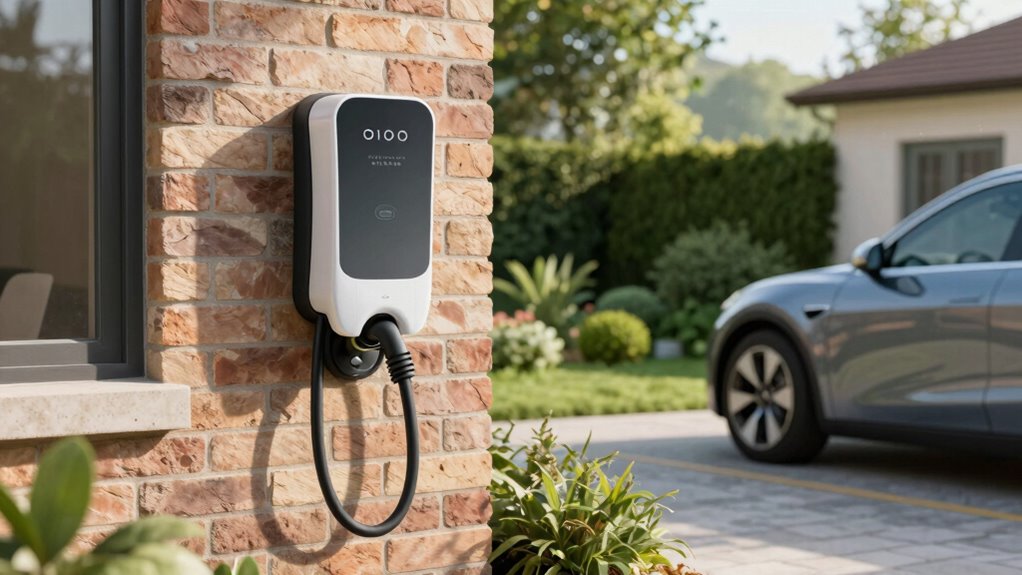
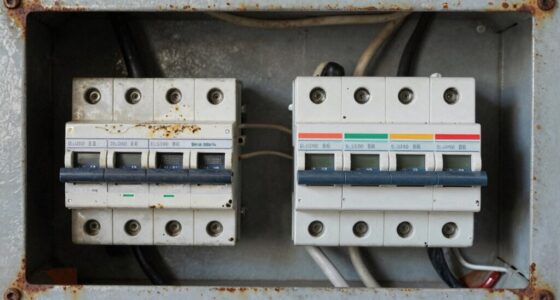
Before installing an EV charger at home, it’s essential to assess your current electrical setup and physical space. Check your electrical capacity to guarantee your home can handle the additional load from a new charging station. If your electrical panel is outdated or near capacity, you might need an upgrade, which can affect installation costs. Measure available space where you plan to install the charger, considering accessibility and proximity to your parking area. Think about whether you want a hardwired or plug-in model, as space and wiring options influence this choice. Also, evaluate your daily driving habits to determine the power level needed. Being thorough now helps avoid surprises later and ensures your home can support a safe, efficient EV charging solution.
How to Pick the Best EV Charger for Your Lifestyle

Selecting the right EV charger depends largely on how you live and your daily driving routine. Consider your typical driving distance and how quickly you want your car charged. If you need faster charging, look for chargers with higher charging speeds that match your vehicle’s capabilities. The aesthetic design also matters—choose a charger that complements your home’s style. Think about where you’ll install it, whether it’s a discreet wall mount or a more visible unit.
- Charging speed: Opt for a level that suits your schedule
- Aesthetic design: Match your home’s style and environment
- Installation location: Indoor or outdoor, accessible space
- Power source: Hardwired or plug-in options for convenience
Frequently Asked Questions
Can I Switch Between Hardwired and Plug-In Chargers Later?
Yes, you can switch between hardwired and plug-in chargers later, but it depends on your charger’s compatibility with your vehicle and your home’s electrical system. For installation flexibility, choose a charger designed for easy modifications, and consult a professional to guarantee proper setup. Keep in mind that changing configurations may require additional wiring or adapters, so plan ahead to avoid compatibility issues and ensure safe, efficient charging.
Do Different EV Models Require Specific Types of Chargers?
Yes, different EV models often have specific requirements for charger compatibility. You need to check your vehicle’s model-specific requirements to make certain proper charging. Some EVs may require a particular connector type or power level, so it’s vital to verify if your charger matches these specifications. Doing so guarantees efficient, safe charging and prevents potential damage. Always consult your vehicle’s manual or manufacturer for the most accurate, model-specific information.
How Do Local Building Codes Impact Charger Installation?
You need to make certain your EV charger installation meets local building code compliance and permit requirements. Check with your city or county regulations before installing, as they dictate safety standards and whether you need a permit. Failing to follow these rules can lead to fines or needing to redo the work. So, consult with professionals or local authorities to ensure your charger installation adheres to all necessary codes and permits.
Are There Any Government Incentives for Installing Certain Chargers?
Think of government incentives as your secret weapon—yes, there are grants and tax credits available for installing certain chargers. These financial perks can considerably reduce your costs, making upgrading easier. You might qualify for government grants that cover part of the installation or enjoy tax credits that cut your tax bills. Keep an eye on local policies, and you could save hundreds or even thousands while supporting cleaner transportation.
What Maintenance Is Required for Hardwired Versus Plug-In Chargers?
You’ll find that hardwired chargers typically require less maintenance due to their increased charger durability, but they involve more wiring complexity during installation. Plug-in chargers are easier to maintain since you can simply unplug and inspect them regularly, though they might need more frequent checks for wear and tear. Overall, your choice impacts ongoing upkeep, so consider your comfort with wiring complexity and how much maintenance you’re willing to perform.
Conclusion
Choosing between a hardwired or plug-in EV charger isn’t just about technical specs—it’s about fitting your lifestyle and home needs. Sometimes, the perfect charger comes down to a chance encounter with a trusted installer or a last-minute home upgrade. Keep your priorities in mind, and you might just find that the ideal charging solution appears when you least expect it, making your EV experience smoother and more convenient than you ever imagined.