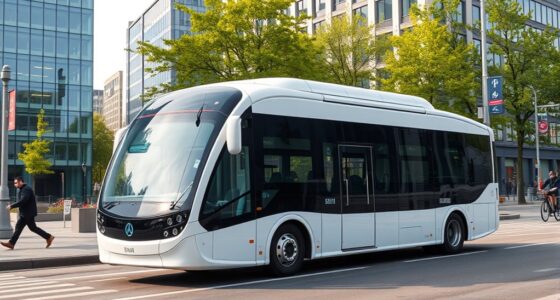

Adaptive charging schedules for Berlin’s night bus operations use real-time data to optimize charging times, helping you extend battery life and reduce energy costs. By analyzing vehicle usage, grid demand, and environmental factors, you can modify charging sessions dynamically to ensure buses are ready when needed while minimizing strain on the energy grid. This smart approach improves fleet reliability and supports sustainability efforts—discover more about how these systems work and benefit your operations.
Key Takeaways
- Adaptive charging schedules utilize real-time operational data from Berlin’s night buses to optimize charging times and methods.
- Scheduling algorithms analyze bus routes, operational hours, and grid demand to align charging with low-demand periods.
- Data integration includes vehicle telemetry, weather forecasts, and grid signals for dynamic, responsive charging adjustments.
- Adaptive schedules prioritize battery health, operational readiness, and cost savings by adjusting to delays or early route completions.
- Implementing these data-driven strategies reduces energy waste, lowers costs, and enhances fleet reliability in Berlin’s night bus system.
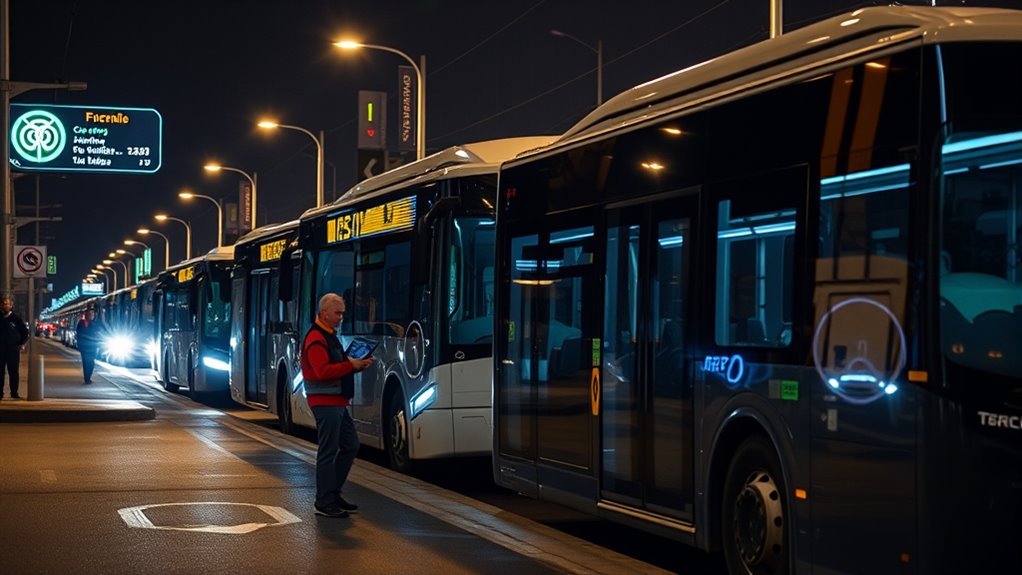
Adaptive charging schedules optimize when and how your devices or electric vehicles charge, guaranteeing efficiency and convenience. When it comes to managing a fleet of electric buses, like Berlin’s night bus operations, this approach becomes even more critical. By intelligently coordinating charging times, you can maximize battery optimization, reduce energy costs, and extend the lifespan of your batteries. This is achieved through advanced scheduling algorithms that analyze usage patterns, grid demand, and charging station availability to determine the most effective charging windows. These algorithms consider various factors such as bus routes, operational hours, and energy prices, allowing for a tailored charging plan that minimizes waste and guarantees vehicles are ready when needed.
In Berlin’s night bus operations, where buses run throughout the night and early morning, maintaining battery health while ensuring operational readiness is a complex balancing act. Scheduling algorithms help streamline this process by predicting power needs based on historical usage data and real-time inputs. Instead of charging buses continuously or at fixed times, the system dynamically adjusts charging sessions to align with off-peak electricity rates and low grid demand periods. This not only saves money but also reduces strain on the energy grid, making the entire process more sustainable. As a result, you benefit from a more reliable and efficient fleet, with batteries remaining healthier over time due to optimized charging cycles.
Furthermore, these algorithms enable you to implement smarter charging strategies that adapt to unforeseen circumstances, like changes in bus schedules or unexpected delays. If a bus finishes its route early or runs longer than planned, the system can re-prioritize charging schedules on the fly, ensuring minimal downtime and maximum readiness. This flexibility is essential in urban transit systems where operational variability is common. By integrating data from various sources—such as vehicle telemetry, grid signals, and weather forecasts—your scheduling algorithms become highly responsive, allowing you to make real-time adjustments that enhance overall efficiency. Additionally, incorporating load‑planning tools can further improve the effectiveness of these schedules by providing actionable insights into energy consumption and backup power requirements.
Frequently Asked Questions
How Do Adaptive Charging Schedules Impact Bus Maintenance Costs?
Adaptive charging schedules can lower your bus maintenance costs by extending battery longevity and optimizing maintenance scheduling. When you use smart charging, your batteries experience less stress, reducing the need for frequent replacements. This means fewer repairs and better planning for maintenance tasks. Ultimately, this approach helps you save money over time, keeps your buses running smoothly, and minimizes unexpected downtime caused by battery issues.
What Are the Environmental Benefits of Adaptive Charging in Berlin?
Imagine your bus fleet as a garden thriving with green energy. Adaptive charging in Berlin harnesses renewable energy during off-peak hours, reducing reliance on fossil fuels. This approach boosts grid stability by balancing demand and supply. As a result, it cuts emissions, lowers pollution, and helps preserve urban air quality, making your city healthier and more sustainable while supporting the progression to cleaner energy sources.
How Do Passenger Loads Influence Charging Schedule Adjustments?
Passenger density plays a key role in adjusting charging schedules, as higher or lower passenger loads require more or less energy. When passenger density fluctuates, you’ll see schedule flexibility increase, ensuring buses are charged efficiently for peak times and reduced service periods. This dynamic approach helps optimize energy use, keeps buses ready when needed, and maintains reliable service while adapting to real-time passenger loads.
Are There Any Safety Concerns With Dynamic Charging Schedules?
You might wonder if dynamic charging schedules pose safety concerns. Generally, they don’t, as they’re designed with strict battery safety protocols to prevent overheating or damage. However, it’s essential to guarantee data privacy, since real-time adjustments rely on data collection. When properly managed, these schedules improve efficiency without compromising safety or privacy, giving you a reliable, secure transit experience.
How Is Real-Time Data Integrated Into the Charging System?
Imagine your charging infrastructure working seamlessly like a well-orchestrated dance. You’ll find that real-time data integration is made possible through sophisticated data analytics, which continuously monitor and interpret charging patterns. This information helps optimize schedules, ensuring buses charge efficiently while on the move. As a result, you benefit from smarter, more reliable charging systems that adapt effortlessly to changing needs, keeping operations smooth and saving you time and energy.
Conclusion
By analyzing Berlin’s night bus operations, you see how adaptive charging schedules can boost efficiency and sustainability. You might wonder if this approach could transform other cities too, reducing costs and emissions simultaneously. Implementing flexible charging strategies isn’t just about technology—it’s about creating smarter, greener urban mobility. So, isn’t it time to rethink how we power our public transit and embrace adaptive solutions for a better future?