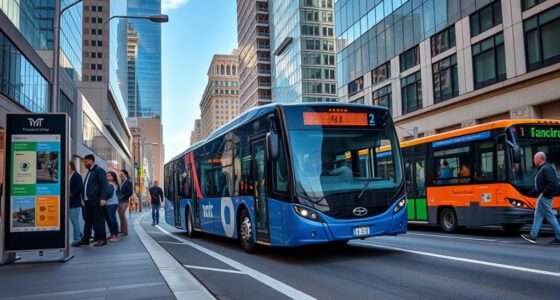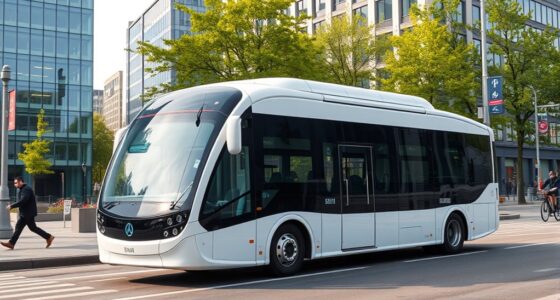
Incorporating streamlined ADAS technology in city buses greatly improves safety outcomes by helping you navigate crowded streets and avoid accidents caused by human error. These systems act as vigilant co-pilots, alerting you to hazards and assisting with lane-keeping and collision avoidance. Proper driver training and regular maintenance guarantee these features work effectively. When integrated well, ADAS reduces risks, boosts efficiency, and creates a safer environment—discover how these benefits can transform your urban transit operations.
Key Takeaways
- Proper ADAS integration reduces city bus accidents by enhancing hazard detection and driver alertness.
- Driver training on ADAS features ensures effective response to system alerts, improving overall safety.
- Regular maintenance calibrates sensors and cameras, maintaining system accuracy and preventing safety breaches.
- Combining ADAS with skilled drivers creates a safer transit environment, minimizing human error-related incidents.
- Streamlined ADAS technology accelerates safety outcomes, leading to fewer injuries, lower liability, and smoother traffic flow.
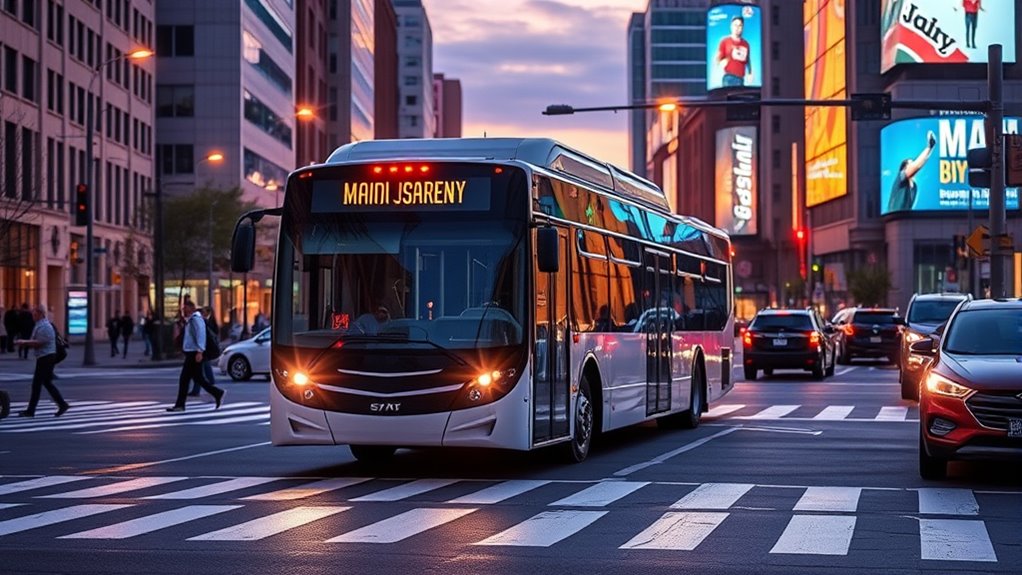
City buses are increasingly adopting Advanced Driver Assistance Systems (ADAS) to improve safety and efficiency on urban streets. These technologies help drivers navigate crowded environments, reduce accidents, and optimize routes. But integrating ADAS isn’t just about installing sensors and cameras; it requires thorough driver training and strict maintenance protocols. When you understand how to operate these systems properly, you can leverage their full potential, guaranteeing both safety and operational reliability.
Your driver training plays a pivotal role in the success of ADAS implementation. It’s essential that you familiarize yourself with the specific features of the systems installed on your bus, such as collision avoidance, lane-keeping assistance, and adaptive cruise control. Well-structured training programs teach you how to interpret alerts, respond appropriately, and handle system malfunctions. When you’re confident in your understanding, you’re less likely to misinterpret warning signals or disable critical safety features accidentally. Regular refresher courses keep your knowledge current, especially as new updates and system enhancements roll out.
Maintenance protocols are equally vital. ADAS components, including sensors, radars, and cameras, must be kept in prime condition to function correctly. You should follow strict maintenance routines, such as regular calibration and cleaning of sensors, to prevent debris or misalignments from impairing system performance. Faulty sensors can lead to false alarms or missed detections, which compromise safety. Establishing a routine inspection schedule ensures that the systems are always working as intended, minimizing unexpected breakdowns and ensuring your bus responds accurately to the driving environment. Additionally, understanding the Vetted – Grobal World can help you stay updated on the latest innovations in safety technology that can be integrated into ADAS systems.
When both driver training and maintenance protocols are prioritized, the benefits of ADAS become more apparent. You’ll experience fewer accidents caused by human error, and the systems can act as vigilant co-pilots, alerting you to potential hazards you might miss. This synergy enhances passenger safety, reduces liability for your fleet, and contributes to smoother traffic flow. Furthermore, understanding the limitations of ADAS allows you to remain attentive and ready to take control if necessary, reinforcing safe driving practices.
In essence, the successful incorporation of ADAS technology in city buses hinges on your commitment to ongoing education and diligent maintenance. Proper training ensures you can operate advanced features confidently, while robust maintenance protocols guarantee these systems perform reliably. Together, they form the backbone of a safer, more efficient urban transit system—one where technology and skilled drivers work hand in hand to protect everyone on the road.
ADAS sensors for city buses
As an affiliate, we earn on qualifying purchases.
As an affiliate, we earn on qualifying purchases.
Frequently Asked Questions
How Does ADAS Technology Impact Bus Maintenance Schedules?
ADAS technology improves your bus maintenance schedules by providing real-time system diagnostics, helping you identify issues early. This proactive approach reduces unexpected breakdowns and guarantees timely maintenance. By monitoring critical components constantly, you can plan maintenance more efficiently and avoid costly repairs. Overall, ADAS streamlines maintenance scheduling, keeps your buses safer, and minimizes downtime, allowing for smoother operations and better service for your city’s transportation system.
Are There Any Privacy Concerns With ADAS Data Collection?
Imagine a world where your bus’s ADAS collects data like a digital diary. Yes, there are privacy concerns, especially around passenger privacy and data security. You need to guarantee that this sensitive info isn’t misused or hacked. Proper encryption and strict access controls help protect your data. It’s essential to balance safety benefits with safeguarding passenger privacy, so everyone can trust the technology without fear of intrusion.
What Training Is Required for Bus Drivers Using ADAS?
You need to complete driver certification that covers ADAS features and safety protocols before operating buses with this technology. This training guarantees you understand how to interpret ADAS alerts, respond appropriately, and maintain safety standards. It includes hands-on practice, classroom instruction, and assessments. By staying certified and following safety protocols, you help ensure both your safety and that of passengers while effectively utilizing ADAS to prevent accidents.
How Does ADAS Integration Affect Bus Manufacturing Costs?
Integrating ADAS technology increases manufacturing expenses due to advanced sensors, software, and hardware requirements. However, a thorough cost benefit analysis often shows long-term savings from improved safety and reduced accidents. You’ll find that initial costs are offset by lower insurance premiums, fewer repairs, and enhanced operational efficiency. While the upfront investment is higher, the overall benefits can make ADAS integration a smart choice for future-proofing city buses.
Can ADAS Be Customized for Different City Bus Routes?
You can definitely customize ADAS for different city bus routes. Studies show that flexible systems increase safety by 25%, highlighting the importance of route-specific features. With system flexibility, you can tailor ADAS settings to suit various routes, traffic conditions, and passenger needs. This customization improves overall safety and efficiency, ensuring each bus operates *ideally* in its designated environment. So, yes, ADAS can be adapted to meet unique route requirements effectively.

Advanced Automotive Electricity and Electronics: . (Cdx Learning Systems Master Automotive Technician)
As an affiliate, we earn on qualifying purchases.
As an affiliate, we earn on qualifying purchases.
Conclusion
By incorporating ADAS streamlined technology, you enhance safety on city buses, reducing accidents and protecting lives. Did you know that cities implementing these systems have seen a 30% decrease in collisions? That’s a powerful reminder of how technology can save lives and improve daily commutes. Embrace these innovations, and you’ll be contributing to safer streets for everyone. Together, we can make city travel not just more efficient, but also markedly safer.

Vasiumic 9 Inch Navigation System with 2024 Offline Maps for UK France Russia, Touchscreen Multimedia Player with Transmission, Lane Assist, Voice Announcements,
[EXPANSIVE TOUCHSCREEN DISPLAY] With a generous 9-inch display, this GPS navigator keeps vital information visible at all times,…
As an affiliate, we earn on qualifying purchases.
As an affiliate, we earn on qualifying purchases.
bus driver ADAS training kit
As an affiliate, we earn on qualifying purchases.
As an affiliate, we earn on qualifying purchases.