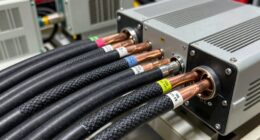
At Amsterdam Arena, second-life bus batteries are reused for energy storage, helping support renewable energy and stabilize the grid. These retired batteries store excess power during peak generation and release it during demand spikes, ensuring a consistent energy supply. This approach extends battery life, reduces waste, and promotes sustainability. By integrating these batteries into urban infrastructure, the arena showcases how reuse can foster cleaner energy solutions—if you look further, you’ll discover more about this innovative approach.
Key Takeaways
- Amsterdam Arena repurposes retired bus batteries as stationary energy storage to support renewable energy integration.
- The second-life batteries help absorb supply fluctuations during events, ensuring stable power at the venue.
- This initiative extends battery lifespan, reduces waste, and promotes circular economy principles in urban infrastructure.
- Battery refurbishment processes ensure safety and optimal performance for grid applications.
- Using second-life batteries lowers costs and accelerates renewable energy adoption at large-scale venues.
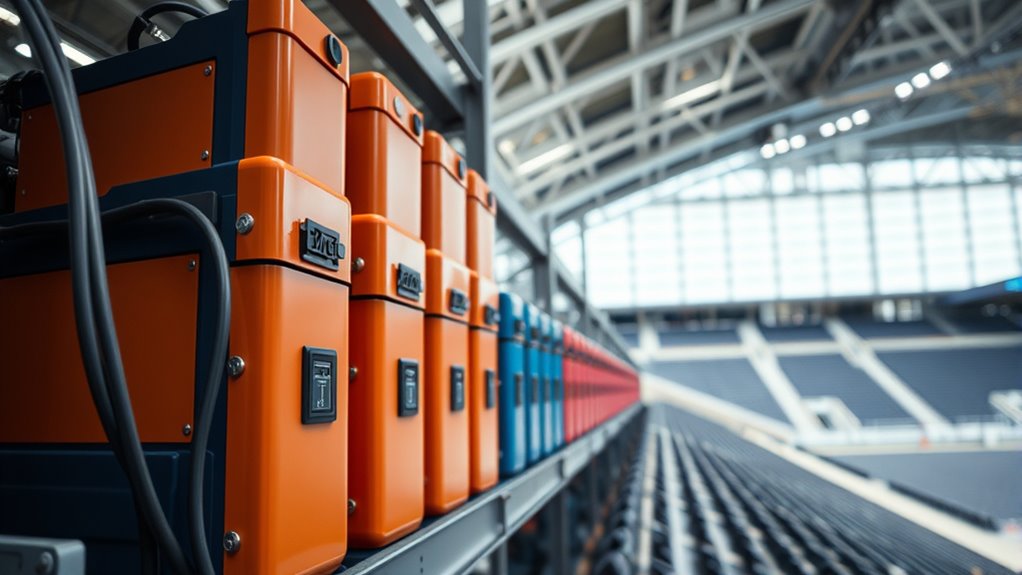
As the demand for sustainable energy solutions grows, second-life battery storage has become an increasingly viable option to extend the usefulness of used lithium-ion batteries. This approach not only helps in managing excess renewable energy but also bolsters the stability of the electricity grid. Imagine turning retired bus batteries into a powerful energy resource at the Amsterdam Arena, a venue known for hosting major events and large crowds. By incorporating second-life batteries, you can support renewable integration, making it easier to accommodate the intermittent nature of solar and wind power. These batteries act as buffers, storing surplus energy when production exceeds demand and releasing it when the grid needs a boost.
Second-life batteries at Amsterdam Arena support renewable energy and enhance grid stability through efficient energy storage.
You might wonder how repurposed batteries contribute to grid resilience. Well, they create a more flexible and reliable energy system by providing localized storage capacity. When the sun isn’t shining or the wind isn’t blowing, these batteries step in, preventing outages and reducing strain on the main grid infrastructure. This means fewer disruptions during peak times or when renewable sources fluctuate unexpectedly. The Amsterdam Arena’s initiative demonstrates how second-life batteries can effectively absorb sudden changes in energy supply, ensuring a consistent power flow for operations and events.
Moreover, using retired bus batteries is an eco-friendly choice. It prolongs the lifespan of lithium-ion cells, delaying disposal and reducing environmental impact. Instead of ending up in landfills, these batteries find a second purpose, promoting circular economy principles. For you, this means a more sustainable energy landscape—one where waste is minimized, and renewable energy is more seamlessly integrated into daily life. The process involves carefully testing and refurbishing the batteries to ensure safety and performance, making them suitable for stationary storage rather than mobility. Additionally, understanding paint sprayer maintenance and proper handling techniques can be crucial when refurbishing or testing these batteries safely in a controlled environment. This innovative use of second-life batteries also offers economic benefits. By repurposing existing batteries, costs are considerably lowered compared to developing new storage systems from scratch. This affordability can accelerate the adoption of renewable energy projects worldwide, particularly in urban settings like Amsterdam. As more venues, cities, and industries recognize the value of second-life storage, you’ll see a growing trend toward resilient, sustainable energy networks. The Amsterdam Arena stands as a prime example, illustrating how second-life battery systems can support renewable integration and enhance grid resilience, ultimately contributing to a more sustainable future for energy management.
Top picks for "battery second life"
Open Amazon search results for this keyword.
As an affiliate, we earn on qualifying purchases.
Frequently Asked Questions
What Is the Expected Lifespan of Retired Bus Batteries?
You can expect retired bus batteries to last around 5 to 10 years in second-life applications, depending on factors like battery degradation and how well they’re maintained. The recycling process helps prolong their usefulness by repurposing batteries before disposal, but their lifespan ultimately depends on their initial quality and usage patterns. Proper management ensures they provide reliable energy storage during their second life, maximizing their value and reducing waste.
How Much Energy Can the Second-Life Storage System Hold?
You can expect the second-life storage system to hold around 1 to 2 megawatt-hours of energy, depending on its battery capacity and energy density. The system’s capacity is determined by the total number of retired bus batteries used, with higher energy density batteries storing more energy in a smaller space. This setup provides reliable energy storage for peak shaving and renewable integration at the Amsterdam Arena.
Are There Safety Concerns With Using Old Bus Batteries?
Yes, there are safety concerns with using old bus batteries. Battery degradation over time can cause instability, increasing the risk of overheating or leaks. However, recycling safety measures are in place to mitigate these risks, including thorough inspections, proper refurbishment, and safety protocols during handling. As long as these precautions are followed, second-life batteries can be safely repurposed, providing an eco-friendly energy storage solution.
What Is the Cost Comparison Between New and Second-Life Batteries?
You’re saving a fortune by choosing second-life batteries—they’re often half the cost of new ones! While new batteries boast higher battery efficiency, reused batteries stem from smart battery recycling efforts, making them an eco-friendly, cost-effective option. The price gap widens as technology advances, so you get to enjoy reliable energy storage without breaking the bank, all while supporting sustainability. It’s a win-win for your wallet and the planet!
How Does Second-Life Storage Impact the Arena’s Energy Costs?
You’ll see that second‑life storage helps lower energy costs by enabling better renewable integration and grid stabilization. As you use retired bus batteries, you reduce reliance on expensive peak energy, saving money. The arena benefits from more consistent power supply and fewer grid charges, which keeps your energy expenses in check. Overall, second‑life batteries make your energy management more efficient, affordable, and sustainable.
Conclusion
Imagine harnessing the power of retired bus batteries and turning them into an unstoppable energy fortress at Amsterdam Arena. This isn’t just recycling—it’s revolutionizing how we store energy, making your everyday power needs feel like child’s play. With second-life storage, you’re witnessing a game-changing leap toward a cleaner, smarter future. So get ready—what you see today is just the beginning of a battery-powered world that’s about to blow your mind!