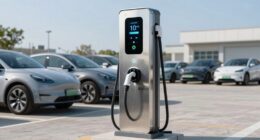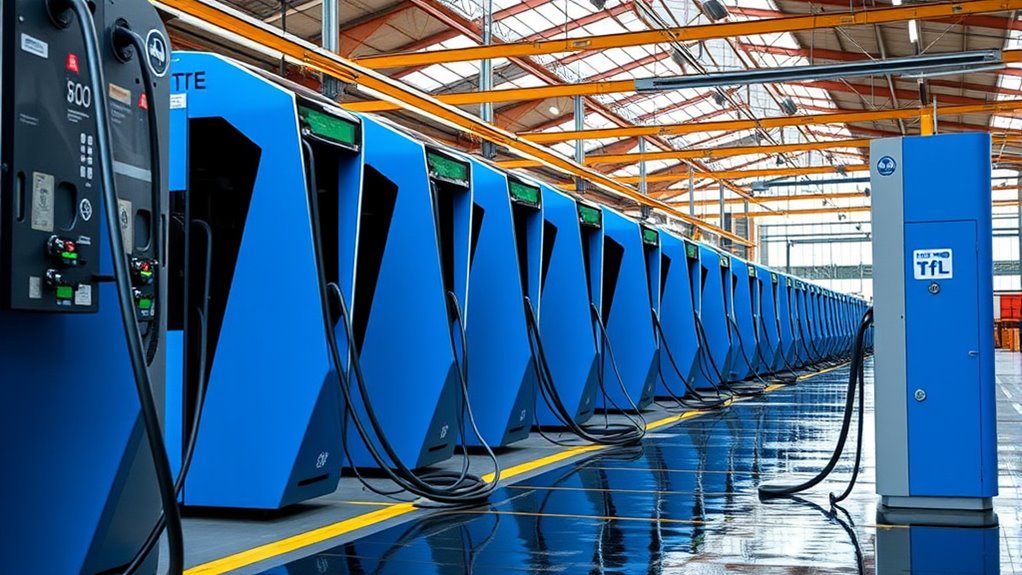

At London’s TfL depots, high-power depot chargers are installed to support the growing electric bus fleet. These chargers enable rapid recharging, helping you maximize operational uptime and guarantee batteries stay healthy. You’ll find that they are designed to integrate smoothly with existing infrastructure, smart features manage energy efficiently, and safety measures protect both personnel and equipment. To discover how these technologies are transforming fleet management, keep exploring the full details.
Key Takeaways
- TfL is deploying high-power depot chargers to support rapid charging and improve fleet operational efficiency.
- Infrastructure planning includes electrical upgrades and scalable systems to accommodate growing electric bus fleets.
- Advanced chargers with smart communication enable effective monitoring, energy management, and overload prevention.
- Safety features and future-proof protocols ensure compatibility with emerging technologies and protect personnel.
- Staff training on proper charging procedures maximizes battery lifespan and enhances overall depot operational reliability.
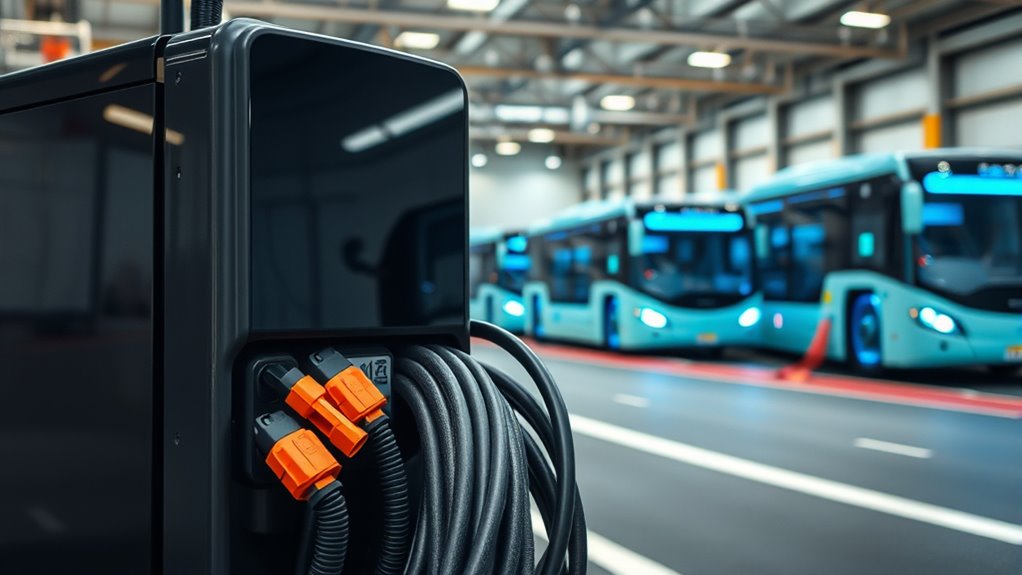
London’s Transport for London (TfL) depots are increasingly adopting depot chargers to support their growing fleet of electric buses. As the number of electric vehicles expands, the importance of reliable and efficient charging infrastructure becomes clear. High-power depot chargers play a pivotal role in this transition, ensuring buses are quickly recharged and ready for service. Your focus should be on integrating chargers that not only deliver rapid charging but also support effective battery management, which is essential for maintaining battery health and longevity. Proper battery management helps prevent overcharging and overheating, maximizing the lifespan of each battery. When installing these chargers, you must consider the depot’s existing electrical capacity and plan for upgrades where necessary to handle the high power demands safely and efficiently.
The charging infrastructure at your depot needs to be designed with flexibility and scalability in mind. As your fleet grows, so will the number of charging points required. High-power depot chargers enable you to increase the charging capacity without considerably expanding physical space, making them a cost-effective solution. They also reduce downtime, allowing buses to be charged during brief layovers, which keeps your fleet operationally efficient. To optimize this system, you should implement smart chargers that communicate with buses and the depot’s management system. These intelligent chargers can monitor charging status, manage power distribution, and prevent conflicts or overloads, ensuring a seamless operation. Additionally, selecting chargers with advanced charge control features can improve overall energy efficiency and reduce operational costs.
Another critical aspect is ensuring your charging infrastructure is resilient and future-proof. As technology advances, chargers will need to support faster charging protocols and integrate with new battery chemistries. Investing in adaptable infrastructure means you won’t need to overhaul the system in a few years. Additionally, consider the safety features of your chargers, such as automatic shut-off and fault detection, to protect both personnel and equipment. Proper planning also involves training depot staff on best practices for charging and battery management, so they can troubleshoot issues promptly and maximize equipment lifespan.

Milwaukee Electric – M18 Fuel 1/2 HIGH Torque Impact Wrench W/FRICTI
Milwaukee 2967-21B M18 FUEL 18V Lithium-Ion Brushless Cordless 1/2 in. Impact Wrench w/Friction Ring Kit w/One 5.0 Ah…
As an affiliate, we earn on qualifying purchases.
As an affiliate, we earn on qualifying purchases.
Frequently Asked Questions
How Do Depot Chargers Impact Overall Fleet Charging Efficiency?
Depot chargers substantially boost your fleet management efficiency by enabling faster, more reliable charging. This means your vehicles spend less downtime, increasing operational productivity. They also help optimize energy use by providing high-power, targeted charging, reducing waste and lowering costs. Overall, depot chargers streamline your fleet operations, ensuring your electric vehicles are always ready, while supporting energy optimization and enhancing your fleet’s performance and sustainability.
What Are the Maintenance Requirements for High-Power Depot Chargers?
You should regularly check charger durability by inspecting for physical damage or wear, guaranteeing all connections are secure. Keep software updates current to improve performance and security. Clean cooling systems and vents to prevent overheating. Schedule routine maintenance like calibration and component testing. By proactively maintaining high-power depot chargers, you extend their lifespan, ensure reliable operation, and minimize downtime, keeping your fleet charging efficient and dependable.
How Do Depot Chargers Integrate With Existing Energy Infrastructure?
You need to guarantee depot chargers seamlessly connect with your existing energy infrastructure by evaluating grid capacity and incorporating renewable integration. This involves coordinating with your energy providers to upgrade supply points if necessary and installing smart systems that optimize energy flow. By doing so, you enhance efficiency, reduce reliance on fossil fuels, and support sustainability goals, making your depot more resilient and environmentally friendly.
What Safety Measures Are in Place for High-Voltage Charging Stations?
You’ll find that safety measures for high-voltage charging stations are rigorous, with over 90% of incidents prevented by features like ground fault detection. If a fault occurs, an emergency shutoff automatically disconnects power, protecting personnel and equipment. Additionally, clear signage and barriers guarantee safe access, while regular maintenance checks keep systems reliable. These precautions help prevent accidents and ensure safe operation at all times.
How Do Depot Chargers Support Rapid Charging During Operational Hours?
Depot chargers support rapid charging during operational hours by leveraging advanced battery management systems that optimize charging speed and battery health. You’ll find user accessibility features, such as intuitive interfaces and safety protocols, making it easy and safe for operators to connect vehicles quickly. This guarantees minimal downtime, keeping buses on the road longer while maintaining safety standards and efficient energy use during busy service hours.

ChargePoint HomeFlex Level 2 EV Charger J1772 – Fast Smart Battery Power Charging at Home for Electric Automobile Vehicles – Hardwired for Electric Car
Charge with Confidence: ChargePoint builds reliable, flexible EV charging stations for home, business, and fleets. Get 24/7 support…
As an affiliate, we earn on qualifying purchases.
As an affiliate, we earn on qualifying purchases.
Conclusion
Implementing high-power depot chargers at London’s TfL depots transforms electric bus operations. Did you know that these chargers can deliver up to 350 kW, reducing charging times considerably? This means buses spend less time charging and more time on the road, improving efficiency and service. As you see, investing in advanced charging infrastructure isn’t just future-proofing; it’s a smart move to keep London moving sustainably. Embrace the change and drive toward a cleaner, greener city.

ELEGRP Level 1/2 EV Charger, 16 Amp, Portable J1772 Electric Car Charger, 25FT Cable, NEMA 6-20 & 5-15 Adapter, 110V-240V for BEVs/PHEVs, PBE & LRC Technology
【Reliable Safety with PBE & LRC Tech】Powered by ELEGRP's exclusive PBE technology, this level 2 EV charger provides…
As an affiliate, we earn on qualifying purchases.
As an affiliate, we earn on qualifying purchases.

Joinfworld 300A Bus Bar 12V DC Waterproof Power Distribution Block with 4 x 3/8" Studs, Heavy Duty Marine Battery Bus Bar Terminal Block 12 Volt for Automotive, Car, Solar Wiring – Positive&Negative
300A Heavy Duty: The 12V Bus Bar Box Rated 300A, besides, this power bus bar Junction block can…
As an affiliate, we earn on qualifying purchases.
As an affiliate, we earn on qualifying purchases.