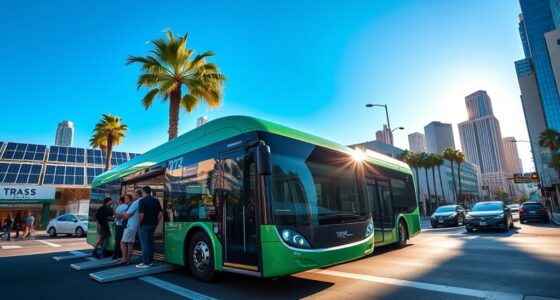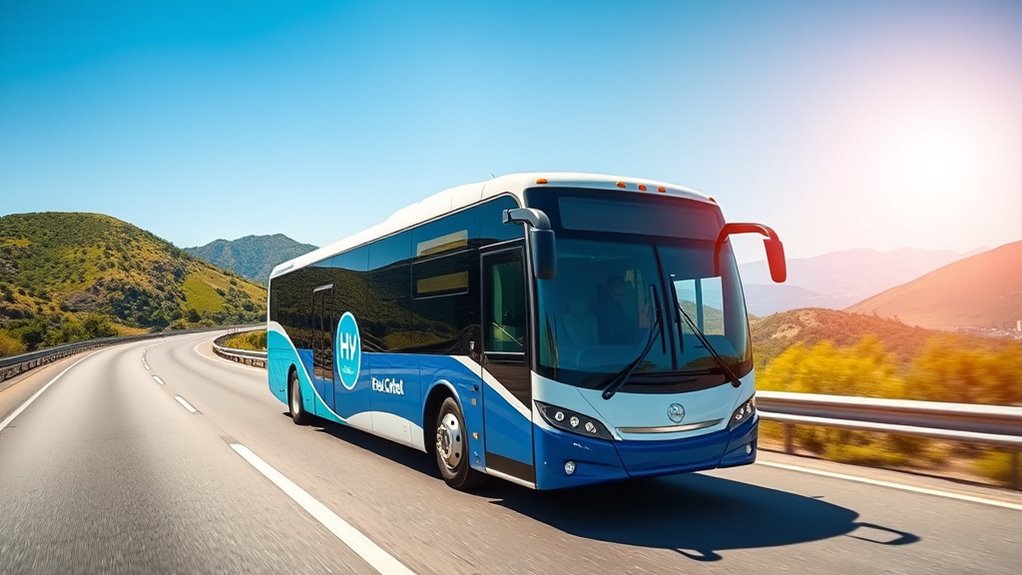

California leads in deploying hydrogen fuel cell buses on intercity routes through innovative pilot programs. You’ll see the state investing heavily in building a widespread hydrogen refueling network and carefully selecting key routes for maximum impact. Collaborations between government, transit agencies, and private companies help speed up adoption and reduce costs. These efforts aim to transform long-distance travel with zero-emission solutions. Keep exploring to discover more about how California’s efforts are shaping sustainable transit.
Key Takeaways
- California is leading in deploying hydrogen fuel cell buses on intercity routes to advance zero-emission transit.
- The state has developed a widespread hydrogen refueling infrastructure supporting long-distance bus operations.
- Pilot programs focus on route selection, operational efficiency, and refueling strategies to optimize hydrogen bus deployment.
- Collaborations between government, transit agencies, and private partners accelerate deployment and cost reduction.
- These initiatives aim to replace diesel buses, reduce emissions, and demonstrate scalable sustainable transportation models.
Have you ever wondered how California is leading the way in clean transportation? It’s no coincidence that the state is at the forefront of integrating hydrogen fuel cell buses into its intercity routes. What sets California apart is its strategic approach to building a robust hydrogen infrastructure and implementing effective bus deployment strategies. These efforts are transforming how long-distance travel is powered, making zero-emission transportation more accessible and reliable.
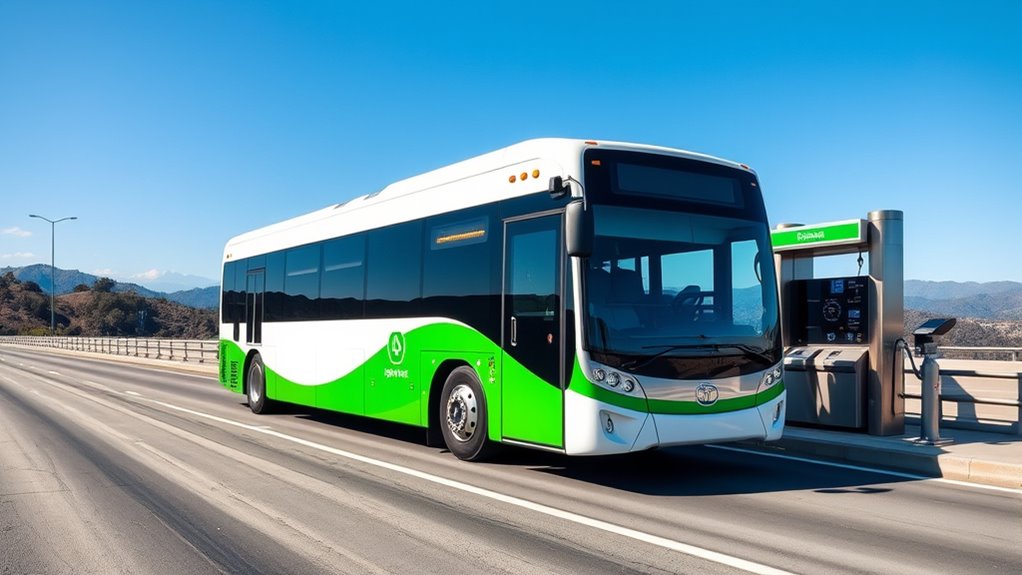
The development of hydrogen infrastructure is central to California’s success. The state has invested heavily in creating a widespread network of hydrogen refueling stations, ensuring that buses can operate smoothly over longer distances without the worry of running out of fuel. This infrastructure supports not just current pilot programs but also future expansion, allowing intercity routes to become more sustainable and efficient. By strategically locating refueling stations along key corridors, California minimizes downtime and maximizes operational flexibility, making hydrogen-powered buses a practical choice for intercity travel.
When it comes to bus deployment strategies, California’s approach is both innovative and pragmatic. The state carefully selects routes that can benefit the most from hydrogen technology, often starting with busy corridors where emissions reductions will have the greatest impact. Pilot programs are designed to test and refine deployment tactics, such as scheduling refueling stops during routine layovers and coordinating with existing transit schedules. This ensures that hydrogen buses don’t disrupt service but instead enhance it, providing passengers with a cleaner, quieter ride.
California also leverages partnerships between government agencies, transit operators, and private companies to optimize deployment. These collaborations help streamline the procurement process, reduce costs, and accelerate the rollout of hydrogen buses. Pilot programs often incorporate real-world feedback, allowing operators to adjust routes and fueling procedures for maximum efficiency. As a result, deployment strategies evolve in response to operational data, ensuring that hydrogen buses become a seamless part of intercity transit networks.
Furthermore, California’s commitment to expanding hydrogen infrastructure and refining bus deployment strategies signals a long-term vision. The state aims to replace traditional diesel buses with zero-emission alternatives across more routes, reducing greenhouse gases and improving air quality. These pilot programs act as testing grounds, helping policymakers and transit agencies identify best practices and scale successful models statewide. With continuous investment and innovation, California is not just experimenting with hydrogen buses; it’s paving the way for a cleaner, more sustainable transportation future that others around the world will look to emulate. Renewable energy innovations are integral to supporting these efforts by providing cleaner energy sources for the hydrogen production process.

Horizon Fuel Cell Technologies Solar Hydrogen Education Kit
Horizon puts renewable energy technology into the hands of our future scientists
As an affiliate, we earn on qualifying purchases.
As an affiliate, we earn on qualifying purchases.
Frequently Asked Questions
What Is the Cost Difference Between Hydrogen Buses and Diesel Buses?
You’ll find that hydrogen buses typically cost more upfront than diesel buses, with a cost comparison showing about 2 to 3 times higher initial investment. However, the economic impact favors hydrogen over time due to lower fuel costs and reduced emissions. While the initial expense is higher, the long-term savings on fuel and maintenance can balance out the higher purchase price, making hydrogen buses a more sustainable choice.
How Long Does It Take to Refuel a Hydrogen Fuel Cell Bus?
Refueling a hydrogen fuel cell bus takes about 10 to 15 minutes, but it can feel like a lightning-fast pit stop in a race! This quick refueling duration helps keep buses on the road longer and reduces downtime. Just remember, maintenance requirements are different—they’re generally lower than diesel buses, but you still need to keep an eye on hydrogen storage and fuel cell health to make certain everything runs smoothly and safely.
Are There Enough Hydrogen Refueling Stations Along Intercity Routes?
You’ll find that station infrastructure and regional coverage are expanding along intercity routes, but they still have gaps. Currently, there are enough hydrogen refueling stations in key areas, but as demand grows, additional stations are needed to guarantee seamless travel. Keep an eye on ongoing upgrades, as transportation authorities are actively working to improve regional coverage, making hydrogen fuel cell buses more practical for longer intercity routes.
What Is the Expected Lifespan of Hydrogen Fuel Cell Buses?
You can anticipate hydrogen fuel cell buses to last around 10 to 15 years, comparable to diesel buses. During this time, you’ll find maintenance costs relatively low, thanks to their fewer moving parts, and technological durability improving with advancements. Imagine these buses running smoothly for over a decade, reducing emissions and operational costs, while their robust design ensures they stay on the road longer, making your investment worthwhile.
How Do Hydrogen Buses Perform in Cold Weather Conditions?
Hydrogen buses generally perform well in cold weather, maintaining good fuel efficiency thanks to advanced insulation and heating systems. You might notice slight reductions in cold conditions, but overall, cold weather performance remains reliable. These buses are designed to operate efficiently across various climates, ensuring consistent service. Proper maintenance and warm-up procedures help optimize fuel efficiency and keep the hydrogen fuel cell system functioning smoothly during colder months.
hydrogen refueling station for buses
As an affiliate, we earn on qualifying purchases.
As an affiliate, we earn on qualifying purchases.
Conclusion
As you consider the future of transportation, remember that California’s pilot programs gently hint at a greener horizon. Hydrogen fuel cell buses quietly pave the way for cleaner air and a more sustainable world, offering a glimpse of what’s possible. While the journey may still have some miles to go, embracing these innovations could lead you toward a brighter, more environmentally harmonious tomorrow. Sometimes, the smallest steps open the door to the grandest changes.
zero emission intercity bus
As an affiliate, we earn on qualifying purchases.
As an affiliate, we earn on qualifying purchases.
hydrogen bus maintenance kit
As an affiliate, we earn on qualifying purchases.
As an affiliate, we earn on qualifying purchases.