

Implementing in-road wireless charging in cities can boost EV adoption by providing seamless recharging during commutes. Sweden and Israel have tested this tech successfully by integrating chargers into roads and establishing strong collaborations between governments, tech companies, and urban planners. These projects highlight the importance of safety, reliable infrastructure, and phased rollouts. If you stay with us, you’ll uncover more lessons from these innovative efforts and how they can transform urban mobility.
Key Takeaways
- Sweden and Israel have conducted pilot projects demonstrating safe, reliable in-road wireless charging integration with urban infrastructure.
- Collaboration among government agencies, technology developers, and urban planners is crucial for successful implementation.
- Pilot programs highlight the importance of phased rollouts and scalability considerations for infrastructure upgrades.
- Ensuring compatibility between vehicles and charging systems, along with safety and maintenance protocols, is essential.
- Lessons emphasize the need for public acceptance, policy support, and strategic planning to optimize benefits and deployment.
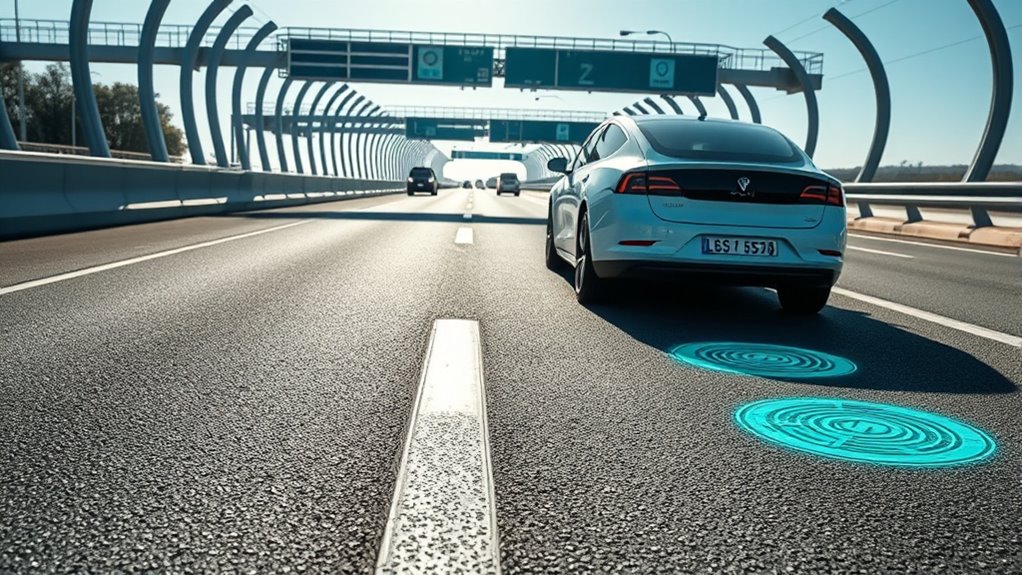
As electric vehicles become more prevalent, implementing in-road wireless charging offers a promising solution to extend driving range and reduce reliance on static charging stations. This technology not only benefits individual drivers but also plays an essential role in shaping the future of urban infrastructure. When integrated effectively, in-road wireless charging can support the deployment of autonomous vehicles, enabling them to operate more efficiently and with fewer stops for recharging. As autonomous vehicles become more common, cities will need to rethink urban planning strategies to accommodate this new mobility paradigm. Instead of building numerous charging stations, urban planners might prioritize embedding charging infrastructure directly into roads, streamlining traffic flow and reducing congestion. This shift could lead to more compact, sustainable cities where electric vehicles seamlessly recharge while in motion, minimizing downtime and maximizing road usage.
In adopting in-road wireless charging, you should consider how it influences urban planning. For example, roads with embedded chargers could eliminate the need for sprawling charging stations, freeing up space for other urban developments. This integration encourages a more efficient use of land, especially in densely populated areas. Additionally, the presence of wireless charging lanes may influence traffic flow and road design, prompting planners to create dedicated lanes for autonomous and electric vehicles. Such lanes could optimize the benefits of in-road wireless charging, ensuring vehicles continuously recharge during daily commutes or long trips. As a result, cities could see a reduction in electric vehicle range anxiety and more predictable travel times, encouraging wider adoption of electric and autonomous transportation. Moreover, the successful implementation of these systems can accelerate the transition to sustainable urban mobility and reduce greenhouse gas emissions.
Furthermore, implementing in-road wireless charging requires collaboration between technology developers, urban planners, and policymakers. You need to ensure the infrastructure is safe, reliable, and compatible with existing roads and vehicle types. This involves careful planning around power supply, maintenance, and upgrades. As you consider these factors, it’s essential to recognize that the success of such systems hinges on coordinated efforts to integrate wireless charging seamlessly into urban landscapes. You might also explore pilot projects and phased rollouts, learning from countries like Sweden and Israel, which are already testing these systems. These experiments provide valuable lessons on how to optimize infrastructure, ensure safety, and promote widespread acceptance.
Ultimately, as you embrace in-road wireless charging, you’re shaping a smarter, more sustainable urban environment. It supports the growth of autonomous vehicles and aligns with modern urban planning principles focused on efficiency, sustainability, and technological advancement. This approach promises to transform how cities function, making transportation more efficient, less polluting, and better suited to the needs of future generations. Recognizing the importance of urban infrastructure innovation is key to understanding how these advancements can be successfully integrated into our daily lives.
Frequently Asked Questions
What Are the Main Costs Involved in Deploying In-Road Wireless Charging?
The main costs involved in deploying in-road wireless charging include infrastructure investment and ongoing maintenance. You need to conduct a thorough cost analysis to understand installation expenses for the charging lanes, power supply, and technology integration. Additionally, consider future upgrades and repairs, which can add to long-term costs. These investments are essential to guarantee reliable, efficient charging infrastructure that supports your transportation goals effectively.
How Do Weather Conditions Affect Wireless Charging Performance?
Weather conditions are like a unpredictable dance partner, constantly shifting and challenging your rhythm. You’ll find that extreme cold, snow, rain, or fog can disrupt wireless charging performance, making climate resilience and weather adaptation essential. Moisture and temperature fluctuations may interfere with signal transmission and infrastructure reliability, so you need robust systems designed to withstand diverse weather. Preparing for these changes ensures your wireless charging stays consistent, no matter the weather’s mood swings.
What Safety Measures Are Necessary for Road Users?
You should prioritize pedestrian safety by installing clear signage, barriers, and warning signals around wireless charging zones. Regularly maintain the system to prevent malfunctions, and educate drivers and pedestrians about safe crossing practices. Establish emergency protocols to quickly address any system failures or hazards, ensuring a swift response that minimizes risk. These measures protect road users and create a safer environment for everyone around wireless charging infrastructure.
How Does Vehicle Compatibility Impact Implementation?
Your vehicle compatibility greatly impacts implementation because seamless vehicle integration guarantees efficient wireless charging. If your vehicle isn’t designed for in-road systems, retrofit challenges can arise, making upgrades costly or complex. To maximize benefits, manufacturers must develop adaptable technology. For you, understanding these compatibility requirements helps you plan for potential modifications and ensures your vehicle can efficiently utilize wireless charging infrastructure, avoiding delays and extra expenses.
What Is the Expected Lifespan of In-Road Wireless Charging Infrastructure?
Coincidentally, your in-road wireless charging infrastructure can last around 15-20 years if you prioritize technological durability and regular maintenance. You’ll need to plan for upkeep that addresses wear and tear, ensuring components stay functional. While advanced materials extend lifespan, unforeseen damage or environmental factors could shorten it. Ultimately, proactive maintenance keeps your system efficient, maximizing the investment’s longevity and minimizing costly repairs over time.
Conclusion
By learning from Sweden and Israel, you see the importance of planning, collaboration, and innovation in implementing in-road wireless charging. You recognize the need to adapt technology, address infrastructure, and engage stakeholders. You understand that success depends on careful design, strategic partnerships, and ongoing evaluation. Embrace these lessons to overcome challenges, seize opportunities, and drive progress toward sustainable, efficient transportation. Ultimately, your commitment to these principles will power the future of mobility.