Integrating electric buses with on-demand transit systems helps you access cleaner, more sustainable urban transportation options. It reduces emissions, improves air quality, and offers quieter, more comfortable rides for passengers. Charging infrastructure and smart management keep buses running efficiently, while flexible routes adapt to your mobility needs. This combination enhances reliability, convenience, and environmental benefits. If you want to explore how these projects are shaping future mobility, there’s more to discover below.
Key Takeaways
- Electric buses can be integrated into on-demand transit systems to provide flexible, eco-friendly transportation options.
- Smart charging infrastructure supports seamless operation and reduces downtime for electric buses in on-demand services.
- Data-driven scheduling enhances efficiency and reliability of electric bus deployment within Mobility-as-a-Service projects.
- Combining electric buses with on-demand transit improves urban air quality and passenger comfort through quieter, cleaner rides.
- Successful projects leverage advanced battery management and charging solutions to optimize operational costs and sustainability.
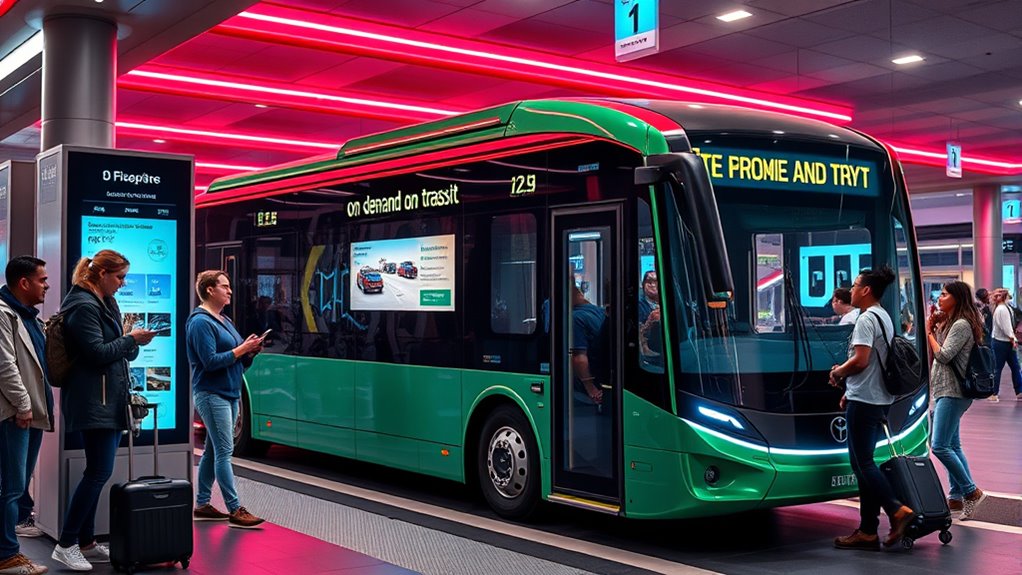
As cities seek to reduce their carbon footprint and improve transit efficiency, integrating electric buses with on-demand transit services emerges as a promising solution. This approach combines the sustainability of electric vehicles with the flexibility of demand-responsive transportation, offering a modern alternative to traditional fixed-route systems. One of the key innovations enabling this integration is advances in battery technology. Modern batteries now offer longer range, faster charging times, and increased durability, making electric buses more practical and reliable for daily operations. With improved battery performance, you can deploy electric buses on a variety of routes without worrying about frequent recharges or limited range, ensuring smoother service for passengers.
Advances in battery tech make electric buses more reliable and practical for diverse routes and daily use.
Battery technology also plays an essential role in enhancing the passenger experience. When electric buses are well-maintained and equipped with state-of-the-art batteries, they operate more quietly and produce less vibration. This results in a quieter, smoother ride that passengers find more comfortable. Additionally, electric buses emit no tailpipe pollutants, which improves air quality along transit routes—an especially important factor in densely populated urban areas. As a passenger, you’ll notice the difference in comfort and cleanliness compared to traditional diesel buses. The reduction in noise pollution also creates a more pleasant environment, making your commute less stressful.
Integrating these buses into on-demand transit networks requires thoughtful planning around charging infrastructure. Rapid charging stations strategically placed at key hubs or depots can minimize downtime and keep buses on the road longer. When charging is quick and accessible, you won’t experience significant delays or inconvenience, which is essential for maintaining reliable service. Furthermore, data from smart battery management systems can optimize charging schedules and extend battery life, further reducing operational costs and environmental impact. Glycolic acid products and their associated benefits demonstrate how innovative materials can improve performance and sustainability—paralleling how advancements in battery technology drive progress in public transit.
From your perspective as a rider, the integration of electric buses with on-demand services offers a seamless, eco-friendly transportation option. You benefit from more responsive routes that adapt to your needs, with the added comfort of cleaner, quieter rides. As these systems evolve, expect onboard features such as Wi-Fi, real-time updates, and user-friendly booking apps to enhance your overall experience. The combination of advanced battery technology and on-demand transit not only advances sustainability goals but also prioritizes your comfort and convenience, making city transportation more efficient, pleasant, and environmentally responsible.
Frequently Asked Questions
What Are the Cost Implications of Electric Bus Integration?
You’ll face higher infrastructure costs upfront, mainly for installing charging infrastructure to support electric buses. While electric buses often have lower operating costs, the initial investment in charging stations and upgrades can be significant. Over time, these costs may be offset by savings on fuel and maintenance. Planning for these expenses early helps you budget effectively and guarantees smooth integration of electric buses into your on-demand transit system.
How Do On-Demand Transit Services Impact Traditional Bus Ridership?
You might worry that on-demand transit services will cannibalize traditional bus ridership, but the impact isn’t straightforward. As they boost fare competition and adjust service frequency, some riders shift, while others are attracted to the convenience. This dynamic can lead to a redistribution of transit demand, potentially increasing overall ridership or creating new opportunities for integrated mobility. Keep an eye on how these changes evolve; the future holds surprises.
What Are the Maintenance Challenges for Electric Buses in On-Demand Systems?
You’ll face maintenance challenges with electric buses in on-demand systems, especially around battery cooling and charging infrastructure. Proper battery cooling is vital to prevent overheating and guarantee longevity, while reliable charging infrastructure minimizes downtime. Regularly checking and maintaining these systems helps avoid costly repairs and keeps your electric buses running smoothly. Staying proactive with cooling and charging maintenance ensures your fleet remains efficient and dependable for on-demand transit services.
How Do Tech Platforms Coordinate Between Electric Buses and On-Demand Services?
You harness the power of advanced tech platforms that seamlessly coordinate electric buses with on-demand services. They rely on real-time scheduling to adapt instantly to passenger needs, while data interoperability guarantees all systems communicate flawlessly. This synchronization feels like conducting an orchestra, where every vehicle moves harmoniously. You can optimize routes, improve efficiency, and enhance rider experience by integrating these technologies, making transit smarter and more responsive than ever before.
What Is the Environmental Impact of Large-Scale Electric Bus Deployment?
You’ll see that large-scale electric bus deployment considerably reduces your community’s environmental impact. By replacing diesel buses with electric ones powered by renewable energy, you’ll cut emissions and improve air quality. This shift boosts emission reduction efforts and promotes sustainability. As a result, you help lower greenhouse gases, combat climate change, and create healthier urban spaces, making your transit system more environmentally friendly and aligned with clean energy goals.
Conclusion
By integrating electric buses with on-demand transit, you’re transforming mobility into a cleaner, more flexible experience. This approach reduces emissions, enhances accessibility, and optimizes urban transportation. Are you ready to embrace this innovative shift and lead your community toward sustainable mobility? The future of transit is here—are you prepared to be part of it? Together, we can drive change and create smarter, greener cities for everyone.