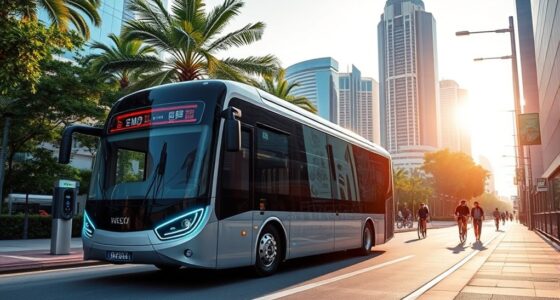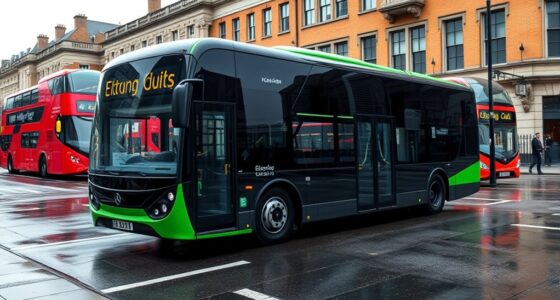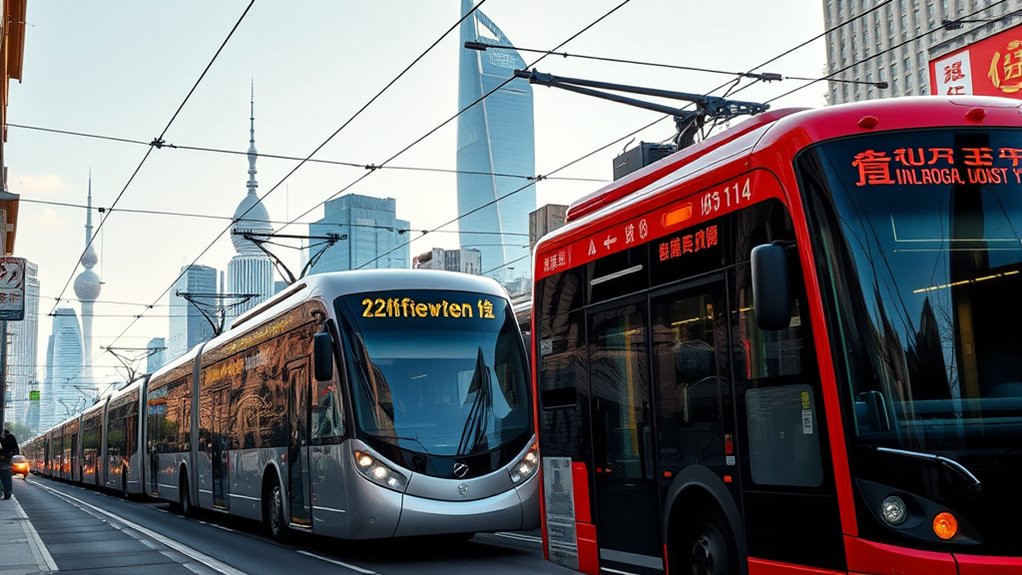

In comparing trolleybus systems and battery buses, Zurich’s modern trolleybuses offer consistent, smooth, and reliable service thanks to dedicated overhead wires and advanced features that enhance passenger comfort. Conversely, Shanghai’s battery buses provide greater route flexibility, operate quietly, and reduce visual clutter by avoiding wires, supported by fast-charging technology. Both cities showcase how technological advances optimize urban transit. To discover how these differences impact their effectiveness, keep exploring the key details behind their success.
Key Takeaways
- Zurich’s trolleybuses offer reliable, smooth, and comfortable service with dedicated overhead infrastructure, exemplifying high passenger comfort.
- Shanghai utilizes battery buses with fast-charging technology, enabling flexible routes and reduced visual impact in urban areas.
- Trolleybuses in Zurich benefit from continuous power supply, ensuring consistent operation, while Shanghai’s battery buses adapt to route changes without extensive infrastructure.
- Modern trolleybuses feature advanced suspension and climate control, enhancing passenger experience; battery buses emphasize quietness and interior space.
- Both cities demonstrate how infrastructure investment and technological advances optimize urban transit, balancing reliability, flexibility, and environmental goals.

When choosing between trolleybus systems and battery buses, understanding their key differences can help you make an informed decision. Both options are popular for urban transit, but they serve different needs based on infrastructure, operational flexibility, and passenger experience. Trolleybus systems rely heavily on electric infrastructure, specifically overhead wires, to power the vehicles. This setup creates a dedicated network that provides consistent power, often resulting in smoother acceleration and deceleration, which directly enhances passenger comfort. Since trolleybuses draw electricity directly from overhead lines, they tend to have fewer interruptions once connected, making trips more reliable and predictable. This stability can make a noticeable difference in passenger experience, especially during busy hours or adverse weather conditions that might affect other modes of transportation.
In contrast, battery buses operate without the need for extensive electric infrastructure. They run on onboard batteries that are charged at designated points or during overnight charging cycles. This flexibility allows cities to deploy battery buses on routes without overhead wiring, enabling more adaptable network planning. However, the reliance on batteries means that their range can be limited, and frequent recharging might disrupt service or require strategic planning. Despite this, advances in battery technology have considerably improved their range and charging times, making them increasingly viable for various routes. When it comes to passenger comfort, battery buses can offer a quieter and smoother ride, especially because they don’t depend on overhead wires, which can sometimes cause visual clutter or noise from contact points. The absence of wires also contributes to a more open and spacious feeling inside the bus, potentially improving ride quality.
Looking at modern examples, Zurich’s trolleybus network exemplifies how dedicated electric infrastructure supports high passenger comfort and reliable service. The city has invested in modern trolleybuses with advanced suspension systems and climate control, ensuring a comfortable ride for commuters. Meanwhile, Shanghai has embraced battery buses as part of its broader strategy to reduce emissions and increase route flexibility. Their battery fleet includes vehicles equipped with fast-charging capabilities, allowing quick turnarounds and minimizing service interruptions. Both cities demonstrate how these technologies can be optimized to suit urban needs, with Zurich emphasizing stability and passenger experience through trolleybuses, and Shanghai focusing on flexibility and environmental benefits with battery buses. Ultimately, your choice depends on your priorities: whether you value the stability and comfort of a wired system or the adaptability and cleaner profile of battery-powered buses.

British Trolleybus Systems – Wales, Midlands and East Anglia: An Historic Overview
As an affiliate, we earn on qualifying purchases.
As an affiliate, we earn on qualifying purchases.
Frequently Asked Questions
How Do Maintenance Costs Compare Between Trolleybuses and Battery Buses?
You’ll find that trolleybuses typically have higher maintenance costs due to their extensive infrastructure needs, like overhead wires and substations, which also increase operational costs. Battery buses often have lower infrastructure investment but may require more frequent battery replacements, adding to maintenance expenses over time. Overall, trolleybuses tend to have higher ongoing costs, but battery buses can lead to savings with fewer infrastructure requirements.
What Are the Environmental Impacts of Each System?
Imagine choosing between two eco-friendly guardians for your city’s air. Trolleybuses tap into the electric grid, reducing emissions and relying on renewable energy, but their infrastructure can strain local resources. Battery buses, on the other hand, emit no tailpipe pollutants and can be recycled, minimizing waste. However, battery production impacts the environment. Both systems offer cleaner transit options, but their environmental footprints depend on energy sources and recycling practices.
How Do Passenger Comfort Levels Differ?
You’ll notice passenger comfort varies between trolleybuses and battery buses. Trolleybuses typically offer a smoother ride because of their continuous power supply, reducing vibrations. Battery buses can sometimes feel less smooth, especially during acceleration or braking, due to power fluctuations. Overall, trolleybuses tend to provide higher passenger comfort and ride smoothness, making your journey more comfortable, especially on longer routes or rougher roads.
What Infrastructure Is Required for Each Type?
You need overhead wiring for trolleybus systems, which requires installing and maintaining extensive overhead lines along routes. For battery buses, you’ll need dedicated charging stations at depots or key points, allowing quick top-ups between routes. Both systems demand infrastructure investments; trolleybuses rely on overhead wiring, while battery buses depend on accessible charging stations. Your choice depends on route complexity, urban space, and long-term operational considerations.
How Scalable Are These Systems for Future City Expansions?
You can scale trolleybus and battery bus systems for future urban growth, but each faces unique infrastructure challenges. Trolleybuses require extensive overhead wiring, which becomes costly and complex as cities expand. Battery buses, on the other hand, offer more flexibility with charging stations but need increased battery capacity for longer routes. Both systems need strategic planning to address infrastructure challenges and support sustainable growth in evolving urban landscapes.

Qukipet Power Distribution Block 12V 150A 1/4" Stud Bus Bar Tinned Copper Electrical Battery Terminal Block for Boat Automotive Solar Wiring
High-Purity Tinned Copper Construction: Made from premium electrolytic copper for superior conductivity, with a tin-plated surface to prevent…
As an affiliate, we earn on qualifying purchases.
As an affiliate, we earn on qualifying purchases.
Conclusion
As you envision Zurich’s gleaming trolleybuses gliding seamlessly through lush city streets and Shanghai’s battery buses weaving swiftly past towering skyline silhouettes, you see the future of urban transit taking shape. Both systems offer vibrant alternatives—silent, clean, and efficient—each with their own charm. As cities embrace these modern marvels, you can almost feel the pulse of progress, where technology and sustainability intertwine, transforming daily journeys into a glimpse of tomorrow.

Anina Club Car Charger 12V 24V 36V 48V 60V 30W PD QC 3.0 Dual Port Type C Charger Fast Charging High Voltage USB Outlet for Club Car Boat Marine Bus Truck Golf RV Motorcycle
Support up to 60 Volts: Our High Voltage Club Car USB outlet utilizes the latest chip technology to…
As an affiliate, we earn on qualifying purchases.
As an affiliate, we earn on qualifying purchases.

British Trolleybuses in Colour: The Last Decade 1961-1972
As an affiliate, we earn on qualifying purchases.
As an affiliate, we earn on qualifying purchases.