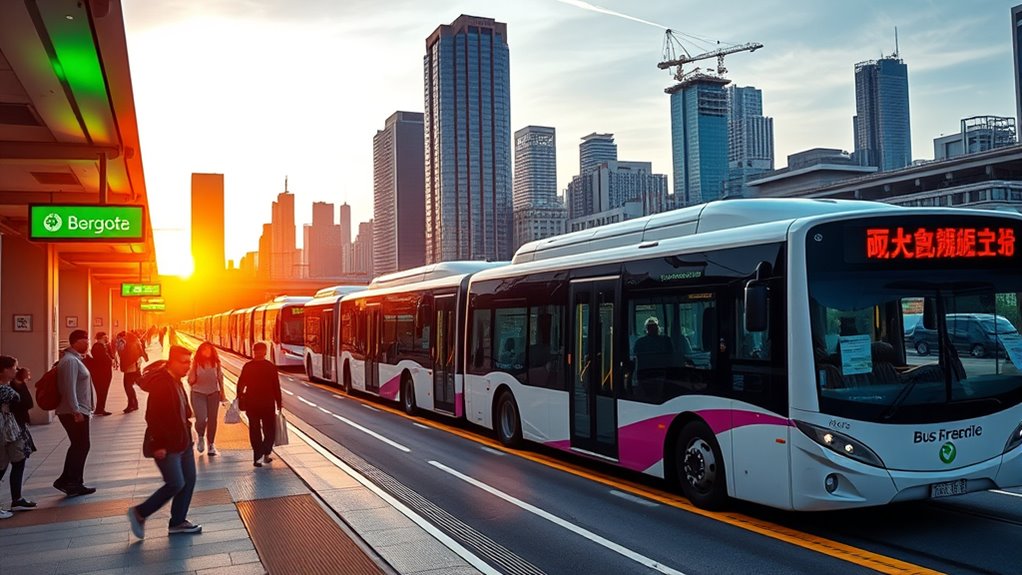

Implementing electric buses in BRT systems improves transit efficiency and passenger comfort, as shown by Bogotá and Guangzhou. Advanced batteries with longer range, quick charging, and durability enable reliable operations and reduce downtime. Infrastructure investments like charging stations support seamless service. These cities focus on integrating battery tech with passenger-friendly designs and strategic infrastructure, creating sustainable and attractive urban transit. Explore how these lessons can guide your BRT upgrades for faster, greener mobility.
Key Takeaways
- Strategic placement of charging stations during short layovers ensures continuous, reliable electric bus operations.
- Advanced battery technologies enable longer ranges and quicker recharging, minimizing service disruptions.
- Integrating passenger comfort features with technological upgrades enhances overall user experience.
- Infrastructure investments in thermal management and energy-efficient systems optimize battery performance.
- Combining reliable batteries with user-friendly design fosters sustainable, efficient urban transit systems.

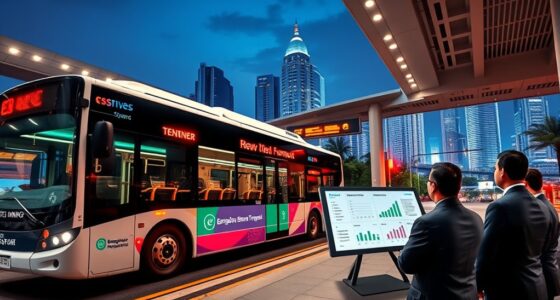
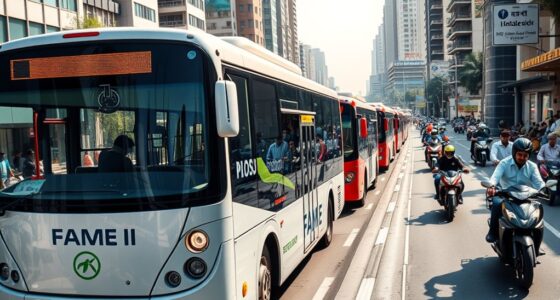
Integrating electric buses into Bus Rapid Transit (BRT) systems offers a promising way to enhance urban mobility while reducing environmental impact. One of the key factors in successful integration is the advancement of battery technology. Modern batteries now offer longer range, quicker charging times, and better durability, making electric buses more practical for daily operation. When you choose electric buses with reliable battery technology, you can confidently run consistent service without frequent delays for charging or battery replacements. This guarantees that the BRT system remains efficient and punctual, which is essential for attracting regular ridership. Additionally, the improved energy density of batteries allows for lighter vehicles, which can enhance overall performance and passenger comfort. Furthermore, ongoing innovations in battery design are continuously expanding the capabilities of electric buses, enabling even more seamless integration into urban transit networks. Passenger comfort is another indispensable aspect that markedly influences the success of electric BRT systems. Electric buses tend to operate more quietly than traditional diesel counterparts, creating a more pleasant environment for passengers. This reduction in noise pollution makes commuting less stressful and can even encourage more people to opt for public transit over private vehicles. Furthermore, electric buses often feature smoother acceleration and deceleration, thanks to their electric drivetrains, which translates into a more comfortable ride. Many systems, including those in Bogota and Guangzhou, have prioritized upgrading their buses with climate control systems that are more efficient and less noisy, further improving passenger experience.
Reliable battery technology ensures efficient, punctual electric BRT systems that attract riders and improve urban mobility.
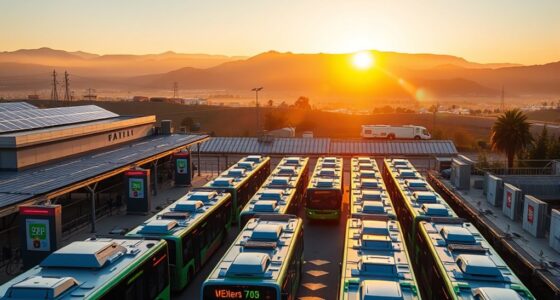
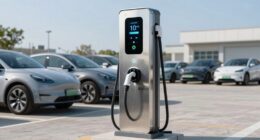
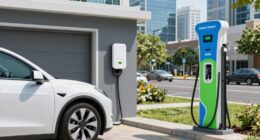
In Bogota, the city’s focus on integrating electric buses has highlighted the importance of infrastructure alongside battery technology. Charging stations strategically placed along routes allow buses to recharge quickly during short layovers, minimizing downtime. The city also emphasizes passenger comfort by designing buses with wide, accessible doors, ergonomic seating, and real-time information displays, making journeys more pleasant. Similarly, Guangzhou has invested heavily in battery technology innovations, enabling longer routes without sacrificing performance. Their electric buses feature advanced thermal management systems that maintain battery efficiency in varying climates, ensuring reliable service and a comfortable ride year-round.
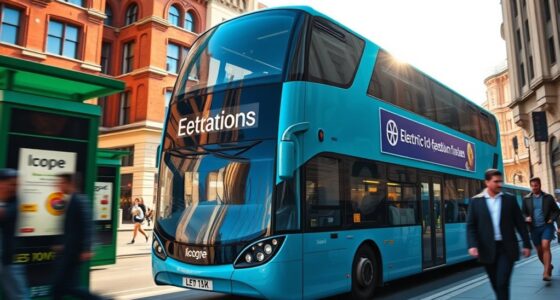
Both cities demonstrate that the combination of cutting-edge battery technology and passenger-centered design is essential. When you prioritize these elements, you not only reduce emissions but also create a more attractive, comfortable transit option for users. As electric buses become more integrated into BRT systems worldwide, lessons from Bogota and Guangzhou show that investing in reliable batteries and passenger comfort features is indispensable for fostering sustainable, efficient urban mobility.
Top picks for "electric integration system"
Open Amazon search results for this keyword.
As an affiliate, we earn on qualifying purchases.
Frequently Asked Questions
What Are the Long-Term Environmental Benefits of Electric Buses?
You’ll see long-term environmental benefits like reduced air pollution and lower greenhouse gas emissions when you adopt electric buses. By focusing on battery recycling, you help minimize hazardous waste, while grid integration guarantees cleaner energy sources power your fleet. Over time, these efforts lead to a healthier environment, improved urban air quality, and a sustainable transportation system that benefits both communities and future generations.
How Do Electric Buses Impact Overall BRT System Costs?
While electric buses may seem to stretch your budget initially, they often lead to savings over time. You’ll find that battery longevity reduces replacement costs, and strategic charging station placement minimizes operational disruptions. These factors can lower maintenance expenses and energy costs, ultimately balancing out the upfront investment. By planning carefully, you can make your BRT system more cost-effective, sustainable, and smoother to operate in the long run.
What Maintenance Challenges Are Unique to Electric Buses?
You’ll face maintenance challenges unique to electric buses, like monitoring battery longevity to prevent unexpected failures. Proper charging station placement is essential; poorly located stations can cause delays and increase wear on batteries. Regularly inspecting battery health and ensuring accessible, well-maintained charging infrastructure helps you keep electric buses reliable. Addressing these issues proactively minimizes downtime and maintains efficient service, making your BRT system more sustainable and cost-effective.
How Do Charging Infrastructure Requirements Vary Across Cities?
You’ll find that charging infrastructure requirements vary greatly between cities based on factors like charging station density and grid capacity issues. Higher station density means more frequent charging options, reducing downtime, while limited grid capacity can restrict the number of chargers or slow charging speeds. Cities with robust grids can support rapid charging, but others must plan carefully to balance infrastructure expansion with grid upgrades, ensuring reliable electric bus operation.
What Are the Funding Options for Large-Scale Electric Bus Deployment?
Funding electric bus deployment is like planting a tree—you need diverse roots to grow strong. You can tap into public-private partnerships that pool resources and share risks, or leverage government subsidies to offset costs. Some cities also explore grants or green bonds. Combining these options creates a sturdy foundation, ensuring your electric bus fleet flourishes sustainably while reducing emissions and improving transit for everyone.
Conclusion
Integrating electric buses into BRT systems transforms urban transit, reducing emissions and improving air quality. Bogotá’s switch to electric buses cut greenhouse gases by over 30%, showcasing environmental benefits. Guangzhou’s experience demonstrates that investing in charging infrastructure and policy support can boost adoption. Embrace these lessons to enhance your city’s sustainability efforts. The key takeaway: strategic electric bus integration can cut urban emissions markedly, making your city cleaner and healthier for everyone.