
In evaluating TheRide’s hydrogen fuel cell pilot, you’ll find that vehicle range generally spans 200 to 300 miles per tank, supporting many daily routes. Infrastructure costs and availability are key factors, as expanding refueling stations will improve flexibility and reduce downtime. While initial investments are high, long-term savings on fuel and maintenance could make hydrogen buses more economical. To discover how these elements influence the pilot’s success and future potential, explore the details further.
Key Takeaways
- Hydrogen buses typically have a range of 200 to 300 miles per tank, supporting daily route needs.
- Infrastructure availability influences refueling frequency, route planning, and overall operational efficiency.
- Initial costs include bus procurement and station installation, but long-term savings may offset upfront investments.
- Infrastructure expansion will reduce refueling times and improve station accessibility, enhancing route flexibility.
- The pilot’s success depends on balancing current infrastructure limitations with expected benefits in range and cost savings.

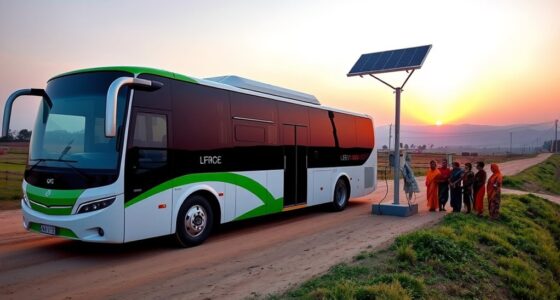
TheRide has launched a new hydrogen fuel cell pilot program, aiming to revolutionize public transportation with cleaner, more efficient energy. This initiative is a bold step toward reducing emissions and dependence on fossil fuels. As you look into the program, one of the key factors to consider is the hydrogen infrastructure. Establishing a reliable network of refueling stations is crucial for the success of hydrogen-powered buses. Currently, this infrastructure is still developing, which means you’ll need to evaluate how accessible refueling options are along your routes. Building out hydrogen stations requires significant investment, but it’s essential for enabling seamless operations. Additionally, the availability and distribution of hydrogen fuel directly impact route planning and overall efficiency. As the infrastructure expands, you’ll likely see improvements in refueling times and station locations, making hydrogen buses more practical for everyday use.
Cost analysis plays a vital role in understanding the feasibility of this pilot program. Transitioning to hydrogen fuel cells involves initial expenses for purchasing new vehicles and installing refueling stations. However, it’s important to compare these costs with the long-term savings from lower fuel expenses and reduced maintenance. Hydrogen fuel cells tend to have fewer moving parts than traditional engines, which means less downtime and lower repair costs over time. When you consider the total cost of ownership, hydrogen buses could prove more economical in the long run, despite the higher upfront investment.
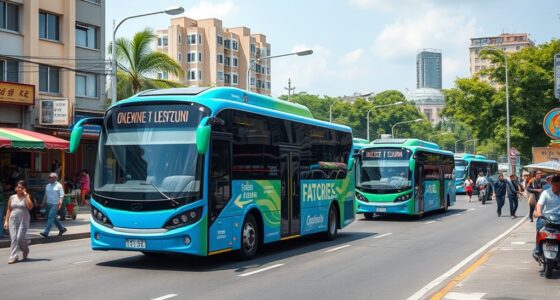
As you assess the range capabilities of hydrogen buses, you’ll find that they generally offer a competitive advantage. They can typically travel 200 to 300 miles on a single tank of hydrogen, which is adequate for many daily routes. This range allows you to operate buses efficiently without frequent refueling breaks, optimizing schedule adherence and service reliability. Nonetheless, the current state of hydrogen infrastructure influences how you plan routes and refueling schedules. If refueling stations are sparse, you might need to adjust your routes or schedules to accommodate longer fueling times or plan for strategic stops.
Top picks for "theride hydrogen fuel"
Open Amazon search results for this keyword.
As an affiliate, we earn on qualifying purchases.
Frequently Asked Questions
What Is the Environmental Impact of Hydrogen Fuel Cell Production?
You might be concerned about hydrogen fuel cell production’s environmental impact. If sourced renewably, it markedly reduces emissions and minimizes pollution. However, if the hydrogen is produced using fossil fuels, it can lead to higher emissions and environmental harm. Overall, renewable sourcing of hydrogen promotes emission reduction and makes fuel cell technology more eco-friendly, supporting a cleaner energy future.
How Does Hydrogen Fueling Infrastructure Affect Operational Efficiency?
Hydrogen fueling infrastructure substantially boosts your operational efficiency by enabling quick refueling, reducing downtime, and increasing vehicle availability. As infrastructure expands, refueling speed improves, allowing you to get back on the road faster. This expansion also supports wider deployment, making hydrogen vehicles more practical for your fleet. With faster refueling times and increased stations, your operations become more streamlined, cost-effective, and capable of meeting growing demand efficiently.
Are There Safety Concerns With Hydrogen Storage on Vehicles?
You might think hydrogen storage on vehicles is a safety gamble, but it’s generally safe when proper precautions are in place. The key concerns are hydrogen leakages and storage safety, which are minimized with robust tanks and safety systems. While hydrogen is flammable, modern technology guarantees secure storage, making accidents unlikely. It’s a case of playing it safe rather than playing with fire, giving you peace of mind on the road.
What Are the Long-Term Maintenance Costs of Fuel Cell Vehicles?
You’ll find that long-term maintenance costs for fuel cell vehicles are generally lower than traditional cars because they have fewer moving parts, reducing repair needs. Battery longevity is a key factor, as fuel cells tend to last longer with proper maintenance scheduling. Over time, routine inspections and timely part replacements help keep costs predictable, making fuel cell vehicles a cost-effective choice for the future.
How Does Hydrogen Fuel Cell Technology Compare to Battery Electric Systems?
Hydrogen fuel cell technology offers quick refueling and longer range compared to battery electric systems, but relies heavily on hydrogen infrastructure. Fuel cell efficiency is generally high, converting hydrogen into electricity with minimal loss. However, building a robust hydrogen infrastructure is costly and still developing, whereas electric systems benefit from widespread charging stations. Your choice depends on infrastructure availability, driving needs, and cost considerations.
Conclusion
As you consider TheRide’s hydrogen fuel cell pilot, remember that innovation fuels progress—just as a single spark ignites a wildfire. While the pilot shows promise in extending range and reducing costs, it’s a reminder that sustainable transportation isn’t a distant dream, but a journey you’re part of now. Embrace this shift, because the road to cleaner mobility is paved with bold steps, and you’re right at the wheel.