
📊 Full opportunity report: Watch-once Spoken Commands For Desktop Workflows on IdeaNavigator AI — validation score, market gap, and execution plan.

Get business pricing on monitors, keyboards and dev gear
- Business-only prices and quantity discounts
- Tax-exempt purchasing
- Multiple users, one account, clear invoices
TL;DR
A new desktop automation approach allows users to record workflows once and trigger them with spoken commands. This beta targets power users with repetitive tasks, promising increased efficiency and trust through visual step replay and rollback features.
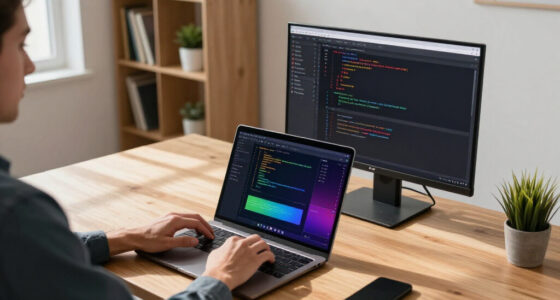
IdeaNavigator AI has introduced a new beta feature that enables users to record desktop workflows once and trigger them through spoken commands. This development targets power users who spend hours on repetitive tasks, aiming to reduce manual effort and scripting complexity. The tool’s core innovation lies in its ability to generalize a single recorded workflow into a reliable voice-activated command, with visual step-by-step replay and rollback options that enhance trust and control.
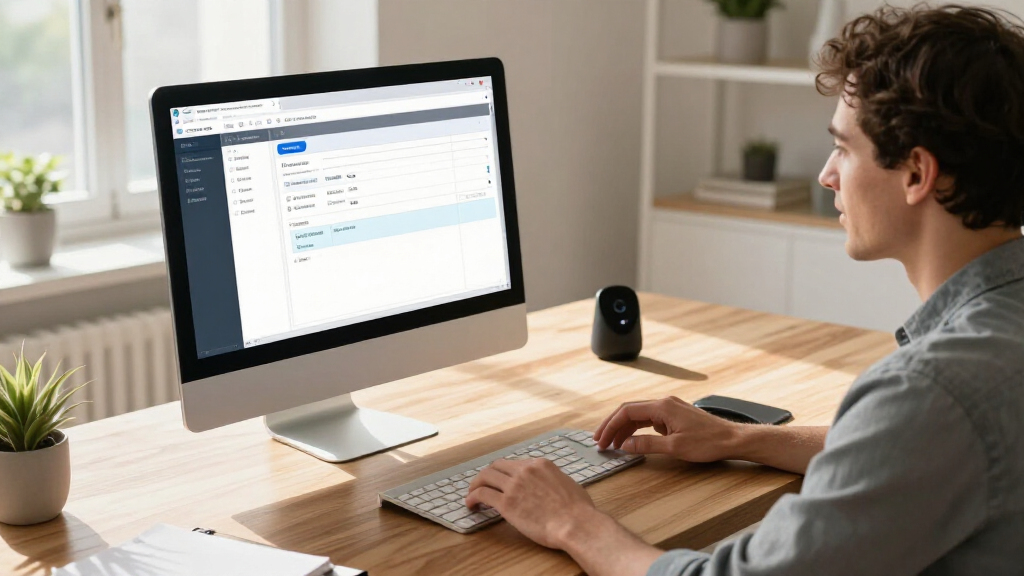
The new system allows users to perform a workflow—such as batch renaming files, resizing images, or transferring data between applications—once while the software records each step, including clicks, drags, and data copying. After recording, the workflow is associated with a spoken command, which can be triggered later to execute the same steps automatically. During execution, each step is visibly replayed, with prompts for user approval on potentially risky actions. If a step misfires, the system can roll back to the last safe checkpoint, reducing errors and increasing confidence in automation.
This approach addresses a long-standing challenge in desktop automation: the friction of scripting and brittle hotkey setups, which often discourage users from automating repetitive tasks. By enabling a ‘record once, speak to run’ model, the system aims to lower the barrier for power users who currently rely on complex scripts or manual repetition, offering a more intuitive, visual, and trustworthy alternative.
The beta will initially handle five common workflow archetypes, including batch renaming or resizing files, report reformatting, and data transfer between applications. The company plans to evaluate success based on weekly retention metrics among a target of 200 dedicated power users, with a subscription model that includes team sharing features for collaborative workflow libraries.
Potential Impact on Desktop Productivity Workflows
This development could significantly streamline repetitive desktop tasks for power users, reducing time spent on manual actions and scripting. By simplifying automation into a visual, record-and-replay process triggered via voice, it could lower barriers to adoption and improve workflow reliability. If successful, this approach may reshape how advanced users automate daily chores, making voice-activated automation a mainstream productivity tool.
Furthermore, the visual replay and rollback features aim to build trust in autonomous workflows, addressing common concerns about errors and unpredictability in automation systems. This could lead to broader acceptance and integration of voice commands in professional environments, potentially influencing future desktop automation standards.
desktop workflow automation software
As an affiliate, we earn on qualifying purchases.
As an affiliate, we earn on qualifying purchases.
Evolution of Desktop Automation and Voice Control
Desktop automation has traditionally relied on scripting languages, hotkey macros, and complex configuration, which often require technical expertise and are prone to brittle failures. Recent advances in AI-driven screen-understanding models now enable systems to interpret workflows visually and generalize them beyond a single recording. Voice control has also matured, but most implementations require predefined commands or complex setup. This new approach combines these trends by enabling users to record a workflow once and trigger it via natural speech, leveraging AI to interpret and generalize the process.
Previous efforts in automation focused on macro recording or voice commands without visual verification, often resulting in errors or lack of trust. The current development addresses these issues by offering a step-by-step visual replay and rollback, making autonomous execution more transparent and controllable. The beta testing phase aims to validate whether this method can be adopted by power users, who are the most likely to benefit from streamlining repetitive tasks.
voice-activated task automation tools
As an affiliate, we earn on qualifying purchases.
As an affiliate, we earn on qualifying purchases.
Unconfirmed Aspects and Challenges Ahead
It is not yet clear how well the system will generalize beyond the initial five workflow types or how accurately it will execute complex or highly variable tasks. The effectiveness of the visual replay and rollback features in real-world, error-prone environments remains to be validated through beta testing. Additionally, user acceptance, especially regarding voice recognition accuracy and trust in autonomous execution, is still uncertain. The company has not disclosed specific metrics or timelines for wider release or integration with existing automation platforms.
workflow recording and playback software
As an affiliate, we earn on qualifying purchases.
As an affiliate, we earn on qualifying purchases.
Next Steps for Beta Testing and Development
The company plans to release the beta to a select group of 200 power users, focusing on monitoring weekly retention and task success rates. Feedback from this phase will inform improvements in workflow generalization, voice command recognition, and user interface refinements. If the beta demonstrates strong engagement and reliability, a broader rollout could follow within the next six to twelve months. Further development may include expanding supported workflow archetypes and integrating with popular productivity suites.
visual automation tools for Windows
As an affiliate, we earn on qualifying purchases.
As an affiliate, we earn on qualifying purchases.
Key Questions
How does the system record workflows?
The system records each step of a workflow, including mouse clicks, drags, and data copying, during a single run. It then associates this sequence with a spoken command for future trigger.
Can I edit or customize recorded workflows?
Details on editing or customizing workflows are not yet confirmed, but the focus of the beta is on reliable recording, generalization, and safe execution with visual verification.
What types of tasks will it support initially?
The beta will handle tasks like batch renaming or resizing files, report reformatting, and transferring data between applications.
When will this feature be available to all users?
Wider availability depends on beta results, but a full release could be expected within the next year if testing is successful.
Will it work with all voice recognition systems?
The system is designed to work with integrated voice recognition, but specific compatibility details are still under development.
Source: IdeaNavigator AI
Halloween Picks
halloween
As an affiliate, we earn on qualifying purchases.