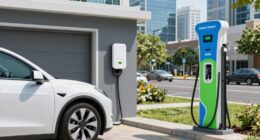
Choosing between 150 kW, 350 kW, and 400 kW chargers depends on your priorities. Faster chargers like 350 kW or 400 kW cut down charging times, boosting fleet efficiency if you can handle the higher infrastructure costs and potential battery wear. Meanwhile, 150 kW chargers are gentler on batteries and easier to install but slow down operations. To find the best balance for your needs, you’ll want insights into how each option impacts your fleet’s performance and longevity.
Key Takeaways
- Higher power chargers (350 kW, 400 kW) significantly reduce bus charging times compared to 150 kW chargers.
- 150 kW chargers are gentler on batteries, potentially extending battery lifespan over frequent fast charging cycles.
- Infrastructure costs increase with higher power chargers due to the need for robust electrical and cooling systems.
- Ultra-fast chargers enable quick turnaround but may accelerate battery degradation and impact long-term maintenance.
- Balancing charging speed and infrastructure investment is essential for optimizing fleet efficiency and longevity.

When it comes to electric vehicles, charging speed can make or break your driving experience. This is especially true for buses, where quick turnaround times are essential for operational efficiency. With charging power levels ranging from 150 kW up to 400 kW, you need to contemplate how these options impact not just how fast your bus charges, but also the long-term effects on battery longevity and infrastructure costs. Faster chargers, like 350 kW and 400 kW, promise to cut down charging times markedly, but they also pose some trade-offs. For instance, high-power charging can accelerate battery wear, potentially reducing the lifespan of your bus’s battery. This means you might face higher replacement costs sooner than expected if you opt for ultra-fast chargers. On the other hand, slower chargers, such as 150 kW, extend the charging time but tend to be gentler on batteries, helping preserve their longevity over many charging cycles. This trade-off is vital to weigh, especially if your fleet relies heavily on frequent charging sessions. Additionally, considering charging technology advancements can help identify more efficient and sustainable solutions for future expansion.
From an infrastructure perspective, higher charging speeds demand substantial investment. Installing 350 kW or 400 kW chargers isn’t just about the hardware itself; you also need a robust power supply and cooling systems to handle the increased energy flow safely. These requirements translate into higher infrastructure costs upfront, which can strain budgets, especially for transit agencies or companies expanding their fleets. Conversely, the 150 kW chargers are more manageable in terms of initial investment. They require less powerful electrical connections and simpler cooling systems, making them a more cost-effective choice for many operations. Still, this comes with longer charging times, which could impact scheduling, especially during peak hours with tight turnaround cycles.
Ultimately, choosing between 150 kW, 350 kW, and 400 kW chargers hinges on your operational priorities. If you value rapid turnaround and can absorb higher upfront costs, the ultra-fast chargers might be worth the investment, provided you’re willing to monitor and manage potential impacts on battery health. If budget constraints and battery longevity are more pressing, then slower chargers could serve your needs better, even if it means slightly longer downtimes between routes. Balancing these factors will help you optimize your fleet’s performance and cost-effectiveness, ensuring your buses stay on the road longer and operate smoothly without breaking the bank on infrastructure.
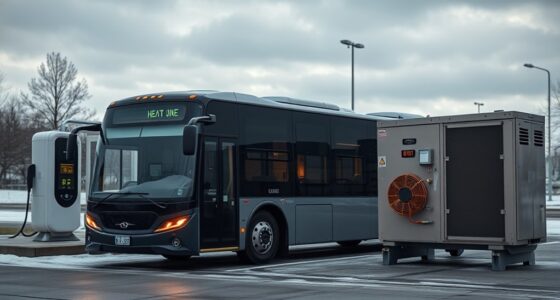
electric bus fast charger 350 kW
As an affiliate, we earn on qualifying purchases.
As an affiliate, we earn on qualifying purchases.
Frequently Asked Questions
How Do Charging Speeds Impact Bus Route Planning?
Charging speeds directly influence your bus route planning by determining how quickly buses can recharge and resume service. Faster chargers, like 350 kW or 400 kW, reduce downtime, but require strategic charging station placement to optimize efficiency. You must consider battery thermal management to prevent overheating during rapid charging, ensuring safety and reliability. Balancing charging speeds with station placement and thermal management allows you to maximize route coverage and minimize delays.
What Are the Cost Differences Among These Charging Options?
You’re biting off more than you can chew if you only consider upfront costs. Higher charging speeds like 350 kW and 400 kW require substantial infrastructure investment and increase charging costs, but they can reduce downtime and improve efficiency. Conversely, lower speeds like 150 kW save on initial expenses but might lead to higher long-term operational costs. Weigh these factors carefully to balance upfront expenses against ongoing savings.
Are Higher Charging Speeds Safer for Buses?
Higher charging speeds can be safe if managed properly, but they may accelerate battery degradation over time. With fast charging, you need to monitor how the bus’s battery handles the stress to prevent long-term damage. Using advanced cooling systems and smart charging protocols helps guarantee safety while maintaining battery health. So, while faster charging offers quick turnaround times, it’s vital to balance speed with battery longevity to keep buses operating reliably.
How Do Charging Speeds Affect Bus Battery Lifespan?
Charging speeds markedly impact bus battery lifespan. Faster charging, like 350 kW or 400 kW, can increase battery degradation over time, reducing the number of charging cycles a battery can endure before performance declines. Studies show rapid charging can cut battery life by up to 20%. So, while high speeds save time, they may accelerate battery wear, meaning you’ll need to replace batteries sooner, increasing long-term costs.
What Infrastructure Investments Are Needed for Each Charging Rate?
To support different charging rates, you’ll need targeted charging infrastructure investments. For 150 kW, standard charging stations with basic power supplies suffice. Upgrading to 350 kW or 400 kW requires more advanced infrastructure, including high-capacity power grid upgrades to handle increased load. You should also consider installing robust cooling systems and faster connectors to guarantee safety and efficiency during rapid charging sessions.

EQBVZZRD EV Charger Adapter Adapter 400A 1000V 400KW DC CCS2 Charging Station to GBT Electric Vehicle Connector
PORTABLE: The Adapter is compact and durable; making it ideal for charging on the go; Keep it conveniently…
As an affiliate, we earn on qualifying purchases.
As an affiliate, we earn on qualifying purchases.
Conclusion
As you stand at the crossroads of charging speeds, imagine each station as a different racecourse—150 kW gently fueling your journey, 350 kW pushing you forward with a burst of speed, and 400 kW propelling you into the future at lightning pace. The choice is yours: do you prefer a steady stream or a rapid sprint? Whichever you pick, these chargers are the engines powering your bus’s adventure—transforming miles into moments, and dreams into destinations.

VTOMAN Jump 600X Portable Power Station 600W, 299Wh Solar Generator LiFePO4 Battery Power Station with Jump Start for Car, 1200W AC Outlet, PD 60W USB-C, 3x Regulated 12V/10A DC for Camping, RV Travel
【2-in-1 Portable Station & Car Jump Start】Never face a dead battery alone! VTOMAN Jump 600X combines a 299Wh…
As an affiliate, we earn on qualifying purchases.
As an affiliate, we earn on qualifying purchases.

Charging Infrastructure and Storage Systems for Electric Vehicles
As an affiliate, we earn on qualifying purchases.
As an affiliate, we earn on qualifying purchases.