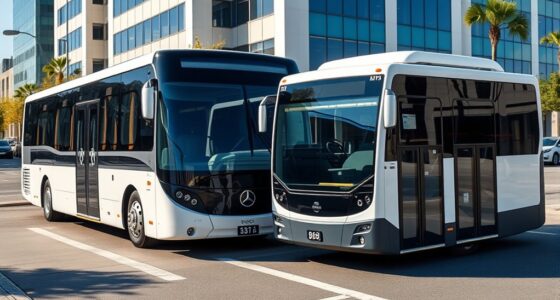
Solid-state battery buses offer faster charging times, improved safety, and longer lifespans compared to conventional lithium-ion buses. They provide higher energy density, which can lead to better range and performance. However, infrastructure upgrades and higher initial costs are challenges to widespread use. As manufacturing mature and costs decrease, these buses are expected to become more affordable and efficient. To discover how these advancements could impact your transportation needs, keep exploring further.
Key Takeaways
- Solid-state batteries offer faster charging, longer lifespan, and improved safety compared to conventional lithium-ion batteries in buses.
- Deployment of solid-state batteries requires new infrastructure, posing initial challenges and investment needs.
- Higher manufacturing costs for solid-state batteries currently limit widespread adoption, but costs are expected to decrease over time.
- Long-term benefits include reduced maintenance, higher energy density, and better performance, offsetting initial costs.
- Full advantages depend on technological advancements, infrastructure readiness, and scaled production to lower costs.
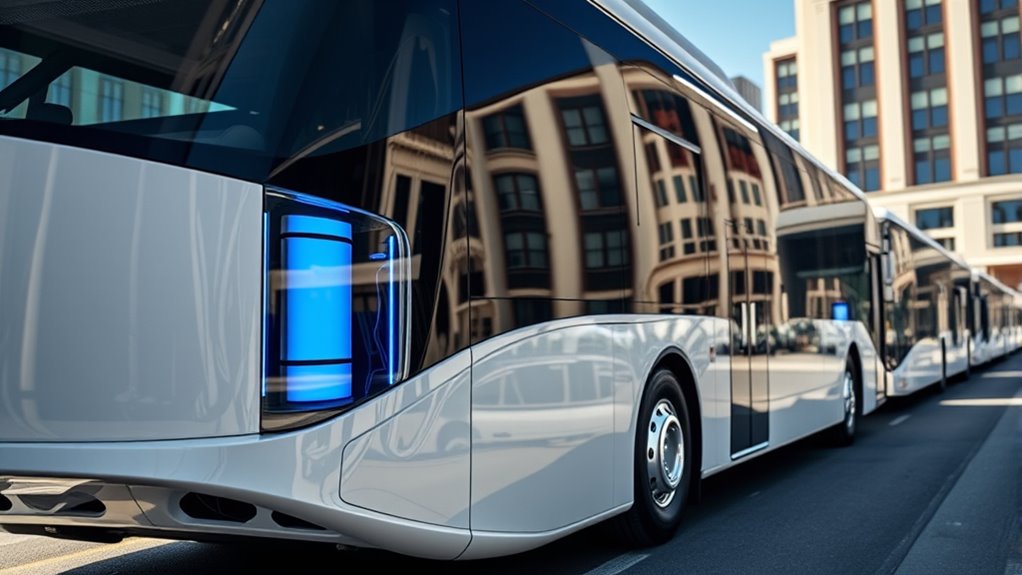
As cities seek cleaner transportation options, buses powered by solid-state batteries are emerging as a promising alternative to traditional lithium-ion models. These batteries offer significant advantages, but they also bring new challenges that you’ll need to consider. One of the key factors influencing the adoption of solid-state battery buses is the charging infrastructure. Unlike lithium-ion batteries, which are compatible with existing charging stations, solid-state batteries require specialized infrastructure to maximize their benefits. This means cities and transit agencies will need to invest in new charging stations or upgrade current facilities. These investments can be substantial initially, but they promise faster charging times, improved safety, and longer battery life, making them attractive in the long run. As you plan for this changeover, you’ll need to evaluate how the current infrastructure aligns with the requirements of solid-state technology and budget accordingly. Additionally, the development of high-quality materials in solid-state batteries is critical to achieving the desired performance improvements and safety enhancements. Manufacturing costs are another critical aspect to consider. Solid-state batteries are still in the early stages of mass production, which means their manufacturing costs are generally higher than those of lithium-ion batteries. This higher cost is mainly due to the complex materials and precise manufacturing processes involved. When you look at deploying these buses, you’ll need to factor in these costs, which can impact the overall budget and pricing strategies. However, it’s important to remember that the higher upfront costs could be offset by the benefits solid-state batteries bring—such as increased energy density, faster charging times, and enhanced safety. Over time, as production scales up and technologies mature, these costs are expected to decrease, potentially making solid-state batteries more economically viable. In addition to infrastructure and manufacturing costs, you’ll also want to consider the longevity and performance benefits of solid-state batteries. These batteries tend to last longer and maintain their capacity better over time, which could reduce maintenance expenses and replacement frequency. This means the total cost of ownership for a bus using solid-state technology might be lower in the long run, even if the initial investment is higher. As you evaluate your options, it’s vital to weigh these factors carefully. Moving to solid-state battery buses could mean a significant initial outlay, but the potential savings and performance improvements might justify that investment. Ultimately, the shift toward solid-state batteries in transportation depends on how quickly infrastructure can adapt, manufacturing costs can decrease, and the technology’s full benefits can be realized. If you’re involved in planning or decision-making, staying informed about these developments will help you make smarter choices that align with your sustainability goals and budget constraints.
Top picks for "solid state battery"
Open Amazon search results for this keyword.
As an affiliate, we earn on qualifying purchases.
Frequently Asked Questions
What Are the Environmental Impacts of Solid-State Batteries?
You might find that solid-state batteries have fewer environmental impacts than traditional lithium-ion ones. They reduce recycling challenges because their materials are easier to recycle and generate less hazardous waste. Plus, they promote resource sustainability by using fewer scarce materials, decreasing the environmental footprint. However, manufacturing processes still need improvement to minimize energy consumption. Overall, adopting solid-state batteries can lead to greener transportation with better resource management.
How Do Solid-State Batteries Perform in Extreme Weather Conditions?
Imagine a fortress standing strong against nature’s fury—that’s how solid-state batteries perform in extreme weather. Their thermal resilience guarantees they withstand cold weather efficiency challenges better than traditional lithium-ion. You’ll notice quicker startups and steadier power in freezing temperatures, thanks to solid electrolytes that resist the icy grip of cold. So, whether it’s a snowstorm or scorching heat, these batteries are built to keep your bus moving reliably.
What Is the Cost Comparison Between Solid-State and Lithium-Ion Bus Batteries?
You’ll find that solid-state batteries usually have higher upfront costs than lithium-ion batteries due to increased manufacturing expenses and advanced materials. However, their longer lifespan and improved safety can offset initial investments over time. Cost factors like production scale and technological advancements could reduce prices in the future. So, while solid-state batteries are initially more expensive, they might offer better value through durability and performance benefits.
How Long Do Solid-State Batteries Typically Last?
You’ll find solid-state batteries typically last longer than traditional lithium-ion ones, often enduring 8 to 15 years. Their enhanced longevity stems from reduced degradation mechanisms, which slow down capacity loss over time. Because solid electrolytes resist dendrite formation better, you benefit from more stable performance. With proper maintenance, these batteries can keep powering your bus efficiently for years, making them a wise, long-lasting investment.
What Are the Safety Risks Associated With Solid-State Batteries?
You should be aware that solid-state batteries generally have improved safety, but they still carry some fire hazards if damaged or improperly handled. Their thermal stability is higher than conventional lithium-ion batteries, reducing the risk of overheating. However, risks like puncture or manufacturing defects can cause safety issues. Always follow proper safety protocols, and note that ongoing research aims to further minimize these risks for safer, more reliable energy storage.
Conclusion
While solid-state batteries show promise for longer-lasting, safer bus energy, some experts believe they might still face scalability challenges and higher costs. However, recent advancements suggest these hurdles could soon be overcome, making solid-state tech a game-changer. If this theory holds true, you could see buses with better range and durability in just a few years, revolutionizing public transportation. So, stay optimistic—solid-state batteries might be the future you’ve been waiting for.