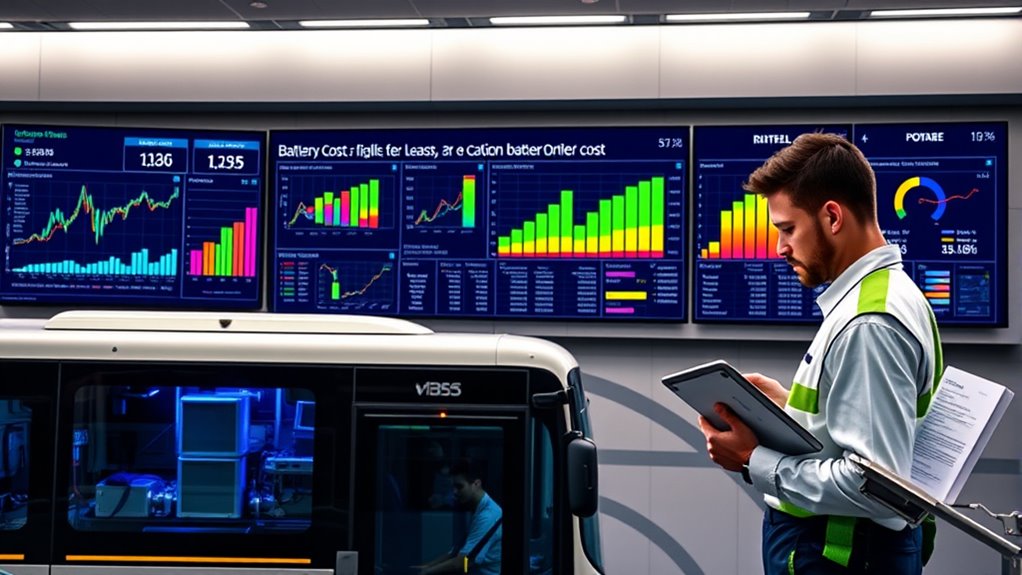

Choosing between leasing or owning batteries impacts your transit agency’s finances considerably. Owning batteries involves a high upfront cost and ongoing maintenance, but it can save you money in the long run if technology remains stable. Leasing offers predictable expenses and easier upgrades, though it may cost more over time. Your decision depends on your budget, technological needs, and long-term plans—keep exploring to see which option fits best.
Key Takeaways
- Ownership involves high upfront costs but offers control over maintenance, upgrades, and long-term cost savings.
- Leasing reduces initial capital expenditure and shifts maintenance responsibilities to the leasing company.
- Leasing provides predictable expenses and warranties, simplifying budgeting and reducing unexpected repair costs.
- Owning is advantageous for long-term stability if battery technology remains consistent, lowering total ownership costs over time.
- Leasing offers flexibility for technological upgrades, benefiting agencies in rapidly evolving battery markets.
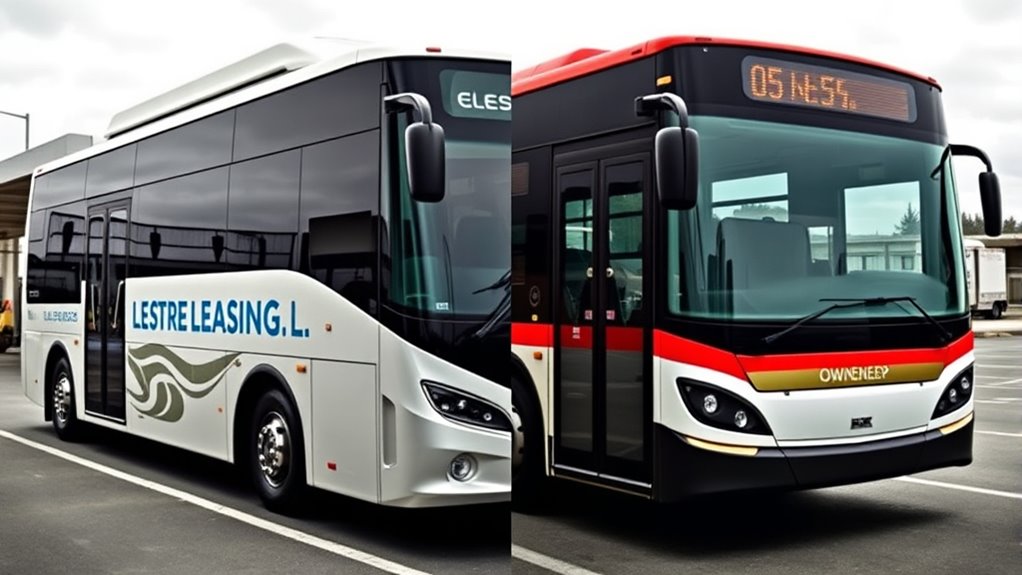
When considering electric vehicle options, one of the key decisions you’ll face is whether to lease the battery or own it outright. This choice profoundly impacts your agency’s budget and long-term financial planning. If you opt to own the battery, you’ll pay an upfront battery cost, which can be substantial but provides the advantage of full ownership. This means you’re not bound by lease terms, and as the battery ages, you can choose when and how to replace or upgrade it. However, owning the battery also means you’re responsible for all maintenance expenses related to it. Over time, batteries degrade, and maintenance costs—such as balancing, cooling system upkeep, and eventual replacements—can add up. These expenses need to be factored into your total cost of ownership, which might increase your operational costs, especially as the battery approaches the end of its lifespan. Additionally, understanding the performance metrics of batteries can help you make more informed decisions about lifespan and maintenance needs.
On the other hand, leasing the battery shifts some of these financial burdens away from your agency. When you lease, the leasing company often covers maintenance expenses, reducing your operational overhead. This can be a substantial advantage, particularly if your agency prefers predictable expenses and wants to avoid unexpected repair costs. Leasing can also lower the initial capital outlay since you don’t have to pay the full battery cost upfront. Instead, you make regular lease payments, which can be easier to incorporate into your budget. This arrangement also typically includes warranties and service agreements, giving you peace of mind that battery maintenance and replacements are handled without extra costs. However, leasing might lead to higher overall expenses over the vehicle’s lifespan, as you continuously pay for the battery, and there may be restrictions on battery upgrades or modifications.
Ultimately, your decision depends on your agency’s financial strategy and operational priorities. If minimizing long-term costs is your goal and you’re prepared for the upfront investment, owning the battery might be the better choice. But if cash flow management and predictable maintenance expenses are more important, leasing offers advantages that could align better with your needs. It’s also worth considering the technology’s pace—if batteries are expected to improve quickly, leasing might allow you to upgrade more frequently. Conversely, owning could be more cost-effective if battery technology remains stable and your agency plans to operate vehicles for many years. Whichever route you choose, understanding the implications for battery cost and maintenance expenses is vital to making a well-informed decision.
Top picks for "battery leas ownership"
Open Amazon search results for this keyword.
As an affiliate, we earn on qualifying purchases.
Frequently Asked Questions
How Do Lease Terms Impact Total Cost of Ownership?
Lease terms considerably impact your total cost of ownership by influencing lease duration and maintenance responsibilities. A longer lease may lower monthly payments but could increase total costs over time, while shorter terms might cost more upfront. Additionally, if maintenance is your responsibility, it adds to expenses; if the lease covers maintenance, it can reduce unexpected costs. Carefully evaluate these factors to understand how lease terms will affect your overall financial commitment.
What Are Potential Hidden Costs in Leasing Agreements?
You might overlook hidden costs in leasing agreements, such as expenses related to battery lifespan and unexpected maintenance. As batteries age, you could face higher replacement or repair fees, which aren’t always included in the lease terms. Additionally, maintenance costs might increase if the lease doesn’t cover routine or emergency repairs, leading to unforeseen expenses. Always review lease clauses carefully to understand potential hidden costs tied to battery performance and upkeep.
How Does Battery Technology Advancement Affect Leasing Options?
Advancements in battery technology, like improved battery life and technology upgrades, can make leasing options more attractive. You benefit from access to the latest innovations without large upfront costs, and better battery performance reduces maintenance and replacement expenses. However, you should consider how future upgrades might impact lease terms or costs, ensuring the lease agreement aligns with upcoming technology improvements to maximize value and efficiency for your transit operations.
Are There Tax Incentives Specific to Leasing Versus Owning?
You’ll find that tax credits and incentive programs often favor leasing options, making them more financially attractive. Leasing agreements sometimes qualify for specific tax incentives that aren’t available with ownership, helping you reduce upfront costs and improve cash flow. Always check local and federal programs, as incentives can vary by region and may change over time, but leasing generally offers more immediate tax benefits in many cases.
How Do Residual Values Influence Leasing Decisions?
Imagine you’re in a 1920s speakeasy, and residual value plays a key role in your decision. It influences lease negotiations by estimating the vehicle’s worth after the lease term. A higher residual value means lower monthly payments, making leasing more attractive. Conversely, a lower residual value can lead to higher costs. Understanding this helps you better evaluate lease options and negotiate favorable terms with confidence.
Conclusion
While leasing batteries might seem costly upfront, it offers predictable expenses and reduces maintenance worries, making it appealing for transit agencies. Some argue ownership provides long-term savings, but leasing’s flexibility can adapt to evolving technology, preventing costly upgrades later. Don’t overlook the value of conserving capital and minimizing risk—leasing can keep your fleet agile and financially sound, even if initial costs appear higher. Ultimately, choosing leasing can balance budget stability with technological adaptability, ensuring your agency stays ahead.