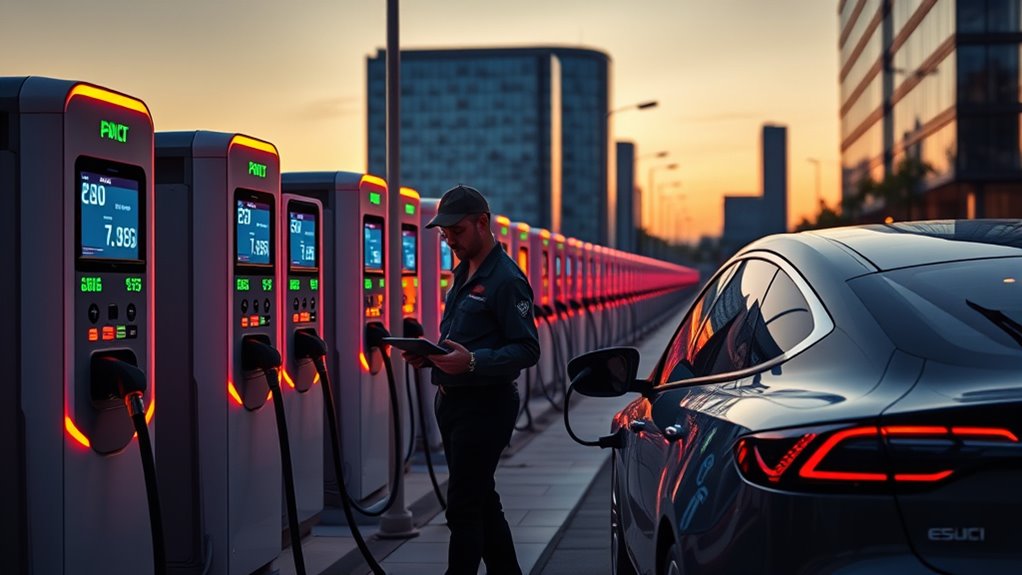

Investing in depot infrastructure involves evaluating costs per charger, which vary based on charger type, electrical upgrades, and site prep. While Level 2 chargers cost less upfront, fast chargers require a bigger initial investment but offer faster revenue opportunities. Your ROI depends on usage rates, pricing strategies, and maintenance costs. Understanding these factors helps you predict profitability and optimize your deployment. Explore further to uncover strategies that maximize your investment’s potential and guarantee long-term success.
Key Takeaways
- Charger type selection (Level 2 vs. fast chargers) influences upfront costs and potential revenue, affecting ROI.
- Site evaluation and electrical capacity assessment help avoid costly upgrades during installation.
- Initial expenses include hardware, electrical upgrades, permits, and site preparation, varying by infrastructure complexity.
- Ongoing costs involve maintenance, repairs, and software updates, impacting long-term profitability.
- Higher charger utilization and faster charging speeds increase revenue, shortening ROI timelines.
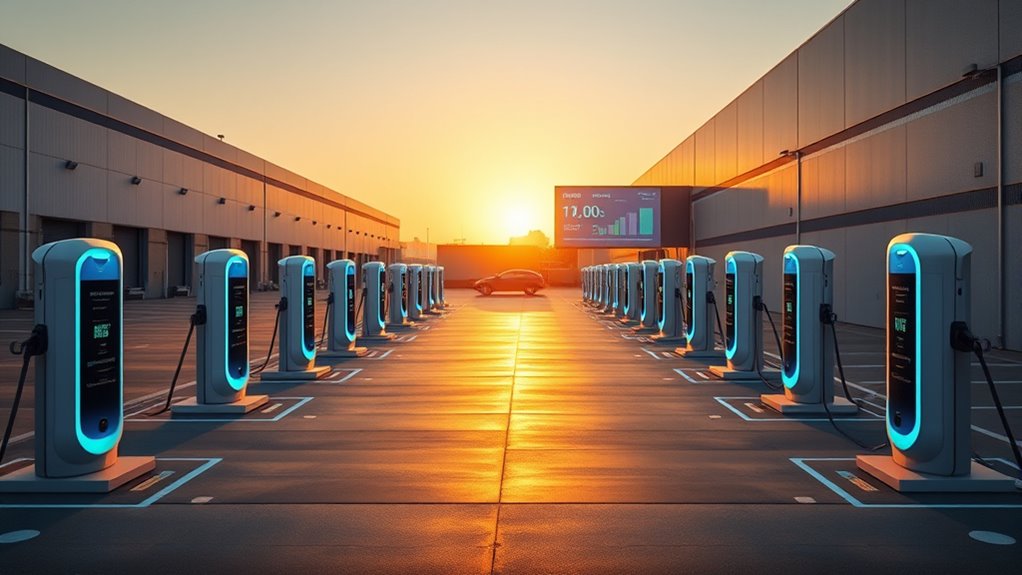
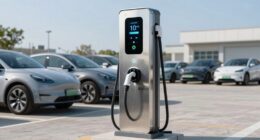
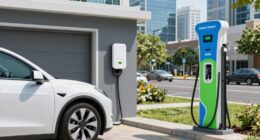
Investing in depot infrastructure is a critical step for expanding electric vehicle (EV) charging networks, but understanding the cost per charger and the potential return on investment (ROI) is essential for making informed decisions. When you’re planning charger installation, it’s important to account for both upfront costs and ongoing expenses like maintenance costs. The initial investment includes hardware, electrical upgrades, site preparation, and labor, all of which can vary depending on charger type and location. Level 2 chargers, for example, tend to be less expensive to install than fast chargers, but may not meet the needs of all users. Fast chargers, while more costly upfront, can generate higher revenue due to faster charging times and increased usage.
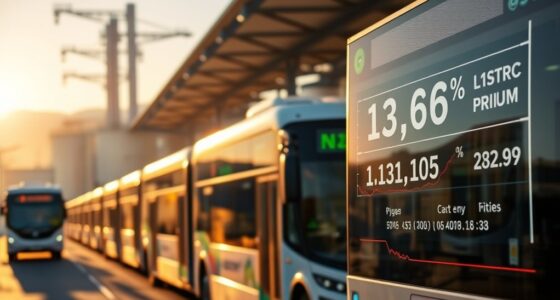
Investing in depot infrastructure involves upfront hardware and electrical costs, with fast chargers offering higher revenue potential despite higher initial expenses.
The charger installation process involves evaluating the site’s electrical capacity, securing permits, and coordinating with contractors. You need to guarantee that the infrastructure can support the chargers’ power requirements without extensive electrical upgrades, which can markedly drive up costs. When estimating expenses, don’t forget to include the costs of trenching, wiring, and possible upgrades to the local electrical grid. These upfront expenses are essential for calculating the overall cost per charger and understanding your initial investment.
Once chargers are installed, ongoing maintenance costs become a key factor in your ROI calculations. Maintenance costs cover routine inspections, repairs, software updates, and potential replacements of hardware components. If you choose high-quality chargers with reliable hardware, your maintenance expenses may be lower over time, but you should still budget for periodic service to guarantee optimal performance. Regular maintenance not only prolongs the lifespan of your chargers but also minimizes downtime, which can affect revenue and user satisfaction. Additionally, understanding the role of sleep and mental health can help ensure that your team remains attentive and effective throughout the deployment process.
Analyzing the ROI of your depot infrastructure investment requires a clear understanding of both costs and revenue streams. The revenue generated depends on usage rates, pricing strategies, and the charging speed offered. Higher utilization rates will enhance ROI, justifying more substantial investments in charger installation and maintenance. Keep in mind that while the initial costs might seem high, increased accessibility and faster charging options can attract more users, ultimately boosting revenue and accelerating your ROI timeline.

EVIQO Level 2 EV Charger 48 Amp HARDWIRED – 11.5kW, 240V, Wall EV Charger Level 2, J1772 (non-Tesla), 25ft Cable, Enhanced WiFi Smart App – Weatherproof Indoor/Outdoor (IP66,NEMA 4), UL, ETL Certified
46 MILES OF RANGE PER HOUR: EVIQO EV charger level 2 with a max output of 48A (11.5…
As an affiliate, we earn on qualifying purchases.
As an affiliate, we earn on qualifying purchases.
Frequently Asked Questions
How Do Government Incentives Impact Depot Charger Investments?
Government incentives substantially boost your depot charger investments by making them more affordable. Grants and policy incentives reduce upfront costs, encouraging faster deployment and broader adoption. These financial supports can improve your ROI, as you save on initial expenses and benefit from quicker returns. By leveraging government grants and policy incentives, you can maximize your infrastructure investments, ensuring a more sustainable and cost-effective charging network for your operations.
What Are the Maintenance Costs Associated With Depot Chargers?
You’ll typically spend around $300 to $500 annually on depot charger maintenance, depending on usage and environment. Charger durability plays a key role, as well-maintained units last longer and require fewer repairs. Regular maintenance scheduling helps prevent costly breakdowns, ensuring chargers stay operational. By proactively managing upkeep, you can extend equipment lifespan, reduce downtime, and optimize your investment, ultimately saving you money and boosting charger reliability.
How Does Charger Type Influence Overall ROI?
Charger type substantially impacts your overall ROI by affecting charger efficiency and grid integration. High-efficiency chargers reduce energy costs over time, boosting returns. Fast chargers may increase upfront costs but improve turnaround times, leading to higher utilization. Additionally, chargers with better grid integration can lower energy expenses through demand management. Choosing the right charger type balances initial investment with operational savings, ultimately maximizing your ROI.
What Are the Best Practices for Scaling Depot Infrastructure?
You should start by planning for scalable infrastructure, considering charger leasing options to reduce upfront costs. Focus on grid integration to guarantee your system can handle increased load as you expand. Regularly assess usage patterns and upgrade strategically, avoiding overinvestment. Collaborate with reliable suppliers and stay updated on technology trends. These best practices help you efficiently scale depot infrastructure, maximize ROI, and ensure sustainable growth for your EV charging network.
How Do Future Technology Trends Affect Current Investment Decisions?
Think of your investment as planting a tree that grows with time. Future tech trends like smart grids and battery storage are the nourishing rain, enabling faster growth and resilience. You should prioritize flexible infrastructure that adapts, ensuring your chargers integrate seamlessly with evolving smart grid systems. This approach maximizes ROI, reduces costs, and keeps your depot ready for innovations, much like a tree thriving through changing seasons.

ChargePoint HomeFlex Level 2 EV Charger J1772 – Fast Smart Battery Power Charging at Home for Electric Automobile Vehicles – Hardwired for Electric Car
Charge with Confidence: ChargePoint builds reliable, flexible EV charging stations for home, business, and fleets. Get 24/7 support…
As an affiliate, we earn on qualifying purchases.
As an affiliate, we earn on qualifying purchases.
Conclusion
Investing in depot infrastructure isn’t just a smart choice—it’s your ticket to transforming your fleet’s future. By understanding the cost per charger and calculating ROI, you release the potential for exponential growth and unparalleled efficiency. Don’t let high upfront costs scare you; think of them as the seed for a greener, more profitable tomorrow. With strategic investment, you’ll turn your depot into a powerhouse of innovation that outshines the competition—because in this game, the bold always lead.

KICTeam – EV Charger Cleaning Kit with Cleaning Brushes, Cleaning Swabs, Scraper & Pick Tools, EV Touchscreen Cleaner and Microfiber Screen Cloths – Safely Cleans EV Charging Station & EV Touchscreens
Complete Cleaning Solution: This kit includes all the essential cleaning tools to effectively clean your EV Charging Station,…
As an affiliate, we earn on qualifying purchases.
As an affiliate, we earn on qualifying purchases.
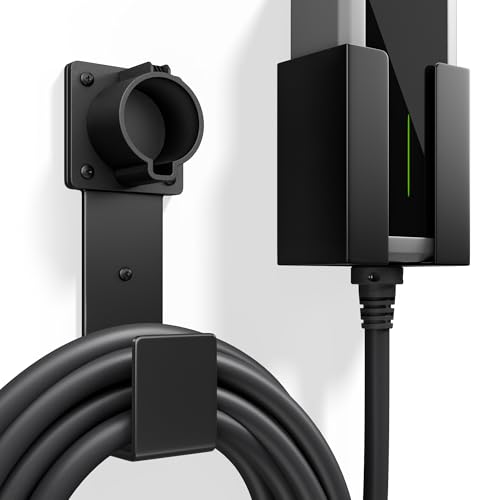
EV Charger Holder Wall Mount – J1772 Cable Organizer & Nozzle Holster with Storage Box for Electric Vehicle Charging
Fit J1772 Connector: Designed to securely hold standard J1772 charging connectors, keeping them stable, properly positioned, and protected…
As an affiliate, we earn on qualifying purchases.
As an affiliate, we earn on qualifying purchases.