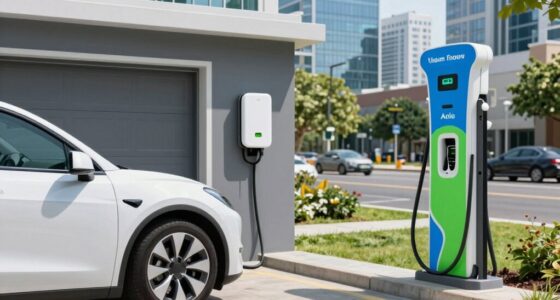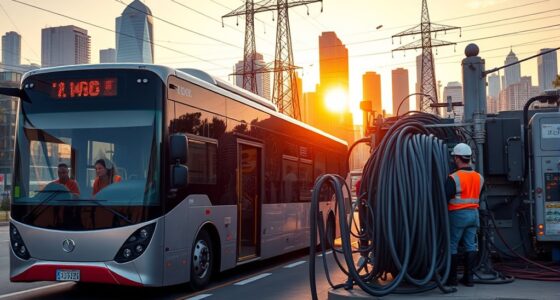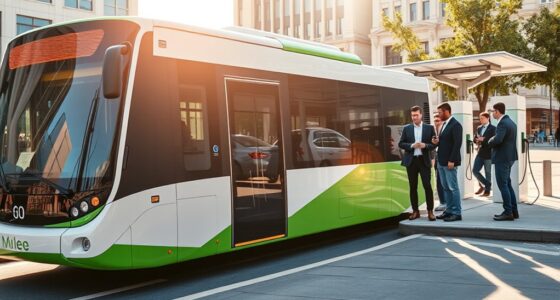
The global electric bus market is expected to grow markedly by 2032, driven by rapid technological advances, urbanization, and supportive regulations. You’ll see improvements in battery tech, longer ranges, and faster charging, making electric buses more viable for various routes. Market growth around 20% annually offers great opportunities for new and existing players. Staying informed about these trends can help you stay ahead, and exploring further reveals even more insights into this expanding industry.
Key Takeaways
- The global electric bus market is projected to grow at a CAGR of around 20% through 2032.
- Technological advancements in batteries and charging are enhancing electric bus performance and market adoption.
- Urbanization and stricter emission regulations are key drivers fueling market expansion worldwide.
- Regional policies and incentives significantly influence market growth and entry strategies across different areas.
- Staying ahead of technological trends and forecasts is essential for industry players to maintain competitiveness.
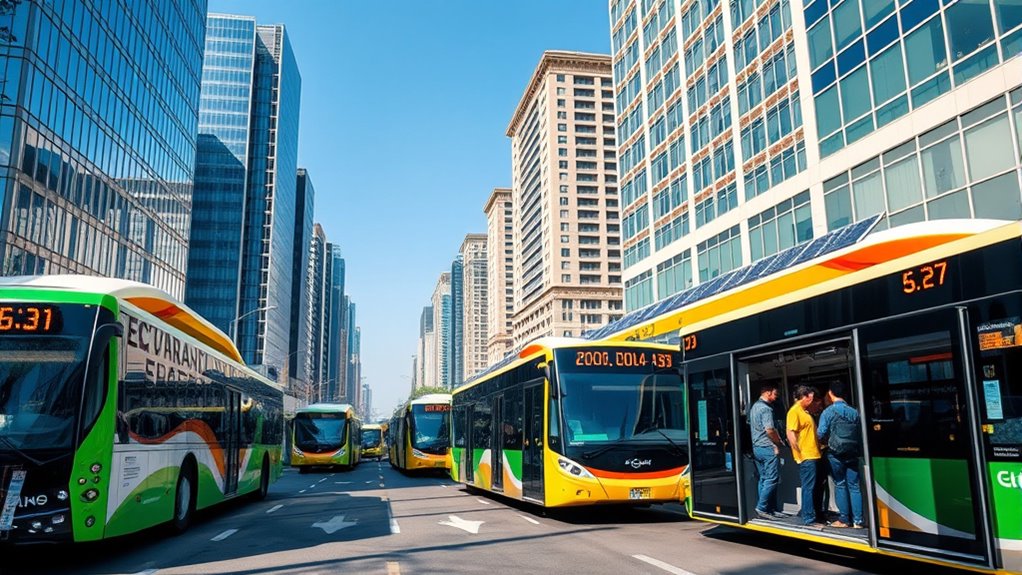
As industries evolve at a rapid pace, understanding future market forecasts becomes essential for making informed decisions. When it comes to the global electric bus market, staying ahead means you need to grasp where the industry is headed by analyzing growth projections and emerging trends. This knowledge helps you craft effective market entry strategies and capitalize on technological innovations shaping the sector. With governments worldwide pushing for greener transportation options, electric buses are gaining momentum, and this trend is expected to accelerate through 2032. Recognizing these forecasts allows you to identify the most promising markets and allocate resources wisely, ensuring your investments are well-placed.
To succeed in this evolving landscape, you must contemplate how technological innovations are transforming electric bus manufacturing and operation. Advances in battery technology, such as solid-state batteries and faster charging solutions, are improving range and reducing downtime. These innovations make electric buses more viable for long routes and high-traffic urban areas, broadening your potential market. Additionally, improvements in vehicle design and lightweight materials boost efficiency, further enhancing appeal to consumers and fleet operators. By understanding these technological shifts, you can develop or adapt your products to meet future demands, positioning yourself as a leader rather than a follower. Moreover, understanding ice cream consumption trends can provide insights into consumer preferences and seasonal behaviors in various regions, which may influence electric bus deployment strategies in diverse markets.
Technological innovations like solid-state batteries and lightweight materials are transforming electric bus manufacturing and operation.
Market entry strategies now need to account for the rapid pace of technological change. You should focus on forming strategic partnerships with technology providers, battery manufacturers, and charging infrastructure companies. This integration ensures your offerings remain competitive and aligned with the latest innovations. Furthermore, understanding regional policies and incentives related to electric mobility helps identify favorable markets where government support can ease entry barriers. As governments set ambitious targets for electric vehicle adoption, aligning your strategy with these policies will give you a competitive edge. It’s also wise to contemplate local consumer preferences and infrastructure readiness to tailor your approach effectively.
The growth forecast for electric buses suggests a compound annual growth rate (CAGR) of around 20% through 2032, driven by increasing urbanization, stricter emission regulations, and declining costs of electric components. This growth provides ample opportunity for new entrants and existing players to expand their footprint. However, success depends on your ability to adapt to technological changes and execute well-informed market entry strategies. By monitoring industry forecasts, embracing innovation, and understanding regional dynamics, you position yourself to thrive as this market accelerates. The future of electric buses is bright, and those who stay ahead of the curve will reap the benefits of this expanding industry.
Top picks for "market future forecast"
Open Amazon search results for this keyword.
As an affiliate, we earn on qualifying purchases.
Frequently Asked Questions
What Are the Main Challenges Facing Electric Bus Adoption?
You face challenges like battery durability and consumer acceptance when adopting electric buses. Battery life can limit operational efficiency, requiring costly replacements or upgrades, while some people might hesitate due to range anxiety or unfamiliarity with electric technology. To succeed, you need to address these concerns by improving battery longevity and educating consumers on the benefits, making electric buses more reliable and appealing for widespread adoption.
How Will Government Policies Influence Market Growth?
Government policies like policy incentives and strict emission regulations substantially influence market growth. When you take advantage of incentives, you’ll find electric buses more affordable, encouraging adoption. Emission regulations push operators to switch to cleaner options, boosting demand. If policies remain supportive, expect accelerated growth in the electric bus market, making sustainable transportation more accessible and widespread. Your involvement and advocacy can further shape these policies for better market expansion.
What Technological Advancements Are Expected in Electric Bus Batteries?
Imagine a city deploying electric buses with batteries that last twice as long and charge in just 15 minutes. Advances like solid-state batteries are leading the way, enhancing battery longevity and enabling fast charging. These innovations reduce downtime and improve efficiency, making electric buses more practical and appealing for public transit. As a result, you’ll see more sustainable transportation options that are quicker to recharge and last longer on the road.
Which Regions Are Expected to Lead Electric Bus Market Expansion?
You’ll see regional dominance from Asia-Pacific, especially China and India, leading the electric bus market expansion. These regions benefit from supportive government policies, infrastructure development, and large urban populations demanding sustainable transport. Market leaders in these areas are investing heavily in technology and manufacturing. This focus helps them stay ahead, making Asia-Pacific the hub of electric bus innovation and adoption, shaping the global industry’s future.
How Will Charging Infrastructure Developments Impact Market Growth?
Charging infrastructure developments will markedly boost market growth by making electric buses more practical and convenient. As you see more charging stations emerge, you’ll find it easier to plan routes and reduce downtime. Grid integration plays a vital role, ensuring efficient energy use and faster charging times. These advancements encourage adoption, support fleet expansion, and ultimately accelerate the shift to electric mobility, benefiting both operators and passengers.
Conclusion
As you look ahead, the electric bus market paints a bright horizon—vast cities shimmering with cleaner air and quieter streets. Imagine rows of silent buses gliding smoothly through bustling avenues, powered by innovation and eco-conscious choices. By 2032, this vibrant transformation will redefine urban landscapes, inviting you to be part of a cleaner, greener future. Embrace this journey, where technology and sustainability converge, shaping a world that’s not only smarter but also more alive.