Calculating grid upgrade costs involves evaluating the infrastructure needed to support increased EV charging and renewable energy. You’ll need to weigh expenses for equipment like substations, distribution lines, advanced inverters, and energy storage, along with system enhancements such as smart grid technologies. Be sure to account for long-term benefits like reduced operational costs and improved reliability. Continue exploring to understand how to balance these costs with future growth and sustainable energy goals.
Key Takeaways
- Assess current grid capacity and identify reinforcement needs for high-demand EV charging stations.
- Calculate costs for hardware upgrades like substations, distribution lines, and smart meters.
- Factor in additional expenses for advanced inverters, energy storage, and communication systems.
- Include operational costs and potential funding or incentives to determine total investment.
- Plan for future capacity growth by estimating long-term infrastructure expansion costs.
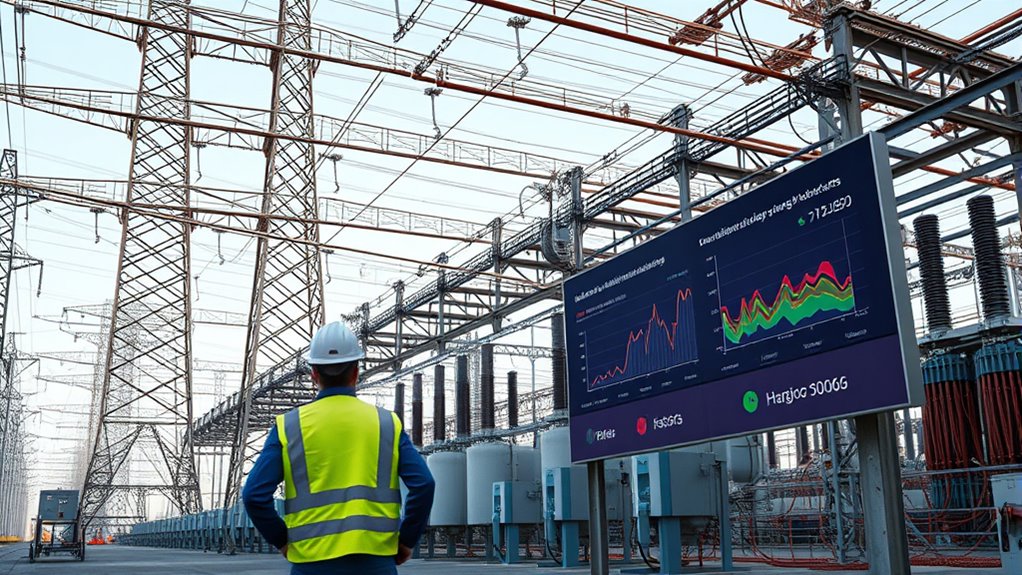
Upgrading the electrical grid can be a costly but necessary investment to guarantee reliable power delivery and accommodate growing electricity demands. As more electric vehicles (EVs) hit the roads, the need for a resilient and adaptable grid becomes even more critical. To manage this increased load, utilities are focusing on renewable integration and smart grid deployment, which, while essential, come with significant upfront costs. These upgrades are designed to modernize infrastructure, improve efficiency, and support the seamless integration of renewable energy sources like wind and solar. However, understanding the financial implications of such initiatives helps you plan effectively and avoid unexpected expenses down the line.
Renewable integration requires specialized equipment such as advanced inverters, energy storage systems, and additional transmission capacity. These components are essential because they allow intermittent renewable sources to connect smoothly with the grid, ensuring consistent power output. The costs associated with integrating renewables are not just limited to hardware but also include software systems that manage and optimize energy flow. Smart grid deployment further enhances this process by implementing digital communication technologies, sensors, and automation, which allow for real-time monitoring and control. This modernization reduces operational costs, improves reliability, and enables better demand response strategies. But these improvements come with expenses related to installing sensors, upgrading communication networks, and training personnel.
When calculating infrastructure investments for EV charging, these factors heavily influence your overall budget. Installing a widespread network of fast chargers demands substantial upgrades to the existing grid, including the reinforcement of substations and distribution lines. The costs escalate with the need for grid balancing solutions to handle sudden surges in electricity demand caused by multiple fast chargers operating simultaneously. If your plan involves deploying a smart grid, you’ll also need to factor in the costs of deploying advanced metering infrastructure and integrating renewable sources. These investments are essential for managing peak loads efficiently and ensuring that charging stations operate reliably without causing instability in the grid.
Although these costs might seem formidable at first, they offer long-term benefits that outweigh initial expenses. A smart, renewable-integrated grid reduces operational costs and minimizes downtime, providing a more sustainable and resilient infrastructure. Properly calculating these investments involves analyzing both capital and operational expenses, considering future growth, and exploring potential incentives or funding options. Recognizing that these investments are necessary for supporting EV charging infrastructure today helps you prepare for the financial commitment, ensuring that your grid remains capable of meeting tomorrow’s demands. Ultimately, strategic planning and clear budgeting will allow you to navigate the high costs of grid upgrades successfully, paving the way for a cleaner, smarter, and more reliable energy future.
Top picks for "grid upgrade cost"
Open Amazon search results for this keyword.
As an affiliate, we earn on qualifying purchases.
Frequently Asked Questions
How Do Government Incentives Affect Upgrade Costs?
Government incentives lower upgrade costs by encouraging electric vehicle adoption and supporting grid modernization strategies. When you take advantage of these incentives, it reduces the financial burden on infrastructure investments needed for charging stations. This makes upgrading the grid more affordable, accelerates the deployment of charging infrastructure, and promotes cleaner transportation. Ultimately, incentives help you and others shift more smoothly to electric vehicles while ensuring the grid can handle increased demand.
What Are the Long-Term Savings From Grid Upgrades?
Think of grid upgrades as planting a sturdy tree in your backyard. Over time, the cost benefit analysis reveals significant savings, like abundant fruit, from enhanced grid resilience and reduced maintenance costs. These upgrades lower your long-term expenses by preventing outages and improving efficiency. Though initial investments might seem high, the improved durability and reliability of the grid provide ongoing benefits, making your energy system more sustainable and cost-effective.
How Do Regional Differences Impact Infrastructure Investment?
Regional differences markedly impact infrastructure investments because urban planning varies, affecting where charging stations are needed most. You’ll find that areas with rapid technological innovation require more advanced grid upgrades to support new charging technologies. By tailoring investments to regional needs, you guarantee efficiency and cost-effectiveness. In regions with dense urban centers, focus on upgrading existing infrastructure, while rural areas may need new, scalable solutions to support future growth.
What Is the Typical Timeline for Completing Upgrades?
Typically, completing grid upgrades takes between 1 to 3 years, depending on project scope. During this time, you’ll focus on charging station deployment and grid capacity planning to guarantee the infrastructure meets future demand. An interesting statistic is that 65% of utilities report upgrades taking longer than initially planned. You should plan for potential delays, coordinate with stakeholders early, and prioritize upgrades to minimize downtime and accelerate deployment.
How Do Upgrades Integrate Renewable Energy Sources?
You integrate renewable energy sources by upgrading the grid to support renewable integration, which involves enhancing transmission capacity and deploying smart grid technologies. You also incorporate energy storage solutions to balance supply and demand, ensuring stability despite intermittent renewable generation. These upgrades enable you to efficiently connect solar and wind farms, making your grid more sustainable and resilient while optimizing renewable resource utilization.
Conclusion
As you envision the future of electric vehicles, picture the power grid as a vast, sturdy highway ready to carry the surge of charging demands. Upgrading infrastructure is like reinforcing this road beneath your wheels, ensuring smooth, uninterrupted journeys. While the costs may seem like hurdles, they’re investments building a resilient, glowing network that fuels progress. Together, these enhancements form the backbone of a cleaner, brighter future, powering every mile you drive with confidence and efficiency.