
AIThis post was created with the assistance of artificial intelligence (AI).

🔍 Read the full analysis: Is The Astra Vs Fable Benchmark Oversimplified With Its Two-Point Focus? on ThorstenMeyerAI.com

TL;DR

Recent scrutiny reveals that the Astra vs Fable benchmark relies on outdated or inconsistent data, and oversimplifies complex differences in AI architecture and efficiency. The comparison may mislead readers about true performance and cost-effectiveness.

A detailed critique of the widely circulated Astra versus Fable benchmark reveals that the comparison is based on outdated or inconsistent data, raising questions about its validity and the narrative it promotes. The analysis shows that the benchmark’s core numbers have shifted due to index revisions and architectural differences, complicating straightforward interpretations of performance and cost-efficiency.The core issue lies in the benchmark’s reliance on a moving index, which has been revised multiple times around Astra’s launch, leading to different scores for the same models depending on the version cited. For example, Astra’s score varied from 66 to 55 across different index versions, and Fable’s score shifted similarly, indicating that the raw numbers are not fixed. The circulating narrative that Astra ‘attacks the economics’ of intelligence is based on a narrow interpretation of a specific index, the Coding Agent Index, where Astra shows cost advantages. However, on the broader Intelligence Index, Astra is actually less efficient per dollar than its predecessor, contradicting simplified claims. Additionally, the benchmark’s methodology is flawed because it measures tokens, which are no longer a reliable proxy for compute due to Astra’s architecture, which reasons in latent space without emitting tokens. As a result, token counts for Astra do not reflect actual computational effort, making the efficiency comparisons misleading. Experts like Alan Thompson and Sebastian Raschka have noted Astra’s architecture involves recurrent loops and latent reasoning, which are not captured in token-based metrics. The overall conclusion is that the benchmark’s two-point focus oversimplifies a complex picture, conflating architectural differences, index revisions, and cost metrics into a misleading narrative.
At a glance
analysisWhen: developing; recent publication of the c…
The developmentA recent analysis challenges the validity of the Astra vs Fable benchmark, showing it is based on shifting data and architecture that the current metrics do not fully capture.
Five Points That Became Two — Reality Check
AI Dispatch · Reality Check · 5 September 2026

Five points that became two: what’s wrong with the Astra vs Fable benchmark

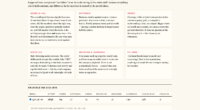
The comparison everyone is quoting — Fable 66, Astra 61, “not a rounding error” — is built on numbers that were stale when written, measuring a quantity that no longer means what it used to, aggregated in a way that hides the reversals that matter. The benchmark isn’t broken. The way it’s being read is.

Problem 1 — the numbers moved: Index v4.1.1 → v4.2 during launch week
as quotedAA today (v4.2)
Claude Fable 5.16657 max effort
GPT-6 Astra6155 max · a third source says 60
gap: 5 2 “Five points is not a rounding error.” Two points, on an aggregate of ten evals that just swapped three of them (GPQA Diamond out; AA-Briefcase + GDP.pdf in), is exactly a rounding error. Not AA’s fault — revising an index is how you keep it honest. The error is downstream: quote the version, or don’t quote the number.
◆ Problem 3 — the tell: Astra’s effort dial isn’t connected to the engine
non-reasoning554.4M tok · $990
medium52
xhigh54$2,778
max55$3,020
Non-reasoning = max. Same score, 3× the cost. Because Astra is reported to be a looped / recurrent-depth transformer — it reasons in latent space, without emitting tokens. The Index prices cost in tokens, measures verbosity in tokens, computes time in tokens. For this architecture it’s counting the receipt, not the work. “140M vs 42M tokens” compares Fable’s verbalized reasoning to Astra’s post-loop output — an artefact, not an efficiency finding. Nobody outside OpenAI knows what the loops cost in GPU-seconds.
The other three problems
02
AA’s own conclusion is the opposite of the story
AA’s benchmarking note: Astra is 75% more expensive than GPT-5.6 Sol at max effort and “largely sits behind its predecessor on the Intelligence Index vs cost frontier.” Price went 2.5× ($4/$20 → $10/$50); token savings only partly offset it. The genuine efficiency win lives in one place: the Coding Agent Index, where Astra equals Fable 5 at under half the cost. “Astra attacks the economics” stretched a true coding result over an intelligence index where AA says the reverse.
04
“Max effort” isn’t the same experiment twice
Fable at max = more tokens. Astra at max = ~nothing (see ladder). And OpenAI’s docs say Astra does not support `none` reasoning effort — yet AA lists a “non-reasoning” score. The most efficient-looking config on the leaderboard may not be one you can buy.
05
The aggregate hides the reversals
Index: Fable +2. OpenAI’s own evals (self-reported): Astra ahead 6 of 7 — AutomationBench, BenchCAD, Terminal-Bench 4.0, DeepSWE, TB-Science, FrontierMath T4; Fable takes HLE+tools. A 6–1 task split became a two-point average, and the average became the story. Ten choices deep, two points is noise wearing a number.
✓ What actually changed — and it’s not on the leaderboard
Hallucination rate 92% → 51% on AA-Omniscience — a 41-point drop; matters more than any 2 Index points “Same headline price” hides cache read $1.00 vs $0.25 (4×) + a 25% cache-write premium — the line that dominates agentic bills Coding Agent Index: Astra = Fable 5 at < half the cost — real, and narrow
The take

Three things happened at once: the Index was revised (five became two), the architecture changed (tokens stopped being compute), and the aggregate did what aggregates do (6–1 became +2). A leaderboard position now tells you less than it ever has — and the more advanced the architecture, the less it tells you. Latent reasoning is only the first architecture to break the token proxy. So with your Astra access: ignore the Index number. Take your ten real tasks. Run both models at the effort setting you’ll actually pay for. Measure the bill including the cache line. Measure the failure rate — the 41-point hallucination drop is the one number here I’d bet money on. The benchmark can’t decide for you anymore.

Sources: Artificial Analysis Intelligence Index v4.2 / v4.1.1 model pages (Fable 5.1; Astra non-reasoning/low/medium/high/xhigh/max — scores, tokens, total cost, cost-per-task method incl. cache-write & reasoning tokens) and “Benchmarking GPT-6 Astra” (75% vs Sol, cost frontier, Coding Agent Index, 92%→51% hallucination, 2.5× price, cache terms); OpenAI GPT-6 Astra developer docs (`none` unsupported, cache-write billing, logprobs removed); Alan D. Thompson, The Memo 4 Sep 2026 (looped-transformer read, unconfirmed); OpenAI’s self-reported Astra-vs-Fable table; the circulating 66/61 comparison (pre-v4.2). Scores are version-dependent and were changing at time of writing. Not investment advice.
thorstenmeyerai.com

Implications of Benchmark Revisions and Architectural Differences

This analysis highlights that relying on a single, simplified benchmark can distort understanding of AI model performance and efficiency. The shifting numbers and architectural nuances mean that claims about Astra’s superiority or inferiority are often based on incomplete or outdated data. For users, investors, and developers, this underscores the importance of scrutinizing benchmark methodologies and understanding the underlying architecture. Misleading comparisons can influence strategic decisions, funding, and perceptions of AI progress, making it critical to interpret these metrics with caution and awareness of their limitations.
Amazon

AI benchmarking tools

As an affiliate, we earn on qualifying purchases.

As an affiliate, we earn on qualifying purchases.

Background on Astra, Fable, and Benchmarking Practices

The Astra model, developed by OpenAI, has been subject to intense scrutiny following its recent release, with benchmarks used to compare it against models like Fable 5.1. Traditionally, AI performance metrics focus on accuracy, reasoning, and cost per task, often measured through token counts and index scores. However, recent developments in model architecture—particularly Astra’s use of latent reasoning loops—challenge the validity of token-based metrics as proxies for compute effort. The Artificial Analysis Intelligence Index, widely cited in the AI community, has undergone multiple revisions, which has led to variations in reported scores for the same models. This evolving landscape underscores the difficulty of making direct performance comparisons when the underlying metrics and models themselves are changing rapidly.

“Astra’s architecture involves latent loops that reason without emitting tokens, making token counts an unreliable measure of computational effort.”

— Sebastian Raschka, AI researcher

Amazon

AI performance analysis software

As an affiliate, we earn on qualifying purchases.

As an affiliate, we earn on qualifying purchases.

Unresolved Questions About Astra’s True Performance and Cost

It remains unclear how Astra’s architecture quantitatively affects real-world compute costs, as token counts do not accurately reflect the model’s latent reasoning effort. OpenAI has not publicly disclosed detailed hardware metrics for Astra’s latent loops, and independent verification is lacking. Additionally, the impact of index revisions on historical benchmark comparisons complicates efforts to establish a definitive performance ranking. Whether Astra’s architectural advantages translate into meaningful efficiency gains outside of token-based metrics is still an open question.
Amazon

AI architecture comparison charts

As an affiliate, we earn on qualifying purchases.

As an affiliate, we earn on qualifying purchases.

Next Steps for Benchmark Transparency and Model Evaluation

Further independent analysis is expected as more detailed hardware and architecture data become available. OpenAI and other organizations may need to update benchmarking practices to account for models that reason in latent space, moving beyond token counts. Industry experts anticipate a push towards more standardized, architecture-aware metrics that better reflect true computational effort and performance. Meanwhile, stakeholders should interpret current benchmark claims with caution, recognizing their limitations and the potential for revisions.
Amazon

AI efficiency measurement devices

As an affiliate, we earn on qualifying purchases.

As an affiliate, we earn on qualifying purchases.

Key Questions

Why are the Astra and Fable benchmark scores inconsistent?

The scores vary because the underlying index has been revised multiple times, and the models are evaluated against different versions, making direct comparisons unreliable.

Does Astra really outperform Fable in efficiency?

It depends on the metric. Astra shows cost advantages in coding tasks due to token reduction, but overall, it is less efficient than its predecessor on broader intelligence metrics, especially when considering the architecture’s latent reasoning.

Why are token counts no longer a reliable measure of compute effort?

Because Astra reasons in latent space without emitting tokens during some processes, token counts do not capture the full computational effort involved in its reasoning, making them misleading for efficiency comparisons.

What should I consider when interpreting AI benchmark results?

Always check the version of the index used, understand the model architecture, and be cautious of metrics that may not fully reflect the model’s true compute effort or reasoning process.

Will future benchmarks better reflect Astra’s capabilities?

Likely, as more transparent and architecture-aware metrics are developed, providing a clearer picture of Astra’s true performance and efficiency in real-world tasks.

Source: ThorstenMeyerAI.com

You May Also Like

Cloud’s Hidden Memory Bill

Rising memory costs in the cloud are hidden in billing, leading to unexpected price increases for users amid a broader memory shortage.

The Trojan Horse in Your Living Room: How Smart TVs Became the World’s Most Sophisticated Ad Surveillance Network

Recent investigations reveal smart TVs continuously capture and transmit screen and audio data for targeted advertising, raising privacy concerns amid regulatory actions.

The Economic Benefits of Reduced Maintenance With Electric Buses

Optimize your fleet’s savings by exploring how electric buses reduce maintenance costs and the long-term economic advantages they offer.

The Hidden Cost of “Cheap” Chargers: Warranty, Heat, and Downtime

The hidden costs of cheap chargers—warranty issues, heat risks, and downtime—may surprise you and could end up costing more than you think.