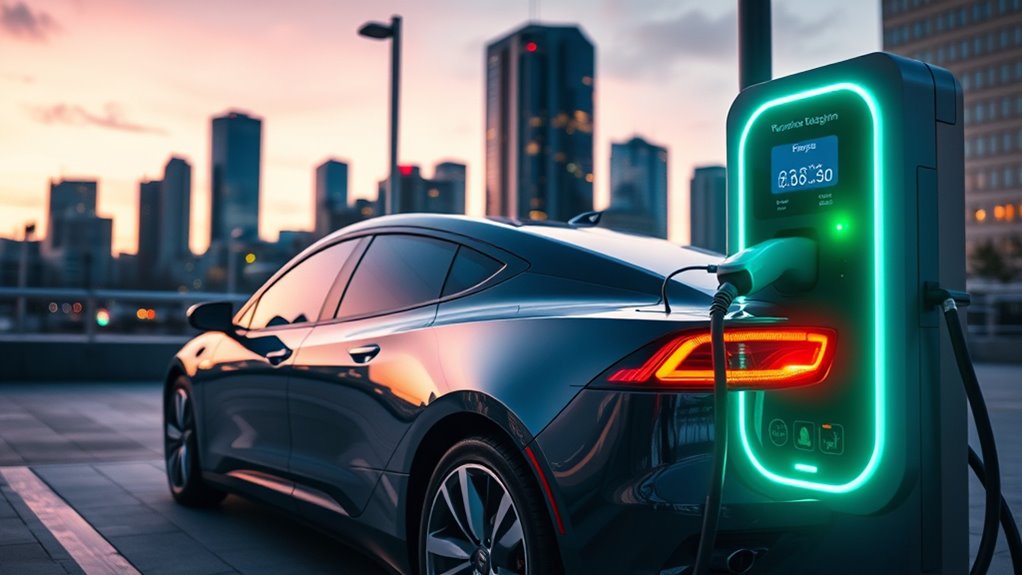

Vehicle-to-grid (V2G) technology lets you turn your electric vehicle into a source of income by selling stored energy back to the grid during peak times. You can earn money through energy market participation, providing grid stability services, and supporting demand management. Investing in compatible smart chargers and understanding regional regulations can boost your profit potential. If you explore further, you’ll discover how strategic V2G use can maximize your earnings and support a cleaner, more efficient energy system.
Key Takeaways
- V2G enables EV owners to sell excess stored energy back to the grid for revenue.
- Participating in energy markets allows monetization of grid support and balancing services.
- Incentives and subsidies reduce upfront costs, increasing profitability of V2G-enabled assets.
- Infrastructure investments in compatible smart chargers facilitate bidirectional power flow and revenue streams.
- Regulatory policies and grid programs create opportunities for ongoing income from V2G services.
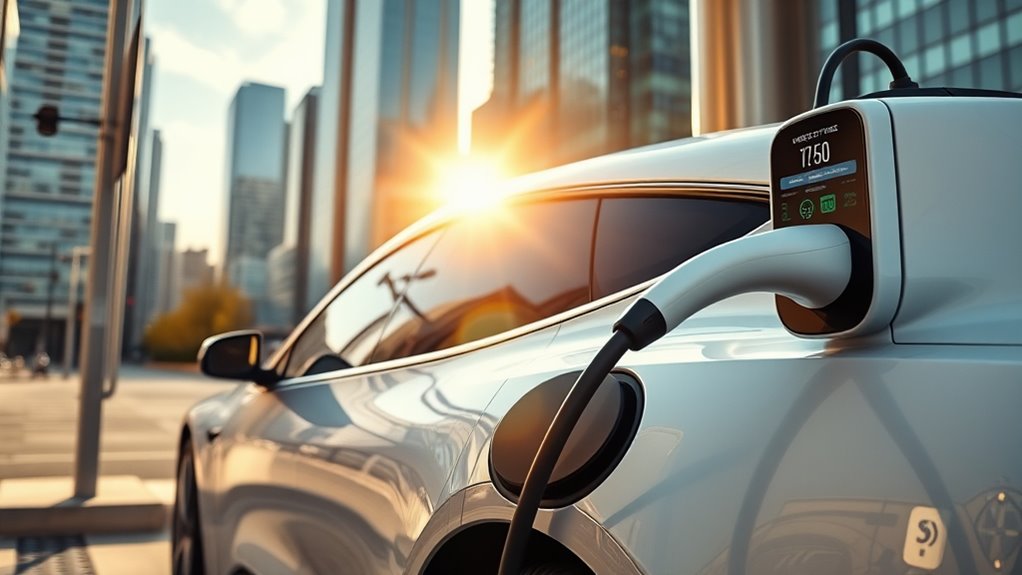
Are you capitalizing on every possible revenue opportunity for your business? If you’re operating within the electric vehicle (EV) market or managing a fleet of EVs, exploring vehicle-to-grid (V2G) services can unlock significant income streams. V2G technology allows your electric vehicles to feed excess energy back into the grid, turning parked EVs into mobile energy storage units. This not only maximizes the utility of your EV assets but also opens up new revenue opportunities, especially when supported by current electric vehicle incentives designed to promote clean energy adoption. By leveraging grid integration, you can participate in energy markets, providing grid stability services or balancing supply and demand, and earn payments for these contributions.
Understanding how electric vehicle incentives work is crucial. Governments and utilities are increasingly offering various incentives to encourage the adoption of EVs and the deployment of V2G technology. These incentives can reduce upfront costs, subsidize infrastructure investments, or provide direct payments for services like grid support. When you combine these incentives with effective grid integration, you create a compelling financial model. You can monetize the stored energy in your EVs during peak demand, earning revenue while helping stabilize the grid during critical periods. This synergy between incentives and grid services is a powerful driver for your business’s growth and sustainability. Additionally, understanding the role of grid integration can help you optimize your revenue streams and improve system efficiency.
To ensure your EV charging infrastructure is capable of supporting bidirectional power flow, you need to invest in smart chargers and compatible vehicles, as not all chargers or EVs are V2G-compatible. Once your system is set up, you can participate in energy markets, providing ancillary services such as frequency regulation or capacity reserves. These services are often compensated, offering a steady revenue stream. Moreover, as grid integration becomes more sophisticated, the potential for earning increases because you can align your V2G activities with real-time grid needs, maximizing profitability.
Keep in mind that regulatory frameworks and market rules vary by region, so staying informed about local policies related to electric vehicle incentives and grid integration is vital. Many regions are actively developing policies that facilitate V2G participation, making now an ideal time to implement these solutions. By strategically integrating V2G services into your operations, you not only reduce energy costs but also position your business as a leader in clean energy solutions. This proactive approach will help you stay competitive, diversify revenue streams, and contribute to a more resilient and sustainable energy ecosystem.

TLE LEVEL Level 2 EV Charger – Portable 40 Amp 9.6kW EV Charger, NEMA 14-50 Plug Electric Vehicle Charging Stations for J1772 Electric Cars, 25' Cable Smart 240V EV Chargers for Home
【Charge 3X Faster at Home with 40A Power】Tired of waiting hours for your EV to charge? Our Level…
As an affiliate, we earn on qualifying purchases.
As an affiliate, we earn on qualifying purchases.
Frequently Asked Questions
How Does Vehicle-To-Grid Technology Impact Battery Lifespan?
Vehicle-to-grid technology can impact your battery lifespan by increasing battery degradation due to more frequent charging cycles. Each time you use the V2G system, it adds to the charging cycles, which can accelerate battery wear over time. However, modern batteries are designed to handle many cycles, and proper management can help minimize degradation, ensuring your vehicle maintains performance while still allowing you to sell power back to the grid.
What Are the Main Regulatory Hurdles for V2G Adoption?
You face regulatory barriers and policy challenges that slow V2G adoption. Governments may lack clear rules for grid integration, complicating authorization and safety standards. Utility regulations can restrict vehicle-to-grid interactions, and inconsistent policies across regions create uncertainty. To succeed, you need streamlined regulations, supportive policies, and industry standards that encourage V2G deployment, enabling you to unseal its full revenue potential while ensuring safety and grid stability.
How Do V2G Services Compare Financially to Traditional Energy Storage?
Sure, because paying for a fancy battery just to store energy seems like a great idea, right? V2G services often cost more upfront due to battery costs and complex grid integration. However, they can generate ongoing revenue by selling power back to the grid, unlike traditional storage which mainly serves as a backup. So, while pricier initially, V2G could pay off in the long run — if regulations cooperate.
What Types of Vehicles Are Best Suited for V2G Services?
You’re best suited for V2G services if you have commercial fleets or electric motorcycles. Commercial fleets, like delivery trucks, offer large batteries and frequent charging cycles, making them ideal for energy transfer. Electric motorcycles, with their smaller size and quick charge times, can also effectively contribute to grid stability. These vehicles provide flexible, reliable power backups, maximizing revenue opportunities while supporting grid resilience.
How Can Consumers Maximize Earnings From Vehicle-To-Grid Participation?
Imagine turning your vehicle into a steady income stream. To maximize earnings, you should choose electric vehicles with high resale value and low maintenance costs, ensuring more profit over time. Keep your V2G system active during peak energy times, and stay informed about local incentives. By maintaining your vehicle properly and timing your energy sell-backs, you could free significant savings and generate consistent revenue from your EV.

Integration of Massive Electric Vehicles to Smart Grid: Advances, Applications and Perspectives (Smart Energy Systems)
As an affiliate, we earn on qualifying purchases.
As an affiliate, we earn on qualifying purchases.
Conclusion
By embracing vehicle-to-grid services, you turn your electric vehicle into a source of income, transforming idle energy into profit. It’s a win-win—saving on energy costs while earning revenue. Instead of letting your car sit unused, you harness its potential, creating a steady stream of income. This opportunity shifts the way you view your vehicle—from a simple transportation tool to a powerful asset, blending convenience with cash flow. The future of energy is in your hands—literally.

Enphase IQ EV Charger 2 | 48A Smart Level 2 Charger (up to 11.5 kW, 240 V) | Wi-Fi + Bluetooth | Hardwired | UL Certified | 25 ft Cable | NACS | Indoor/Outdoor
9× FASTER CHARGING: Get faster, smarter EV charging (up to 53 miles/hour) with 13.3 kW on 277 V…
As an affiliate, we earn on qualifying purchases.
As an affiliate, we earn on qualifying purchases.
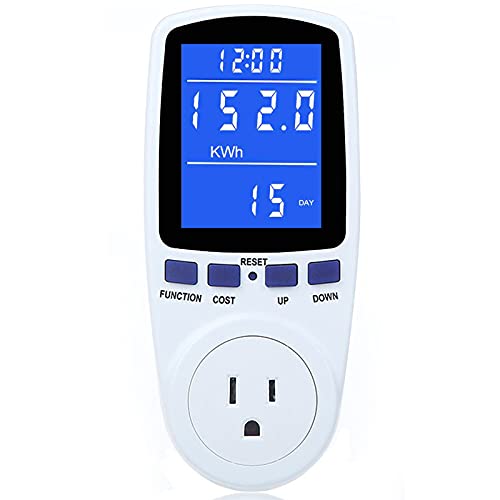
Upgraded Watt Power Meter Plug Home Electrical Usage Monitor Consumption, Energy Voltage Amps Kill Tester with Backlight, Overload Protection, 7 Modes Display
Various Monitoring Parameters: The power meter plug can monitor the power (W), energy (kWh), volts, amps, hertz, power…
As an affiliate, we earn on qualifying purchases.
As an affiliate, we earn on qualifying purchases.