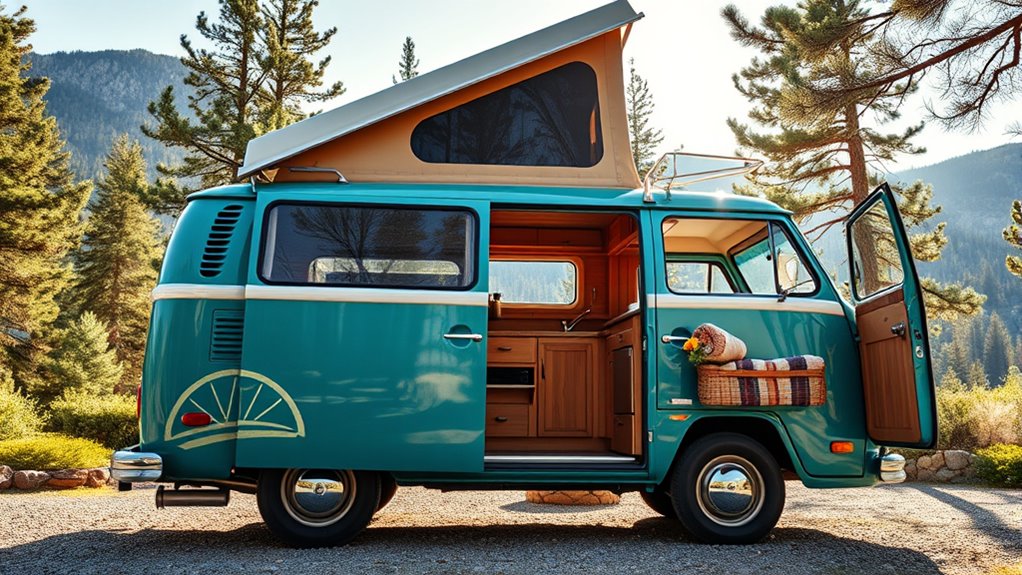

Transforming a VW bus into your perfect road trip machine begins with planning and budget-friendly design. Focus on essential functions like sleeping, cooking, and storage, using affordable materials like plywood and thrifted appliances. DIY insulation, wiring, and lightweight furniture keep costs low and weight manageable. Add personal touches and entertainment options to make it truly your own. Continue exploring to discover step-by-step tips for turning your VW bus into a cozy, efficient adventure home.
Key Takeaways
- Plan and design a functional, space-efficient interior with multi-use furniture to maximize limited space.
- Use affordable, lightweight materials like plywood and thrifted appliances for cost-effective construction.
- Install simple electrical systems with portable batteries and solar panels for off-grid power needs.
- Incorporate efficient insulation and easy-to-maintain flooring to ensure comfort in various weather conditions.
- Personalize the camper with entertainment options and DIY solutions to create a cozy, home-like travel experience.
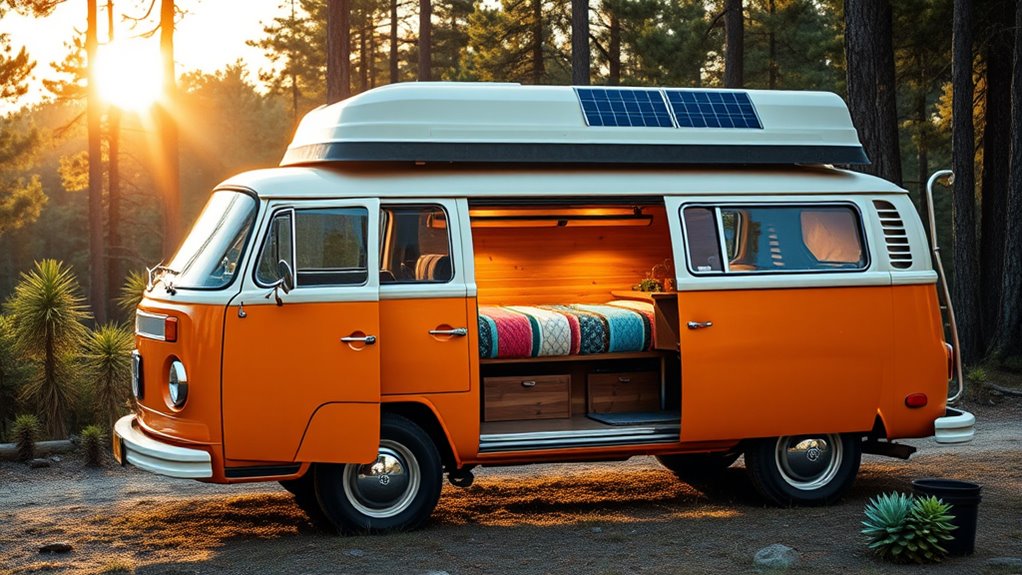
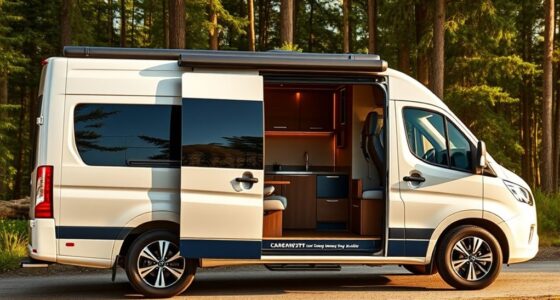
Converting a van or bus into a camper is a rewarding project that puts you in control of your travel experience. If you’re dreaming of embracing van life, creating a customized space for budget camping, and hitting the open road, doing a DIY camper conversion is the way to go. Turning a VW bus into your ultimate road trip machine isn’t just about saving money; it’s about crafting a home on wheels that suits your style and needs.
First, you need to plan how you want your camper to function. Think about your priorities: Do you want a cozy bed, a small kitchenette, enough storage, or all of the above? Designing with simplicity in mind makes the process more manageable and keeps costs down. Since van life often attracts those looking for affordable travel options, sticking to a budget is essential. Focus on affordable materials like plywood for furniture, thrifted or lightweight appliances, and DIY solutions for insulation and wiring. You can find plenty of tutorials online that guide you step-by-step through building a compact, efficient interior that maximizes space without breaking the bank.
When it comes to insulation, don’t skimp—good insulation keeps your van comfortable in all weather and helps maintain temperature during budget camping trips. Spray foam or reflective barriers are cost-effective options. For the flooring, consider easy-to-install vinyl or peel-and-stick tiles that are both durable and budget-friendly. Installing a bed isn’t complicated if you build a simple platform with storage underneath. Use lightweight materials to keep your van manageable and fuel-efficient. You might also want to add foldable or multi-use furniture to make the most of limited space.
Electrical setup is another vital aspect. Basic wiring for lights, a small fan, or even a portable fridge can be straightforward if you follow DIY guides carefully. Many van lifers rely on portable batteries or solar panels, which are affordable options for off-grid power during your budget camping adventures. Installing a small sink or water tank is also doable with some plumbing knowledge, adding comfort without excessive expense.
Additionally, understanding home theatre projectors and their features can inspire you to incorporate entertainment options into your camper, making long trips more enjoyable and cozy. Throughout the conversion, keep your goals in mind: a functional, cozy space that’s easy to maintain and transport. DIY camper conversions aren’t just about saving money—they’re about creating a personalized travel companion that fits your style and budget. When you finish, you’ll have a unique vehicle ready for countless adventures, all while enjoying the satisfaction of having built your own van home. This approach to van life not only saves money but also adds a sense of accomplishment to every mile you travel.
VW camper van interior furniture kit
As an affiliate, we earn on qualifying purchases.
As an affiliate, we earn on qualifying purchases.
Frequently Asked Questions
What Is the Estimated Total Cost of a VW Bus Conversion?
The estimated total cost of a VW bus conversion varies based on your project scope, but a detailed cost breakdown helps with budget planning. You might spend anywhere from $10,000 to $30,000, depending on whether you do it yourself or hire professionals. Consider costs for insulation, electrical systems, furniture, and appliances. By planning your budget carefully, you can create a comfortable camper without overspending, making your dream road trip a reality.
How Long Does the Conversion Process Typically Take?
Imagine your conversion timeline stretching longer than the horizon itself; that’s how unpredictable it can feel. Usually, you’ll spend about 4 to 8 weeks on your project, but it depends heavily on your planning phase. If you meticulously plan and gather materials beforehand, the process speeds up. Rushing or missing steps can turn a simple conversion into a multi-month saga, so patience and organization are your best friends.
What Tools Are Essential for the DIY Conversion?
For your DIY camper conversion, you’ll need essential tools like wire strippers and a voltage tester for electrical wiring. A staple gun and insulation materials are also vital to insulate and secure your space. Don’t forget basic hand tools like screwdrivers, pliers, and a drill. These tools help you efficiently install electrical wiring, apply insulation materials, and build your camper van into a cozy, functional home on wheels.
Are There Any Legal Requirements for Camper Conversions?
You need to check local laws for camper conversions, as parking regulations can restrict where you park or sleep overnight. Insurance considerations are also essential; inform your insurer about your conversion to guarantee coverage. Some areas may require safety inspections or specific modifications. Staying compliant helps avoid fines or legal issues, so research your region’s requirements before hitting the road with your DIY camper conversion.
Can I Convert a VW Bus Without Prior Woodworking Experience?
Imagine you want to convert your VW bus, but you have no woodworking skills. You can still do it by starting small, like installing simple storage or shelves, and following safety precautions. Many beginners successfully tackle basic projects by watching tutorials and practicing patience. While more complex tasks might require help, you’ll learn as you go, ensuring safety and steady progress. So, don’t worry—your journey begins with small, safe steps.

Renogy 200W Portable Solar Panel, IP65 Waterproof Foldable Solar Panel Power Backup, Solar Charger for Power Station RV Camping Off Grid
[Industry-Leading Efficiency 25%] Upgraded with 16BB N-Type cell technology, Renogy solar panels for camping achieve 25% efficiency—outperforming standard…
As an affiliate, we earn on qualifying purchases.
As an affiliate, we earn on qualifying purchases.
Conclusion
Now, with your VW bus transformed into a cozy home on wheels, you hold the freedom of the open road and the comfort of a familiar space. This DIY project blends the thrill of adventure with the satisfaction of craftsmanship, proving that sometimes, the simplest beginnings lead to the most extraordinary journeys. Embrace the unpredictability ahead, knowing you’ve built more than just a camper—you’ve created a sanctuary that’s both a destination and a departure.

classAcustoms | 20 Gallon RV Concession Fresh Water Tank with Plumbing Kit & 12 Volt Water Pump | T-2000-BPK-PUMP
20 Gallon Fresh Water Holding Tank Manufactured by Class A Customs – Made from NSF Approved Materials -…
As an affiliate, we earn on qualifying purchases.
As an affiliate, we earn on qualifying purchases.

ABORON Camping Cot for Adult 28" Extra Wide, Heavy-Duty 1200D Oxford Cot for Sleeping, Portable Folding Camp Bed with Mat & Carry Bag
Cot for Sleeping with Detachable Soft Pad: The included soft mat adds comfort for better sleep; remove it…
As an affiliate, we earn on qualifying purchases.
As an affiliate, we earn on qualifying purchases.