
Advanced Driver Assistance Systems (ADAS) in buses use sensors, cameras, and radar to monitor the environment around you. These systems help you operate the bus more safely by detecting pedestrians, warning about lane departures, and maintaining safe distances from other vehicles. They can alert you or automatically take action to prevent accidents. As these technologies continue to evolve, you’ll discover even more ways they enhance safety and efficiency in bus transportation.
Key Takeaways
- ADAS in buses use sensors, cameras, and radar to monitor the environment and assist drivers in real-time.
- Key features include pedestrian detection, lane departure warning, and adaptive cruise control.
- These systems enhance safety by preventing accidents and protecting passengers and pedestrians.
- ADAS integrates AI and sensor technology to improve accuracy and responsiveness.
- They act as digital co-pilots, reducing driver stress and supporting safer navigation in complex traffic.
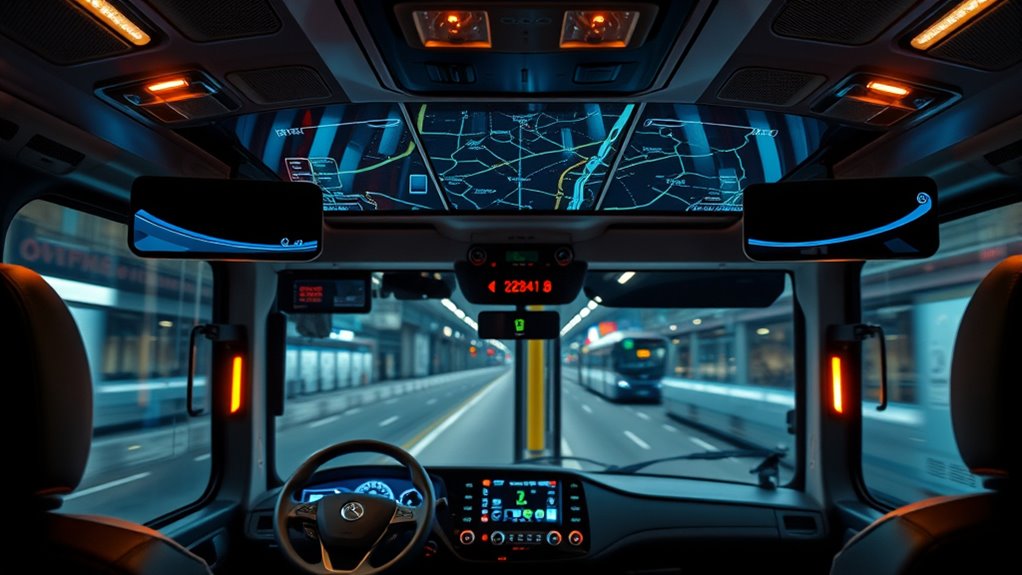
Have you ever wondered how technology is transforming bus safety and efficiency? Advanced Driver Assistance Systems, or ADAS, are at the forefront of this change, making journeys safer for both passengers and pedestrians. These systems use sensors, cameras, and radar to monitor the environment around the bus, providing real-time data to help drivers make better decisions. One of the most essential features of ADAS is pedestrian detection. This technology uses cameras and infrared sensors to spot pedestrians near the bus, especially in busy urban settings. When a pedestrian suddenly steps into the path of the bus, the system alerts the driver or even automatically applies the brakes if necessary. Pedestrian detection greatly reduces accidents involving pedestrians, especially in densely populated areas where quick reactions are indispensable.
Pedestrian detection in ADAS reduces accidents by alerting drivers or automatically braking near pedestrians in urban areas.
Another fundamental component of ADAS is lane departure warning. As a bus driver, you know how challenging it can be to stay within your lane, especially during long drives or in poor weather conditions. Lane departure systems use cameras to continuously track lane markings. If the bus begins to drift out of its lane without signaling, the system provides a visual or auditory alert to grab your attention. Some advanced systems even gently steer the bus back into the correct lane, helping prevent accidents caused by driver fatigue or distraction. Additionally, recent innovations incorporate AI-powered image recognition to improve the accuracy of environmental monitoring, making these safety features even more reliable. Together, pedestrian detection and lane departure warning create a comprehensive safety net, empowering you to respond more effectively to unpredictable road situations.
Beyond safety, ADAS also boosts efficiency by optimizing driving patterns and reducing unnecessary interventions. For instance, adaptive cruise control maintains a safe following distance from the vehicle ahead, adjusting speed automatically based on traffic flow. This not only makes your ride smoother but also helps conserve fuel. Additionally, systems like traffic sign recognition inform you of speed limits and other important regulations, ensuring compliance and avoiding costly tickets. All these features work together to streamline bus operations, making routes more predictable and reducing the likelihood of accidents or delays.
In essence, ADAS transforms traditional bus driving into a smarter, safer experience. By integrating pedestrian detection, lane departure warnings, and other intelligent features, these systems help you stay alert and in control, even in complex traffic environments. They serve as your digital co-pilot, reducing stress and allowing you to focus on your primary task: safely transporting passengers. As technology continues to evolve, ADAS will become even more sophisticated, further enhancing safety and efficiency on every route. Embracing these advancements means creating a safer, more reliable transportation system for everyone.
Top picks for "advanc driver assistance"
Open Amazon search results for this keyword.
As an affiliate, we earn on qualifying purchases.
Frequently Asked Questions
How Do ADAS Systems in Buses Improve Passenger Safety?
ADAS systems in buses improve passenger security by actively monitoring surroundings and alerting you to potential hazards. They help prevent accidents through features like collision avoidance, lane departure warnings, and automatic braking. This technology enables you to respond quickly to risks, reducing the chances of crashes and ensuring a safer journey. By enhancing accident prevention, ADAS systems keep passengers secure and foster greater confidence in bus transportation.
What Are the Maintenance Requirements for Bus ADAS Technology?
They say “a stitch in time saves nine,” and that’s true for bus ADAS maintenance. You need to regularly perform sensor calibration to guarantee accuracy and safety. Keep software updated to maintain ideal system performance and security. Routine checks help identify issues early, preventing costly repairs and ensuring passenger safety. Staying proactive with calibration and updates keeps your ADAS functioning smoothly and extends the system’s lifespan.
How Do ADAS Features Differ Between Bus Models?
You’ll notice ADAS features differ between bus models mainly because of variations in design, size, and intended use. Some models offer basic safety tools like collision warning, while others include advanced features like lane assist or adaptive cruise control. You can often customize these features depending on the bus model, ensuring the system aligns with specific operational needs and passenger safety requirements. This flexibility helps optimize performance across different bus types.
Are ADAS Systems in Buses Cost-Effective for Operators?
Think of ADAS in buses like a safety net—you might hope you won’t need it, but it’s invaluable when things go wrong. They are generally cost-effective, especially when you consider the reduced accident rates and insurance premiums. A thorough cost-benefit analysis shows long-term savings outweigh initial investment. However, implementation challenges like training staff and integrating new tech can pose hurdles, but the safety gains often justify the effort.
What Training Is Needed for Bus Drivers to Use ADAS Effectively?
You need exhaustive driver training to use ADAS effectively. Focus on system familiarity, understanding each feature’s purpose and operation. Hands-on practice helps you recognize how ADAS responds in different scenarios, improving safety and confidence. Regular updates and refresher courses ensure you stay current with system enhancements. By mastering these aspects, you’ll operate the bus more safely and efficiently while reducing reliance on manual controls.
Conclusion
By now, you can see that ADAS in buses are revolutionizing safety and efficiency on the road. These systems act like a superhero sidekick, constantly watching over you and your passengers. Embracing ADAS isn’t just a upgrade—it’s a game-changer that could save lives and prevent accidents on an epic scale. So, step into the future of transportation with confidence, knowing these advanced systems are making every journey safer than ever before!