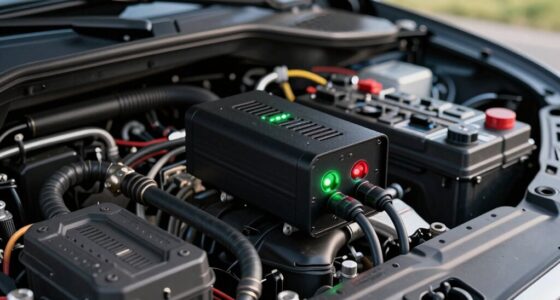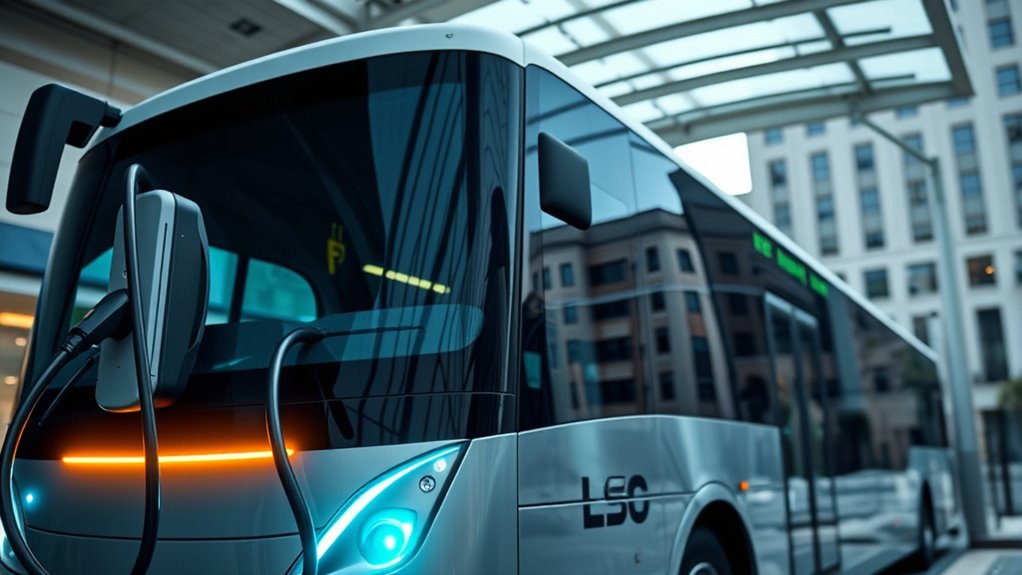
Electric bus charging involves three main levels: Level 1, which plugs into standard outlets and provides slow overnight charging; Level 2, using 240V power for faster charging at depots or stops; and Level 3, or DC fast charging, which delivers rapid 20-30 minute recharges suitable for quick stops. Different chargers and infrastructure are needed based on operational needs, with options like plug-in, pantograph, or wireless systems. If you want to explore how these systems optimize efficiency, keep exploring.
Key Takeaways
- Electric bus charging levels range from slow Level 1 to fast Level 3, matching operational needs.
- Infrastructure involves installing suitable chargers (plug-in, inductive, pantograph) with maintenance and space considerations.
- Charging methods include manual plug-in, off-board fast chargers, and wireless systems, each offering different efficiencies.
- Battery sizes vary from 50 to 500 kWh, affecting route length, charging time, and vehicle weight.
- Fast and opportunity charging strategies minimize downtime, enhancing operational flexibility and sustainability.
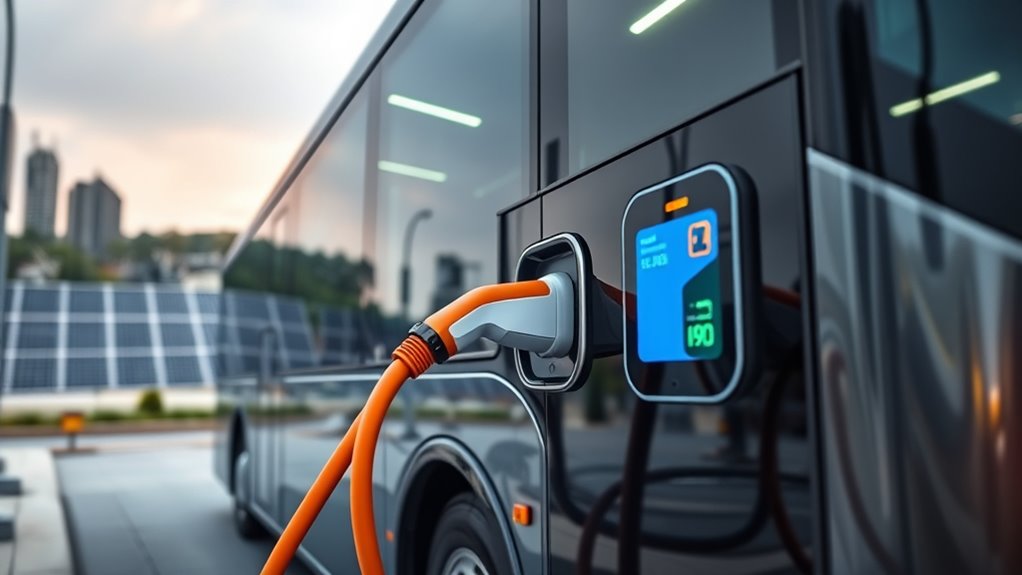
Electric bus charging plays an essential role in shifting to cleaner public transportation. It’s the backbone that keeps these vehicles running efficiently and sustainably. Understanding the different charging levels is key to optimizing bus operations.
Electric bus charging is vital for sustainable, efficient public transportation.
Level 1 charging uses standard 120V AC outlets, which provide slow charging typically suitable for overnight depot use. It’s simple and inexpensive but not ideal for quick turnaround times.
Level 2 charging operates at 240V AC, offering faster charging times. This level is common in commercial settings where buses need to recharge overnight or during breaks.
For rapid turnaround, Level 3, known as DC Fast Charging, is fundamental. It delivers high power, ranging from 50 kW to over 350 kW, enabling buses to recharge in just 20 to 30 minutes.
To support these different levels, a proper charging infrastructure is necessary, requiring specific installation and ongoing maintenance. The development of this infrastructure can be a challenge, especially when considering costs and space needs, but it’s essential for widespread adoption.
Your charging strategy depends on operational needs. Overnight charging is the most straightforward approach, where buses are plugged in at depots for several hours to recharge large batteries, often between 200 to 500 kWh. This method suits routes with predictable schedules.
For routes requiring more flexibility, opportunity charging can be employed at bus stops or depots, using smaller batteries of 50 to 90 kWh. These quick charges, lasting only a few minutes, keep buses running without long downtime.
Another approach, online charging, involves charging buses while they’re in motion, often through pantographs that connect overhead wires automatically. This method supports longer routes and reduces the need for large onboard batteries, increasing efficiency.
You have options when it comes to chargers. On-board chargers are integrated into the bus, making them easier to install but sometimes limiting the power input.
Off-board chargers are external and capable of handling higher power levels, offering better efficiency but requiring more complex installation. The choice between these depends on your operational priorities and budget.
Charging methods also vary; plug-in chargers are the most common, where operators manually connect cables. Inductive or wireless charging offers convenience but currently suffers from lower efficiency.
Pantograph systems enable automatic, overhead connections, suitable for in-motion charging, and battery swapping provides a quick replacement option to minimize downtime.
Battery capacity and energy management are indispensable. Batteries typically range from 50 to 500 kWh, with larger capacities suited for longer routes or overnight charging.
Operating at voltages around 600V helps optimize performance and efficiency. However, larger batteries add weight and require more space, affecting bus design.
Proper management of charge cycles and depth of discharge extends battery life, making investment more cost-effective over time. [Advancements in charging infrastructure] are continually improving the speed and reliability of electric bus charging systems.
Electric buses significantly cut emissions and noise pollution, making them a more sustainable choice for cities.
Your understanding of charging levels, infrastructure, and methods ensures you can optimize electric bus operations, reducing environmental impact while maintaining reliable service.

Visual Studio Code AI Mastery: Build Full-Stack Applications with GitHub Copilot, AI Agents, Prompt Engineering, Automated Workflows, and AI-Powered Software ... (Morden developer toolkit Book 1)
As an affiliate, we earn on qualifying purchases.
Frequently Asked Questions
How Long Does It Take to Fully Charge an Electric Bus?
You wonder how long it takes to fully charge an electric bus. The time varies based on factors like battery size, charger type, and charging method.
For example, a fast-charging station can recharge a bus in as little as 15 minutes, while slower overnight charging might take 8-12 hours. Usually, rapid chargers are used during operational breaks, ensuring your bus is ready for the next day quickly and efficiently.
What Safety Measures Are Required During Charging?
Are you aware of the safety measures needed during charging? You should guarantee your charging equipment is certified and installed by qualified electricians. Keep the area dry and free from hazards, and manage cables to prevent trips.
Follow manufacturer guidelines, conduct regular inspections, and have safety equipment like fire extinguishers nearby. Are you prepared to handle emergencies?
Staying compliant with standards and training staff reduces risks and keeps everyone safe.
How Often Do Charging Stations Need Maintenance?
You need to schedule maintenance for your charging stations based on usage, environmental factors, and manufacturer guidelines. Regular cleaning, inspections, and software updates are essential, especially for high-use or outdoor stations.
Typically, weekly cleaning and monthly inspections are recommended, but more frequent checks may be necessary in harsh conditions.
Proper maintenance prevents costly repairs, extends lifespan, and guarantees your stations operate efficiently and reliably for your electric buses.
Can Electric Buses Charge at Multiple Locations?
Imagine your electric bus network as a web of rivers, each flowing smoothly to keep your fleet moving. Yes, your buses can charge at multiple locations, like tributaries feeding into the main stream.
What Are the Costs Associated With Electric Bus Charging Infrastructure?
You need to contemplate several costs for electric bus charging infrastructure. Installation expenses vary based on how many units you install at once and the site’s electrical setup.
Upfront costs include labor, materials, permits, and possible utility upgrades. Plus, ongoing expenses like demand charges and energy use affect your budget.
Planning your layout strategically and taking advantage of incentives can help manage costs and maximize your investment.

Software Requirements (Developer Best Practices)
- Condition: Used Book in Good Condition
As an affiliate, we earn on qualifying purchases.
Conclusion
Now that you understand the basics of electric bus charging, you can see how charging stations empower, energize, and transform public transportation. You can choose the right charging method, optimize charging times, and support sustainable travel. With knowledge of fast charging, standard charging, and depot solutions, you’re prepared to make informed decisions. Embrace the future, drive innovation, and help build cleaner cities—because understanding electric bus charging is your step toward a greener, brighter tomorrow.

Apple 2026 MacBook Air 13-inch Laptop with M5 chip: Built for AI, 13.6-inch Liquid Retina Display, 24GB Unified Memory, 1TB SSD, 12MP Center Stage Camera, Touch ID, Wi-Fi 7; Sky Blue
- Designed for College and Beyond: Powerful M5 chip with AI capabilities
- Long Battery Life: Up to 18 hours of use
- Fast Performance: Enhanced CPU and unified memory
As an affiliate, we earn on qualifying purchases.

HP Essential 2026 Laptop, Office 365, Copilot AI, 8GB RAM, Intel Processor
- Processor: Intel Celeron N4500 dual-core
- Memory: 8GB DDR4 RAM
- Display: 14-inch HD display with anti-glare
As an affiliate, we earn on qualifying purchases.