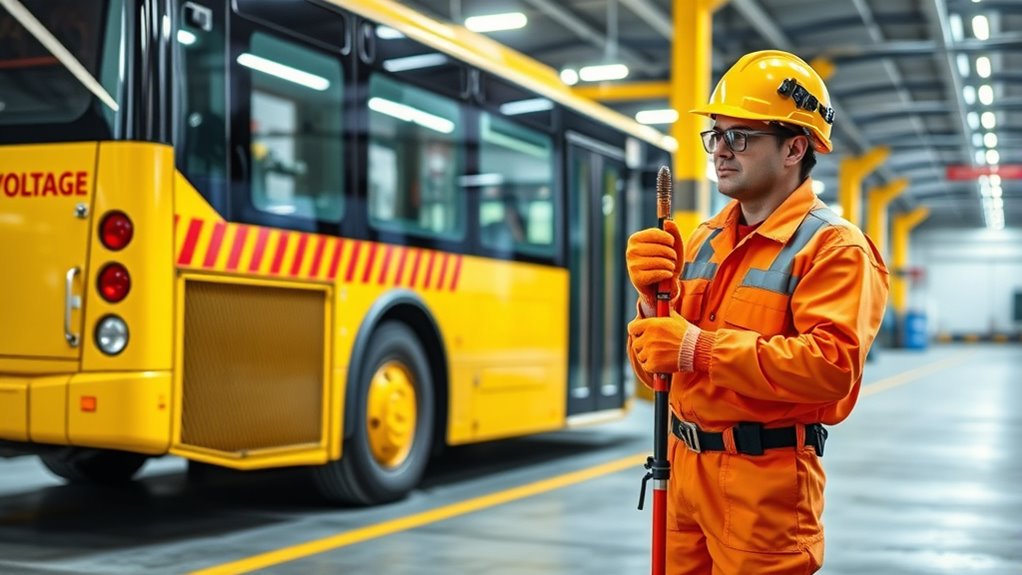

When working on electric buses, always pay attention to high-voltage color coding—orange or yellow cables signal danger. Wear proper PPE like insulated gloves, face shields, and rubber mats to protect yourself from shocks and arc flashes. Before starting any work, verify that the system is de-energized and follow safety protocols. By respecting color cues and PPE requirements, you keep yourself safe. Continuing further will give you detailed guidelines to prevent hazards effectively.

Get business pricing on monitors, keyboards and dev gear
- Business-only prices and quantity discounts
- Tax-exempt purchasing
- Multiple users, one account, clear invoices
Key Takeaways
- High-voltage components are color-coded in bright orange or yellow to alert personnel of electrical dangers.
- Always respect high-voltage color codes and avoid handling components without proper training.
- PPE such as insulated gloves, face shields, and rubber mats are mandatory during maintenance.
- PPE must be regularly inspected to ensure its integrity and effectiveness against electrical hazards.
- Follow safety protocols, including de-energizing the system, before working on high-voltage components.

Have you ever wondered how safe electric buses are for passengers and pedestrians alike? The answer depends on strict safety protocols and proper handling practices. Electric buses operate with high-voltage systems that require careful attention to battery maintenance and emergency response procedures. Regular battery maintenance is essential to guarantee the system functions correctly and to prevent potential hazards. This includes routine inspections for any signs of damage, leaks, or corrosion, as well as verifying that all connections are secure. Proper maintenance reduces the risk of electrical faults that could lead to short circuits or fires, keeping everyone safer.
Regular battery inspections are crucial for safe, reliable electric bus operation.
When it comes to emergency response procedures, understanding how to handle high-voltage situations is critical. If an incident occurs, knowing how to cut power safely can prevent further injury or damage. Emergency responders are trained to recognize the high-voltage components and follow specific steps to disable the electrical system without risking their safety. This often involves disconnecting power sources, using insulated tools, and adhering to manufacturer guidelines. Clear, accessible emergency shut-off switches should always be in place, and personnel should be well-trained on their operation.
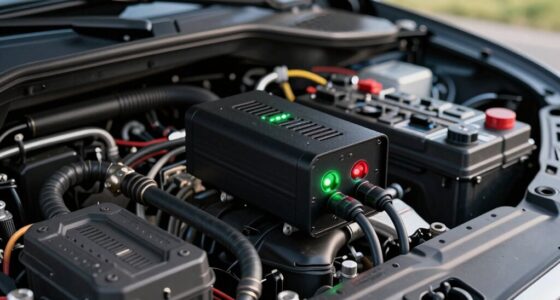
High-voltage color coding is an essential safety feature designed to alert everyone involved—drivers, maintenance staff, and emergency personnel—about the presence of dangerous electrical components. Typically, high-voltage cables and parts are color-coded in bright orange or yellow to stand out from other systems. This visual cue helps prevent accidental contact during routine inspections or repairs. Always respect these color codes and never attempt to handle or modify high-voltage components unless you’re trained and equipped with the appropriate PPE.
Personal protective equipment (PPE) plays a significant role in safeguarding workers during maintenance or emergency procedures. When working around electric buses, PPE such as insulated gloves, face shields, and rubber mats are necessary. They provide a barrier against accidental electrical shocks or arc flashes. PPE must be inspected regularly to guarantee its integrity—damaged gear can expose you to unnecessary risks. Additionally, following proper safety protocols, including de-energizing the bus before starting any work, ensures a safer environment for everyone involved.
Popular right now

Breville Bambino Espresso Machine, Brushed Stainless Steel

Bose QuietComfort True Wireless Earbuds with Active Noise Cancellation, Black

Ninja Flip Toaster Oven and Air Fryer, 8-in-1, Stainless Steel, SP151
As an affiliate, we earn on qualifying purchases.
Frequently Asked Questions
How Often Should High-Voltage Color Coding Be Inspected on Electric Buses?
You should inspect high-voltage color coding on electric buses during each voltage maintenance check, ideally according to the manufacturer’s inspection schedules. Regular inspections guarantee the color coding remains visible and effective for safety, especially after maintenance or repairs. By adhering to these schedules, you minimize risks and maintain compliance, ensuring that all personnel can quickly and safely identify high-voltage components during routine inspections or emergency situations.
Are There Specific PPE Standards for Different Electric Bus Models?
Are there specific PPE standards for different electric bus models? Yes, you should always follow PPE material and color coding standards set by safety regulations. Different bus models might require unique PPE, such as insulated gloves or face shields, to make sure safety around high-voltage components. Always check manufacturer guidelines and local safety codes to select the right PPE, guaranteeing you’re protected no matter what electric bus model you work on.
What Training Is Required for Personnel Working on High-Voltage Systems?
You need to complete high voltage certification training before working on high-voltage systems, ensuring you understand safety protocols. This training covers PPE compliance, proper handling procedures, and emergency response. It’s essential that you stay current with certifications, follow PPE requirements diligently, and adhere to safety standards. Continuous education helps prevent accidents, protects you, and maintains a safe working environment when dealing with high-voltage components on electric buses.
How Does Weather Affect PPE Performance and High-Voltage Safety?
Sure, weather impact is no joke when it comes to PPE durability and high-voltage safety. Rain, snow, or humidity can weaken PPE materials, making them less effective at insulating or protecting you. Cold weather can make gloves stiff, reducing dexterity, while heat can degrade protective gear faster. Always inspect your PPE regularly and adapt your safety measures to weather conditions—because a little weather shouldn’t turn into a big shock!
What Are the Emergency Procedures for Electric Bus High-Voltage Incidents?
If you encounter a high-voltage incident on an electric bus, immediately perform an emergency shutdown to cut power and prevent further harm. Follow rescue procedures by maintaining a safe distance, wearing appropriate PPE, and avoiding contact with energized components. Call emergency services, assess the situation calmly, and only attempt rescue if trained and safe to do so. Always prioritize personal safety and follow your organization’s established emergency protocols.
Conclusion
By following high-voltage color coding and PPE requirements, you protect yourself from the incredible dangers of electric buses—dangers that could turn chaos into catastrophe in seconds. Your vigilance isn’t just important; it’s the single most powerful shield against electrocution and injury. Stay alert, stay safe, and remember—your careful actions could be the difference between disaster and safety in the blink of an eye. Never underestimate the importance of safety procedures—they’re your ultimate safeguard.