
Electric vehicles like the VW ID Buzz run on large, rechargeable lithium-ion batteries that power electric motors for propulsion. When you accelerate, the battery supplies electricity directly to the motor, which drives the wheels smoothly and instantly. Regenerative braking captures energy back into the battery, helping it last longer. Modern systems monitor battery health and optimize efficiency. As technology continues to improve, you’ll discover even more about how EVs are transforming transportation.

Get business pricing on monitors, keyboards and dev gear
- Business-only prices and quantity discounts
- Tax-exempt purchasing
- Multiple users, one account, clear invoices
Key Takeaways
- The VW ID Buzz uses a large lithium-ion battery to store electrical energy for powering the electric motor.
- The battery supplies immediate torque to the motor, enabling smooth acceleration and silent operation.
- Regenerative braking captures kinetic energy and feeds it back into the battery, increasing efficiency.
- The onboard computer monitors battery health, charge level, and temperature to optimize performance and longevity.
- Fast charging technology allows the ID Buzz to recharge quickly, reducing downtime and extending driving range.
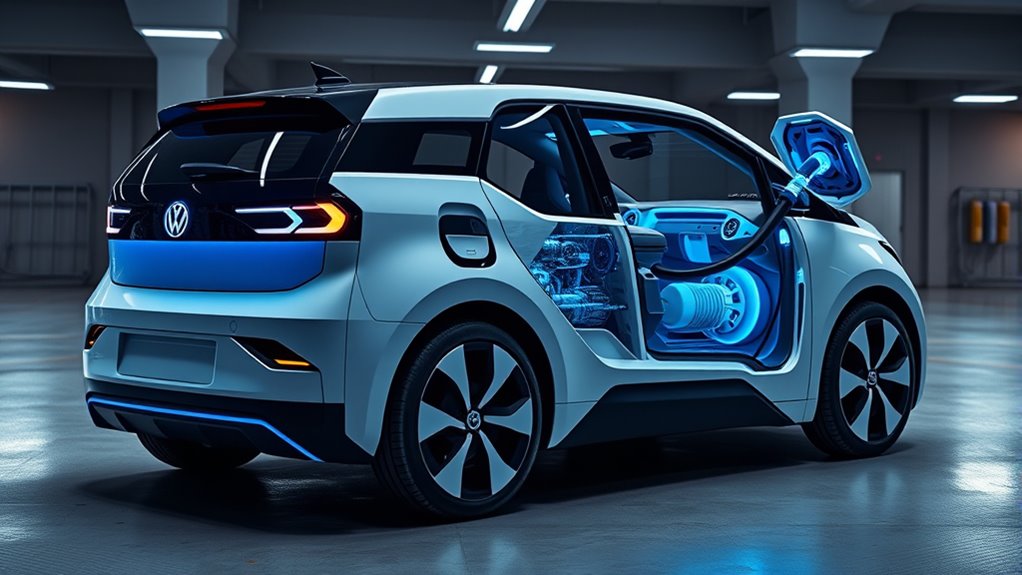
Have you ever wondered how electric vehicles work and why they’re gaining popularity? At the heart of every EV, including the VW ID Buzz, is advanced battery technology. Unlike traditional gas engines, electric vehicles rely on large, rechargeable batteries to store energy. These batteries are typically lithium-ion, which are lightweight, efficient, and capable of holding a significant amount of power. As you drive, the battery supplies electricity to the electric motor, which then powers the wheels, delivering instant torque and a smooth ride. Over recent years, battery technology has improved dramatically, leading to longer ranges, faster charging times, and better overall performance. This progress makes EVs more practical for everyday use, easing concerns about running out of power during trips.
Charging infrastructure plays a *vital* role in making electric vehicles viable for the masses. You’ll find that the availability of charging stations has expanded rapidly, from urban areas to highways, making it easier to recharge your vehicle wherever you go. Charging stations come in various types, including slow chargers for overnight charging and fast chargers that can top up your battery in under 30 minutes. As these networks grow, your ability to plan longer trips improves, reducing range anxiety and making EV ownership more convenient. Home charging is also a key part of the infrastructure, allowing you to simply plug in your vehicle overnight, much like charging a smartphone, ensuring your ID Buzz is ready to go each morning with a full battery.
The science behind how these components work together is *fascinating*. When you accelerate, the battery supplies power to the motor, which then generates movement. When you brake or decelerate, regenerative braking systems kick in, converting kinetic energy back into stored energy in the battery, extending your range. The vehicle’s onboard computer constantly monitors and manages the battery’s health, temperature, and charge level to optimize efficiency and longevity. Additionally, advancements in battery management systems help prolong the lifespan of the batteries, ensuring reliable performance over many years. This integration of advanced battery technology and a widespread charging infrastructure is what makes electric vehicles like the VW ID Buzz a practical, eco-friendly alternative to traditional cars.
In essence, understanding how the battery technology and charging infrastructure work together reveals why EVs are becoming more accessible and appealing. They are not just about reducing emissions but also about embracing a new way of driving that’s cleaner, smarter, and more connected. As technology continues to evolve, electric vehicles will only become more efficient and easier to use, transforming the way you get around every day.
electric vehicle home charging station
As an affiliate, we earn on qualifying purchases.
As an affiliate, we earn on qualifying purchases.
Frequently Asked Questions
How Long Does the VW ID Buzz’s Battery Typically Last?
You’re probably curious about how long your VW ID Buzz’s battery will last. Typically, the battery lifespan offers around 8 to 10 years or roughly 100,000 to 150,000 miles of reliable charging longevity. Proper care, like regular charging and avoiding extreme temperatures, can extend this lifespan. Eventually, you might need a battery replacement, but overall, the ID Buzz is designed to keep you powered for many years.
What Environmental Benefits Does the ID Buzz Offer?
You might think electric vehicles like the ID Buzz have minimal environmental impact, and you’d be right. They reduce reliance on fossil fuels and lower emissions, especially when paired with recycling initiatives and renewable energy sources. This combination helps decrease greenhouse gases and waste. By choosing the ID Buzz, you’re supporting a cleaner planet, promoting sustainability, and encouraging a shift towards greener transportation options.
How Fast Can the ID Buzz Accelerate From 0 to 60 Mph?
You’ll find that the VW ID Buzz accelerates from 0 to 60 mph in around 5.5 seconds, making it pretty quick for an electric van. Its impressive performance benefits from advanced charging technology, allowing quick recharges and maintaining battery lifespan. This means you can enjoy swift acceleration without worrying about battery health, giving you a smooth, efficient drive every time.
Are There Any Special Maintenance Requirements for Electric Vehicles?
You don’t need much special maintenance for your electric vehicle. Focus on battery care by keeping it charged between 20% and 80%, and avoid extreme temperatures. Regularly check your tire pressure to ensure safety and efficiency. Unlike traditional cars, EVs have fewer moving parts, so routine checks on brakes and cooling systems are usually enough. Staying proactive assists your vehicle run smoothly and extends its lifespan.
How Does the ID Buzz’s Charging Time Compare to Traditional Cars?
You’ll find that the VW ID Buzz charges faster than traditional cars, thanks to the expanding charging infrastructure. While gas cars need less downtime, electric vehicles like the ID Buzz often charge in about 30 minutes with fast chargers, ensuring convenience. Plus, good battery longevity means your vehicle stays efficient over time, making charging a quick, hassle-free part of your routine.
As an affiliate, we earn on qualifying purchases.
Conclusion
Now that you understand how electric vehicles like the VW ID Buzz operate, it’s tempting to believe they’re entirely eco-friendly. While they produce zero tailpipe emissions, the truth depends on how the electricity is generated. If your power comes from renewable sources, you’re making a real difference. So, stay curious and keep exploring the science behind EVs—because understanding their impact helps you make smarter, greener choices for the future.
As an affiliate, we earn on qualifying purchases.
As an affiliate, we earn on qualifying purchases.
Halloween Picks
halloween
As an affiliate, we earn on qualifying purchases.