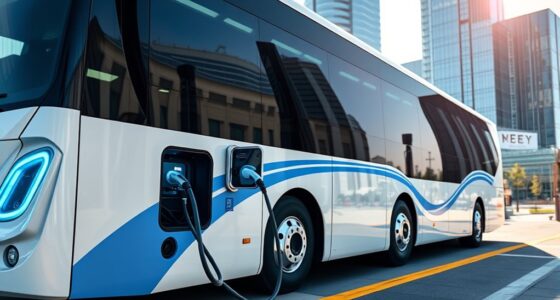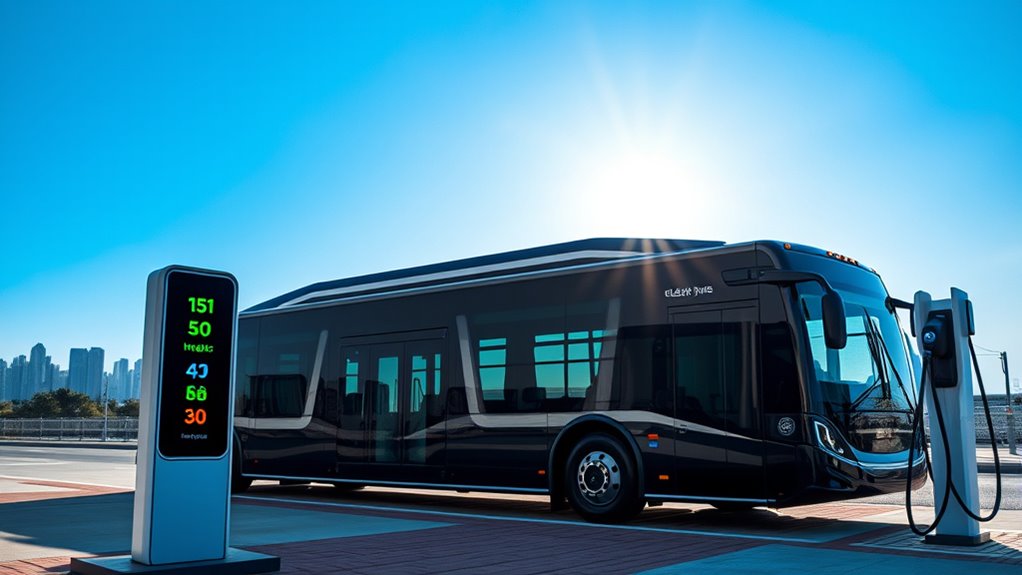

A kilowatt-hour (kWh) is a unit that measures the energy stored in an electric bus’s battery, similar to how a fuel tank’s size indicates fuel capacity but expressed in energy terms. It helps you understand how much power the battery can hold and how far your bus can travel on a single charge. Understanding this unit is key to managing energy use and planning routes, and if you keep exploring, you’ll learn even more about optimizing electric bus performance.
Key Takeaways
- A kilowatt-hour (kWh) measures the amount of energy stored in electric bus batteries, similar to a fuel tank’s capacity.
- Battery capacity in kWh indicates how much energy a bus can hold, affecting its range and operational duration.
- Energy consumption is expressed in kWh per mile or km, reflecting vehicle efficiency in using stored energy.
- Larger kWh ratings enable longer distances per charge, but real range also depends on factors like driving conditions.
- Understanding kWh helps in planning routes, managing charging needs, and analyzing operational costs for electric buses.
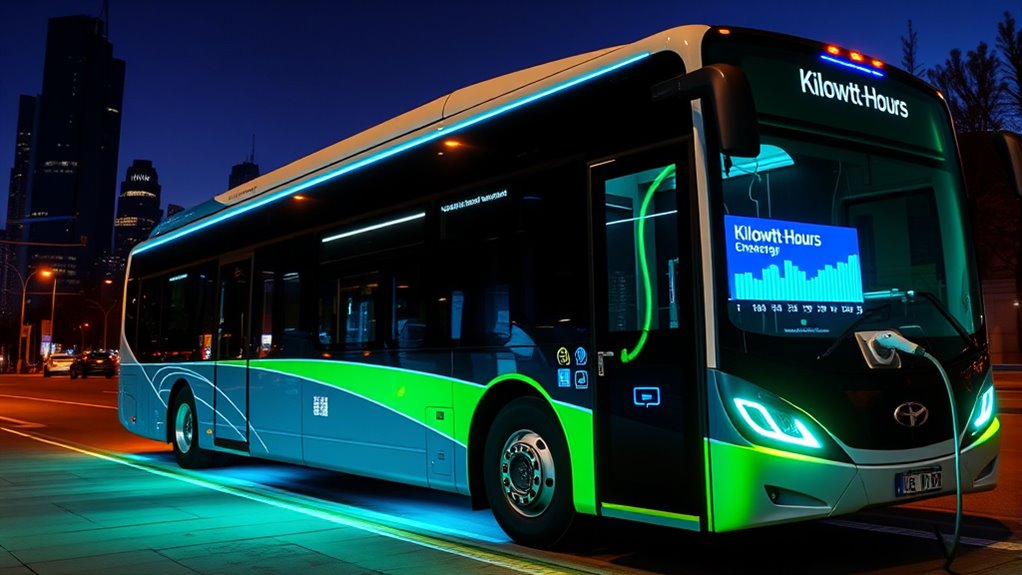
Have you ever wondered what the different energy units used to measure electric bus batteries really mean? When you hear about an electric bus’s battery capacity or its energy consumption, it can seem confusing at first. But understanding these terms is key to grasping how electric buses operate and how far they can go on a single charge. One of the most common units you’ll encounter is the kilowatt-hour, often abbreviated as kWh. This measurement helps you understand the amount of energy stored in a bus’s battery and how efficiently it uses that energy during operation.
Battery capacity, expressed in kilowatt-hours, indicates how much energy the battery can hold. Think of it as the size of the fuel tank in a traditional bus, but instead of gallons or liters, it’s measured in kWh. A higher kWh rating means the battery can store more energy, allowing the bus to travel longer distances before needing to recharge. For instance, a bus with a 300 kWh battery can generally go further than one with a 150 kWh battery, assuming similar driving conditions and energy consumption rates. This is pivotal when planning routes, especially in areas where charging stations are sparse.
Energy consumption, on the other hand, refers to how much energy the bus uses during operation, typically expressed in kWh per mile or per kilometer. This metric tells you how efficiently the vehicle uses its stored energy. If a bus consumes 2 kWh per mile, and it has a 300 kWh battery, you can expect it to travel roughly 150 miles on a full charge. Lower energy consumption means the bus is more efficient, which is beneficial for lowering operating costs and extending the bus’s range. Factors influencing energy consumption include vehicle weight, driving style, terrain, and weather conditions. Additionally, understanding zoning regulations is important for planning where electric buses can operate efficiently.
Frequently Asked Questions
How Does a Kilowatt-Hour Compare to Other Energy Units?
A kilowatt-hour is a common energy unit used to measure electricity, and it’s larger than many others like joules or calories. To compare, you can convert kilowatt-hours to energy units like joules using measurement standards—1 kWh equals 3.6 million joules. Understanding these energy unit conversions helps you grasp how electric bus batteries store and deliver power, making it easier to evaluate their efficiency and range.
Can Kilowatt-Hours Measure Energy Efficiency Over Time?
Yes, kilowatt-hours can measure energy efficiency over time. By tracking the kilowatt-hours used by an electric bus, you can evaluate how effectively its battery storage converts energy into movement. Lower energy costs and efficient battery use indicate better efficiency. Monitoring kilowatt-hours helps you optimize routes and charging schedules, reducing overall energy consumption and costs while ensuring the bus performs reliably over its lifespan.
Are Kilowatt-Hours Used for Both Energy Consumption and Production?
Yes, kilowatt-hours are used for both energy consumption and production. When you use renewable energy sources like solar panels, your system produces kilowatt-hours, which can offset your energy billing costs. Utility companies also measure your energy consumption in kilowatt-hours to determine your bill. This unit helps you track how much energy you produce and use, making it easier to manage your renewable energy system and optimize costs.
How Do Kilowatt-Hours Relate to Charging Times for Electric Buses?
Charging times for electric buses hinge on kilowatt-hours, and this can be a game-changer—faster than lightning! Your bus’s charging time depends on the charging station capacity and the bus’s battery discharge rates. A higher capacity station delivers more kilowatt-hours per hour, shortening charging time. Meanwhile, lower discharge rates help preserve battery health, ensuring efficient energy transfer. So, understanding these factors helps you optimize charging schedules and reduce downtime.
Is There a Global Standard for Measuring Kilowatt-Hours?
There isn’t a single global standard for measuring kilowatt-hours, but international standards like IEC and ISO promote measurement consistency across countries. These organizations set guidelines to make certain that energy units are calculated uniformly, helping you compare electric bus charging data worldwide. While standards aim for uniformity, variations can still occur due to regional practices. Staying aware of these standards helps you interpret energy consumption more accurately across different markets.
Conclusion
Now that you know what a kilowatt-hour is, you’ll notice it popping up everywhere—from electric bills to bus displays. It’s funny how something so simple can have such a big impact on your daily life and the future of transportation. Next time you see an electric bus, remember it’s fueled by those tiny units of energy you just learned about. It’s a small measure that’s shaping a cleaner, smarter world—coincidence or not?